Anti-inflammatory therapy (NSAID, colchicine, corticosteroid & IL-1 inhibitor) is cornerstone of treatment in inflammatory & transient forms
Constrictive Pericarditis & Effusive Constrictive Pericarditis-L El Harake, M Al-Kazaz, P Cremer
https://t.co/tRhUELYRxk #DeBakeyCVJournal
ALLEVIATE-HF: #HeartFailure risk detection with an insertable cardiac monitor paired w/ a centrally coordinated nurse-led diuretic intervention was safe but did not reduce CV events in ambulatory patients w/ recent symptomatic HF events.
Learn more: https://t.co/yNqqKE2b5c #JACC
The present and the future of risk stratification for and prevention of sudden cardiac death: A Heart Rhythm Society think tank meeting
https://t.co/ylW85ojtAV
Circulating levels of micro- and nanoplastics were associated w/ structural plaque vulnerability in #cvACS, using optical coherence tomography, according to research published in #JACCIMG.
Get full details ➡️ https://t.co/vJfhSD7Ghq #CardioX
Timely question in AF care: can semaglutide lower arrhythmia recurrence after ablation? In our Heart Rhythm time-to-event meta-analysis of 7,798 pts, semaglutide was linked to lower recurrence (HR 0.71; 95% CI 0.54–0.94). Promising, hypothesis-generating, needs RCTs.
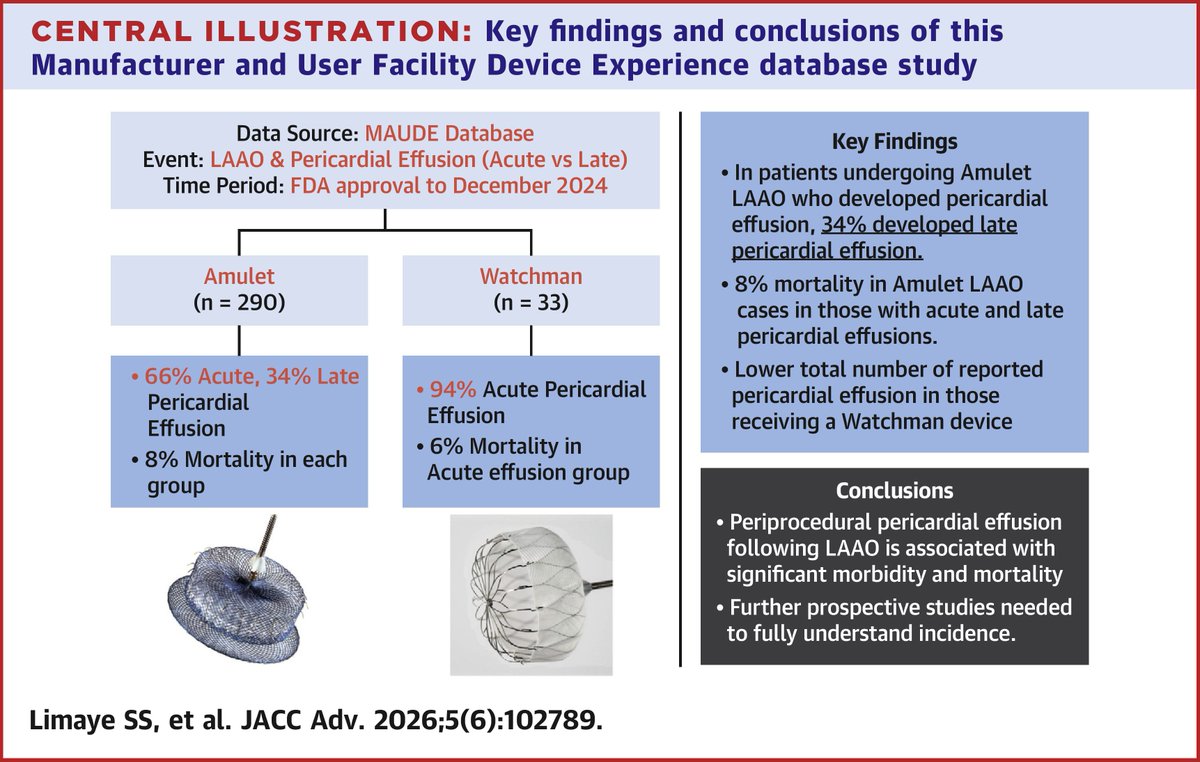
MAUDE Registry: Late pericardial effusion following LAAO device implantation was associated w/ negative patient outcomes, including mortality, suggesting the need for long-term surveillance of these patients.
Read more: https://t.co/rQF1GwJhg7 #JACCAdvances
Percutaneous Stellate Ganglion Block in Left Ventricular Assist Device recipients with refractory electrical storm: Insights from the STAR registry
@s_savastano
https://t.co/X40zf5za1N
Optimal potassium range in HF = 4.2–5.0 mmol/L r
•HFrEF → Reverse J-shaped: hypokalemia is dramatically more dangerous. Risk spikes sharply below 4.0.
•HFpEF → Flat U-shaped: risk is more symmetric, lower overall mortality, less steep penalty for low K⁺
Outcomes of Early Sodium-Glucose Cotransporter 2 Inhibitor Use in Takotsubo Syndrome
early sodium-glucose cotransporter-2 inhibitor use after Takotsubo syndrome was associated with lower all-cause mortality but not lower cardiovascular event rates.
https://t.co/TV4hLb5l4a
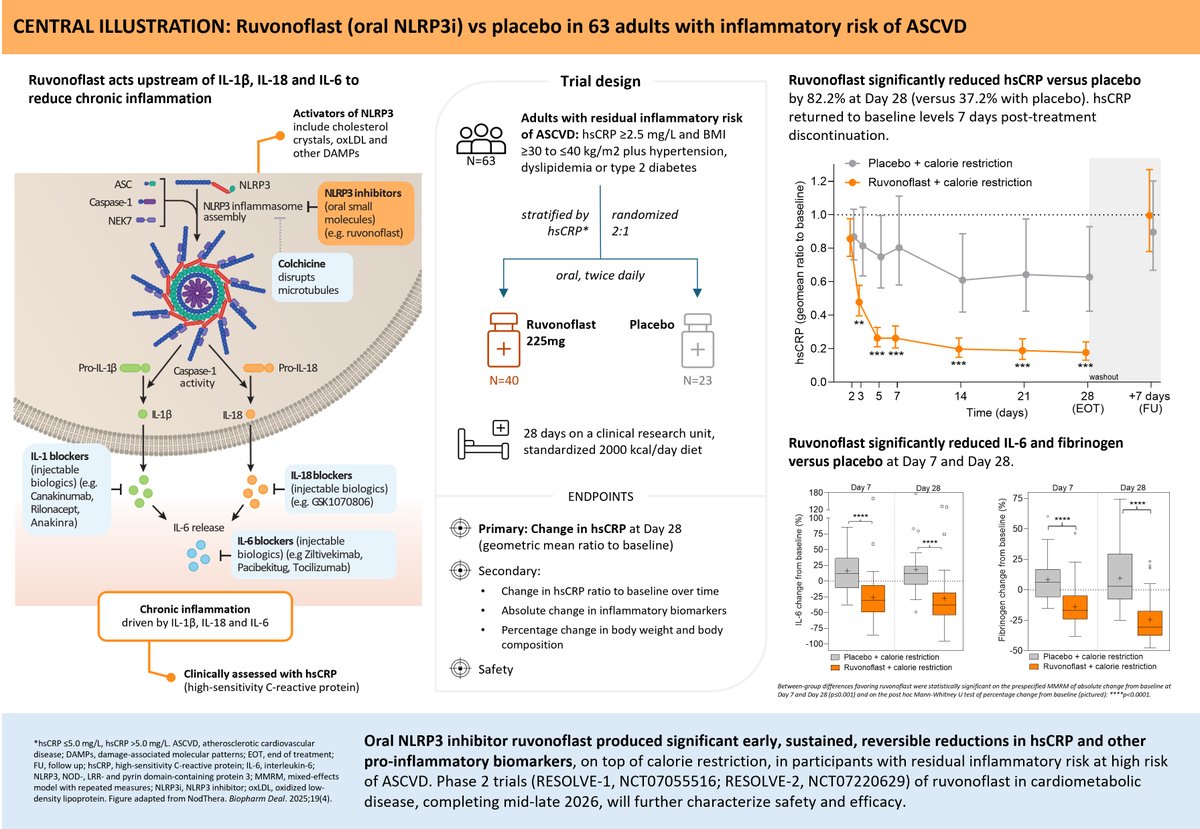
Ruvonoflast, an oral NLRP3 inhibitor, provides early, sustained, & reversible reductions in #hsCRP & significantly lowers inflammatory biomarkers IL-6 & fibrinogen in cardiometabolic patients with elevated #ASCVD risk https://t.co/HAQsOzox8i
#EASCongress2026#JACC@ProfKausikRay
Using a self-expanding valve offers lower risk of bioprosthetic valve dysfunction and better hemodynamics for patients with severe symptomatic aortic stenosis and small annuli, according to new data from the SMART trial. https://t.co/krR4U9rAsF
#EuroPCR 2026
New data from ORBITA: computed microvascular resistance (MVR) predicts who benefits from PCI.
Patients with HIGH MVR → attenuated benefit. Microvascular disease may be the reason PCI underperforms.
Bottom line: assess microvascular disease BEFORE stenting.
Managing Post-AMI Ventricular Free-Wall Rupture (VFWR) — A decision algorithm every cardiologist should know!
The key question: Is the patient hemodynamically stable?
Every second counts in VFWR management. The Heart Team approach is essential!
#Cardiology#VFWR#HeartAttack