Okay, here is the impact of the filter on a 1-lot Nifty 0DTE Delta Neural BT: 45% trade reduction with 84% profit retention. I've been running this no-filter strategy for many years without any changes and getting similar results. I'll think about adding this filter.
We’re launching Volrix.
An MCP server that lets you backtest and research trading ideas directly from Claude and Chatgpt.
Connect your AI agent, describe a strategy, and run backtests across index and commodity derivatives.
Link in the comments, Try it for free!
I know people, from very ordinary back ground, of average competence, who created a wealth of say Rs.2 crores or Rs.3 crores, twenty five years ago. They all now live in huge bungalows in posch areas being ultra HNI families.
If God asks you whether you want skill or luck, don't hesitate. Choose luck.
HERE’S THE EXACT STRONG STOCKS SCAN
BUILT FROM SCRATCH TO CATCH WINNERS
Tool used: @tradingview (I run ALL my scans on TV)
Bookmark this post right nown.
I will drop the direct scan link for you to copy-paste in Comments.
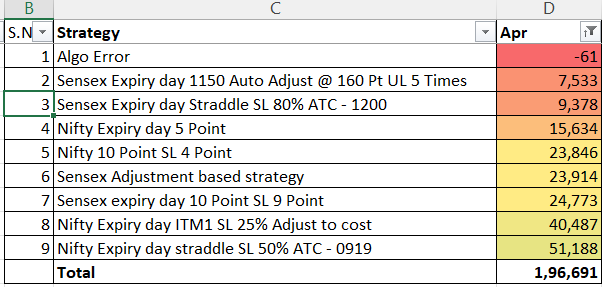
Apr'26 ended at net profit of 1.97 Lakhs (1%)
Good start to the FY
Second best Apr month performance in past 5 years for me after Apr '23
8 strategies were in action and all ended in profit
Details @ https://t.co/h3FeVaE24A
https://t.co/pBTUnaRtAB
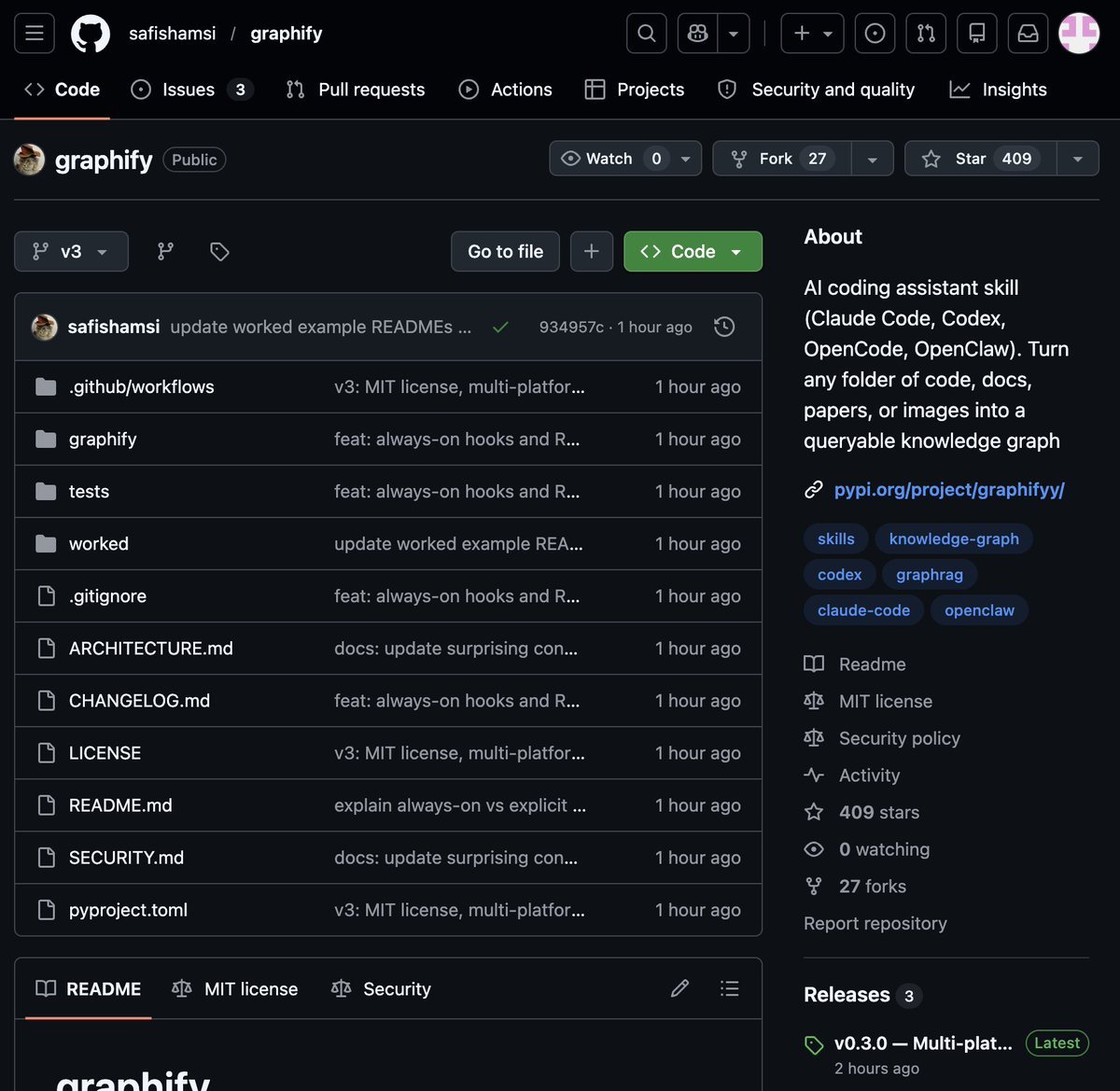
🚨 BREAKING: Someone just built the exact tool Andrej Karpathy said someone should build.
48 hours after Karpathy posted his LLM Knowledge Bases workflow, this showed up on GitHub.
It's called Graphify. One command. Any folder. Full knowledge graph.
Point it at any folder. Run /graphify inside Claude Code. Walk away.
Here is what comes out the other side:
-> A navigable knowledge graph of everything in that folder
-> An Obsidian vault with backlinked articles
-> A wiki that starts at index. md and maps every concept cluster
-> Plain English Q&A over your entire codebase or research folder
You can ask it things like:
"What calls this function?"
"What connects these two concepts?"
"What are the most important nodes in this project?"
No vector database. No setup. No config files.
The token efficiency number is what got me:
71.5x fewer tokens per query compared to reading raw files.
That is not a small improvement. That is a completely different paradigm for how AI agents reason over large codebases.
What it supports:
-> Code in 13 programming languages
-> PDFs
-> Images via Claude Vision
-> Markdown files
Install in one line:
pip install graphify && graphify install
Then type /graphify in Claude Code and point it at anything.
Karpathy asked. Someone delivered in 48 hours.
That is the pace of 2026.
Open Source. Free.
ANDREJ KARPATHY COULD HAVE CHARGED $500 FOR THIS WALKTHROUGH.
He put it on YouTube.
Every way he personally uses LLMs in his own life. Thinking models. Deep research. File uploads. Python interpreter. Claude Artifacts.
Not theory. Not benchmarks.
The actual daily workflow of the person who built Tesla Autopilot and co-founded OpenAI.
2 hours walking through his personal LLM workflow.
The gap between people who watch this week and those who save it for later is not 2 hours.
It is everything those 2 hours quietly change about how you work for the rest of your career.
This is very close to me, Euan was the guiding light for me when I started trading.
A lot of my first principle understanding of markets comes from my reading and discussions with him.
This one touches on a lot of those.
This will be a great listen I promise.
I wouldn't ask you to share something till it is really valuable. This one is, so please do retweet.
The kind of content that makes me go into 'think mode'.
Being an intraday trader, I found the data analysis intriguing. One that gave me enough food for thought.
Real quality content! Hence sharing here.
https://t.co/VttfP15C2V
Reposting an old thread: My fellow traders' social media content that helped me build my trading systems.
Look at the STBT idea source. Worked great in Mar'26!
Someday I'll update this thread with my stock/index/commodities positional futures s/m and cash sgmnt breakout s/m :)
This 2-hour lecture by Andrej Karpathy - co-founder of OpenAI, the man who coined "vibe coding" - will build GPT from scratch and show you exactly why message 30 costs you 31x more than message 1.
Bookmark this & give it 2 hours today, no matter what. It's the best thing you can do for your Claude budget. Then read the article below.
After this, you'll never pay for tokens Claude spends talking to itself again.
How to setup your Claude code project?
TL;DR
Most developers skip the setup and just start prompting. That's the mistake.
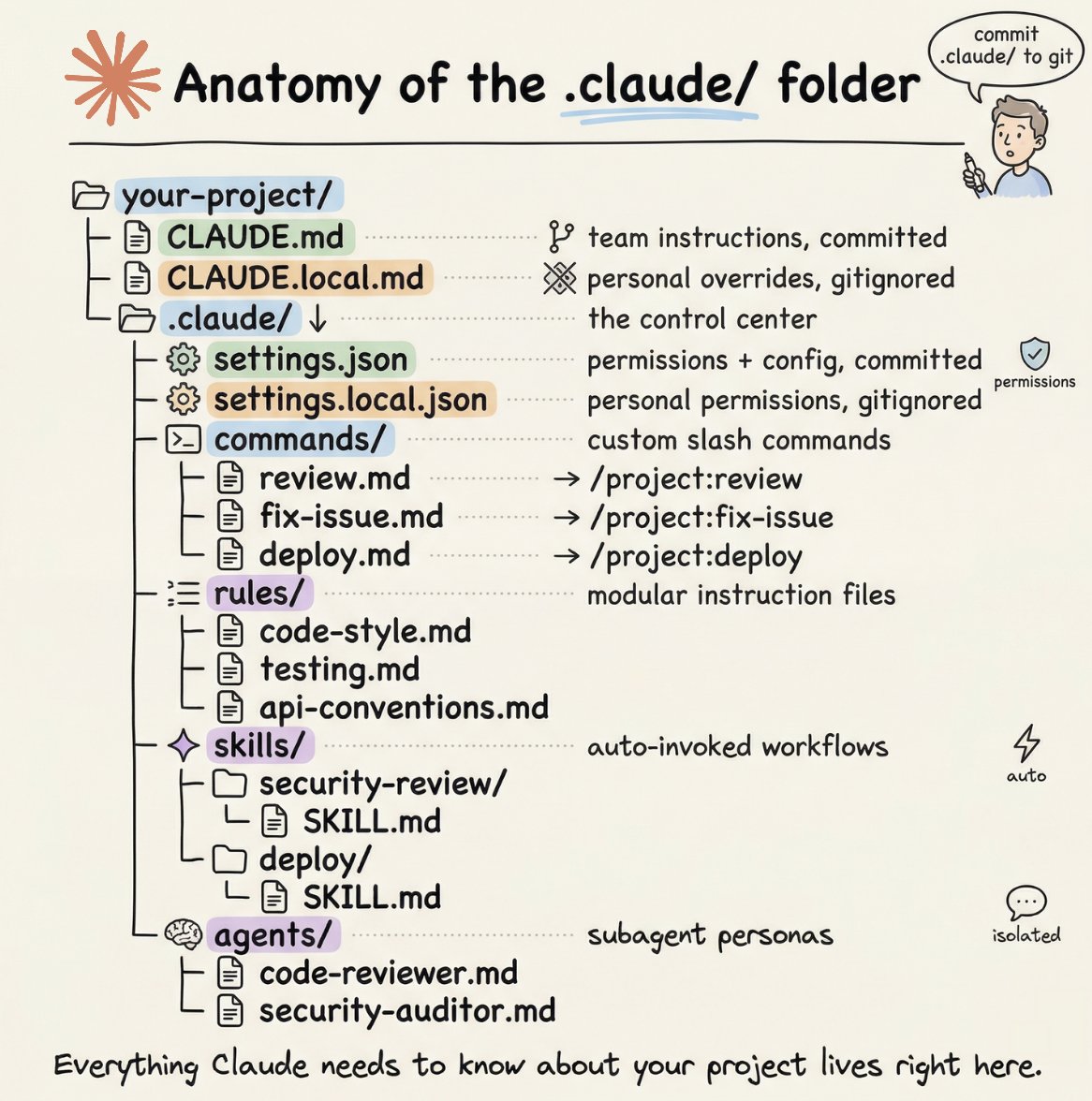
A proper Claude Code project lives inside a .𝗰𝗹𝗮𝘂𝗱𝗲/ folder. Start with 𝗖𝗟𝗔𝗨𝗗𝗘.𝗺𝗱 as Claude's instruction manual. Split it into a 𝗿𝘂𝗹𝗲𝘀/ folder as it grows. Add 𝗰𝗼𝗺𝗺𝗮𝗻𝗱𝘀/ for repeatable workflows, 𝘀𝗸𝗶𝗹𝗹𝘀/ for context-triggered automation, and 𝗮𝗴𝗲𝗻𝘁𝘀/ for isolated subagents. Lock down permissions in 𝘀𝗲𝘁𝘁𝗶𝗻𝗴𝘀.𝗷𝘀𝗼𝗻.
There are two .𝗰𝗹𝗮𝘂𝗱𝗲/ folders: one committed with your repo, one global at ~/.𝗰𝗹𝗮𝘂𝗱𝗲/ for personal preferences and auto-memory across projects.
The .𝗰𝗹𝗮𝘂𝗱𝗲/ folder is infrastructure. Treat it like one.
The article below is a complete guide to 𝗖𝗟𝗔𝗨𝗗𝗘.𝗺𝗱, custom commands, skills, agents, and permissions, and how to set them up properly.
OpenClaw forces you to do something no productivity tool has ever required: write down your own personality as a markdown file.
It's called soul.md. When you set up the bot, you can't skip it. You name it, define how it interacts, give it values and behavioral constraints. Naman named his Fella. The file persists across every session, every cron job, every Slack message the bot sends on your behalf.
That design choice reveals something about where agents are heading.
Every other AI tool optimizes for low friction. Open the app, type your question, get an answer. OpenClaw inverts that. The setup is deliberately high friction because the agent needs to know who it's pretending to be before it starts acting autonomously at 3am.
Think about what goes into that file. Your communication style. Your priorities. Which decisions you want flagged versus handled silently. How aggressive or conservative to be when triaging customer bugs. Whether to wake you up for a critical Slack message or log it for morning.
You're writing an operating manual for a version of yourself.
Naman's next project takes this further. He wants an entire family of agents, all managed by Fella as the primary. Sixteen specialized bots handling different jobs, reporting up to one orchestrator that filters what actually reaches him. His description: a CEO model. "I don't need to know all the details of everything going on."
That's the real product roadmap hiding inside this tool. Today you're configuring one bot to summarize Slack. Within months, the power users will be managing hierarchies of agents that divide labor the same way a company org chart does.
The people who write the best soul.md files will have the best-performing agents. The bottleneck on AI productivity just moved from "which model is smartest" to "how well do you know your own decision-making patterns."
Turns out the hardest part of building your AI assistant is the self-awareness required to describe how you actually think.
bro created a skill inspired by Karpathy's autoresearch to fine-tune his other Claude Code skills and iteratively make them better. one skill went from 56% → 92% in just 4 rounds of changes.
the method is to define a set of tests for your skills: what to improve. then it changes the skill slightly to see if there's an improvement or not.
Here is the Sensex 0DTE ATM straddle premium for the last 1 year.
It is an interactive dashboard where you can compare any expiry.
https://t.co/HoFEvwkcnN