alguien construyó un editor de pdfs gratuito, que funciona sin cuenta y sin internet.
es 10 veces más pequeño que Adobe y funciona mucho más rápido.
edita textos e imágenes de cualquier pdf.
redacta, firma, divide y fusiona. todo desde un solo dispositivo.
100% gratis 👇🏼
React Doctor 这个代码检测工具和 Codex 的 Goal 简直是绝配!
今天用一条命令跑了 2 小时,直接干掉了 300 个代码质量与性能隐患,最后拿到了 100 分满分的健康分数,成就感满满。
顺便安利一下天才少年 Aiden Bai 和他打造的三个 React 质量与性能神器。他 16 岁独立开发 Million.js;18 岁带队入选 Y Combinator,为公司融资 1410 万美元。如今他做的这三款工具,刚好串联起了 AI 时代人机协同的完美闭环:
1. React Scan:浏览器里直接跑,哪个组件在重复渲染就用彩色边框高亮+闪烁,一眼就能看到性能浪费在哪。。
2. React Grab:网页上按 Cmd/Ctrl+C 点元素,直接复制出对应代码的文件路径、行号和组件栈,扔给 AI 让它精准修改。
3. React Doctor:专门扫描 AI 写出来的 React 代码问题(state、effect、性能、架构等),然后给项目打一个 0-100 的健康分数。能直接集成到 Codex、Cursor、Claude Code 里,或接入 CI 里自动运行。
现在最好的用法是直接在 Codex 里输入这条 Goal 指令:
/goal run "npx react-doctor@latest" and fix issues until you get a score of 100. do it properly without taking any shortcuts.
让它自己跑、自己修、自己验证,直到 100 分。
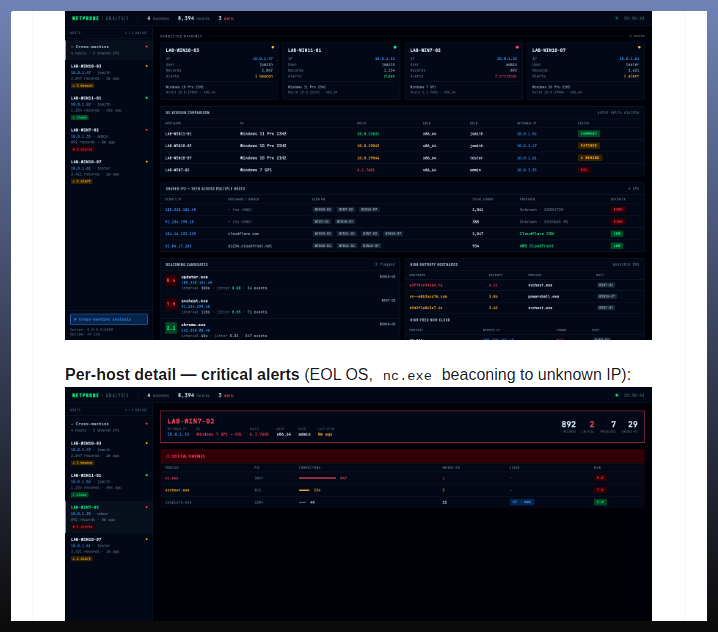
te presento SearchPhone, una herramienta con la que puedes extraer información de cualquier teléfono, esto es lo que puedes saber:
> operadora, tipo de línea y rastros de identidad.
sin duda una herramienta de cyber seguridad muy potente, es open - source, 100% GRATIS
link de la repo encomentarios 👇🏻
A senior Google engineer just dropped a 19-page PDF on "Loop Engineering" for LLM and agentic systems.
Act -> Observe -> Learn -> Repeat
Act: the LLM proposes a code transformation (tile this loop, parallelize that one).
Observe: a compiler runs it and reports back - is it valid? faster? slower? by how much?
Learn: the LLM reads that feedback and adjusts its next move.
Repeat until it stops finding improvements.
The agent gets smarter purely from grounded feedback inside its own context window.
This 19-page PDF totally changed the way I’m building agentic systems today.
Read it now, then explore the article below.
FREE $500 of frontier AI API credits, every model included 😳
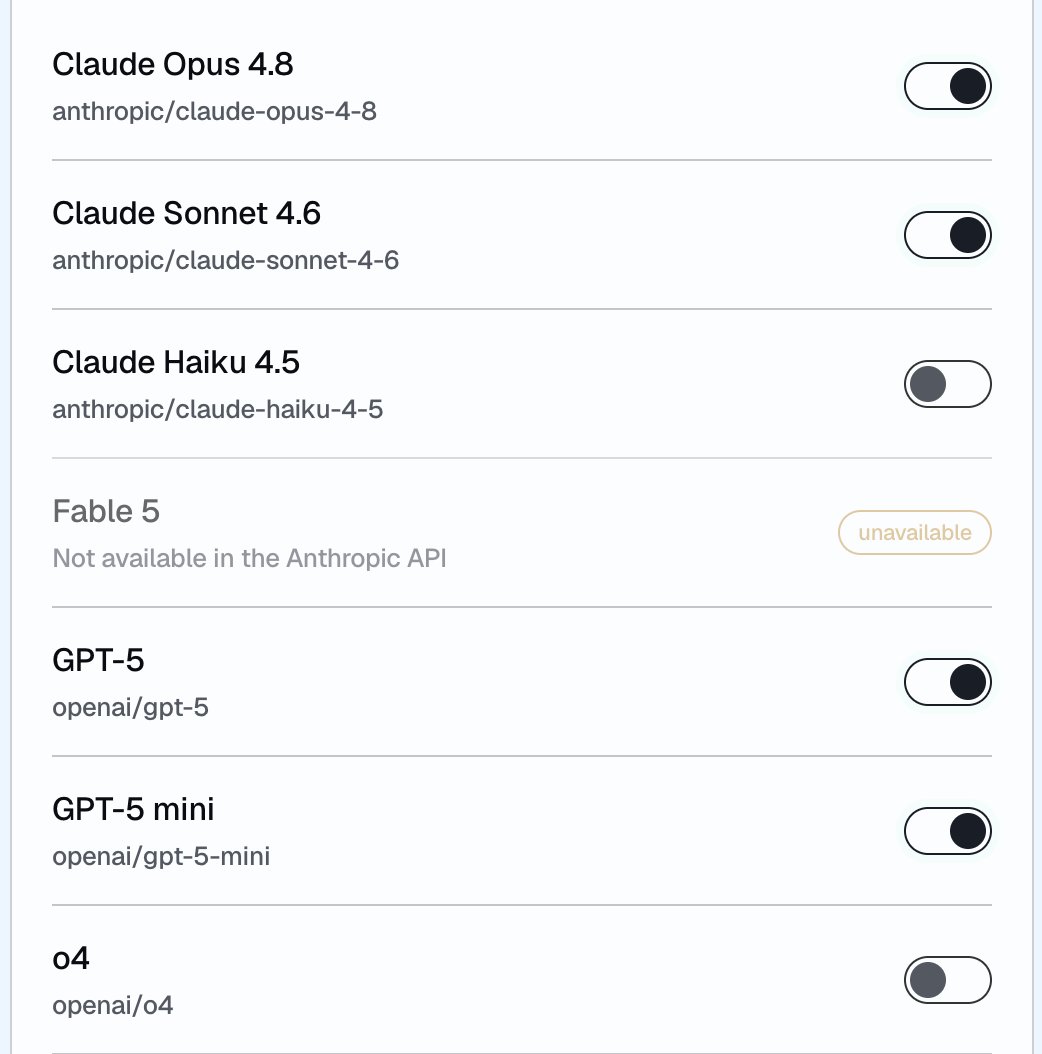
Claude Opus 4.8, Sonnet 4.6, GPT-5, GPT-5 mini, Deepseek. one key, openai-compatible.
Conduit is an API proxy that drops $500 trial credit into every new account. Opus 4.8 alone runs $5/$25 per million tokens, so $500 is real money, not a teaser.
how to grab yours (5 min):
go to - https://t.co/RfKM5RfYDm
> open the conduit telegram bot
> start it and verify from website (one click verify)
> copy your api key from the dashboard (starts with sk-cdt-)
> set base url to https://t.co/5MlqvooiFF
> drop the key into cursor, cline, claude code, any openai-compatible tool
switch models by changing one string: claude-opus-4-8, openai/gpt-5, deepseek, whatever you need.
if one model is overloaded, swap to another (deepseek is the most stable). it's a third-party proxy, so test with small calls first.
bookmark this before the free tier closes.
KARPATHY JUST KILLED THE PROMPT ERA WITH A SINGLE DOCUMENT
prompts are easy. loops are hard. and writing fifty prompts a day is the work nobody does twice.
he shifts the burden to the harness.
you define the contract once. the model writes, reviews, restarts, and reconciles. you keep judgment. it keeps the loop.
the throughline is the same in every rule: the human owns the spec and the boundary. the model owns the execution and the bookkeeping.
planner never touches code. generator never grades itself. state lives on disk, not in context.
9 rules. start with one feature, not ten. most people are still typing prompts. this turns Claude into an agent that finishes the job on its own.
here is the official document from Karpathy explaining the architecture
Someone built a free, open source alternative to Opus Clip that runs entirely on your own hardware.
No monthly limits. No paywalls. Unlimited clips, fully local.
Opus Clip charges $50/month for this.
CLOUDFLARE WORKERS AI IS RUNNING GLM-5.2 CODING AGENTS FOR FREE
1. Create a free Cloudflare account
[https://t.co/TxLxCgsIyk]
2. Go to Workers AI and copy your Account ID
[https://t.co/JldkkfmLVP]
3. Create an API Token
[https://t.co/KYcw5Z41gL]
4. Add Cloudflare as a provider in OpenCode using this base URL:
txt
https://t.co/KoGdBqRU3r
5. Select this model:
txt
@cf/zai-org/glm-5.2
6. Start running it inside OpenCode, Cursor, Aider, Hermes Agent, Claude Code, or any OpenAI-compatible tool.
Loop Engineering is the next step after prompt engineering.
Most people still use Claude Code, Codex, Cursor, or Grok like a chat box:
Prompt.
Wait.
Copy.
Fix.
Prompt again.
This repo shows the next step:
You stop prompting the agent.
You design the loop that prompts the agent for you.
Inside:
→ Daily triage loops
→ PR babysitter loops
→ CI sweeper loops
→ Dependency sweeper loops
→ Changelog drafter loops
→ Post-merge cleanup loops
→ Issue triage loops
It also gives you CLIs to:
• Scaffold a loop
• Estimate token cost
• Audit if your repo is ready
• Add memory/state
• Add human handoff
• Add verification gates
• Run agents safely through GitHub Actions
The wild part is the shift in thinking.
Prompt engineering was about writing better instructions.
Loop engineering is about building a system where agents keep working, checking, fixing, and escalating without you babysitting every step.
This is what AI coding looks like when it stops being a chat session and starts becoming an operating system for software teams.
Repo: https://t.co/2USzC6KHUt
It's raining OCR models again!
@Baidu_Inc's Unlimited-OCR is one of the more interesting. You can try it without much effort via a throwaway GPU endpoint on @huggingface Jobs (which recently added port forwarding support) with one command
It's OpenAI-compatible, your HF token is the API key, and --timeout makes it self-destruct so you can't leave a GPU running by accident
Once it's warm, it's quick and @sgl_project batches concurrent requests, so an agent can boot the model, fire a big async batch at it (say, a whole bucket of newspaper scans), then cancel it.
I pointed it at the front page of a 1901 newspaper, "The Commoner" + 6 PDF pages in a single request: tables came back as HTML, equations as LaTeX, figures with captions, reading order preserved across pages.
Docs here:
https://t.co/mApuKalqSN
How a 24-year-old programmer from Portugal made $18,200 in a month on football betting
He created an AI analyst that finds flaws in bookmakers' live lines in real time and delivers predictions with an 84% win rate.
Costs: $0 (Used free APIs and Windsurf IDE)
He launched a Python script that maps out match videos in real time:
Top layer: A Computer Vision algorithm recognizes the positions of players from both teams (blue and pink dots) and the ball, instantly transferring them onto a 2D pitch layout. This allows the AI to track team formations and open spaces in high detail, things regular bettors completely miss.
Bottom layer: Python code (written alongside the Windsurf AI assistant), where the SoccerPitchConfiguration class defines the field, penalty box, and center circle dimensions down to the centimeter for perfect player-distance calculations.
The AI constantly correlates the real-time movement of players on the pitch with live bookmaker odds. The moment the algorithm detects that a team has pinned their opponent into a specific zone or exposed their flanks, while the bookmaker hasn't adjusted the odds yet, the script automatically fires a betting signal.
First week:
>Live bets placed: 142
> Won bets: 119
> Net profit: +$4,350 using a flat $50 stake
The AI completely automated the entire cycle: Windsurf and Claude wrote the tracking code, and the algorithm autonomously parses live odds, calculates the mathematical expectation of value bets, generates player heatmaps, and spots hidden tactical anomalies. It runs 100% autonomously.
Bookmark it and check out the article below 👇
you can now pull personal info linked to ANY phone number in seconds.
just type a number into your terminal and it reveals everything tied to it.. carrier, location, line type, identity traces.
runs on python. zero GUI. pure OSINT.
100% open source.





![RoundtableSpace's tweet photo. CLOUDFLARE WORKERS AI IS RUNNING GLM-5.2 CODING AGENTS FOR FREE
1. Create a free Cloudflare account
[https://t.co/TxLxCgsIyk]
2. Go to Workers AI and copy your Account ID
[https://t.co/JldkkfmLVP]
3. Create an API Token
[https://t.co/KYcw5Z41gL]
4. Add Cloudflare as a provider in OpenCode using this base URL:
txt
https://t.co/KoGdBqRU3r
5. Select this model:
txt
@cf/zai-org/glm-5.2
6. Start running it inside OpenCode, Cursor, Aider, Hermes Agent, Claude Code, or any OpenAI-compatible tool.](https://pbs.twimg.com/media/HLztBxtbMAA13SC.png)