As BTC-TCs, both @Strategy | @Strive rely on robust capital markets access to scale the Treasury Model.
Through Digital Credit, they’ve opened additional capital-raising channels and, in my view, created a new asset class. The resulting preferred securities now trade as their own cohort | block in a secondary market, adjacent to $BTC and their “parent equities”, not separate from them.
My research at True North examines $STRC through that lens: buybacks, market structure, and the transmission channels connecting the offering to the wider complex.
This connection shows up in the data - the following results are from a broader analysis of all five preferred offerings: $STRK | $STRF | $STRD | $STRC | $SATA - using their price histories since inception and rolling attribution models built on matched trading sessions.
The results below are from a 9-4-26 snapshot of that larger analysis: a 60-session window spanning 6-11-26 through 9-4-26, covering the selloff, the pre-buyback rebound, and the buyback execution period.
Within that window, a model built on orthogonal (uncorrelated) factors explained 74.65% of daily price return variance in $STRC. The three largest allocations, expressed as shares of that explained variance, were:
a] Other (Non-STRC) Preferreds: ~44.7%
b] MSTR (ex-BTC): ~39.2%
c] BTC: ~15.7%
Read the full analysis here: https://t.co/cPIyEOnkeg
Scientists develop technology that allows people to digitally transmit smells across the world, potentially bringing scent to phone calls, video chats, & social media.
$MSTR | $ASST | $STRC | $SATA: Now almost 6 months since it was recorded, but @coffeebreak_YT still hasn't released the @PunterJeff episode on his channel.
Sat down with @coffeebreak_YT today on Bitcoin and Digital Credit.
His edit will drop soon. Posting the full raw hour for anyone who wants the unfiltered version.
Enjoy
JUST IN: $SATS is NOW LIVE on Roxom.
Strive’s preferred stock carries a 15% annual dividend rate.
On Roxom, dividends are credited in bitcoin, every business day.
Bitcoin’s volatility can keep large pools of income seeking capital on the sidelines.
Through 10-16-2026, all Digital Credit offerings have outperformed $BTC with lower volatility over their respective periods.
That’s the opportunity for Digital Credit: lower volatility than spot $BTC, offering yields above many traditional alternatives.
That combination will attract investors who would otherwise avoid direct $BTC exposure, expand the TAM of $BTC, and spur new demand over time.
Unitree Introducing: H2-X Kung Fu Legend Guardian🤖
Powerful performance to serve and guard you, with a maximum endurance of approximately 8 hours.
Please use the robot safely and in a friendly manner.
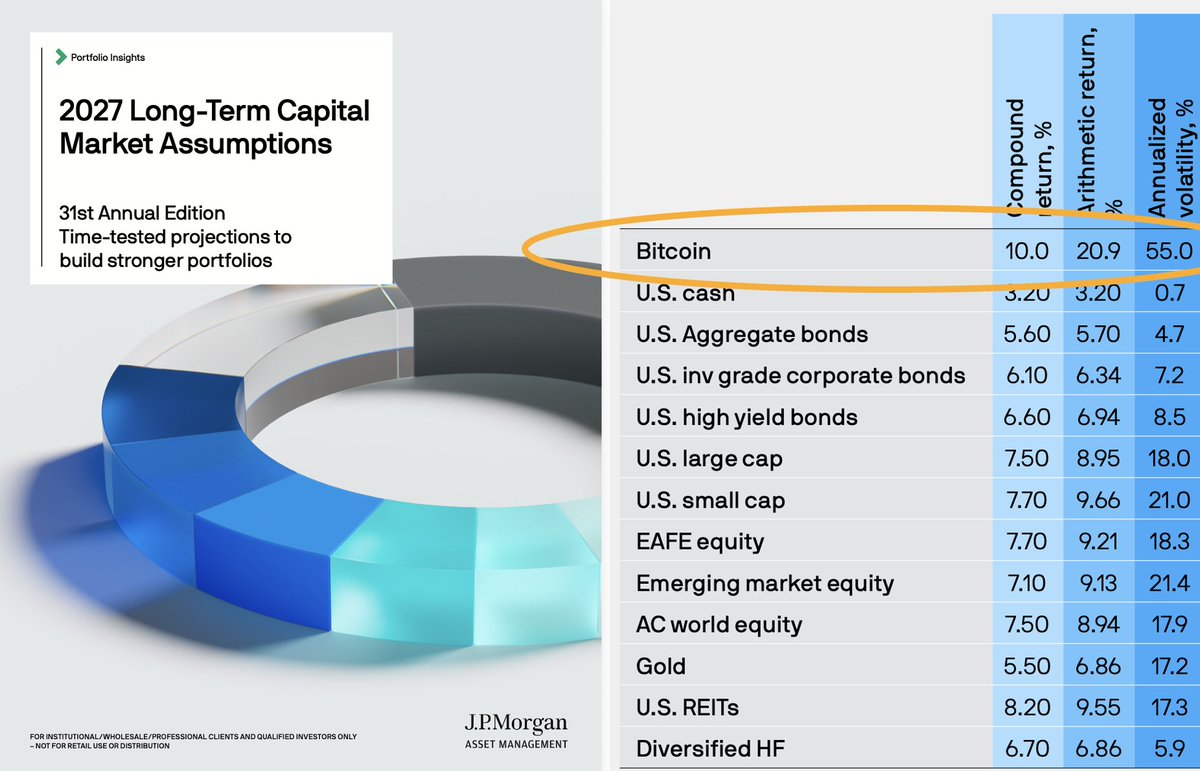
I wonder how Jamie Dimon feels about this.
Adding $BTC to their Long-Term Capital Markets Assumptions paper is a tacit admittal that $BTC is:
1] Worthy for portfolio consideration
2] Here to stay
First they ignore you, then they laugh at you, then they fight at you, then they add you to their Long-Term Capital Markets Assumptions paper and predict you'll be the best-performing asset of the next decade.
$STRC | Buybacks vs Trading Activity (Part 4)
13 weeks later, through 10-18, Strategy has spent ~$1.84B on $STRC buybacks, retiring obligations on 18.91M shares. Over the ongoing buyback window, that spending is equivalent to [20.06%] of dollar trading volume.
Strategy has also increased its Digital Credit Securities repurchase authorization from $2B to $3B, leaving approximately $1.16B available under the program.
Last week, dollar trading volume increased from ~650M to ~990M, up [52.26%], while buyback spending was essentially unchanged, increasing from $192.4M to $193.1M with, Strategy’s purchases represented [19.49%] of dollar turnover, down from [29.57%].
The lower participation rate did not come from Strategy meaningfully stepping back, there was more trading around a similarly sized issuer bid but despite that bid, STRC closed 10-16 at $97.72.
We have to be fair and note that the 10-15 ex-dividend date saw $0.50 a share paid out so the weekly price decline of [1.94%] overstates the shareholder loss (if we include that dividend entitlement, the decline was approximately [1.44%]).
However this was not just an ex-dividend adjustment; Friday alone saw STRC fall [1.82%], from $99.53 to $97.72. A lot of people ascribe this to MSCI index exclusion fears, but Friday also brought a broad market selloff. Either way, the issuer bid did not insulate $STRC from weakness across the market and Strategy’s capital structure.
The question I keep coming back to (and that many are wrestling with today) is this: if the substantial issuer bid is the main explanation for the recovery in $STRC, why has continued buying still not delivered a return to par? My read remains that many are conflating the recovery with the buybacks, and giving the corporate bid too much credit.
Buybacks retire dividend obligations and might provide support at the margins, but that marginal support doesn't insulate $STRC from the effects of leverage, a repricing across the broader capital structure or the structural market transmission channels namely $BTC, $MSTR and Digital Credit as an asset class.
https://t.co/cPIyEOnkeg
$STRC | $1.84B later and with 13 weeks of buybacks through 10-18, $STRC closed Friday 10-16, at $97.72, today hovering between $98-$99, still below par.
From my 9-24-26 research paper on the @TNorth website:
“The open question is not whether Strategy can keep buying, but whether they should, and how much organic demand remains once they stop.”
Strategy can keep buying, but inorganic issuer demand is not the same as organic market demand. I have many thoughts on what can be done, but sometimes doing nothing is the wisest move.
We will see how things play out, updated market read below:
$MSTR | $STRC | $BTC: The good that comes from an increase in the Digital Credit Securities Repurchase Program is that it'll allow Strategy to retire more dividend obligations | shares. That is a real benefit to the capital structure.
As far as price? The market controls that.
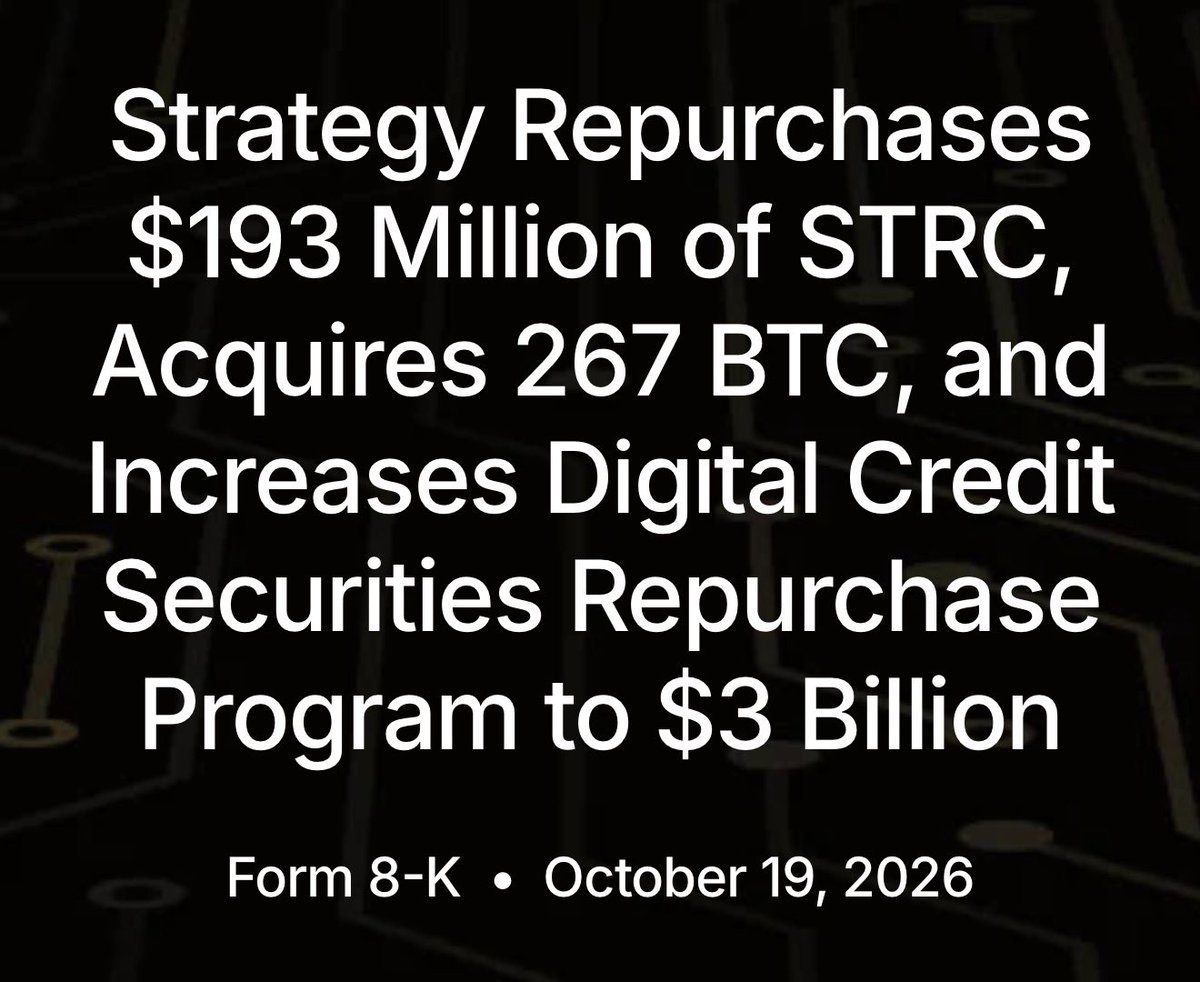
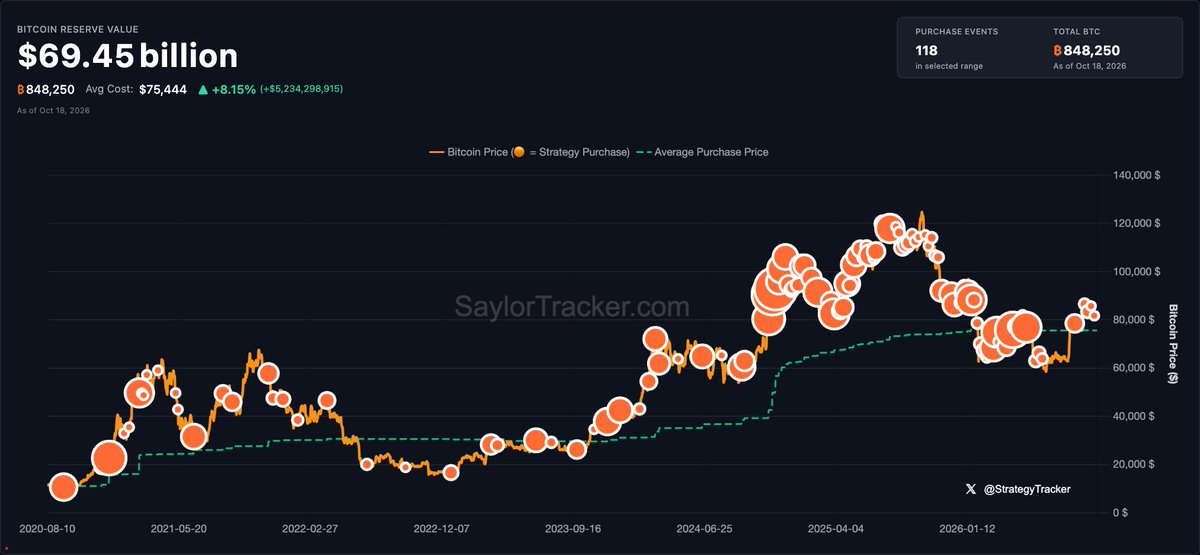
Strategy has repurchased $193M of $STRC and acquired 267 $BTC. As of 10/18/26, we hold 848,517 BTC and $5.3B of USD Assets. We have also increased the size of our Digital Credit Securities Repurchase Program from $2.0B to $3.0B. $MSTR https://t.co/ea29gd1OO5
This aged well.
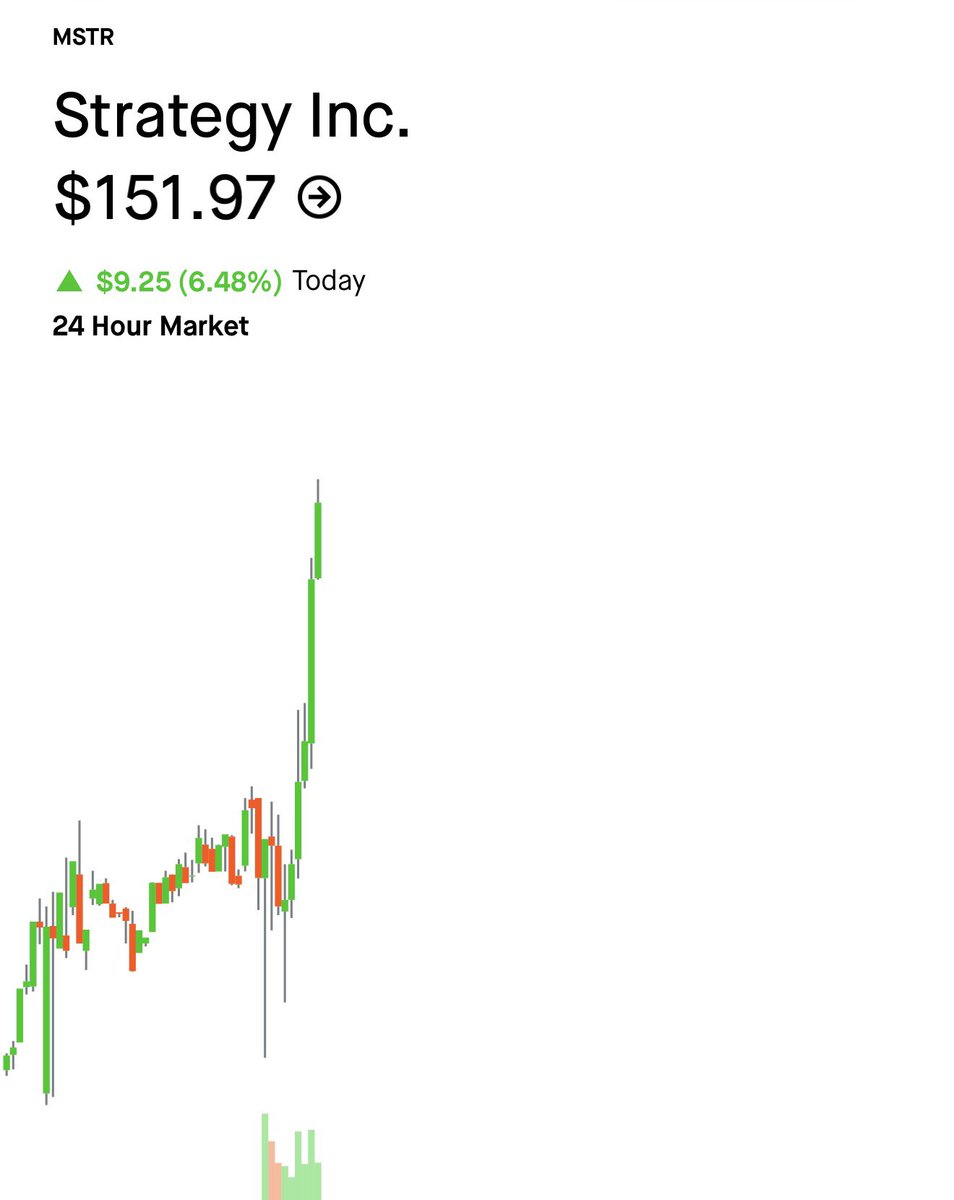
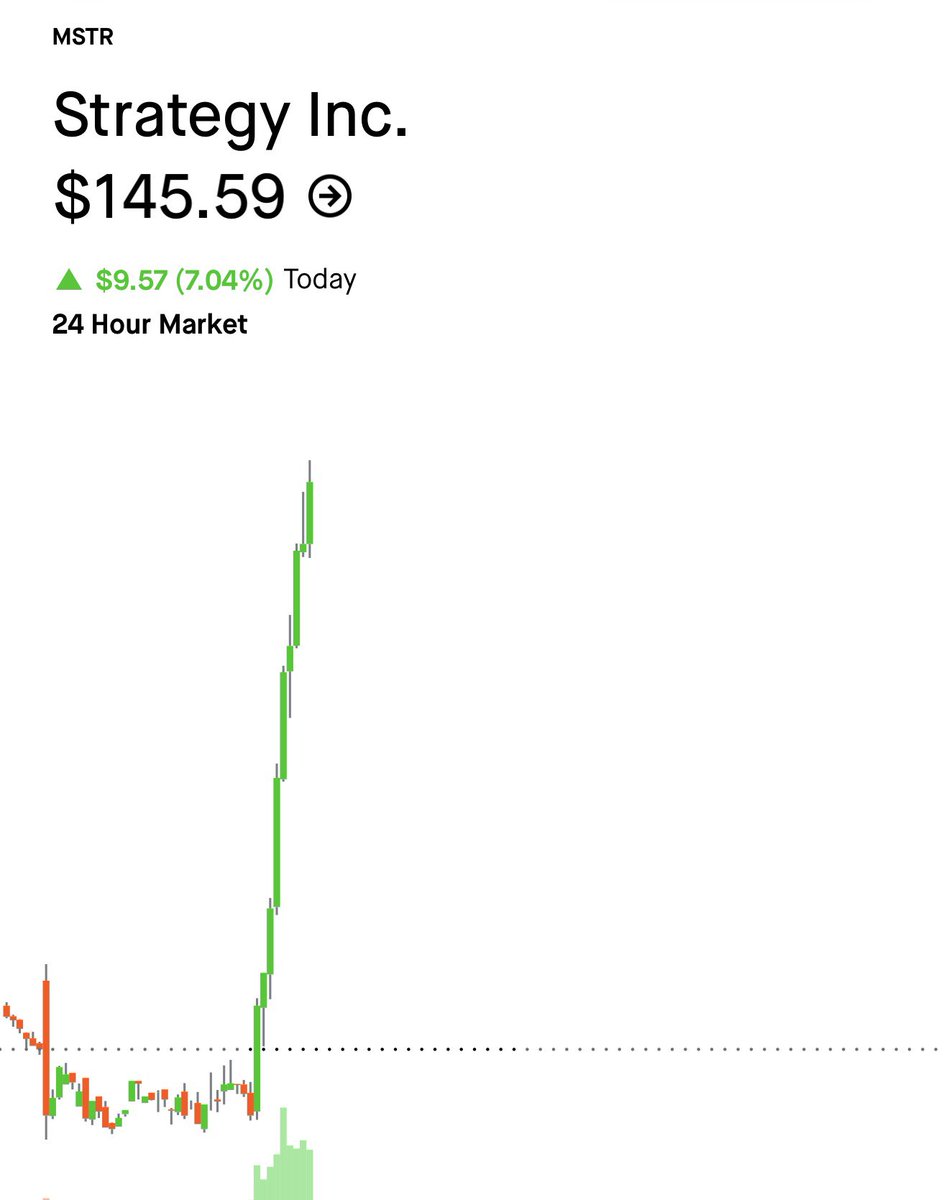
3 hours into the supposed "Black Monday" stock market crash and Nasdaq 100 futures are now up nearly +1%.
The S&P 500 is set to add +$350 billion in market cap at the open again.
As we stated 24 hours ago: Ignore the noise.
The team at @Strive is cooking. The $SATS IPO upsize is giving them a lot of capital to work with, expecting a nice sized $BTC buy if they emptied the clip.
The triplicate structure of $ASST | $SATA | $SATS will power @Strive into the second largest $BTC Treasury spot.
@TowardTroward That is absolutely not what that means. They are a new asset class that have created a yield curve on top of $BTC. There is a lot of potential for growth and differentiated offerings. They were never "advertised" to stay at par, they were "designed to stay at par". Not guaranteed
$STRC | $SATA: Digital Credit offerings are "Meta Derivatives".
They are derivatives of their parent equity ($MSTR or $ASST) which itself is a derivative of $BTC: a derivative of a derivative.
They aren't broken, this isn't a flaw, this is how the market will treat them.