Hola 👋, en este espacio hablamos de:
📊 Ciencia de Datos y análisis
💻 Software y tecnología emergente
🔐 Seguridad digital
🧠 Ideas y opiniones
😅 Memes y cultura pop
🔄 Sigo a quien me sigue
📰 PER DYBALA È L'INIZIO DI UNA NUOVA VITA
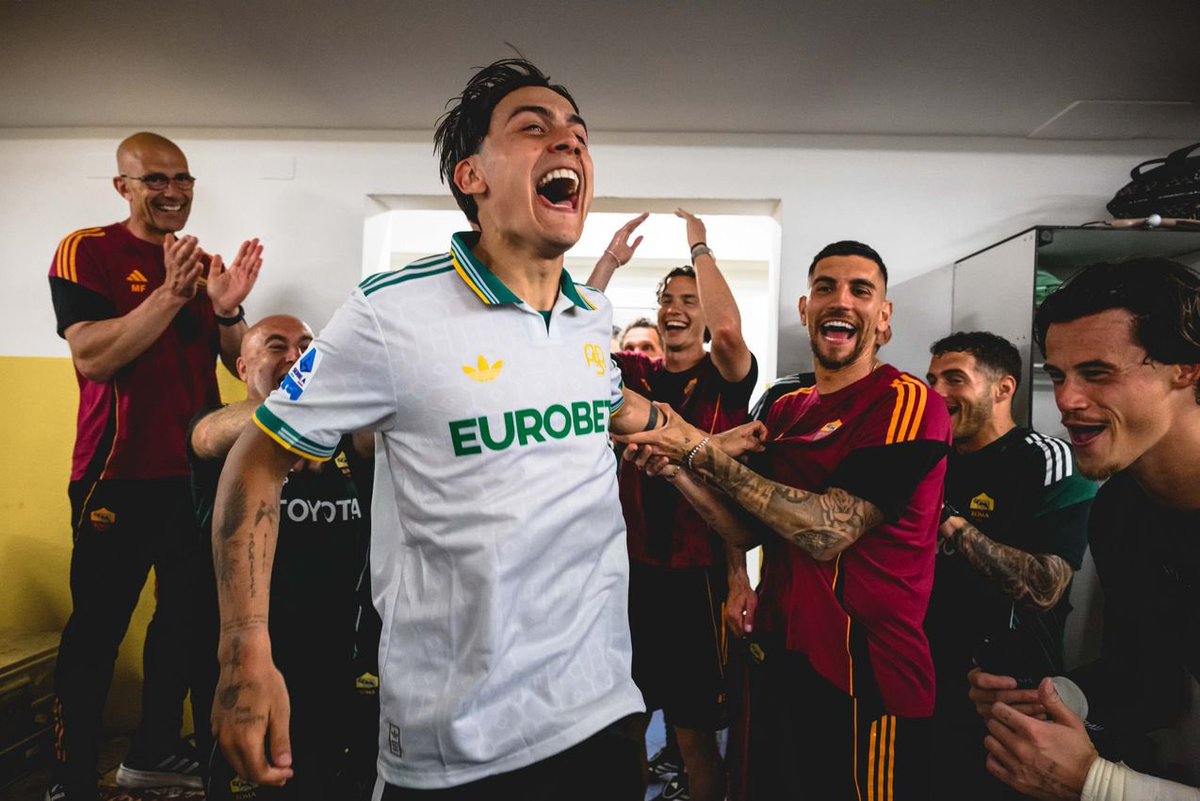
"Gli sono bastati novanta minuti per riprendersi tutto. Tipico dei campioni, dei fuoriclasse, di chi non soffre le pressioni perché da quando è ragazzino è abituato a dare del tu al pallone. Perché senza Paulo chissà come sarebbe andata a finire a Verona. Squadra paralizzata, impaurita, incapace di fare due passaggi di fila per cinquanta minuti. Poi arriva il genio. In poco meno di un tempo colleziona l'espulsione di Valentini, due assist, un salvataggio nell'area piccola e soprattutto regala quella caratteristica che la squadra, per una partita, sembrava aver smarrito: la personalità. Qualità e personalità. La volontà di Gasp sul futuro dell'argentino è chiara: «Sono riuscito a mettere in contatto i Friedkin con Paulo e se non rimane adesso non so più che fare». Sono quindici giorni che le parti si confrontano: ora quando l'agente sarà convocato a Trigoria si arriverà alla fumata bianca. Poi bisognerà imparare a gestirlo, alla soglia dei trentatré anni qualcosa scatta nella vita e nella testa di un campione. Iniziano ad esserci delle priorità. Ora si riparte. Paulo riposerà, tornerà tirato a lucido dopo le vacanze e aver guardato in modo malinconico i mondiali americani. La Selección sembra ormai un capitolo chiuso. La Roma, no. Resta, anche grazie al lavoro ai fianchi portato avanti in queste settimane da Gasperini, un libro che avrà quantomeno un altro capitolo da scrivere. Sembrava finita dopo Budapest. Poi è sembrato arrivare il tempo dei saluti ai tempi di De Rossi, con l'offerta araba. Per non parlare di un paio di settimane fa, dopo Parma, quando le suas parole somigliavano ad un commiato. E invece, Dybala è sempre qui. Una Joya per lui. Una gioia per tutti."
🗞️ @ilmessaggeroit
✍🏻 @stecar74
#RomaSpace | #ASRoma
In 1986, a five-year-old boy in India fell asleep on a bench at a train station while waiting for his older brother to come back. His brother never returned.
The boy wandered onto an empty train carriage, thinking his brother might be inside. He fell asleep again. When he woke up, the doors were locked and the train was moving. It didn’t stop for nearly two days. When it finally did, he was in Kolkata, nearly 1,500 kilometres from home. He was too young to know his surname, couldn’t read, and had no idea what his hometown was called.
He survived alone on the streets for weeks, sleeping under station benches and scavenging scraps of food, before eventually being taken to an orphanage and declared a lost child. No one could trace where he came from.
He was adopted by a couple from Tasmania, Australia, who gave him a loving home and a new life. His name became Saroo Brierley. He grew up on the other side of the world.
But he never forgot. He held onto fragments: the image of a bridge near a train station, a water tower, a neighbourhood layout, the faces of his family.
In his mid-twenties, he discovered Google Earth. He calculated the rough distance the train could have covered based on how long he remembered being on it, drew a circle on a map around Kolkata, and began searching along every railway line within that radius. Some weeks he spent 30 hours scanning satellite images of towns across central India, looking for landmarks that matched his childhood memories. His family in Australia didn’t even know. They thought he was just browsing the internet.
In 2011, after years of searching, he found it. A water tower. A bridge. A ravine past a station. It was a neighbourhood called Ganesh Talai in the city of Khandwa. He zoomed in and recognised the streets he had walked as a small boy.
He flew to India and walked through the town until he found his family’s home. The door was chained shut and he feared the worst. Then people came out. One of them led him to a woman down the road.
It was his mother. She had never stopped looking for him. After 25 years, they were standing in front of each other.
What he didn’t know until that moment was that his brother Guddu, the one he’d been waiting for at the station that night, had been struck and killed by a train. His mother had spent 25 years searching for both sons. She learned what happened to one. She never stopped praying for the other.
His story became the book “A Long Way Home” and was adapted into the film “Lion,” which received six Academy Award nominations.
@ViniDeLaurentis@BowTiedMara Es por extensión que miden, no por cant. hab., igual no sé cómo hacen la medición porque Córdoba es más extensa que BsAs y creo que también es más extensa que la de México
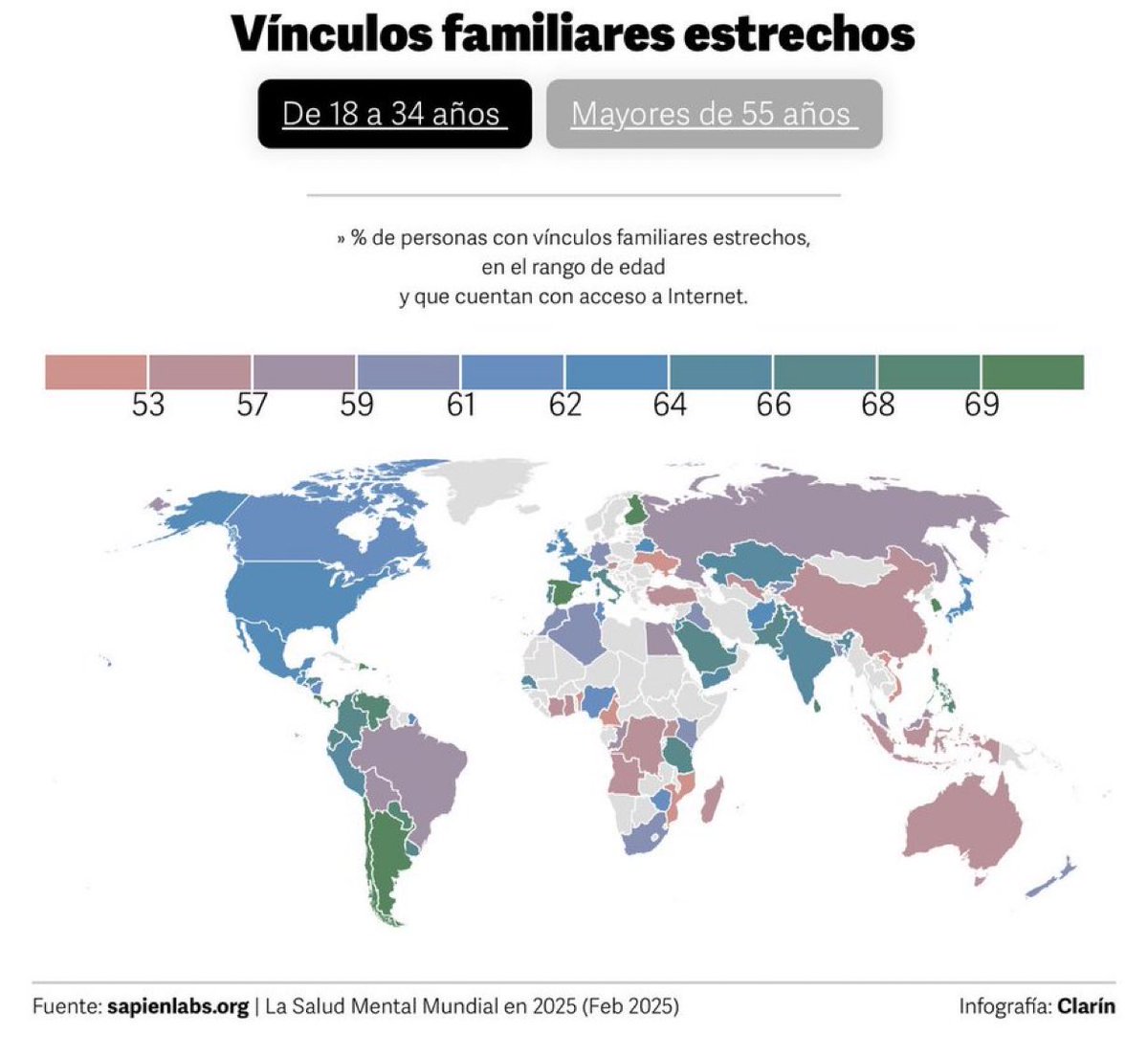
Argentina 🇦🇷 ranks second globally in strong family ties, according to the Sapiens Labs Global Mind Health 2025 report. It shares this position with Finland and is surpassed only by the Dominican Republic among the 80 countries analyzed.
What the data shows: 70% of young Argentinians surveyed reported having close relationships with many family members, nine points above the global average. The study highlights that in Latin America, family ties act as a buffer against mental health problems.
The role of the family: Experts point out that the concept of an “extended family” persists in the region, where relatives and close friends maintain support networks.