If you are 40, this is how to rewrite your story
First, drop the shame. Being 40 without the life you imagined is not failure. It is information. Shame freezes people. Clarity moves them. You are not late, you are just now aware.
Stop chasing youthful fantasies. At 40, your edge is not speed, it is judgment. Do not compete with 25 year olds on hype. Compete on experience, reliability, and problem solving.
Audit your life brutally. Your income, debts, skills, health, and relationships. No motivation, just facts. You cannot fix what you are afraid to look at.
Shift from labor to leverage. If all your income depends on your daily presence, you are exposed. Look for systems, services, consulting, teaching, or assets that earn beyond your physical energy.
Kill pride-driven expenses. Impressing people at 40 is expensive and pointless. Redirect money toward stability, tools, skills, and income-producing assets.
Monetize what you already know. You have lived long enough to have knowledge people will pay for. Package it. Mentor, consult, train, document, or build around it.
Rebuild your body and mind. Energy is currency at this stage. Without health, discipline collapses. You do not need extremes. You need consistency.
Choose peace over noise. Fewer friends, fewer arguments, fewer distractions. Protect your focus aggressively. This decade rewards calm execution, not chaos.
Accept responsibility without self-hate. The moment you fully own your life is the moment you regain control of it.
At 40, reinvention is not dramatic. It is quiet, intentional, and relentless.
This is not a second chance. It is a conscious reset.
I have observed that my honest interview yesterday was misquoted by many media outlets, creating a false narrative that misrepresents my position.
Let me set the record straight:
I am not against coalition. In truth, I am for it not for power grab but to position Nigeria for greatness.
I have not, and will never, advocate for any coalition or alliance that does not prioritize the welfare and progress of the ordinary Nigerian.
Any discussion about governance must centre on what it means for the everyday Nigerian, how it will address critical issues such as access to quality healthcare, and education, and pulling people out of poverty.
Too often in our nation’s history, individuals and groups have come together solely for the purpose of taking power for power's sake. Such endeavours, devoid of genuine purpose and vision, have only deepened our challenges, leaving the ordinary Nigerian to bear the brunt of bad governance. This is what I stand firmly against.
Leadership must be about service, not self-interest. It must be about building a nation where opportunities abound for all, where justice and equity are non-negotiable, and where governance works for the people, not against them.
As I have always maintained, the New Nigeria is possible. But it requires us to change the way we think about power. It is not about grabbing it; it is about using it responsibly to transform lives and secure a brighter future for generations to come. -PO
We cannot have a system that regulates impunity and then that licenses men to act as though they're gods and citizens are selves they can trample upon and then use the court to legitimise their evil. - Dele Farotimi.
The Struggle for Freedom: Lessons from a Nigerian Revolutionary - Dele Farotimi
Dele Farotimi in his book “Imperatives of the Nigerian Revolution” offers a poignant reflection on the state of Nigeria, a country shackled by systemic oppression and a populace disconnected from the fight for freedom. His life story, filled with vivid accounts of protests, societal inequities, and disillusionment, serves as both a cautionary tale and a rallying cry for collective action.
Farotimi’s childhood was marked by early encounters with the realities of power and violence. Growing up in Ibadan where he attended Abadina Primary School inside the University of Ibadan, he recalls the stark contrast between the vibrant academic environment and the chaos of life outside its gates.
In 1976/77, at just nine years old, Farotimi witnessed the infamous "Ali Must Go" riots, a student-led protest against harsh education policies. "We heard gunshots, then the noises," he recalls. Soldiers and policemen descended upon the university, unleashing chaos. Tear gas filled the air, stinging the eyes and forcing students to flee through bush paths. “It was my first introduction to the Nigeria State,” he reflects, “a killing machine that valued power over its people.”
This early brush with state violence was just the beginning. During the reign of General Ibrahim Babangida in the 1980s, Farotimi, then a student at Lagos State University (LASU), became deeply involved in student protests against military dictatorship. “The Nigeria State is better imagined than lived,” he writes, highlighting the brutality of a system that obliterated citizens’ rights and amplified inequities.
Farotimi’s activism brought him face to face with the ruthlessness of power. One harrowing memory recounts a slap from a police officer during a protest in Ife, leaving him dazed but awakening him to the depth of state oppression. “He must have been touched by God,” Farotimi quips, noting how the officer walked away without further harm. Yet, this was a rare mercy in a system that routinely silenced dissent with violence.
Perhaps the most profound realization from Farotimi’s activism is the detachment of Nigerian citizens from their own struggle for emancipation. He laments how many ordinary people rationalized their oppression, remaining indifferent to the sacrifices of student activists. “They would complain about the same pains that propelled us to protest, yet saw us as mad for standing up,” he notes.
This detachment, he argues, stems from a deliberate erosion of civic consciousness. The state, driven by a singular focus on self-preservation, has systematically disempowered its people, making them resigned to their suffering.
Farotimi is unsparing in his critique of both the Nigerian state and its would-be liberators. He highlights the naivety of the Nigerian Left, whose leaders assumed their sacrifices alone would inspire the masses to rise. “They presumed knowledge in a people unaware of their fetters,” he writes, pointing to the need for deeper political education and engagement.
His reflections on figures like Fela Kuti further illustrate this point. Fela, heartbroken by the lack of support during his protest against state violence, exemplifies the disillusionment of those who fight for a people unwilling to fight for themselves.
Farotimi’s story is more than a memoir—it is a manifesto for change. He urges Nigerians to reconnect with the struggle for their freedom, to recognize the systemic forces that bind them, and to embrace collective action. As he poignantly states, “The purpose of power in Nigeria is the preservation of the state; not the protection of its citizens.” Changing this narrative requires a conscious, united effort to demand accountability and justice.
#Nigeria #Revolution #Activism #SocialJustice #PoliticalChange #DeleFarotimi #YouthEmpowerment #FreedomStruggle #CivicEngagement #Leadership #Protest #SystemicOppression #HumanRights
The Battle of Words: Aare Afe Babalola's Defamation Petition Against Dele Farotimi
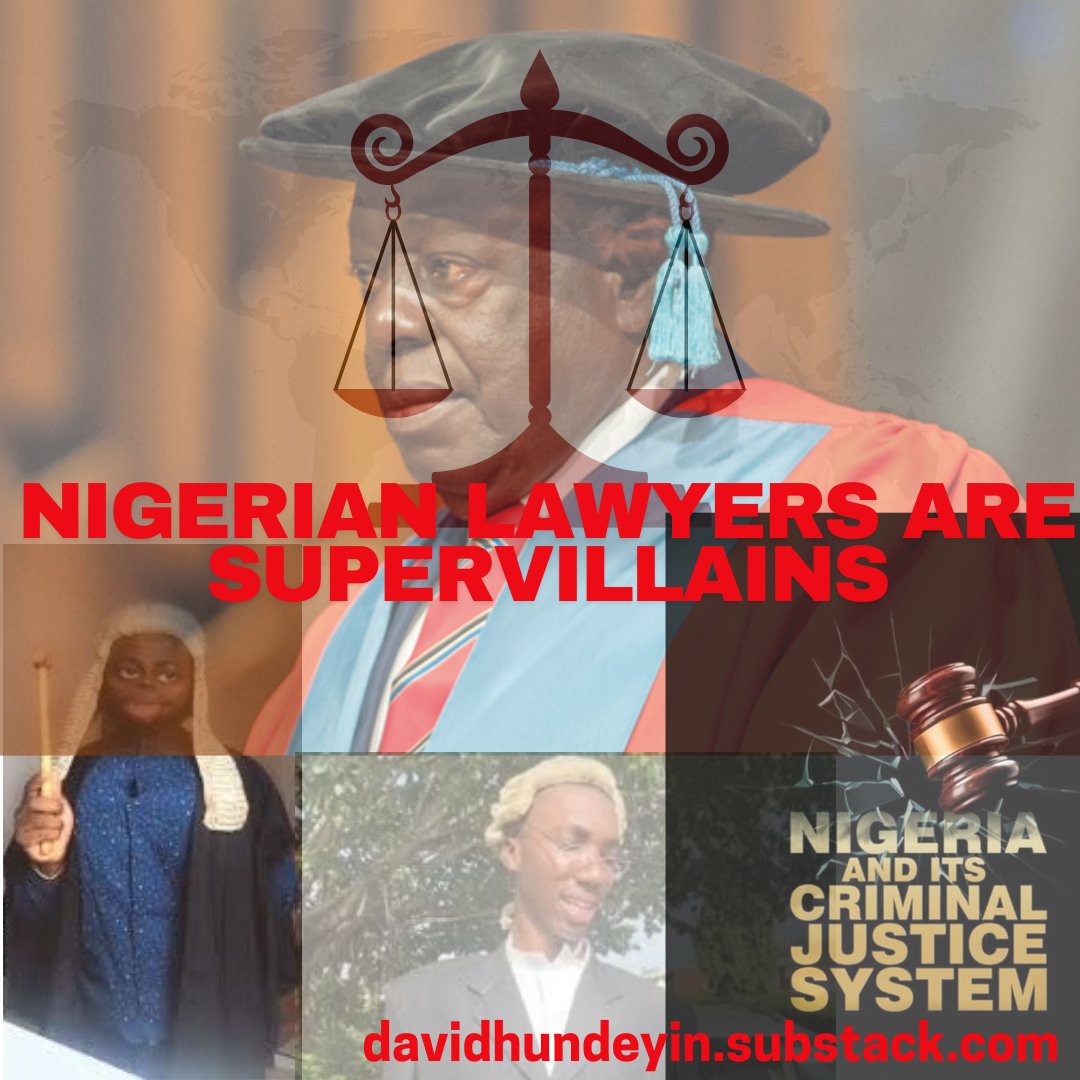
In a dramatic legal turn, lawyer Aare Afe Babalola SAN has filed a petition accusing fellow legal practitioner Dele Farotimi of criminal defamation. This petition, addressed to the Commissioner of Police in Ekiti State, is rooted in allegations made in Farotimi's book, "Nigeria and Its Criminal Justice System."
The case not only highlights the delicate balance between free speech and defamation but also underscores the ethical challenges within Nigeria's legal system.
The Context of the Dispute:
The controversy stems from Farotimi’s claims about Aare Afe Babalola’s involvement in a landmark case, Suit No. SC/146/2005: Major Muritala Gbadamosi Eletu & Ors v. H.R.H. Oba Tijani Akinloye & Ors. Farotimi alleges that Babalola and his law firm, Afe Babalola & Co., manipulated the judiciary to secure a favorable outcome for their client. These claims are detailed in the book and have been widely circulated on various media platforms.
Key Allegations Highlighted in the Petition:
Aare Afe Babalola asserts that Farotimi’s statements were false, malicious, and designed to damage his reputation. Below are some key quotes from the petition:
Judicial Corruption Allegation:
“That Aare Afe Babalola corrupted the Supreme Court to procure a fraudulent judgement in the service of his client.” (Page IX)
Compromising the Judiciary:
“Afe Babalola and the Eletus might have killed the buffalo but had no way from feeding from the carcass…The conspirators had it in hand and would extinguish the fire.” (Page 88)
Attacking Professional Integrity:
“Afe Babalola was imperial by the suit I filed in court. It was designed to blow open the tawdry details of his dirty deals with the Supreme Court.” (Page 85)
Questioning Court Integrity:
“The Supreme Court’s judgement was doctored by the confederation of lawyers in Afe Babalola’s chambers and the law offices of S.B Joseph & Co.” (Page 60)
Characterizing Babalola’s Influence:
“Afe is so enmeshed in his corruption that he has lost all sense of propriety and or fairness.” (Page 84)
Reputational and Professional Impact:
The petition emphasizes the far-reaching consequences of these allegations. According to Babalola:
The statements have caused many clients to withdraw from his firm, impacting its financial credibility.
The allegations have aroused public disdain, particularly within the legal community, damaging his reputation as a respected elder statesman.
Babalola also highlights his six decades of professional achievements, including his contributions to landmark legal cases, his role in founding Afe Babalola University, and his recognition as a global legal luminary.
Babalola demands:
An investigation into Farotimi’s actions.
A halt to further distribution of the book.
Recovery of all existing copies of the book.
An inquiry into Farotimi’s admitted actions of bypassing standard judicial processes.
This case raises pivotal questions about free speech, defamation, and the ethics of the Nigerian legal profession. Aare Afe Babalola’s petition is not just a defense of his personal and professional reputation but also a call to uphold the sanctity of the judiciary.
Hello, Does this petition signify a necessary defense against defamation, or does it risk suppressing the freedom of expression?
#LegalDrama #Defamation #Judiciary #DeleFarotimi #AareAfeBabalola #NigeriaLaw
MY SINCERE THOUGHTS ON CONVERSATIONS ABOUT A POSSIBLE PETER OBI ALLIANCE:
It may be a long read, but I want to cover all the bases.
Walk with me, fellow Obidients 🚶🏾♂️⏰️
Anyone who's followed my political thought-process on this app should already know where I stand on this; but for the benefit of new followers, I'll re-itemise
1) The APC came into power on the back of an unholy alliance solely for the purpose of grabbing power. We can seen where that has brought us. For me, it's not enough that someone wants to be president; why they want to be president matters even more to me
2) There is a reason the entire APC & over half of PDP focus their attacks on Peter Obi. An Igbo adage says "onye ji igu ka ewu na-e so" which translates directly as "na who carry palm frond wey goat de follow" & indirectly as "na person wey carry ball other players de tackle." Peter Obi is the most important and most influential politician out of subsaharan Africa in the past decade. Anyone who even remotely suggests that he has to deputise anyone else first in order to become president should have a bed reserved at Yaba left.
3) Peter Obi CLEARLY won the last presidential election, doing so with a relatively unknown running mate while spreading his message & ideas to the ends of the country at an unprecedented speed that it took the combined effort of the darkest forces in Nigeria to steal his victory.
Now, listen clearly; he has grown even bigger & more popular since then. To suggest that a man with such a profile should have to deputise a far less popular politician on no other basis than on the basis of ethnicity is nothing short of insulting. Throw that thought-process in the bin.
@PeterObi has never had a winning problem. In a free & fair election, he will blow any opponent to smithereens before noon. It is our duty as citizens to start now to demand electoral reforms, to devise ways to check INEC's maleficience and make sure our democratic institutions work for us.
4) The only reason some Nigerians, and particularly some Obidients are been swayed by the option of Peter Obi being running mate to someone else in order to become president is because we are cowards; very lazy cowards.
Why do I say so? Because we are not ready to do what's necessary to get Peter Obi into Aso Rock; therefore, we rely on an unholy alliance.
I can assure you that if every single Nigerian who believes that Peter Obi should be president takes the fight to INEC & other institutions keeping us in this situation, we will get Peter Obi into Aso Rock without having to rely on any stupid alliance. Has Osibanjo not taught us anything? What happens if Peter Obi agrees to such an alliance, gets in there, & is faced with the same fate as Osibanjo? What happens to all the goodwill he has gathered over his entire political career? Is Atiku really a man whose ambition you want to hedge Obi's credibility on?
5) This goes to Igbo people who have somehow allowed themselves to be brainwashed into believing that an Igbo man cannot be president unless he goes through a man from another ethnic group: I am ashamed of you. You have made yourself a 3rd class citizen by your own hands. Do you realise who Peter Obi is? Do you realise that we are speaking of a man who took a party from obscurity to securing the most votes in the last presidential election all within 9 months? Jesus Christ! What in the hell are you people talking about????
6) Since the end of the elections tribunal, Peter Obi has not taken a minute's rest. He has continued to travel to the ends of the country, bringing succour to people impoverished by this administration, engaging citizens, spreading hope in a time when most Nigerians see no reason to hope. Please, the man you people plan to yoke him with, where has he been in all this time since the end of the tribunal? Do we hate ourselves? Ehn fellow Nigerians? Do we believe that we do not deserve the best? Answer me, please.
Tax reform is a critical issue, and there is nothing wrong with pursuing it.
However, such reform must be subject to robust and informed public debate. A public hearing on tax reform is essential, allowing Nigerians from all walks of life to engage meaningfully. This is how we build public trust and ensure inclusivity in policymaking.
Matters of this magnitude require extensive deliberation and careful consideration—they should never be rushed.
Public hearings must be conducted to allow for diverse opinions and inputs.
Such public hearing would also enable the broadest spectrum of public opinion to be reflected in public policy.
When considering tax reforms and similar issues, it is insufficient to focus solely on the benefits to the government, particularly in terms of increasing revenue collection.
We must also take into account the overall impact on the nation and the sustainability of all its regions.
Furthermore, the government must sensitize the people and secure their buy-in for any policy changes.
Trust and legitimacy are the foundation of effective governance, and without them, even the best-intended reforms may fail.
Let us prioritize transparency, deliberation, and public engagement in charting the path forward. This is how we build a truly participatory democracy.
A new Nigeria is POssible!
-PO
4 years ago on October 20, 2020, my ongoing journey began with the Lekki Massacre, which happened just a couple of kilometres from my apartment. Within the next 17 days, I was forced to smuggle myself out of Nigeria and I haven't been able to go back since.
In the intervening period, I have spent time in a Ghanaian safe house, I have been declared wanted for "national security violations" in Nigeria, and I have survived a kidnap/assassination attempt in Accra organised by the (now former) Director of the National Intelligence Agency, Ahmed Rufai Abubakar.
In all this time and across all these experiences, one piece of wisdom I heard from my good friend @YarKafanchan has never left my head and remains my true north. She said it in passing one evening in 2021 when we were hanging out at Breakfast 2 Breakfast, Osu, and she probably didn't realise that what she said was so profound that it would remain stuck in my head forever.
She said: "Nigeria's biggest trick is convincing you that nothing is happening. Meanwhile everything is happening."
She said that in the context of us figuring out whether the Buhari regime had forgotten about teaching us #EndSARS people a lesson, and if we should risk returning home, but I took that pearl of wisdom, expanded its application, and made it my True North for analysing Nigeria.
Nigeria was not always this way, but after decades of deliberate actions by internal and external actors, it has become the country where "nothing happens." When it comes to anything consequential, meaningful and positive like favourable trade policy, economy-boosting infrastructure projects, or diplomatic and geopolitical positioning to enhance regional integration, nothing happens in Nigeria. It is frozen in time and covered with dust and cobwebs. To all intents and purposes, nothing is happening.
But behind the scenes, when it comes to listening to the counsel of American econmic hitmen and piling on ruinous dollar-denominated debt that the country categorically does not need, or when it comes to spending billions of dollars to develop military, intelligence and law enforcement capacity, only to use it to monitor the young girlfriends and political opponents of middle aged big men with potbellies, everything is happening. Nigeria may not be able to generate more than 5,000 MW of electricity for 200 million people, but when it comes to using NIA field agents - actual intelligence operatives trained expensively in Israel and North Korea - to go after outspoken Nigerian citizens in foreign countries, everything is happening.
This is why I cannot bother myself with who Peter Obi chooses or does not choose to wish Happy Birthday to. It's not that I don't think Yakubu Gowon is a genocidal a-hole. It's that his involvement in what happened between 1966 and 1970 is not even the worst or most disastrous thing he has done. The worst things Yakubu Gowon did came AFTER the war, and they are why we are where we are today.
Nigeria as it existed then, was one of the most powerful countries in the entire Global South, and a very consequential country on the world stage. Nigeria was a country that funded liberation movements in other countries, used its economy and military to massive geopolitical effect in Africa, gave out foreign aid, and came within one Ajaokuta Steel Complex of becoming Africa's first proper industrial economy.
Most of this period, when Nigeria was one of the world's real movers and shakers in the decade between 1970 and 1979, fell under Yakubu Gowon's tenure. The Nigeria he had was a country where everything was happening, and everybody could see that everything was happening. Nigeria was one of the players moving pieces on the global chessboard, and not merely one of the pieces being moved.
Yakubu Gowon had the unique opportunity with a postwar Nigeria that found itself economically, militarily and geopolitically in the proverbial Garden of Eden, to lead the country into World Power status. There was a perfect storm of geopolitical circumstances, and Nigeria was right in the sweet pot. The country had real money to spend on infrastructure and industrialisation, and very little foreign debt. It had de-facto geopolitical leadership of Sub Saharan Africa, and infinite possibilities for continental alignment and integration. He didn't even have to worry about winning an election every 4 years. All he had to do was deliver leadership
If he had delivered Sub Saharan Africa's first industrialised nuclear power, Africa and the African diaspora would have finally had an untouchable base to build from, and the world would never again have been able to treat Black people with the levity it continues to do in 2024. I am 34 this year. Gowon became Head of State at 33. He found himself leading this budding postwar superpower with everything falling into place for it at 37. And what did he do with this once-in-a-century opportunity?
He did Cement Armada. Udoji Awards. Offshore bank accounts. Contract and invoice inflation. Free Nigeria Airways flights for anyone who could get a "note" from a military officer, which eventually ran the airline into the ground. Cars, houses and holidays in London for girlfriends of big men in government. The beginning of the Rolls Royce culture in Ikoyi. During his 5 postwar years in power, Nigeria for the first time began piling on dollar-denominated foreign debt that it did not need, which was the fuel for the explosion that came 15 years later called IMF Structural Adjustment.
He met a country that was powerful and competent enough to hatch its own foreign influence and subversion operations around the world. Nigeria used to be so consequential that every single liberation war it directly or indirectly intervened in swung the way it wanted. From Lagos, the outcomes of liberation wars in Mozambique, Zimbabwe and Namibia were decided. By the time he and his mad dog successor Murtala Mohammed left the scene, Nigeria had gone from this to a victim - a country that couldn't pay its debts, started suffering electricity blackouts, and ended up having American intelligence penetrate its core, to the point where the outcome of elections or post-coup succession was decided by people like Susan Rice.
It was once a country where everything happened in plain sight, but by the time Yakubu Gowon and the Class of 1966 were done, it became the Nigeria we know today - a benighted country where you have to be highly connected or extremely intelligent to even suspect when anything is happening, because to all intents and purposes, nothing ever happens.
The challenge for my generation and the coming ones is to hijack and regain control of our collective destiny, which Yakubu Gowon and his contemporaries lost for us. They inherited the Black world's most powerful country and potent nation state. They bequeathed a parody of a country that has been fully captured by economic hitmen, where the CIA has been able to openly install a drug peddler with urinary incontinence to become puppet president of the largest Black country in the world - a level of blatant disrespect that illustrates just how much has been taken from us.
Instead of getting mad at Peter Obi for wishing such people Happy Birthday (which doesn't actually change the figurative price of garri in the market), our generational challenge as Millenials and Zoomers is to wrest back control of our country and its governance, intelligence, law enforcement and military institutions from the foreign interests that took them from our 90 year-old "senior statesmen" who sold their children for the proverbial mirrors, gin and red cloth.
Getting angry at Yakubu Gowon is pointless and is not going to save us. Getting mad at people wishing him Happy Birthday is borderline asinine. He has already got what he wants out of life. At 90, he has amassed a lifetime's worth of oyibo's mirrors, gin and red cloth, and the Black superpower he once led is now dragging status with Eswantini and Sao Tome & Principe. We should be happy for him. He is a fulfilled man who led a life that clearly fills him with fulfillment.
We have our own mission now, and it is to start undoing his damage. In our lifetime, Nigeria should once again becomes a country where everything is happening. It has to happen soon. Otherwise, 200 million people go kpai.
Let's be guided.
Why I Congratulated Gen. Gowon at 90
My felicitation with Nigeria’s former military Head of state, General Yakubu Gowon, on his 90th birthday anniversary, which was celebrated by a cross-section of Nigerians, has been received with mixed feelings by some Nigerians, and some have expressed their sentiments publicly, and privately to me.
I share in some of them, and I feel that as a leader in the vanguard of providing direction for our country to shift base away from all our shortcomings, including the issues that caused our avoidable cruel civil war, I needed to show to the World that the ultimate heroism is forgiving the enemy and moving forward.
Indisputably, the darkest part of our 64-year journey as a nation is the 30 months of civil war from 1967 to 1970 and God almighty whose way is not our way must have a reason why he kept the Chief Prosecutor of the war who is General Gowon alive to be 90 years today and the man who saw the end of the war, Chief Olusegun Obasanjo to be there at 87 years super-heading all the moves to see a reconciled and just Nigeria.
There was also a developing new spirit why the same country, Nigeria, gave the Biafra leader, Dim Chukwuemeka Odumegwu Ojukwu, a heroic national burial on 2 March 2012, when he joined his ancestors, coincidentally under my tenure as Governor of Anambra state.
The status of the burial given to Dim Ojukwu remains the boldest indication to the World that Nigeria as a country is disposed to moving forward in the spirit of reconciliation.
There are various ways human beings can respond to acts of evil, especially one that claimed millions of lives.
One is the tragedy of revenge, and another offers the hope of forgiveness in an attempt to forget. The latter conforms neatly with the template I adopted in greeting Gen Gowon at 90 years old.
In all my dealings with human beings, I try to be guided by my faith as a Christian in a strong message preached by Jesus Christ himself and underscored in reflections in St Paul’s letter to the Colossians 3:13: “Bear with each other and forgive one another: if any of you has a grievance against someone. Forgive as the Lord forgave you.” And to Ephesians 4: 31-32 “Get rid of all bitterness, rage and anger, brawling and slander, along with every form of malice”
Whatever reason I will give for joining the rest of Nigerians to greet General Gowon, May never truly conform with some persons, especially direct victims of the war, but anger, hurt, and bitterness are the commonest responses to cruelty.
It fuels sectarianism, it leads to resistance and avoidable blood feuds that we are witnessing across the globe, and even in our country and it does not abate.
There is something about forgiveness, it sets the person doing it free. Forgiveness is more a process than an instinct.
It’s hate that has put our society, blessed by God to be the greatest land in the black World, down, but this hate has to stop.
I was under ten years old when the Nigeria/Biafra war started in 1967. Most of my supporters across the country joining me get a new Nigeria were born after the war, and I didn’t feel I should drag them back to the dark side of our history by being unforgiving.
I feel such an act will derail the message of a New Nigeria that we insist is POssible.
‘Must you greet him? Why didn’t you keep quiet?’ some angrily say to me, but that will still be injurious to our journey to a new Nigeria where all political vices, including but not limited to ethnic, religious, bitterness, and regional segregation, are eliminated.
Various personal experiences of victims of injustice across the globe who have chosen to put ugly things behind them visibly demonstrate the transformative power of forgiveness in healing personal and collective wounds.