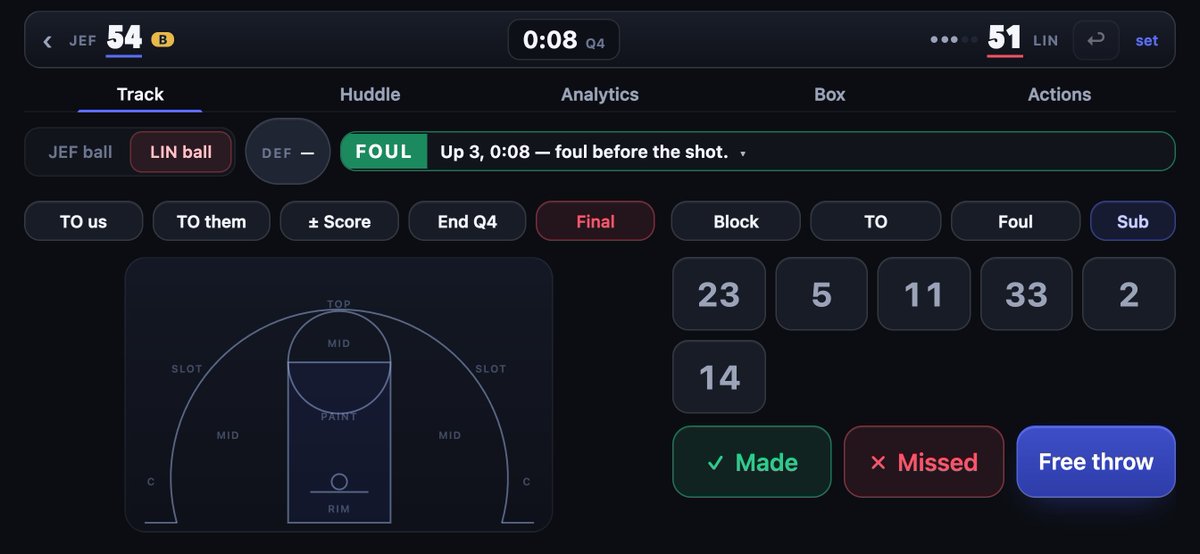
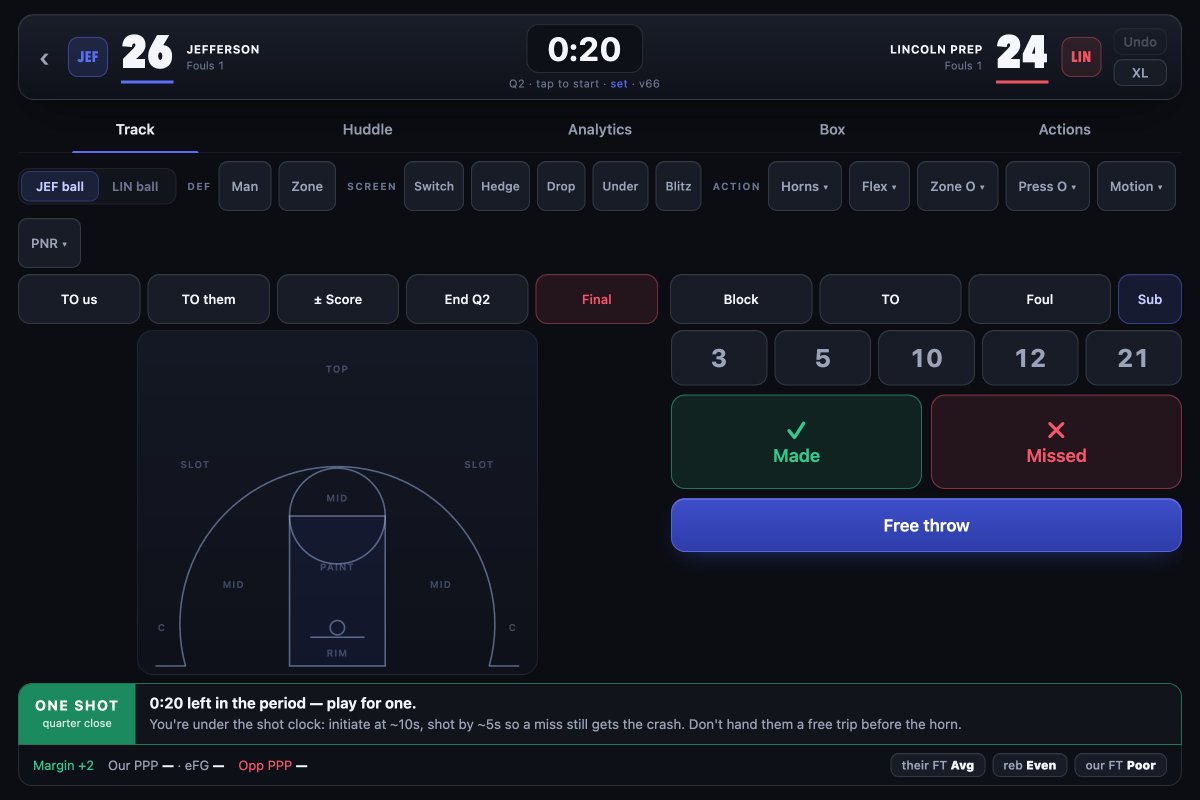
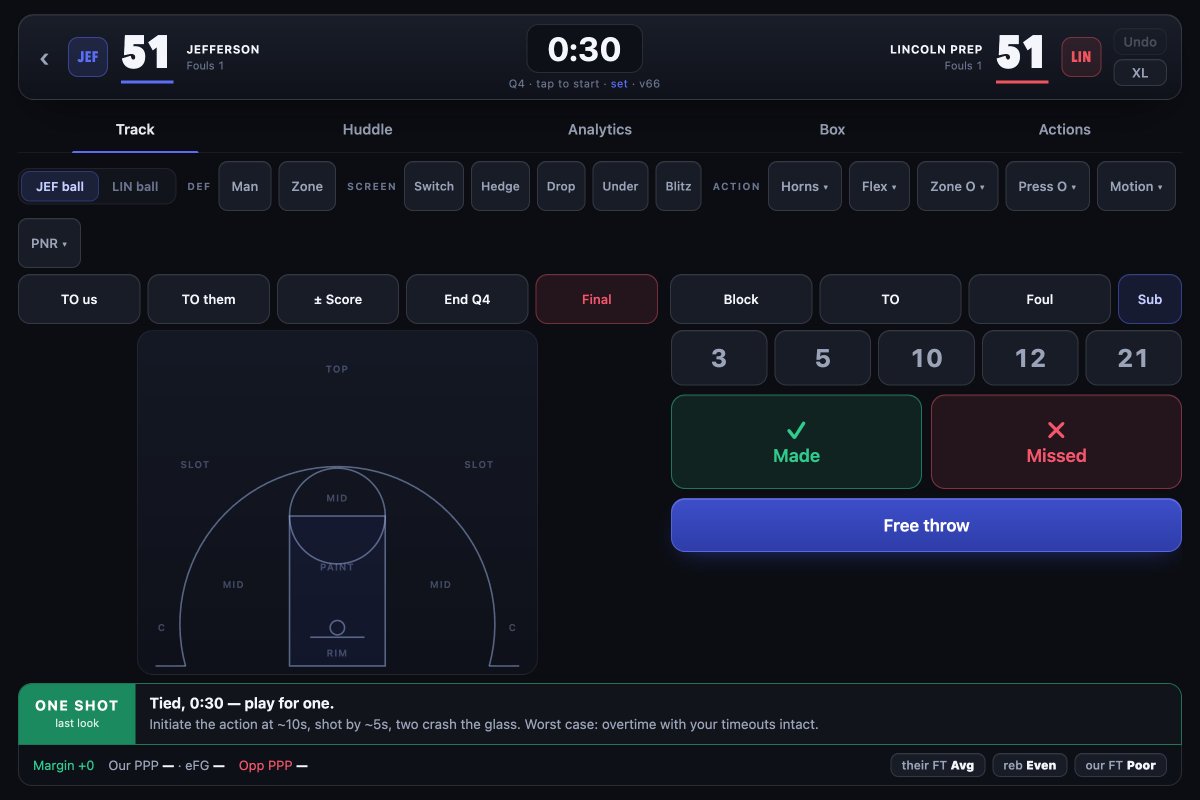
Courtside AI is on the App Store.
The scorebook never answered the timeout question — what do we call, right now? Courtside reads both teams live and turns it into the call: when to foul, when to hold, who to target.
https://t.co/8j9YNddrvU
I wrote up the entire "foul up 3" decision — the exact clock window, and the one rebounding exception that changes the whole call.
https://t.co/Q5jeacwE1Y
A 60-second timeout is really about 30 seconds of talk once the chaos settles. One defensive fix, one offensive call, one situational reminder — that's the whole huddle. Wrote up why less is what actually gets used. #CoachTwitter
https://t.co/hONdmy32jK
Tied game, 30 seconds left, your ball. Initiate around 10, shoot by 5, and crash the offensive glass. Worst case is overtime with your timeouts still in your pocket.
@csteed The reason it sticks is which cost a coach can see. Fouling him out with six minutes left is a mistake the whole gym watches; the eight minutes you never got out of him is invisible. Same reason foul up 3 took so long — the whistle you cause feels worse than the three you allow.
@SSAsstSupt@TheHoopHerald@MountHoops Ten is the number most coaches who actually teach it land on, and the math backs you — the edge holds out to about twelve. The two failures are almost always the same thing: a half-second of hesitation, or a foul that arrives with the ball already up. The rep is the hard part.
@TheHoopHerald@MountHoops Still foul. Losing it that way takes four things in a row: make the first, miss the second on purpose, win a long rebound, then score. One catch-and-shoot three needs one. The clip is the tail, not an argument against the call — and you can practice the tail away.
@Hoops_Companion 11 and 12 are the two I'd practice hardest. The color call only works if the bench knows the window — up 3, the fouling edge holds until about 12 seconds, and past that you're better off contesting. Everybody drills how to foul. Almost nobody drills when.
@natfluential Up 3 the math is on your side �� foul on the floor under about 12 seconds and they can't tie it. Up 4 I'd let them shoot, since a three still leaves you ahead. What stops most benches is the fear of a late whistle turning it into three free throws.
@TripleThreat3D The one nobody plans for is down 4 with 1:20 left. You used to have to foul right away because they could just hold it. Now they have to shoot inside 35, so a stop is available without giving a point away. A lot of benches will foul out of habit year one.
@TeachHoopsBBall Neither, at first. What it really does is expose which of your sets can't get a shot up in 20 seconds. The three-reversal stuff dies on the clock, so you run less of what you practiced until you trim it. Players don't rush — the playbook shrinks.
@unitedbballplus For: it ends the four-corners stall, which is the worst thing in the gym both to officiate and to watch. Against: it's real money and one more body at the table, and small schools feel that. I'd take it, but the cost isn't nothing.
Wrote up how the bonus actually works: 5 team fouls in a quarter is the double bonus, it resets every quarter — except overtime, which doesn't reset at all. That last part catches more coaches than it should.
https://t.co/92aXlJpERA
@3on3HoopsNation "Know time and score" is the one on that list nobody actually practices. Everything else gets drilled daily. Easy fix: stop a scrimmage cold and make them tell you score, clock, shot clock, team fouls, who has a foul to give. First few weeks it's ugly, and that's the point.
@MylesEhrlich The hard part of that one isn't "are you a foul team" - it's that the answer changes mid-possession. Miss the second free throw and up 3 becomes up 2, and the foul that was right two seconds ago is now wrong. That's a bench call, not something a player should have to re-solve.
@TheyHoedMe@johnrivers131 Yes, with a clock on it. Under about 12 seconds you foul on the floor, before any shooting motion. Above that you're just handing back a possession. The exception: if they crash the offensive glass, that missed second free throw is the real danger. https://t.co/Q5jeacwE1Y
@Rishibets Agreed — once he's squared up that's a shooting foul, not a stop. The call happens earlier: under about 12 seconds you take it on the floor, ideally with 4-8 left, before any shooting motion. Wait past that and it's three free throws or a clean look.
Up 3, 7 seconds, 2013 Finals. The Spurs defended. Watch what the bench software calls — and when the call changes.
Famous endings series starts Friday.