How most scams work, mathematically -
Assume a sports tournament with 10 teams. For the first match, you email 10,000 people saying A will win and 10,000 saying B. After the match, you divide the right side, and email 5000 the same way.
By the 8th match, 300 people have seen your correct prediction 8 times! You can ask them for money to get the prediction for the Final match!
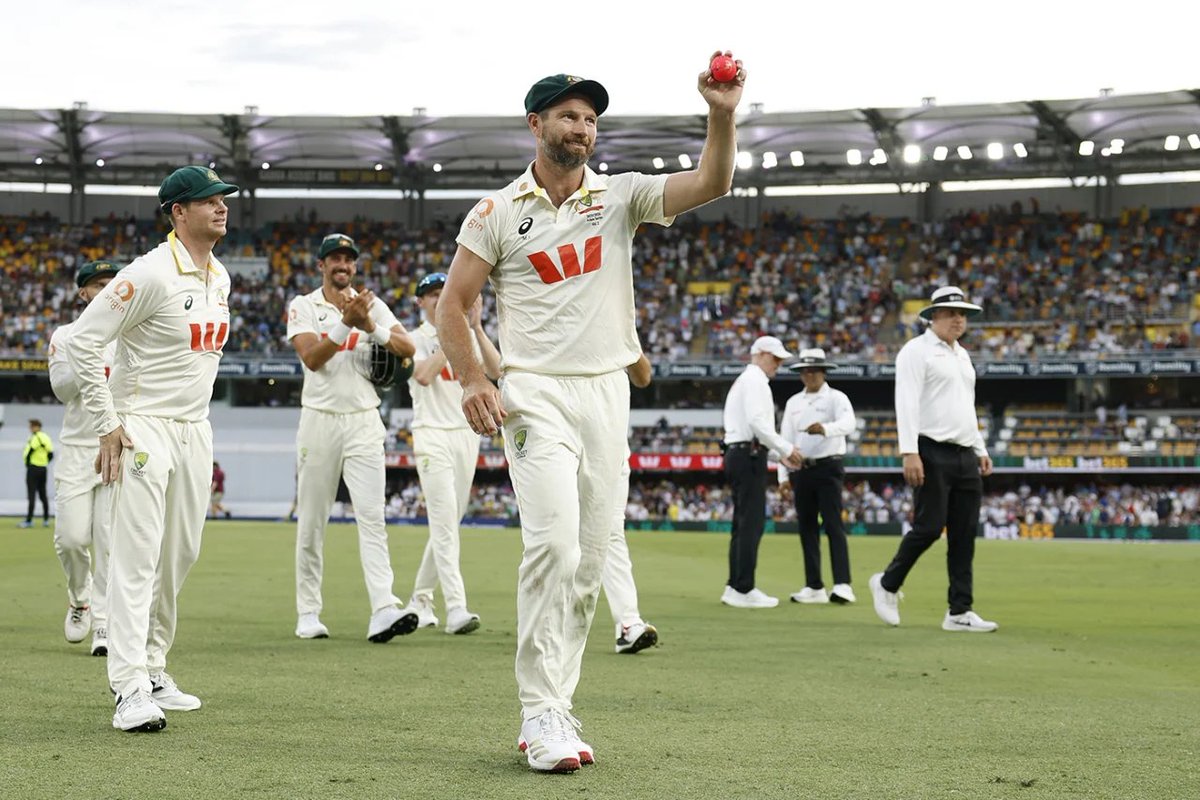
There’s a particular cruelty in cricket’s numbers when you’re a pace bowler. The sport will worship a quick who can touch 150kph even if his average hovers around 30, but a bowler who runs in with the intensity of a man trying to push a broken-down car uphill? He needs to prove himself in triplicate just to get his kit bag in the dressing room...
Michael Neser has 423 first class wickets at 23 odd average. He also has 4000+ runs at average around 30. Those are allrounder numbers. Yet until last month, Neser’s entire Test career could be summarized in a coffee break: 2 matches, in last 4 years, each appearance feeling like Australia had remembered they had a spare key hidden under the doormat...
Stat sheet doesn’t tell you about the 2010 Shield debut, when a 20 year old Neser dismissed Adam Voges and Shaun Marsh; two batters who’d go on to play Test cricket, whose Test careers would begin after that game & end before Neser got his baggy green. It doesn’t tell you about the countless times he’d be the best bowler in Shield, only to watch the selectors fax in another squad with his name in the “emergency only” column...
“I feared my Test career was over,” Neser admitted last summer, and you could hear the exhaustion in that sentence. Not the dramatic exhaustion of a torn ACL or a stress fracture, but the quiet, grinding fatigue of a man who’d torn his hamstring playing Australia A against India A at the MCG; 12 months on the shelf for a glorified practice match. The kind of injury that happens to players who are always available, always dependable, always one phone call away from being told “we need you to carry drinks and maybe bowl 12 overs in nets if it rains.”
Neser, at 35, became the human equivalent of that reliable sedan in your garage; works perfectly, gets you everywhere, but everyone’s dreaming about the sports car they can’t afford.
And then, the twist. Gabba 2025.
Last minute selection over Nathan Lyon, a decision that had Shane Warne’s ghost reaching for the whiskey. A 35 year old on his home ground, picked ahead of the greatest off-spinner of the modern era. The controversy was delicious. The vindication? Even better.
Neser’s Test progression reads like a man who’s tired of being the backup plan.
1st Test: 2 wickets. 2nd Test: 5. 3rd Test: 6. 4th Test: 4 in the first innings at MCG, each wicket a middle finger to the idea that you need 90mph to succeed in Australia. He has never gone wicketless in an innings. Not once!
In this series where England built their entire philosophy around speed; Wood, Archer, Carse, Atkinson. Neser & Scott Boland have tilted this Ashes by proving that 5 good balls an over beats one thunderbolt followed by four half-volleys...
Depth of Australian fast bowling didn’t just keep Neser out of the side; it forged him into something harder, sharper, more complete. While others were being rested & rotated, he was bowling in Cardiff, batting in Glamorgan, learning to be the player you’d build a team around even if nobody ever did...
You won’t find many pace bowlers with those numbers, in any country, in any era, still waiting for their moment. But then, you won’t find many cricketers like Michael Neser...
He doesn’t need speed. He has got something better: perseverance. And finally, the opportunity.
Have been reading about TCP vs UDP and how zoom works.
---
If Zoom were built on TCP, your video would freeze every time packet #100 went missing. Not because the system is broken, but because TCP is doing exactly what it promises to do.
In most backend systems, packet loss is treated as an error. Something went wrong, so the system stops and waits. In real-time systems, packet loss is often an acceptable outcome. The goal isn’t perfection. The goal is staying live.
TCP optimizes for correctness, not timeliness. If packet #100 is lost, the receiver says “stop, I didn’t get #100.” The sender retransmits it, and everything waits in the meantime. You eventually get perfect data, but the delay is unpredictable. This head-of-line blocking is fine for file downloads, database replication, or backups. It’s terrible for live video.
Live video has a very different constraint. A video frame from 200 milliseconds ago is already useless. If packet #100 disappears, pausing the entire stream just to recover it makes the experience worse. You’d rather skip that frame and show packet #101 immediately. That’s why systems like Zoom, Google Meet, and Discord use UDP instead of TCP. A brief visual glitch is far less annoying than a frozen screen.
Skipping packets doesn’t mean the video turns into static. This is where Forward Error Correction comes in. Instead of waiting for retransmissions, the sender proactively includes redundant information. The math allows the receiver to recover missing data instantly, without stopping the stream.
In a simplified example, the sender transmits packet A and packet B, and also sends packet C, which is A XOR B. If packet A is lost, the receiver still has B and C. By computing C XOR B, it reconstructs A on the spot. No waiting, no pause, no rewind.
The trade-off is clear. You spend more bandwidth upfront to gain predictable, low latency during playback. You accept occasional imperfection in exchange for continuity.
That’s the deeper lesson here. In real-time systems, being slightly wrong now is often far better than being perfectly correct too late.
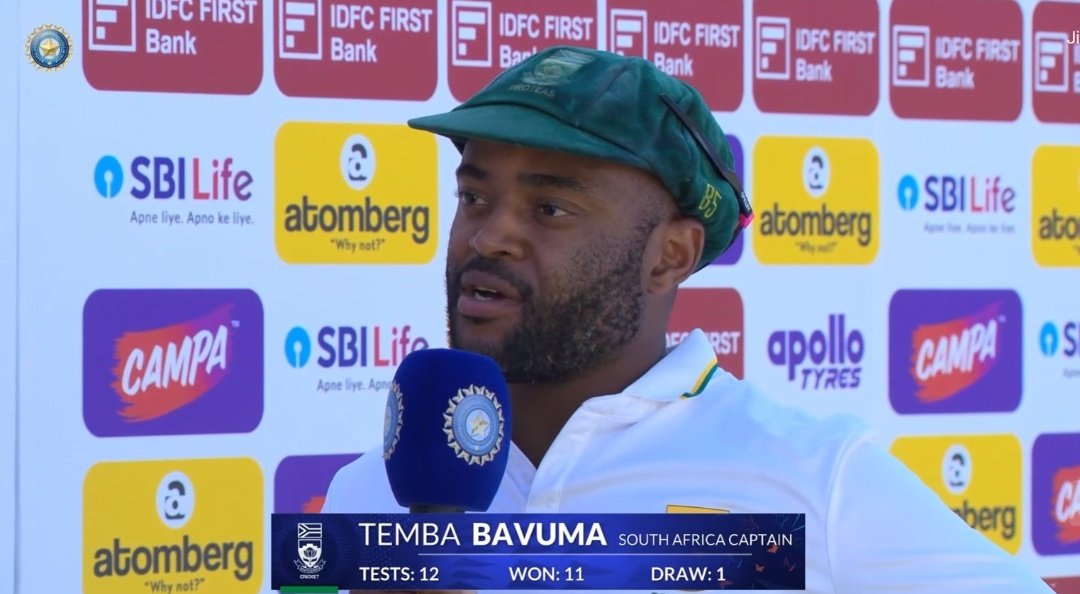
Temba Bavuma hasn't lost a test match as captain.
He averages over 50 with the bat in those matches.
He has now whitewashed India in India -- a feat a South African captain achieved over 25 years ago.
And he's also led SA to their maiden ICC title in over two decades.
Had Temba been an Indian, English or an Aussie, he'd be talked about a lot more.
Nonetheless, when he ends his test career, he could well go down as one of the best test captains of the past 15 years, along with Pat Cummins & Virat Kohli.
Consider the circumstances in which Temba became South African captain.
The team was in shambles, and he faced despicable remarks. People suggested he became captain because of the color of his skin. The South African team was accused of ignoring "merit".
How beautifully and calmly he's turned it around, and silenced his critics with dignity.
He's a story of hope, wonderfully living up to his name.
Generally I am not as upset as others when India loses. I am all for competitive sport. But I hate to see such timid surrender against SA. It's ok to lose but atleast there should be some indication of a fight. #indvssa