I realized recently that Germany has a database with
-all hospital admissions (any cause)
-by diagnostic code
-by outcome incl death
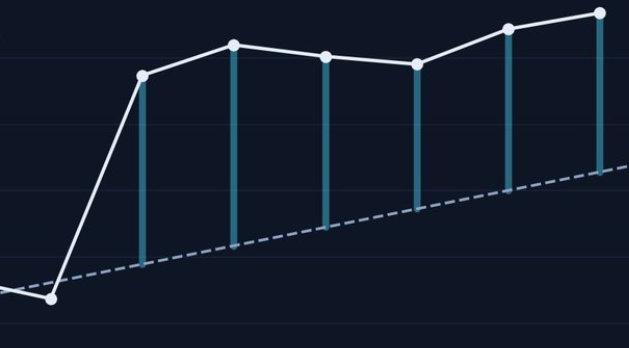
The death rate among admissions for SARI (severe acute resp infx: J9-22) shows something much more severe hit Germany in 2020
What could it be?🤔
One reason you believe people are “crazy” for taking COVID precautions is because you don’t know how sick people are treated by society and the medical system. You think nothing bad will happen to you and you’ll be taken care of by medical professionals but you’re mistaken.
The excess deaths look horrific in this graph & it's worse than at 1st glance.
Rather than a linear extrapolation (dashed line), expected deaths in later years should get lower b/c of so many early-pandemic deaths ("harvesting").
👇This is an underestimate. 😬
#StillDying
As A Doctor, I Don’t Fear Covid As I Once Did. Or Cholera. Or Ebola. Or Anything At All, Actually, Come To Think Of It. I Wonder If Something Has Damaged The Part Of My Brain That Handles Risk Assessment.
It's widely accepted that hantavirus transmits from rodent excreta to humans via inhalation of aerosolized virus, so I don't understand why we're so reluctant to acknowledge the inhalation route for human-to-human transmission.
https://t.co/aGFDKS94Qk
Maskenlose Menschen, die uns seit 2022 eine Angststörung andichten, haben Angst vor einer neuen Pandemie, während wir ganz entspannt sind.
Ich lache mehr, als ich sollte.
1/ What were the historical reasons for the resistance to recognizing airborne transmission during the COVID-19 pandemic?
Our peer-reviewed open-access paper is now published:
https://t.co/2SuvreBOxK
Ach, schau an. Die hohen krankheitsbedingten Fehlzeiten seit 2022 sind gar nicht auf die Einführung der E-Krankschreibung zurückzuführen, sagt das @DIW_Berlin. Sondern auf einen sprunghaften Anstieg der Atemwegserkrankungen. Wer hätte das ahnen können? 1/4
https://t.co/IBt7J0h1Of
🚨BMJ Opinion:
“Hantavirus outbreak should reset WHO’s default approach to airborne risk”
“For pathogens with documented person-to-person spread […], the initial assumption should be AIRBORNE risk unless and until evidence supports easing back.”
https://t.co/BK9Dr0a4cA
Excellent and thoughtful thread that lays out the issues.
There’s a gap that’s opened up between what PH is saying and what it’s doing that an emergent pathogen could drive a truck through.
If it could drive a truck.
The irony of hearing experts now say hantavirus isn't like Covid because it's not as airborne ("not like Covid where you could [past tense - sic] be infected just from being in a room that had virus."
@AOKNordWest „Atemwegserkrankungen verursachten damit fast 70 Prozent mehr Arbeitsausfall als noch fünf Jahre zuvor“
Warum wird SARS-CoV-2 ignoriert? Warum gibt es in Schulen, Kitas & am Arbeitsplatz keine Infektionsprävention?
@mellziland@ocnj3 Risk comes with not following the precautionary principle. Go hard & go early will work for everything & is the least painful in the long run. Act as if everyone is infectious, & all forms of transmission applicable. When we see that's not happening, it's cause for concern.
Pro-Tip: When a pathogen (A) spreads via “Close contact” and (B) infects anywhere in the respiratory system, this means that the pathogen is AIRBORNE.
Mask.
Filtration.
Ventilation.
Clean the air.
Credit to the hypervigilant here on X making enough noise to shame the WHO into being more cautious than they were with Sars2.
Otherwise you would have had these travellers returning on regular commercial flights with no protections.
Hopefully a disaster averted.




![_CatintheHat's tweet photo. 🚨BMJ Opinion:
“Hantavirus outbreak should reset WHO’s default approach to airborne risk”
“For pathogens with documented person-to-person spread […], the initial assumption should be AIRBORNE risk unless and until evidence supports easing back.”
https://t.co/BK9Dr0a4cA https://t.co/Xh6jRzuuug](https://pbs.twimg.com/media/HILoUa9W8AE1X6x.jpg)


