@012jcyl ¿Sigue siendo posible obtener la tarjeta Buscyl? Estoy intentando gestionarlo pero no hay manera...
¿Estoy metiendo la pata en el formulario? Si son solo 4 campos...
Esta claro, es un 403 pero... darme más pistas!
Otro ejemplo para la colección de formularios @JaimeObregon
En 2022 construí el motor de una ambiciosa herramienta para explorar la contratación pública. Mucho más que un buscador de contratos.
Ahora lo he retomado y estoy construyendo una carrocería a la altura del motor. ¡Estoy entusiasmado!
Y deseando compartirlo con todos. Será gratuito, como todo lo que hago. Puedo hacerlo así gracias a mis patronos y a una entidad cívica, gran compañera de viaje.
Estoy avanzando muchísimo, pero ayer pinché. El trabajo no fluía. Hacía mucho calor en Santander y me sentía mentalmente drenado.
Pero ya me conozco y conozco el trabajo digital, intelectual: apeé el remordimiento y el sentimiento de culpa en el arcén y salí a dar un paseo.
Al caer la tarde regresé a casa, con la sensación de «día perdido», de día improductivo.
Pero de pronto, ¡ay!, la musa Calíope.
Llevaba desde 2022 buscando el nombre perfecto para el proyecto. Corto, pronunciable, memorable, evocador, con un nombre de dominio libre. ¡Ya sabéis lo difícil que es bautizar un proyecto!
Pero ayer, al regresar del paseo, di con el nombre perfecto. No me lo creía. Registré el dominio y, ya cerrada la noche, diseñé el concepto, la marca. Estoy encantado.
¡Este proyecto es lo mejor que he hecho! Creo que será una herramienta principal para investigadores, periodistas, académicos, organismos públicos y, sobre todo, la ciudadanía.
¡Estoy deseando enseñároslo! 🤓
Ahora resulta que mi pagina personal está bloqueada porque emito futbol pirata... y yo sin saberlo! 🤣 Es delirante que un juez permita semejante barbaridad técnica y contra la neutralidad de Internet. #tebas#bloqueoips#internetlibre
🚆“Tenemos que reivindicar lo que nos pertenece: un tren digno para Salamanca”. Así de claro se muestra Alfonso Vicente, delegado provincial de los árbitros de fútbol y que estará en la concentración.
🗓️Domingo, 10 de mayo
🕘12:00h.
📍Plaza de Los Bandos
#TrenDeFuturoSalamanca
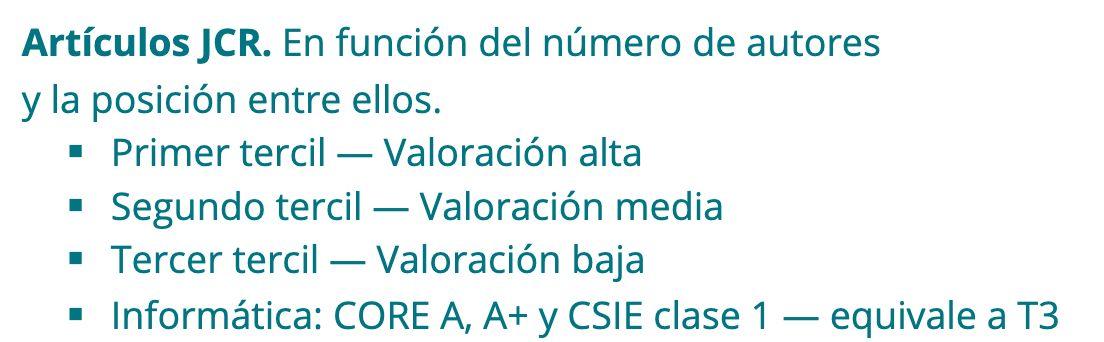
La ANECA valora los congresos CORE A+ -- los lugares más competitivos y de más prestigio donde publicar en IA -- como a las revistas del ultimo tercil en JCR. ¿Alguien en @ANECAinfo puede explicarlo? ¿Se dan cuenta de hasta qué punto fomentan nuestra irrelevancia científica?
🙋♀️ ¡Vente conmigo de viaje!
A través de un recorrido de 15 paradas 🛑 y de forma totalmente visual, trato de mostrar cómo sería viajar con @Renfe desde Salamanca a las distintas capitales de España 🇪🇸
Scroll-story👇
https://t.co/GQn2w9Ww0M
Juniors entering the field will still need to understand what code is. But they won't need most of the philosophy that we've been used to. The emphasis will all be on pragmatics and engineering. So they won't need to know OOP, but they will definitely need to know dependency inversion. They won't need to know functional programming, but they'll definitely need to understand purity and the costs of mutability. They won't need to know about structured programming, but they will need to understand modularity.
@chongdashu Great workflow! I was trying to do the same thing but for lots of reference images. Any open source alternatives? Have you tried Qwen Image Edit?
A few random notes from claude coding quite a bit last few weeks.
Coding workflow. Given the latest lift in LLM coding capability, like many others I rapidly went from about 80% manual+autocomplete coding and 20% agents in November to 80% agent coding and 20% edits+touchups in December. i.e. I really am mostly programming in English now, a bit sheepishly telling the LLM what code to write... in words. It hurts the ego a bit but the power to operate over software in large "code actions" is just too net useful, especially once you adapt to it, configure it, learn to use it, and wrap your head around what it can and cannot do. This is easily the biggest change to my basic coding workflow in ~2 decades of programming and it happened over the course of a few weeks. I'd expect something similar to be happening to well into double digit percent of engineers out there, while the awareness of it in the general population feels well into low single digit percent.
IDEs/agent swarms/fallability. Both the "no need for IDE anymore" hype and the "agent swarm" hype is imo too much for right now. The models definitely still make mistakes and if you have any code you actually care about I would watch them like a hawk, in a nice large IDE on the side. The mistakes have changed a lot - they are not simple syntax errors anymore, they are subtle conceptual errors that a slightly sloppy, hasty junior dev might do. The most common category is that the models make wrong assumptions on your behalf and just run along with them without checking. They also don't manage their confusion, they don't seek clarifications, they don't surface inconsistencies, they don't present tradeoffs, they don't push back when they should, and they are still a little too sycophantic. Things get better in plan mode, but there is some need for a lightweight inline plan mode. They also really like to overcomplicate code and APIs, they bloat abstractions, they don't clean up dead code after themselves, etc. They will implement an inefficient, bloated, brittle construction over 1000 lines of code and it's up to you to be like "umm couldn't you just do this instead?" and they will be like "of course!" and immediately cut it down to 100 lines. They still sometimes change/remove comments and code they don't like or don't sufficiently understand as side effects, even if it is orthogonal to the task at hand. All of this happens despite a few simple attempts to fix it via instructions in CLAUDE . md. Despite all these issues, it is still a net huge improvement and it's very difficult to imagine going back to manual coding. TLDR everyone has their developing flow, my current is a small few CC sessions on the left in ghostty windows/tabs and an IDE on the right for viewing the code + manual edits.
Tenacity. It's so interesting to watch an agent relentlessly work at something. They never get tired, they never get demoralized, they just keep going and trying things where a person would have given up long ago to fight another day. It's a "feel the AGI" moment to watch it struggle with something for a long time just to come out victorious 30 minutes later. You realize that stamina is a core bottleneck to work and that with LLMs in hand it has been dramatically increased.
Speedups. It's not clear how to measure the "speedup" of LLM assistance. Certainly I feel net way faster at what I was going to do, but the main effect is that I do a lot more than I was going to do because 1) I can code up all kinds of things that just wouldn't have been worth coding before and 2) I can approach code that I couldn't work on before because of knowledge/skill issue. So certainly it's speedup, but it's possibly a lot more an expansion.
Leverage. LLMs are exceptionally good at looping until they meet specific goals and this is where most of the "feel the AGI" magic is to be found. Don't tell it what to do, give it success criteria and watch it go. Get it to write tests first and then pass them. Put it in the loop with a browser MCP. Write the naive algorithm that is very likely correct first, then ask it to optimize it while preserving correctness. Change your approach from imperative to declarative to get the agents looping longer and gain leverage.
Fun. I didn't anticipate that with agents programming feels *more* fun because a lot of the fill in the blanks drudgery is removed and what remains is the creative part. I also feel less blocked/stuck (which is not fun) and I experience a lot more courage because there's almost always a way to work hand in hand with it to make some positive progress. I have seen the opposite sentiment from other people too; LLM coding will split up engineers based on those who primarily liked coding and those who primarily liked building.
Atrophy. I've already noticed that I am slowly starting to atrophy my ability to write code manually. Generation (writing code) and discrimination (reading code) are different capabilities in the brain. Largely due to all the little mostly syntactic details involved in programming, you can review code just fine even if you struggle to write it.
Slopacolypse. I am bracing for 2026 as the year of the slopacolypse across all of github, substack, arxiv, X/instagram, and generally all digital media. We're also going to see a lot more AI hype productivity theater (is that even possible?), on the side of actual, real improvements.
Questions. A few of the questions on my mind:
- What happens to the "10X engineer" - the ratio of productivity between the mean and the max engineer? It's quite possible that this grows *a lot*.
- Armed with LLMs, do generalists increasingly outperform specialists? LLMs are a lot better at fill in the blanks (the micro) than grand strategy (the macro).
- What does LLM coding feel like in the future? Is it like playing StarCraft? Playing Factorio? Playing music?
- How much of society is bottlenecked by digital knowledge work?
TLDR Where does this leave us? LLM agent capabilities (Claude & Codex especially) have crossed some kind of threshold of coherence around December 2025 and caused a phase shift in software engineering and closely related. The intelligence part suddenly feels quite a bit ahead of all the rest of it - integrations (tools, knowledge), the necessity for new organizational workflows, processes, diffusion more generally. 2026 is going to be a high energy year as the industry metabolizes the new capability.
@levelsio We have been using the same pipeline (https://t.co/prvsYMUwly) at @usal for two years with excellent results. It's amazing how people with no experience in video game engines or modelling knowledge can bring their ideas to life. https://t.co/Rx76Dkshmc
Today we launch the Agentic AI Foundation (AAIF) with project contributions of MCP (@AnthropicAI), goose (@blocks) and https://t.co/KhZ4k71lmO (@OpenAI), creating a shared ecosystem for tools, standards, and community-driven innovation.
Learn more about this major step toward: https://t.co/JHvfl8D0UP
"Illustrations reminiscent of Spanish comics by Ibañez from the 1980s. Like a comic book." @NotebookLM@ylecun It's not Ibañez in all of them, but it is very funny.😂
Happy birthday to MIT Prof. Barbara Liskov, Turing winner & programming pioneer.
Watch her break down data abstraction & object-oriented programming: https://t.co/kO0Ogymk80
💸 ¡Vamos a mejorar un trámite digital sin gastar un euro!
Muchos trámites parecen diseñados en el séptimo círculo del averno. Y cuando se lo digo a mis amigos funcionarios, me salen por bulerías con el mismo cante jondo de siempre:
—Es que no hay dinero.
Pero payo… ¿cuándo lo ha habido? ¡Gestionar es un arte que florece justo en la escasez!
He aquí una idea muy loca:
✨ Podemos mejorar los trámites digitales de nuestro país sin gastar (apenas) ✨
¡Veámoslo con un ejemplo!
Y ve situando tu dedo —tú, sí; te lo digo a ti 🫵— sobre el botón de «retuit» para difundir este evangelio, que he echado medio sábado en él. 😜
📣 ¡Necesitamos que llegue a nuestros gobernantes y gestores!
¡Vamos allá! 🥳🧵👇
💻 I just wanted to show how easy it is getting a GPU in the regular way compared to the 🇪🇺 EU's "AI Factory" plan where you have to apply for a proposal
Funnily enough @LambdaAPI actually shows "Design your AI Factory" on their landing, maybe they're trying to get that juicy EU money too (but I don't think they have servers in EU anyway)
So I sign up/login, select what GPU I want, like 8x H100s, which is $24/hour, select the location, add a filesystem and launch the server
Then about 5 minutes later, I have a running 8x H100 cluster, with a Jupyter notebook ready with Terminal access and I can see and work with my GPUs!
And no Lambda did not ask me if I was mindful of "Individual, and Social and Environmental Well-Being", and I did not need to apply to some proposal, and wait months.
They just gave me a GPU to build a business on, within 5 minutes, as it should be!
If the EU wants to help AI startups, the infrastructure is already there! Just fund/subsidize GPU rent prices for European citizens and businesses on existing European hosting companies like @Hetzner_Online or @OVHcloud that already have GPUs (where the process of getting a server is pretty much the same as Lambda btw)
For example, a 8x H100 is $24/hour now but with EU's funding could be $12/hour, giving European startups an unfair advantage to compete with the rest of the world for training and inference (generating)
Personally I don't think you should mess with the market like that, but this was the EU's intention, so then do it properly!
I thought about it in the shower this morning and realized I guess the fundamental problem in the EU is they just don't respect technology or the people making it. And they don't listen to them like they do elsewhere in for example US or China. You have lots of European founders who'd tell you the same I tell you here, but they're never heard by the EU either
In the US you have the top tech CEOs and founders at dinner with the president regularly to advise him and it feels more properly run and they actually listen to smart people
In China you have essentially technocrats running the country and fair you can disagree with their system (see Jack Ma etc. not great oaky) but they do understand tech as we can see from how fast they progress and deploy it
But the EU just never listens to skilled people, it's always design by committee by midwits and the EU is just systemically rekt like that. It's not a meritocracy at all
But I'm a European and an eternal optimist, so maybe we can help improve it by telling them how to do it then (like this tweet)
See how easy it could be @vonderleyen