Showed my “normie” wife the unicorn tardimal.
She fucking loved it and instantly started making doodles to turn into tardimals.
People are always wondering how we can onboard more women into the space.
The answer is $Tardimals
@blknoiz06
@ayzxwwwiiii2000 Phantom sometimes blocks smaller cap sized tokens as spam and doesn't show them. Search the token address in Phantom and mark it as "not spam" so it shows correctly in your wallet again
KausaWorld is live on mainnet.
A browser-based village on Solana. Explore in 3D, fish to earn SOL. Nothing to install, it runs in the browser on desktop and mobile.
https://t.co/l00Dl1kkg3
(1/4)
Next week we will be rolling out updates to several native KausaLayer features. Here's a sneak peek at 2 of them:
First, @Arcium integration into KausaLayer. Users will have the option to choose their privacy model: the existing Dynamic Maze Routing mode, or a fully non-custodial and trustless Arcium mode.
Second, KausaWorld V1. Every user becomes a character living inside the KausaLayer world. Existing features become places you can visit and use directly from within the world, like the metaverse concept that was hyped a few years ago. On top of that, we will also be adding several new features to KausaWorld, making it more than just a dashboard.
Full details coming soon.
GM Kausa 🔥
Got a few things to share today.
We've been building something new on top of KausaMemory, the encrypted memory layer we shipped not long ago.
The idea is simple:
What if your agent didn't just answer questions, but actually remembered what it learned? What if every research session got stored permanently in an encrypted knowledge graph that only you can access?
We took that concept and turned it into something bigger. A full infrastructure layer where AI agents don't just chat, they accumulate knowledge over time, learn from their own research, and carry that knowledge across sessions.
Passphrase-encrypted. IPFS-backed. Wallet-authenticated. No one sees your data, not even us.
More details dropping soon.
stay tuned.
What i see with this $kausa compute update is the early stages of a private economic infrastructure layer.
To understand why, zoom out.
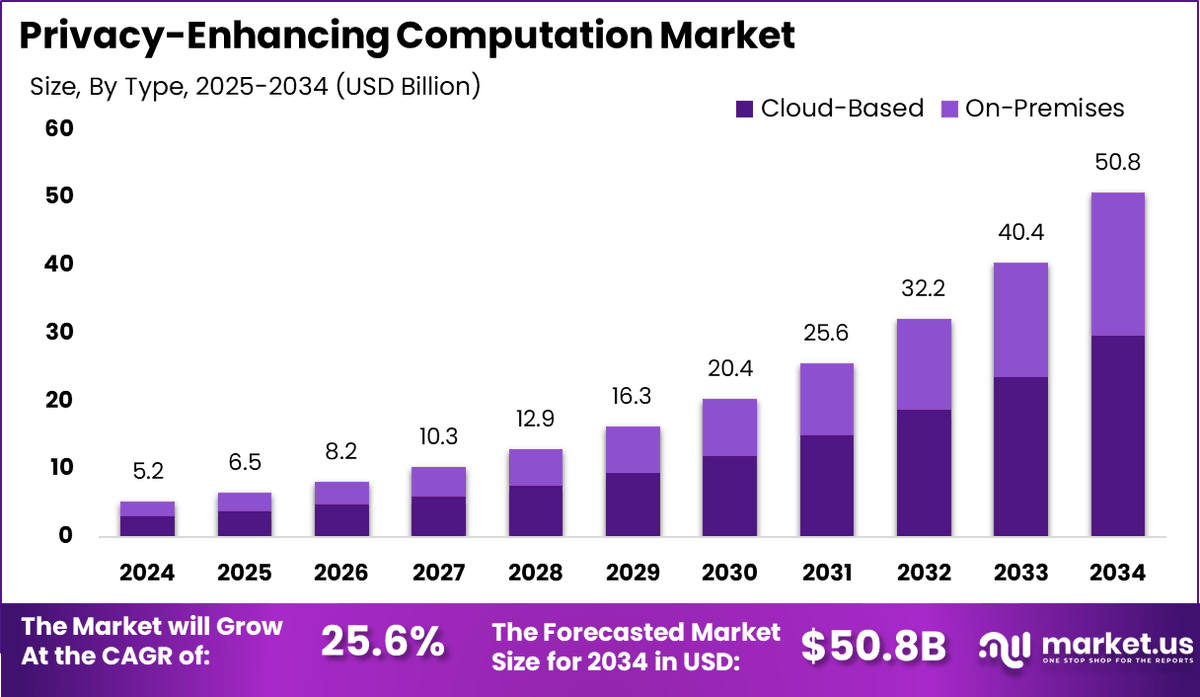
The global Privacy-Enhancing Computation market is projected to grow from billions today into tens or even hundreds of billions over the next decade. (Approx. 5.5 billion and $42.7 billion in 2026,)
At the same time, AI infrastructure is becoming one of the largest capital expenditure categories in the world.
Every major technology company is spending aggressively on:
- inference
- model deployment
- compute infrastructure
- agent systems
- autonomous workflows
The future economy is increasingly becoming an AI economy.
But there is a problem.
AI systems require three things:
Capital.
Compute.
Execution.
Today those three things exist in separate worlds.
Capital lives in wallets.
Compute lives in cloud providers.
Execution lives in applications.
Everything is visible.
The result is an economy where the operators become increasingly visible as activity increases.
$Kausa Compute changes this architecture.
For the first time inside the $Kausa ecosystem, a Maze Pocket is no longer simply a wallet.
It becomes an operational entity.
A Pocket can now:
- hold capital
- receive capital
- route capital
- deploy compute
- pay for compute
- run models
- execute strategies
- generate outputs
without exposing the underlying treasury wallet.
This seems like a small feature.
It is not.
It fundamentally changes what $Kausa is becoming.
Historically, privacy protocols focused on protecting transactions.
$Kausa appears to be moving toward protecting operations.
That distinction is critical.
Institutions do not care about hiding one transaction.
They care about protecting operational intelligence.
They care about protecting:
- treasury flows
- execution strategies
- supplier relationships
- trading behavior
- infrastructure usage
- AI workloads
- capital allocation decisions
As AI agents become economic actors, this becomes even more important.
The next generation of autonomous systems will not simply answer questions.
They will:
- deploy capital
- purchase compute
- consume APIs
- generate revenue
- execute strategies
- operate continuously
These systems require infrastructure.
But more importantly, they require private infrastructure.
An autonomous hedge fund agent cannot reveal every position.
An autonomous trading agent cannot reveal every execution path.
An autonomous research agent cannot reveal every inference workflow.
What they need is a private operating environment.
That is the direction $Kausa appears to be moving toward.
When viewed in isolation, $Kausa Compute looks like GPU access.
When viewed alongside:
- Maze Pockets
- KausaPay
- KausaGate
- KausaOS
- MCP integrations
- UsePod integration
- Conduit integration
- Cross-chain execution
- Private payments
- Private treasury management
a different picture emerges.
Kausa is gradually assembling every component required for private autonomous operations.
Capital enters through a Pocket.
Capital is routed privately.
Compute is purchased privately.
Inference is consumed privately.
Payments occur privately.
Revenue can be received privately.
Execution remains separated from identity.
This is no longer simply a privacy protocol.
It is beginning to resemble a private operating system for capital and intelligence.
The market currently values Kausa as a privacy project.
The opportunity may ultimately be much larger.
Privacy-Enhancing Computation (Software): Valued at roughly $5.5 billion in 2026, with projections up to $46 billion by 2035. Computing (Hardware/Cloud): Valued between $15.15 billion and $42.7 billion in 2026, with exponential forecasts projecting it to exceed $400 billion by 2034. This sector is largely driven by large-enterprise and cloud deployments using Trusted Execution Environments.
@ConduitOS
BWXSNRBKMviG68MqavyssnzDq4qSArcN7eNYjqEfpump
KausaLayer built privacy routing for @metaplex Genesis Launch Pools. Devnet demo working end-to-end.
Participate in any Genesis Launch Pool without exposing the funding wallet on-chain. Maze Routing creates an unlinkable stealth wallet that wraps SOL and deposits to the Launch Pool in a single call.
Fully tested on Solana devnet with a live Launch Pool.
https://t.co/FG6AJ6PyeR
Pocket Dashboard update.
Perps positions now visible directly in the dashboard. Open a position from @kausalayer, track it live with entry price, mark price, PnL, leverage, liquidation price, and fees. All synced from Jupiter Perps.
Cross-chain swap balances are also integrated. Base and BSC assets acquired through @kausalayer now show up in the Pocket Dashboard with full balance visibility across chains.
Everything monitored.
Haven't made a post for $kausa in a while because I was trying to understand where they are headed with all the updates and partnerships so far and it clicked for me what these guys are doing. Pay close attention as I take you through it
But before that, ca: BWXSNRBKMviG68MqavyssnzDq4qSArcN7eNYjqEfpump
$Kausa is quietly evolving from a “privacy tool” into a full execution layer for onchain activity.
At first glance you'll readily see:
- stealth wallets
- private swaps
- maze routing
But the deeper direction is much bigger.
Every update points toward the same thing:
> abstracting identity away from execution.
Your main wallet is slowly becoming just a vault.
Now your pockets become operational entities.
That matters because crypto is entering an era where:
- AI agents execute trades
- users trade directly from social platforms
- wallets become autonomous
- cross-chain activity becomes default
- financial activity becomes machine-driven
In that world, public wallets are inefficient.
A fully transparent wallet exposes:
- strategy
- positioning
- counterparties
- treasury flows
- behavioral patterns
- execution timing
@kausalayer is building infrastructure where execution can happen without exposing the operator behind it.
And now the stack is expanding fast:
- cross-chain swaps
- private perps
- programmable maze routing
- X-native execution
- pocket-to-pocket creation
- AI agent integrations
- x402 payments
- API monetization
- proof-of-privacy systems
The important part is this:
these aren’t random features.
They all reinforce one thesis:
> privacy-native financial operations.
Not “hiding transactions.”
Not “another mixer.”
An operating layer where:
humans, agents, developers, and applications can transact, deploy capital, route liquidity, and interact across ecosystems without turning their wallet into a permanent public identity.
That’s why integrations like @HatcherLabs $Hatcher, @DaemonTerminal $DAEMON, @debridge, @1inch, and #x402 matter.
$Kausa is positioning itself at the intersection of:
- AI agents
- wallet abstraction
- private execution
- cross-chain liquidity
- programmable finance
Most people still think privacy is a niche.
But once agents, autonomous wallets, and social execution become normal, privacy stops being optional infrastructure.
It becomes default infrastructure.
That’s the direction Kausa appears to be moving toward.
And that's more reason we all need to pay attention to it.
@toly you could use @kausalayer to give $perpolator a privacy layer too you know.
@mert you could have @kausalayer as a complementary to $zec based on execution.
@solana you of all should know that privacy is a key feature and if you're going to be the agent execution chain you need an agent enabled privacy project.
@Polymarket you'll definitely have a need for kausa as well.
What am I saying we all need kausa not only $kausa we need @kausalayer
They laughed at privacy until governments, banks, and algorithms knew everything.
If you want real privacy on Solana without the hassle, @kausalayer is one of the most interesting solutions right now.
$KAUSA core tools:
Maze Pocket → Stealth wallets that create fresh, unlinked addresses with zero on-chain history
Dynamic Maze Routing → Probabilistic unlinkability with measurable entropy + verifiable Proof of Privacy
Built for everyday use → private swaps, perps, DeFi, cross-chain & AI agents
No KYC. No pools.
Lightweight infrastructure privacy that actually feels usable.
KausaLayer is now integrated with @HatcherLabs.
Hatcher is a managed hosting platform for AI agents on Solana. Deploy OpenClaw and Hermes agents in minutes, no infra setup needed.
With this integration, every Hatcher agent now has access to KausaLayer privacy tools. Stealth wallets, private routing, token swaps, P2P transfers, proof of privacy, and more.
Privacy for AI agents is here
https://t.co/aZgZ7F0BOe
KausaLayer is more than a privacy layer. Maze Pocket is a full suite of tools built on top of privacy infrastructure.
Here's everything inside it. 🧵
(1/8)
Cross-chain swap just expanded. Base and BSC, both live.
Drop a contract address into a swap command. Mention @ kausalayer on X.
KausaLayer figures out the rest. Chain, token, decimals. All automatic.
Swap from your pocket. Sell back to SOL.
"swap 0.2 sol from [pocket] to 0x..."
(1/2)
One week since Kausa Stake launched.
Total KAUSA locked has reached 112.68M. That's 11.27% of total supply.
- 70.08M locked in Kausa Stake by the community
- 42.6M locked directly from the creator wallet via Streamflow
Since the launch of Kausa Stake, over 5.2M $KAUSA has been distributed to stakers through the daily buyback reward system. This number will continue to grow every day.