Ruto just spent 40 minutes trying to create a false equivalence between our national values set out in the constitution and his so called “development”. Kenyans, please trust me when i tell you there is a reason the Preamble comes before Article 43. You don’t get to the “development “ clauses until and unless you have taken into account the reasons we passed this constitution in the first place. Democracy, Human Rights, Freedom, Equality, Rule of Law and Social Justice.
Sasa tungoje script ya Dennis Itumbi about the by-election… “the win by DCP candidate is a show of the Government’s commitment to democracy and IEBC’s independence. We congratulate the winner…yadayada”
Quarterly Performance Report for Oak Special Fund (USD) Q2/H1’ 2026
Oak Special Fund USD delivered a net return of 2.35% in Q2’ 2026, which translates to an Annualized Net Return of 11.10%
The USD Fund’s AUM currently stands at USD 3.1M
@4Real_KE Congratulations and keep cooking, I have appreciated your perspective on engineering for a while. Big up to you and the work that your are doing! Keep sharing your knowledge of these machines, there are many following,keep sharing these proud moments and solutions for our land!
Providing is not enough.
Planning is what protects your family.
No emergency fund = risk
No investments = stagnation
No plan = pressure
Build systems, not stress.
🔗 https://t.co/PvMnXuGhnZ
Fellow Kenyans, I need you to help me reset, rebuild and restore Kenya.
I have chosen to run a campaign that is funded by you, ordinary Kenyans.
I am appealing to you to make a donation to the campaign.
If my campaign is funded by donations from you, the everyday Kenyan, then it becomes OUR campaign. And I will be accountable to you, the everyday Kenyan.
You can donate any amount.
Simply log in to
https://t.co/Qnx8YlRZfQ.
Or go to Mpesa Paybill: 4164137
Account Number: 4164137
In my address titled "The Political Economy of Obedience," delivered last month at the Josef Korbel School of Global Affairs at the University of Denver, I identified five key mechanisms through which African populations have been trained into political compliance. I am sharing a summary here because they explain precisely what we are watching play out in real time every day on this continent.
The first is colonial education. The curriculum inherited from the French, the Brits or the Portugese administration was not designed to produce critical citizens. It was designed to produce a particular kind of political subject. one who understood authority as something to be respected rather than questioned, and who experienced his own political traditions as a source of shame rather than institutional possibility. As I said in Denver, the most effective political prisons are not made of concrete. They are made of curriculum. The Togolese school I attended taught us the genealogy of French kings with more precision than the history of the governance systems that predated French colonial presence on our territory.
The second is the economy of obedience itself. Authoritarian systems endure not primarily through permanent terror but because they structure the relationship between political compliance and material survival so that obedience becomes, for most people most of the time, the rational choice. Access to employment, scholarships, market licenses, import authorizations, health clinic access: none of it politically neutral, all of it conditioned on loyalty. People in these systems do not collaborate with power because they are morally deficient. They collaborate because the scaffolding of their daily lives has been designed to make non-collaboration economically catastrophic.
The third is the family as a site of control. In conditions of economic precarity, the individual who considers a dissident act must calculate not only her own risk but the risk she imposes on her parents, her siblings, her children, her cousins etc. I have watched people of intelligence and moral clarity retreat from political engagement not because they were afraid for themselves but because they could not justify the devastating exposure their activism would bring to their families. The authoritarian state does not need to threaten everyone. It only needs to ensure that the threat to one is visible and comprehensible to all.
The fourth is religion. In many parts of Africa, religious institutions have been deployed, not by their most honest practitioners but by their most politically convenient ones, to transmit a theology of earthly resignation and otherworldly reward that discourages political engagement. The pastoral instruction to render unto Caesar what is Caesar's sits very comfortably with the interests of Caesars who have no intention of rendering anything to anyone. Liberation theology, which in Latin America produced an extraordinary tradition of religiously grounded political resistance, has had a far more contested reception in much of African Christianity and Islam, partly because of the direct entanglement of many religious institutions with state power, which has made spiritual authority and political compliance structurally allied.
The fifth is media. In authoritarian African contexts, state and privately owned media aligned with power do not typically practice crude propaganda. They practice something more subtle and more durable: the selection of what is visible and what is invisible; the framing of social problems as natural phenomena rather than political choices; and the treatment of opposition voices as marginal or foreign-funded. The film industry participates in this discipline in its own way, through the systematic promotion of narratives that depict poverty and wealth as conditions of fate or personal failure, stories in which the distance between the poor and the rich has everything to do with luck, talent or divine favour and nothing to do with power, policy or the deliberate engineering of inequality.
The cumulative effect, over decades, is a population whose political imagination has been narrowed to the point where alternatives are genuinely difficult to conceive, not because the alternatives do not exist, but because the political ecosystem has ensured they remain invisible.
These are the operating manual of authoritarian systems on this continent. And authoritarianism today is not limited to regimes with a known dictator who has held power for decades. It extends equally to regimes that perform a change of leadership through placebo elections conducted every four to five years, producing a new face every eight to ten years while the same system of impunity, patronage and repression remains structurally intact.
I would argue that these are in fact the more dangerous form of authoritarianism because their citizens are deceived into believing they are living under a democracy when they are in reality governed by plutocrats. The citizen under an obvious dictatorship at least knows what he is fighting. The citizen under a rotating plutocracy has been convinced there is nothing to fight at all. He votes, he watches a new face take the oath, and he mistakes the performance of transition for the substance of change. He ends up with no voice, no justice, no agency, and worse, no drive to fight for his own dignity. For one can only fight for liberation after acknowledging one's condition of oppression.
In 2011 when the country was facing a similar situation of fuel crisis, the then minister for finance Uhuru Kenyatta addressed the issue with utmost respect & professionalism. Uhuru has always been compassionate with his words since kitambo. There was no tribal profiling or incitement saying Kibaki is being targeted for being a Kikuyu & that people never complained about fuel prices when Mzee Nyayo was president for 24 years.
During this time, the Botanist with a PhD in Avocado grafting was busy Assembling new KDF (Kapseret Defense Forces) recruits in Mau Summit to cause violence in the 2012 general elections which was later moved to march. Uhuru was no better, But he at least tried during his tenure. William Ruto can NEVER be anything near Uhuru. NEVER EVER!!! I REPEAT, William Ruto CAN NEVER outdo president Uhuru Kenyatta.
I know many will disagree with me on this, but hear me out.
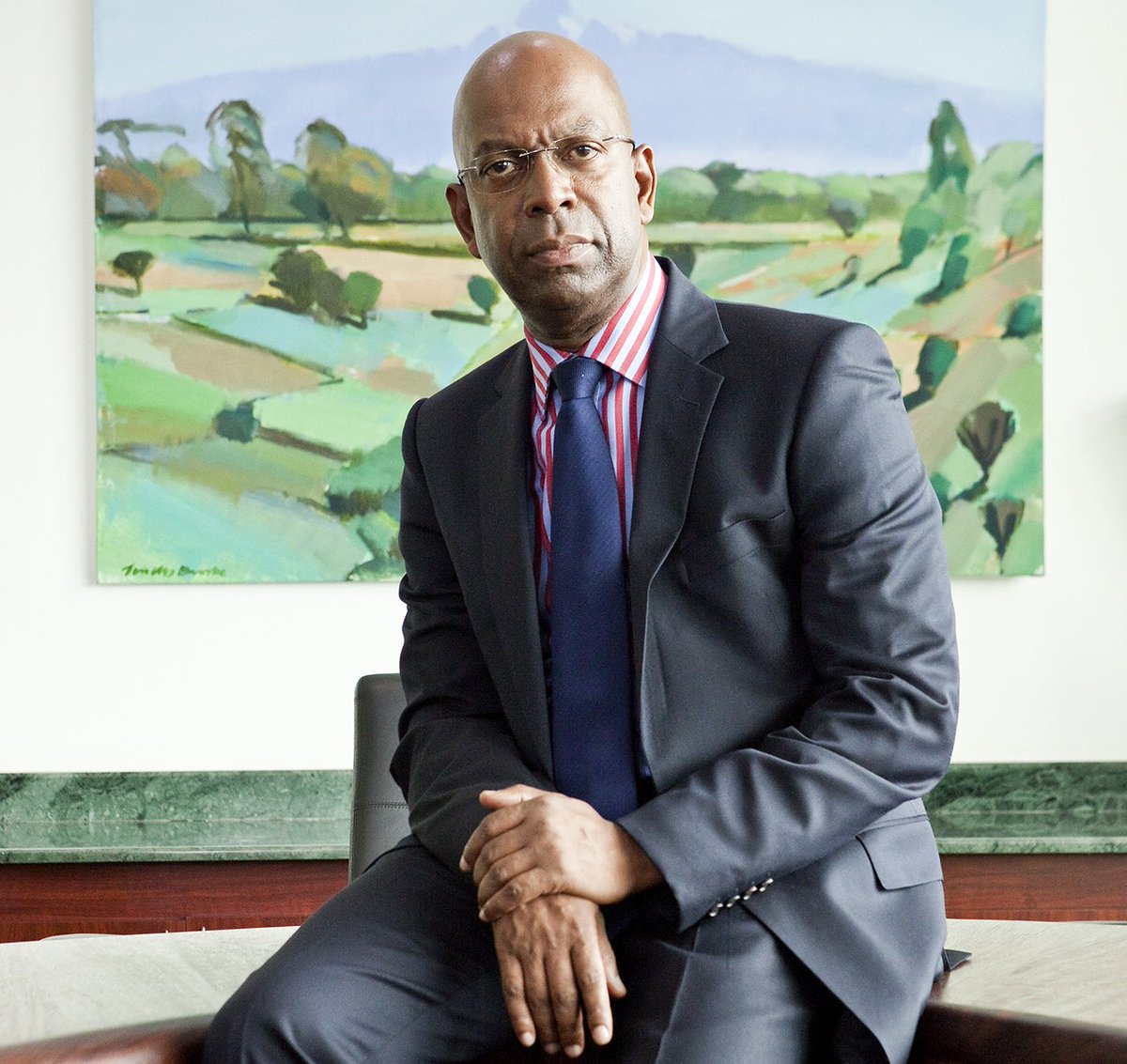
Safaricom under Bob Collymore felt different.
It felt simpler, more innovative, and more customer-focused.
When Bob was in charge, many Kenyans felt proud of what Safaricom was becoming.
But ever since he passed, something seems to have shifted.
The decisions feel less connected to customers, and products like OneApp only deepen that feeling.
Maybe I’m wrong.
But I can’t be the only one who feels Safaricom lost part of its soul after Bob.
17 BILLION for State House Vs 188.33 shillings for capitation
✈️ Over 150 MILLION for the VP’s air travel in just 2 months.
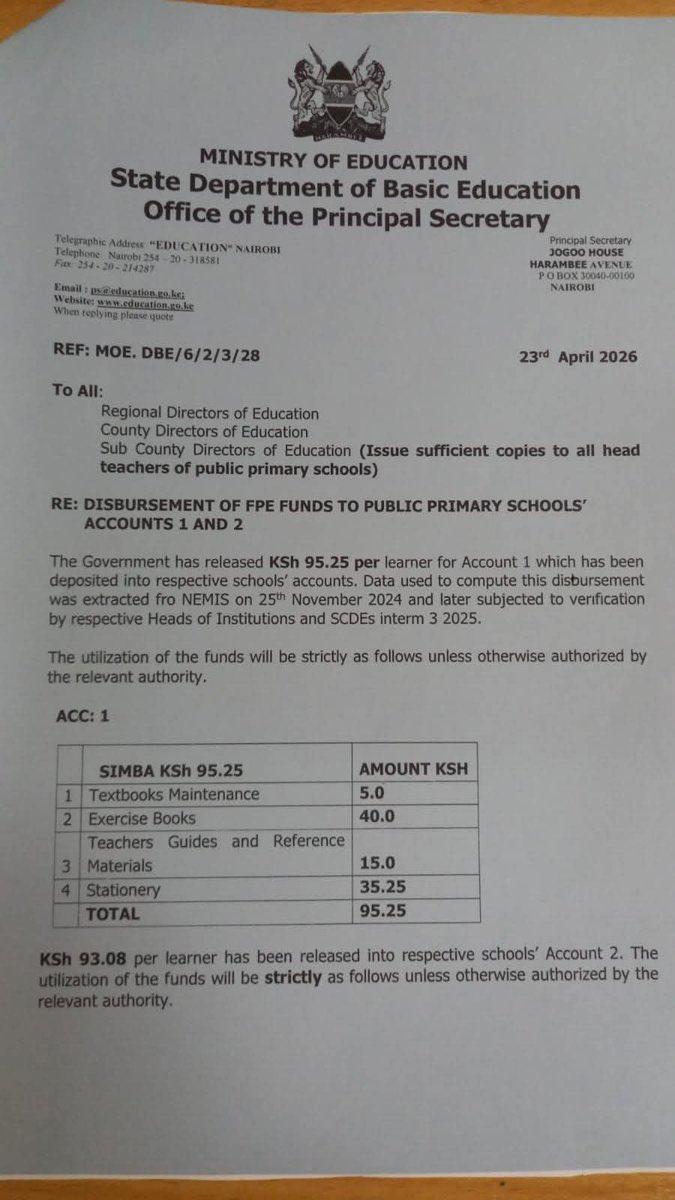
Education? 188.33shillings in total capitation per learner, of which just KSh 40 goes to exercise books.
To add insult to injury, the circular disbursing these funds has the audacity to strongly word the letter saying:
“…the utilization of the funds will be STRICTLY as follows….”
They are strictly managing 188 shillings while billions flow freely to luxury at the top.
Hii ndio madharau!!
It is us the public Vs them.
Kenya deserves better.
Tired of seeing politicians on TV talk shows & radio. We can’t keep talking to them. We need to talk to each other. We can’t keep listening to them. We need to listen to each other. We don’t need to hear their stories. We need to hear our own stories. Enough of/about them!
William Ruto spent a whooping 104 Billion Kenyan Shillings to replace a working NHIF with SHA just to open a new door for him and his friends to loot.
In Context 104 Billion would have built 60–70 Level 4 hospitals from Scratch.
A whole 60 hospitals!!!!!!!
Safaricom removed a perfectly working M-Pesa app and forced this ‘one app’ on everyone, for what?
It keeps freezing, lagging, crashing, and can’t even search contacts properly.
Now, after the latest update, I need a SIM card on my phone just to use an app in 2026??
Did anyone even test this thing before rollout?
Nothing about this is better. Nothing.
People are just enduring it because there’s no alternative.
You can’t tell me I’m the only one dealing with this
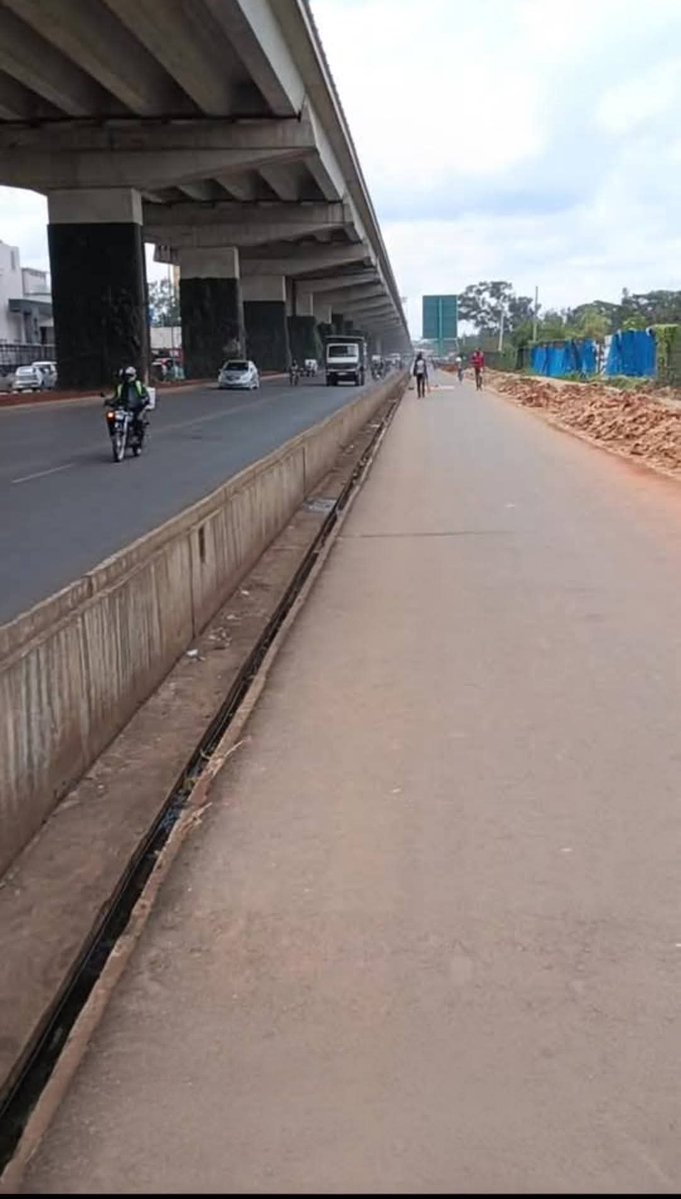
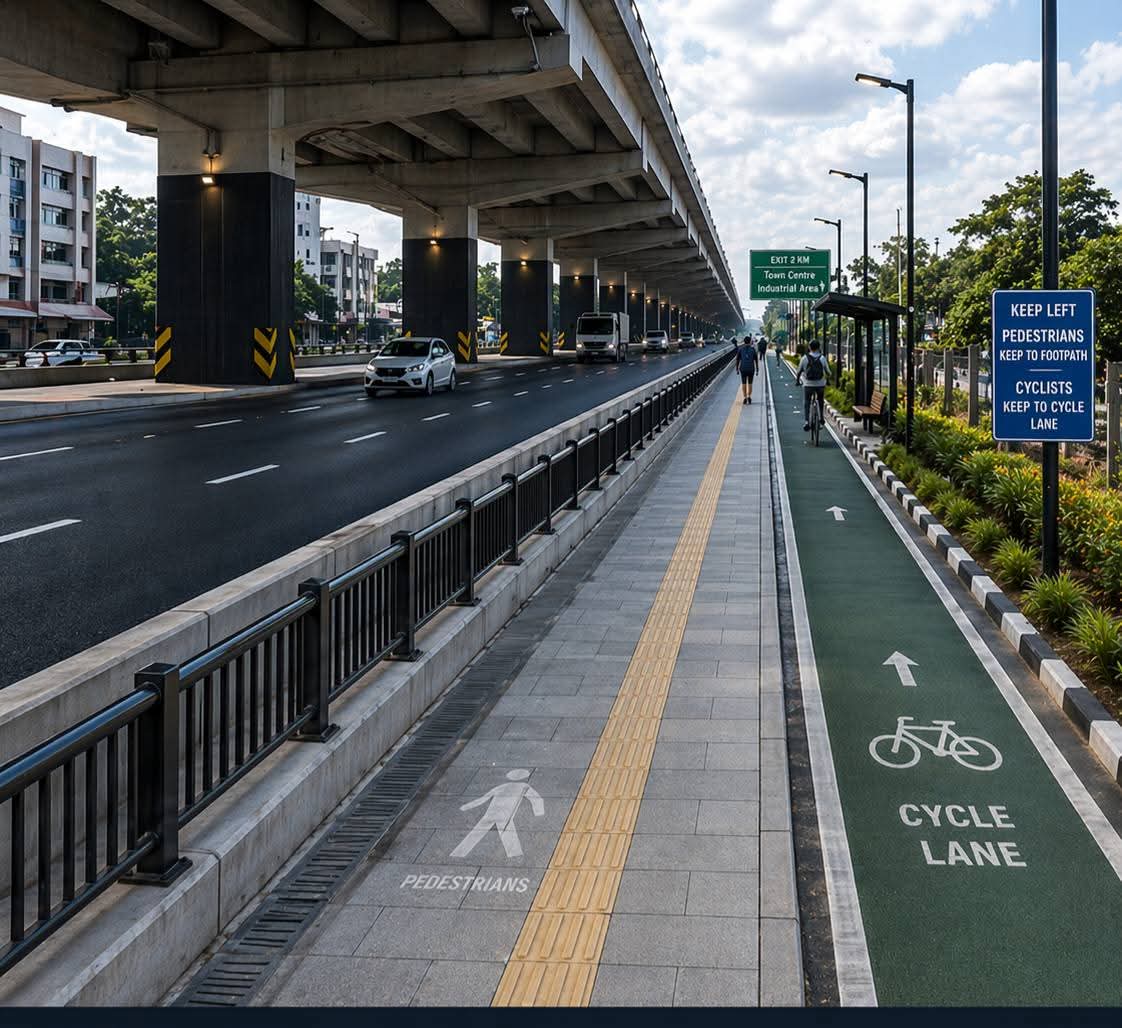
This road was designed, the drawings were reviewed, and they were approved by Kenya National Highways Authority engineers. I have a simple question: do you believe those engineers approved drawings with an open drainage channel right next to a highway?
After construction, the road was inspected and certified for payment. Another question: do you believe the as-built drawings submitted to KeNHA showed an open drain running alongside a live carriageway?
If we assume it was only the resident engineers who was “seen” by the contractor to turn a blind eye to this obvious hazard, are we also saying that none of the directors at KeNHA have used this road or noticed the mistake?
There is nothing as destructive as corruption. It is a cancer that quietly takes lives, all for the sake of a few extra coins. And those who have the power to act but choose not to ,whether corrupt or simply indifferent ,are part of that harm.