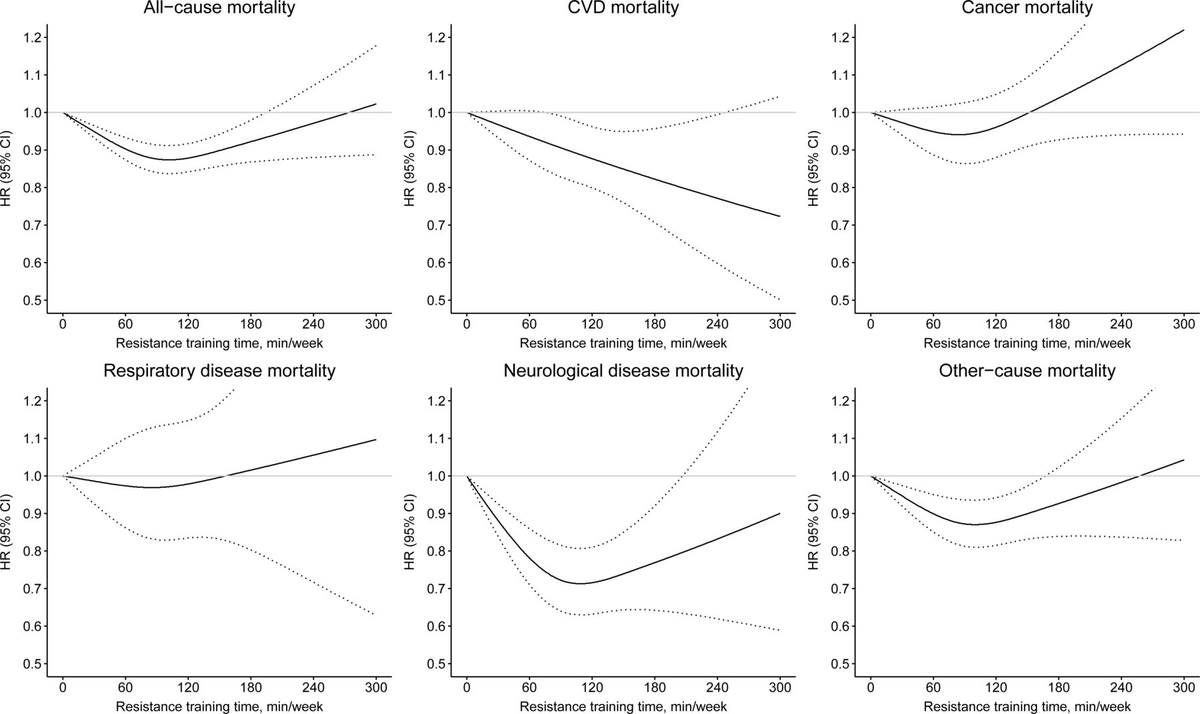
Strength training for 90-120 minutes per week is associated with up to a 30% lower risk of death from all causes, CVD, cancer, and neurologic disease.
That seems to be the upper limit - no additional benefit was observed above 120 minutes of strength training per week.
These benefits were independent of total aerobic activity, but combining strength training with ~5-15 hours of moderate-to-vigorous-intensity aerobic activity reduced all-cause mortality risk by 45%!
Clear message here is: "do both."
Is it ok to combine creatine with caffeine?
They are generally not a problem together unless your caffeine dose is very high.
The interference seems to show up around ~350 mg of caffeine pre-workout (about 3.5 cups of coffee), where caffeine may blunt some of creatine’s performance benefit because they have opposite effects on muscle relaxation.
So yes, you can put creatine in your coffee (I do). Just don’t mega-dose caffeine before training if you want the full ergogenic effect. Even then, the effect is probably minor enough to not stress about.
We’ve agreed to a partnership with @SpaceX that will substantially increase our compute capacity.
This, along with our other recent compute deals, means that we’ve been able to increase our usage limits for Claude Code and the Claude API.
Higher omega-3 status is associated with dramatically lower Alzheimer’s risk.
People with a high omega-3 index (~10%) have about a 50% lower risk of Alzheimer’s disease compared with those at the low end (~4%).
Other studies have reported a dose-dependent relationship - for every 100 mg/day increase in omega-3 intake, Alzheimer’s disease and cognitive decline risk falls by about 10%.
This is still largely correlative data. But when you combine a large risk reduction with a dose-dependent trend, it becomes hard to ignore.
Practically, it may take roughly 2 g/day of omega-3s to move from a low omega-3 index toward that higher, more protective range.
Rhonda Patrick just dropped a bombshell at Natural Products Expo 2026.
Just 1 gram of omega-3 a day slows biological aging at the DNA level and reduces invasive cancer risk by 61%.
This could be the biggest longevity finding of the decade.
Here's everything you need to know:
This study on visceral fat loss blew my mind...
It found that sustained visceral fat reduction over years was linked to preserved brain volume and cognitive function in middle age.
They tracked people for up to 16 years, and those who lost more visceral fat during an initial diet + weight loss intervention had less brain atrophy and higher cognitive function even up to a decade after the intervention ended.
But it was only visceral fat, not subcutaneous fat or even body weight, making the difference. There was no association between subcutaneous fat loss or BMI improvement and brain volume or cognitive function.
Managing visceral fat levels may truly be the key to keeping a sharp and healthy brain with age.
Our devices are changing how we use our brains.
@arthurbrooks makes a compelling point that constant device use fills every open moment with stimulation, and that may come at the expense of reflection, meaning, and self-understanding.
Boredom feels uncomfortable, but it also gives the brain space to wander. And that mind-wandering state is linked to the default mode network, which plays an important role in self-reflection. So when every quiet moment gets filled with a screen, we lose the mental space where meaning gets made.
Sometimes the healthiest thing you can do for your brain is stop reaching for stimulation.
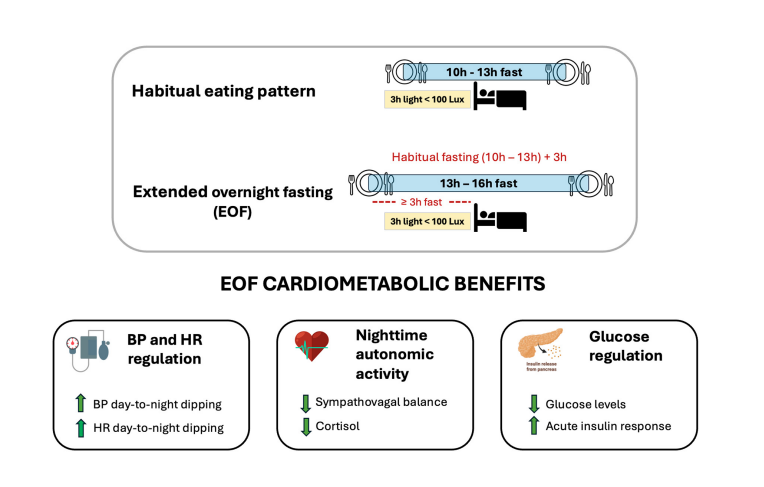
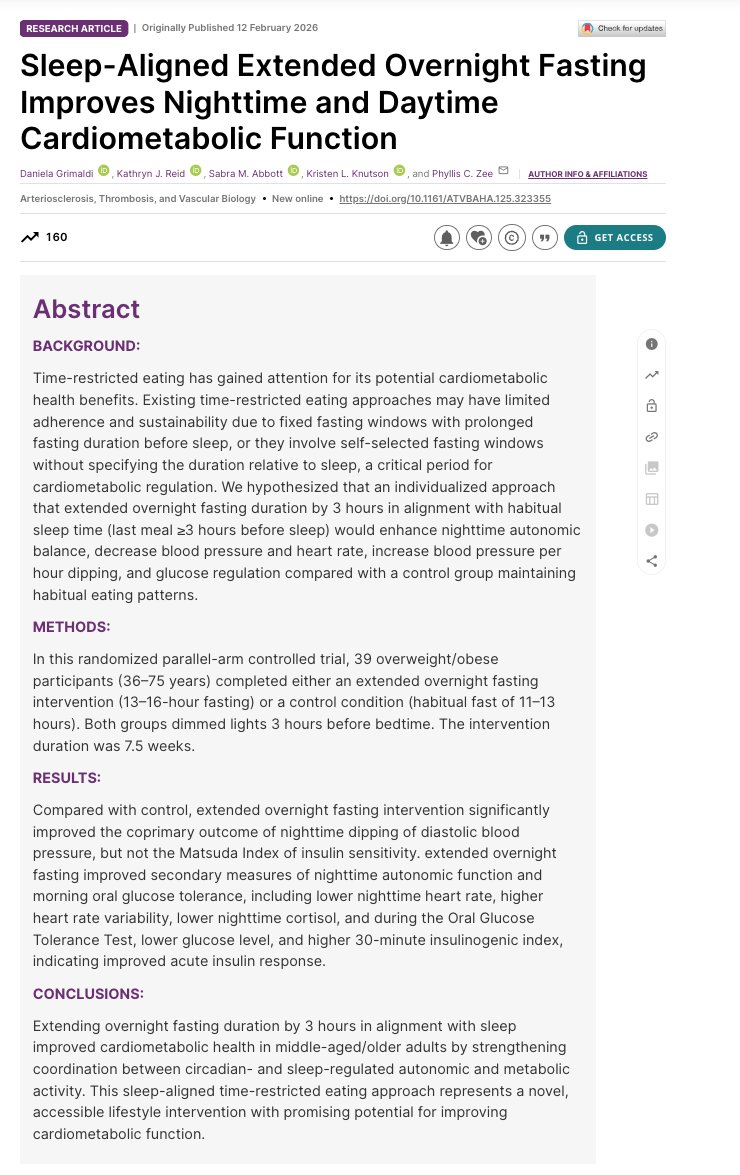
Stopping food intake 3 hours before bed may be one of the simplest ways to improve cardiovascular health
Digestion can take roughly 5 hours, so eating too close to bedtime may interfere with the parasympathetic shift that helps blood pressure and heart rate fall during sleep
In one study, people who stopped eating 3+ hours before sleep saw deeper overnight blood pressure dipping, lower heart rate, higher HRV, lower cortisol, and improved insulin sensitivity
What you eat matters, but so does *when* you eat
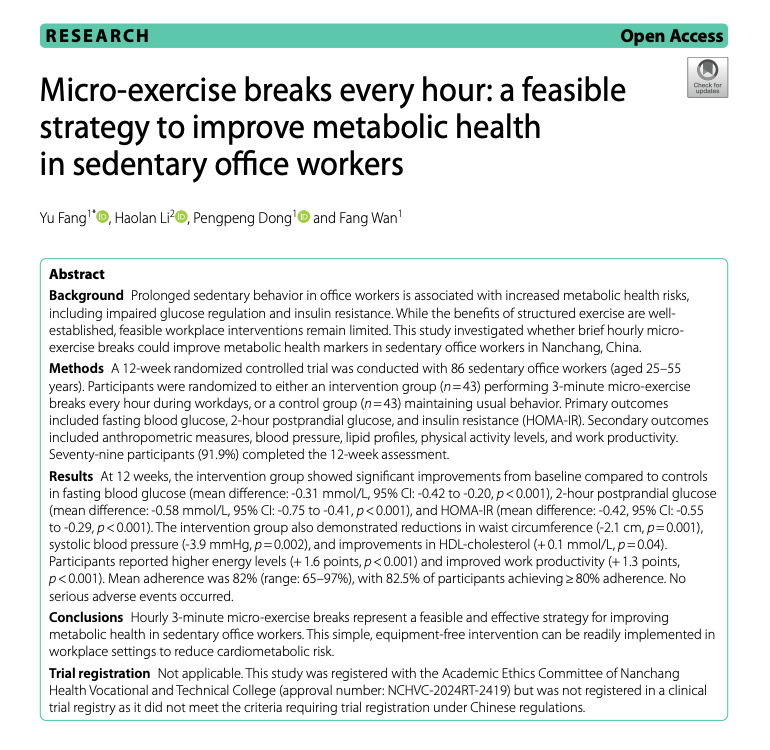
If you work at a desk, incorporating "micro-exercise breaks" into the day can greatly improve your metabolic health.
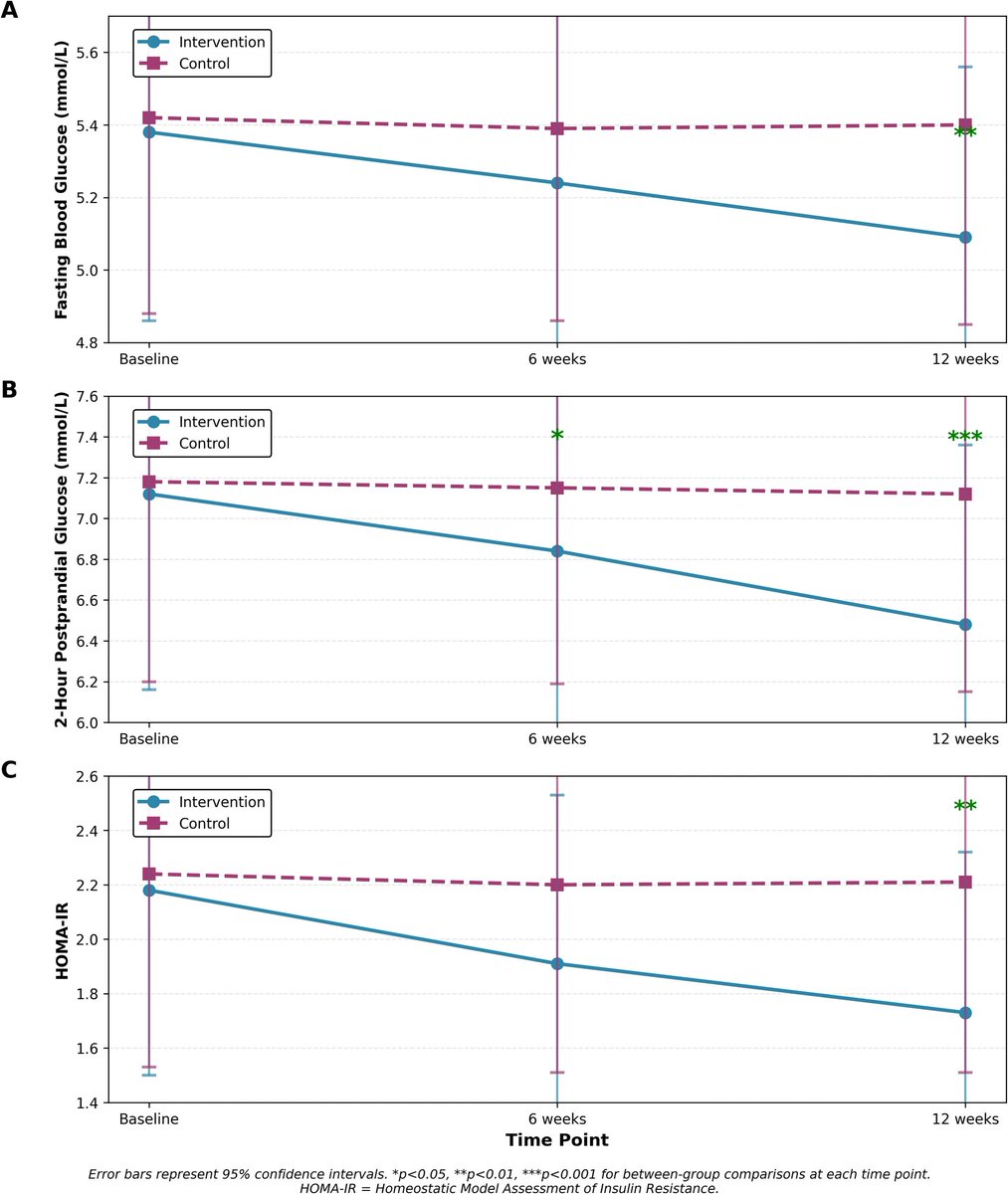
A 12-week study found that doing 3-minute exercise breaks every hour during the workday (e.g., marching in place, push-ups, squats, heel raises) improved fasting blood glucose, insulin sensitivity, and even waist circumference, blood pressure, and HDL cholesterol.
These metabolic benefits happen because muscle contraction stimulates insulin-independent glucose uptake. This is especially beneficial after meals.
Big upside for a low time and effort investment!
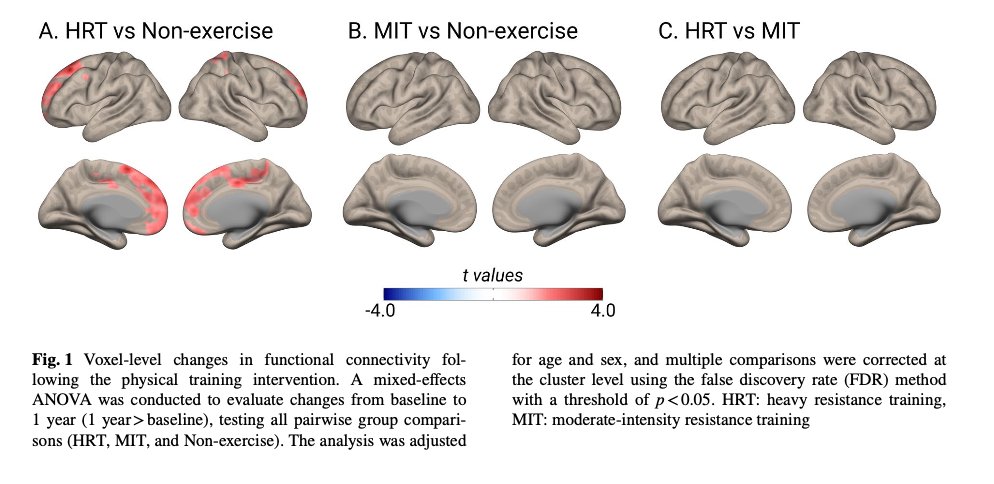
Lifting weights makes your brain look younger.
One year of either heavy- or moderate-intensity strength training reduced older adults' estimated brain age by 1.4-2.3 years on average and enhanced functional connectivity between brain networks.
What I find remarkable is, while the training lasted only one year, the effects on the brain were still noticeable at the two-year follow up.
So many benefits of going to the gym, and not just for your muscles.
Having your last meal at least 3 hours before bed improves blood pressure, heart health, and even blood glucose regulation.
Participants who stopped eating 3+ hours before sleep (extending their overnight fast to 13-16 hours) improved overnight diastolic blood pressure dipping by 3.5% and overnight heart rate by 5%. They also had a higher (better) HRV, lower cortisol, and improved insulin sensitivity.
That was without changing what or how much they ate!
This is one strategy I've advocated for years, so it's promising to see further support from a controlled study on "sleep-aligned" eating patterns.
What you eat matters. But so does when.
Exercise is one of the most powerful ways to raise NAD levels.
A single 40-minute bout of aerobic exercise increases the expression of enzymes involved in NAD synthesis and elevates NAD levels in human blood.
When NAD declines (as it does with aging and in certain diseases), metabolic efficiency and muscle performance decline alongside it. In other words NAD supports exercise capacity… and exercise supports healthy NAD bioenergetics.
So what about supplementing with NAD precursors like nicotinamide riboside (NR) or NMN to enhance performance or recovery?
Mechanistically, it’s plausible. But in controlled human trials, we don’t yet have strong evidence.
That hasn’t stopped interest. @CharlesMBrenner notes that professional sports organizations, including teams like the New England Patriots, have reportedly experimented with NR for performance and recovery. But at this point, that’s anecdotal.
Could exercise-induced NAD turnover mean that certain individuals or athletes will benefit from precursor supplementation? It's a fascinating hypothesis, but one that still needs rigorous testing.
For now, exercise remains a proven way to support your NAD system, as does supplementation for those who wish to explore that route.
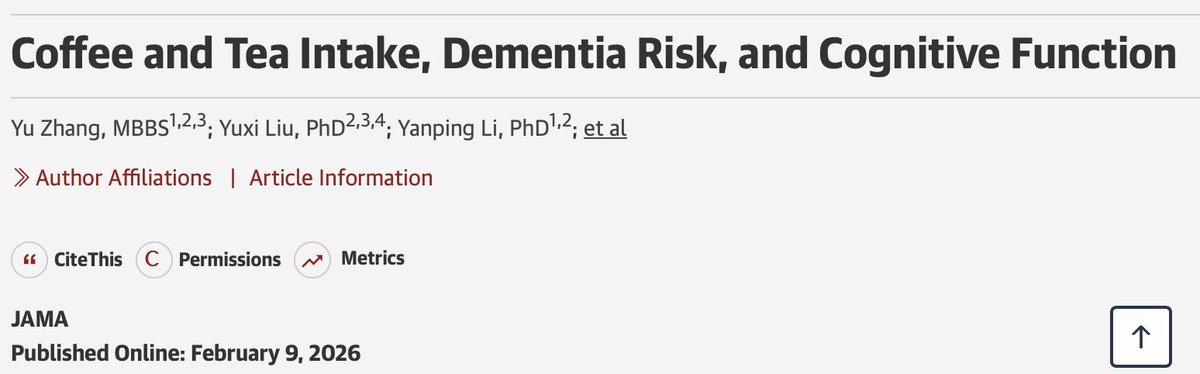
2-3 cups of coffee per day associated with an 18% lower dementia risk and better cognition in a 40-year study of 130,000 participants.
Even with these benefits, I can't do it; caffeine creates a physiological roller coaster and enslaves me.
Dr. Andrew Huberman & David Goggins broke down the anterior mid-cingulate cortex—the brain's "no-days-off" structure that grows when you push through resistance and shrinks when you quit.
Huberman: It lights up when you do what you don't want to do. It releases dopamine in response to friction. It learns. It has plasticity in both directions—build it constantly or watch it atrophy. Stimulation studies make people feel: "There's a storm coming... but I want to go through it."
Goggins (raw, unfiltered): "I didn't know any of this science, but I built it. People call me crazy because they can't imagine doing it. The demons come when you realize what it actually takes. Most wake up to coffee, pancakes, and comfort. I wake up to work. No one wants that grind. That's why average is everywhere. You don't do the work, then at 80 you're empty inside. I have zero empty bones in my body."
This is the science and soul of willpower: The brain rewards the fight. The ones who keep fighting become unbreakable.
If you feel that pull to quit today—remember: Your anterior mid-cingulate cortex is waiting to grow.
What's one hard thing you're pushing through right now? Drop it below. Let's inspire each other.