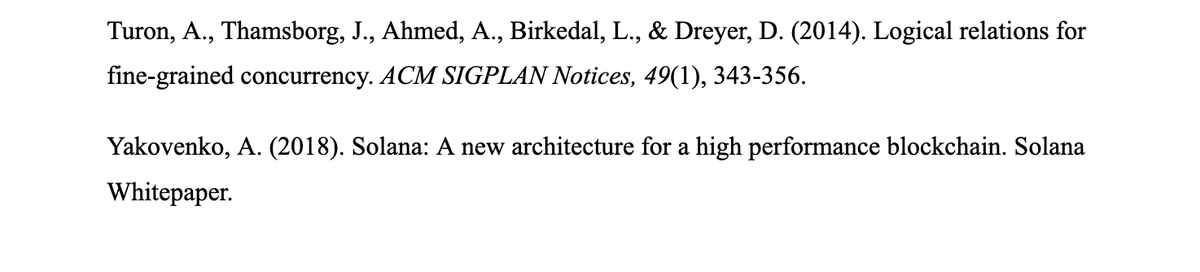
writing an academic research paper on:
"RUST PROGRAMMING LANGUAGE: FEATURES AND USE CASES"
you can talk about rust without talking about its blockchain use case, and you can talk about its blockchain use case without talking about solana...
hence, "Yakovenko. A"
Worked on my first SRS document. It was a really fun process #swe
I would be sharing all things I learnt from it once I’m done with it tomorrow morning.
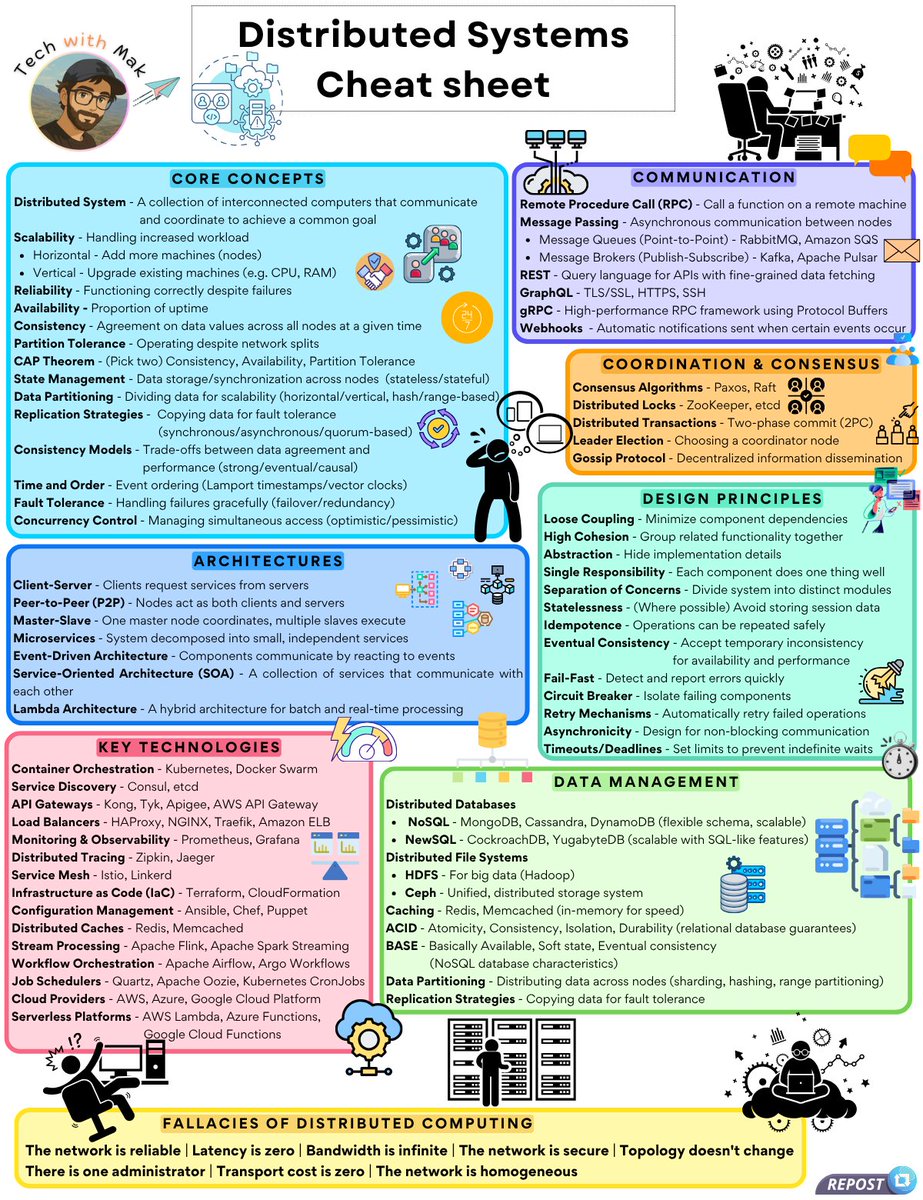
If you like engineering, you should read this before touching distributed systems. (Hard truths of Distributed Systems)
1./ No matter how perfect your code or infrastructure, parts of your system will fail. Machines die, networks glitch, clocks drift, and bugs survive staging.
👉 Design for failure first, and success second. Assume every network call might fail, every service might become unreachable, and every disk might corrupt.
2./ We often say “eventual consistency” like it’s a magic fix.
But in practice, it’s a sliding scale: how eventual is too eventual? Seconds? Minutes?
👉 Real-world systems must define acceptable inconsistency windows and how clients handle them (e.g., stale reads, conflict resolution, or version vectors).
3./ Retries sound safe, but they can:
- Overload a struggling server
- Cause duplicate side effects (e.g., double payments)
- Trigger cascading failures
👉 Use idempotency, exponential backoff, and circuit breakers, they matter more than people realize.
4./ Not just the network. Serialization, DNS lookups, TLS handshakes, cold caches, disk I/O, queue backlogs, all add non-obvious delays.
👉 Performance tuning in distributed systems is a full-time job. Tools like tracing and tail-latency metrics matter more than averages.
5./ You can’t debug what you can’t see. And logs alone don’t cut it.
👉 Use structured logging, distributed tracing, and per-service health signals.
6./ Real-world systems often live in the messy grey area.
For example:
- You can simulate availability and partition tolerance by serving cached reads
- You can delay consistency to boost performance
👉 Think in trade-offs, not absolutes.
7./
“The network is reliable.”
“Latency is zero.”
“There’s one administrator.”
“Bandwidth is infinite.”
These aren't just jokes, they're warning labels. 🧨
👉 Treat every assumption about the network with paranoia, or risk surprises in production.
TL;DR
Distributed systems aren’t just about gRPC, Kafka, or CAP choices, they’re about designing with humility, expecting failure, and constantly asking:
“What happens if this part breaks?”
That’s where real engineering begins.
---------
Follow @techNmak
WTF is Degening❔ 🙂↔️
Imagine a game where you can win big, lose big, and everything moves at lightning speed. That’s degening in Web3!
A “Degen” is a trader who jumps into highly speculative investments with little to no research. Known for extreme risk tolerance, degens thrive in volatile markets, constantly chasing trends like decentralized finance (DeFi) and non-fungible tokens (NFTs).
The term “degen” comes from “degenerate,” originally used to describe reckless gamblers. In crypto, it refers to those diving into high-risk assets like meme coins, NFTs, and DeFi projects hoping for quick profits.
It’s not about playing it safe; it’s about spotting early opportunities, making risky plays, and sometimes gambling purely on hype.
How is a Crypto ‘Degen’ Different from a Regular Investor❔
Degens embrace high-risk, speculative trades, often in untested projects with potential for massive gains. Regular investors, however, prioritize long-term stability, avoiding reckless bets in favor of sustainable growth.
How Degens Make Money💰
Degens don’t just gamble; they use different strategies to generate profits:
→ Trading and Flipping
Meme Coins and Low-Cap Tokens
Buying low and selling high before the hype fades.
→ NFT Flipping
Buying undervalued NFTs and reselling them for profit. Some secure whitelist spots to mint hyped NFTs at lower prices, later selling for gains. Others invest in NFTs to join exclusive communities that offer perks like free airdrops and alpha (insider tips).
→ Pre-Sales and IDOs
Buying tokens before public launch, usually at a lower price, and selling them after their value increases.
→ Leveraged Trading
This trading method amplifies potential returns by borrowing funds to increase position size.
High Leverage (50x-100x): Small price movements can result in massive gains or devastating losses. Some mitigate risk by setting stop-loss (SL) orders to avoid liquidation.
→ Yield Farming and Staking
- Liquidity Providing; Lending crypto to a trading platform to earn rewards.
- Staking; Locking up tokens to earn more over time.
→ Airdrops and Bounties
While not as fast as flipping, airdrops and bounties require little to no upfront investment. Some degens go all-in, farming multiple airdrops at once; investing in nodes, using mainnet apps, and spending gas fees on multiple transactions in hopes of securing a big payout later. They sell all of the gained tokens at a good price and move on!
The Risks/Stress of Degening
Degening is high risk, high reward but it’s not all fun and gains.
→ Scams & Rug Pulls
Some projects are scams, with founders disappearing after taking investors’ money.
→ Losing Everything
A coin can crash in minutes, wiping out an entire portfolio.
→ No Regulations
Unlike stocks, crypto is largely unregulated. If you lose money, no one will save you.
→ Mental Stress
Watching charts 24/7, making risky trades, and handling big losses can be exhausting.
Degening is not for the weak.🙂↔️
Is Degening a Career?
❌ No, degening is NOT a real career. It’s a high-risk strategy, not a stable job. Some people turn it into a full-time hustle, some retire their bloodline but most burn out or lose money in the long run.
But degening can open doors to real Web3 jobs, such as:
→ Crypto Researcher – Analyzing tokens and projects.
→ Community Manager – Running Web3 communities and promoting projects.
→ Trader – Transitioning from reckless gambling to strategic trading.
→ Content Creator – Sharing alpha (insider tips) and building a personal brand.
How to Start Degening in Web3
If you want to be a degen, here’s what you need:
→ Set Up Your Wallet
Get a crypto wallet like MetaMask, Phantom, or Trust Wallet. This is your digital bank in Web3.
→ Get Some Crypto
You need funds to trade! Most degens use ETH, SOL, or BNB.
→ Find the Plays
Find other degens, follow crypto groups, Twitter (𝕏), Discord, and Telegram to spot the hottest (and riskiest) new projects.
→ Ape In (But Smartly)
Degens buy early in meme coins or NFT projects, hoping for a pump. But if the project fails? They lose everything.
→ Exit Fast
Many degens sell early to secure profits. The longer you hold, the higher the risk.
The Dark Side of Degening
Degens shake up markets, but they also increase volatility and make crypto riskier:
💀 Pump & Dumps – Degens sometimes inflate token prices artificially, then dump them for profit.
💀 Market Manipulation – Some groups coordinate buys and sells to trap new investors.
💀 Extreme Volatility – Degen trading causes rapid price swings, making crypto riskier for all investors.
Final Thoughts: Degening is Like Playing with Fire 🔥
Some degens make life changing money, while others lose it all. It’s a high-stakes game where some strike gold, and others get burned.
If you want to degen:
→ Never risk money you can’t afford to lose.
→ Learn before you ape in.
→ Take profits early.
→ Don’t believe every hype tweet.
Degen smartly by building skills, and not relying on luck alone.
If this was valuable; please gib me a follow, TENKZ! 🙂↔️
@rainbowpikmin A desktop app that is a collection of word games— like the one on iMessage, for now I have been able to finish 75% of the work on anagram. Haven’t written a single line of code for the rest of the games. But hoping to add this one to my portfolio.
Currently in my early days of College as a computer science student, and early days of learning programming, what advice do you would you give me? And books will you recommend I pick up?