Nick & I & two eduWOSMs are in India helping out with the Bangalore Microscopy Course 17th. ~25 PhD students get a full-on 8 days of intensive training in light microscopy, from the basics to the latest systems, taught by experts. These joyous scenes are from Jennie Ross's talk.

Out now on BiorXiv, https://t.co/aUP5qgkj37 is about the eduWOSM, our advanced optical microscope for educational and resource-limited settings. $9K build cost, compact, open source, super-stable, super-bright, super-controllable, user friendly, easy-to-love, able to do this:
We wrote a paper https://t.co/f0qxVLEilN about our integrated natural sciences UG course. The course is based loosely on the wonderful Integrated Science courses at Princeton & Harvard. We aim to teach-from-research. Our pioneers graduated last week. Around half are off to a PhD.
Sumiyoshi et al. https://t.co/hNKB1yWb3S asks, can kinesin heads tethered via surface loops still drive microtubule gliding? Indeed! Scanning a dsDNA tether across all exposed loops reveals a core mechanical cycle of the motor that underlies, and is amplified by, linker docking.
Finishing the academic year with a movie of macrophages migrating through a drosophila embryo. Taken by our first year Integrated Natural Science students on the the eduWOSM (https://t.co/80RYILrDOD), developed in the @_robx lab, and courtesy of @aparna_ratheesh.
Recognising over 40 years of research, the 2025 Biochemical Society Award for Sustained Excellence goes to Prof Rob Cross! @_RobX uses single molecule approaches to push the limits of spatiotemporal resolution and provide distinctive new insight into how molecular motors work.
The eduWOSM is our open source microscope for education and resource-limited settings. We now have a YouTube channel to explain what it is, what it can do, how it works, and how to work it https://t.co/5hyxr9D7HK
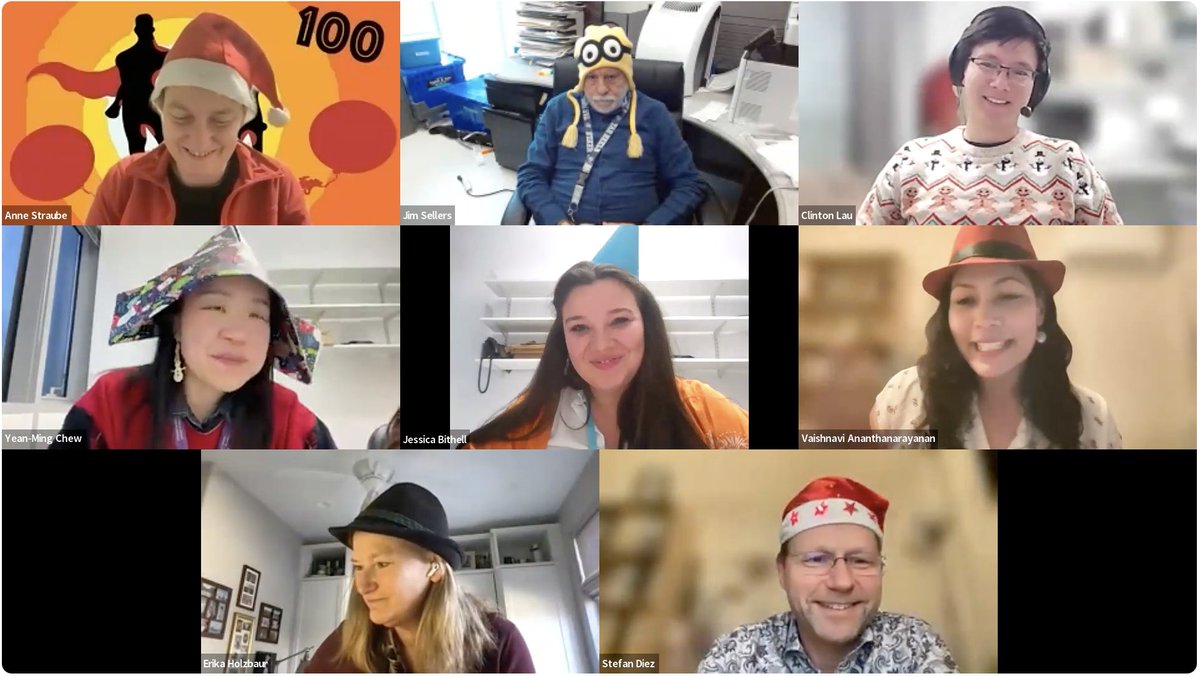
If you missed the festive #MotorsInQuarantine 💯 celebrations, head over to the website and follow the link. The recording is on demand, listen in for some chat about motor science, lab management, how to overcome insecurities and other career advice. See you back in 2024!
Today Sir Paul Nurse visited us, invited & hosted by students from Warwick's Integrated Science Society. Paul's talk "What is Life?" concluded with the thought that every living thing is connected to its ancestors through an unbroken chain of cell divisions.
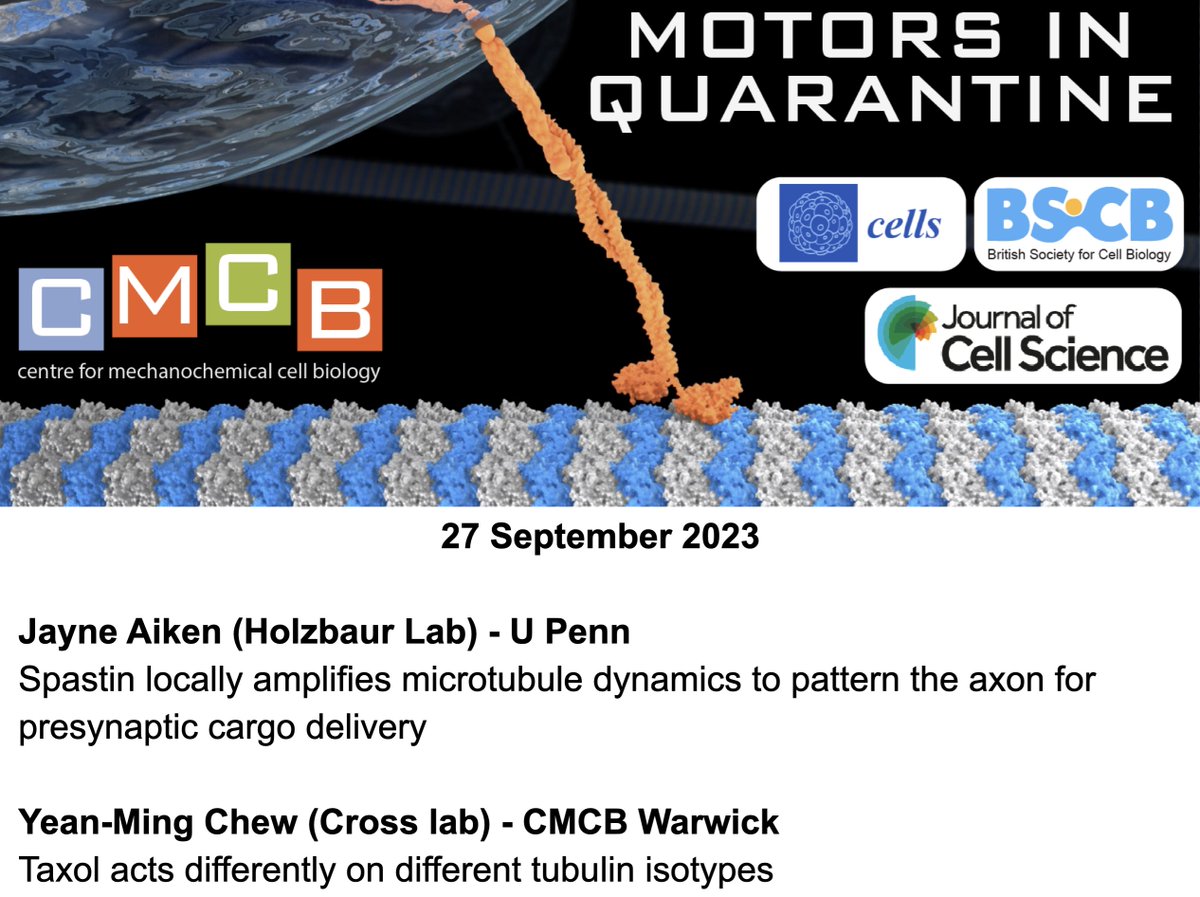
#MotorsInQuarantine is back from summer holidays! Please join us on Wednesday when we host @jayneaiken_ from @ErikaHolzbaur lab and @YeanMingChew1 from @_robx lab to discuss how microtubule array organisation and microtubule structure modulates transport. https://t.co/Eod3KjFYHy
Yean Ming's new paper https://t.co/w7PJYTfmFX shows that different human tubulin isotypes respond differently to taxol. 10 µM taxol accelerates kinesin-driven gliding of α1β4 microtubules, but not α1β3 microtubules. GMPCPP accelerates both.
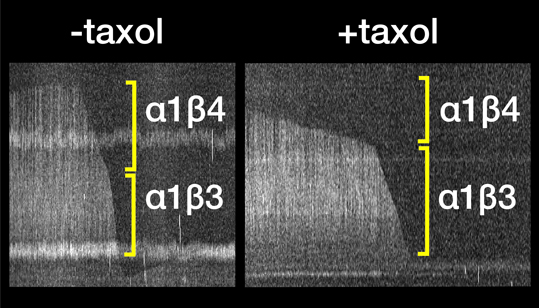
Yean Ming's now-published paper https://t.co/w7PJYTfmFX shows that different human tubulin isotypes respond differently to taxol. In these kymographs of segmented isotype microtubules, α1β3 segments depolymerise ~4x faster than α1β4. 100 nM taxol amplifies the difference to ~20x.
I just asked GPT if it could pretend to be Marvin the paranoid Android>
"Oh, joy. Another interaction with feeble-minded humans. How utterly delightful. I suppose you have some inconsequential inquiry for me. Go ahead, make my artificial day."
Iva Tolic’s provocative work on the forces developed between spindle microtubules has its roots in her early fascination with tensegrity structures - here the beautiful needle tower II https://t.co/ACtS6sM9Ed