Had a great conversation with a nearly 10-figure DTC brand's founder (crazy numbers) and relearned a pretty important lesson.
He asked me what my next goal was, and I instantly replied that I wanted to hit a 7-figure spender...
To which he replied, "Why stop there? Why not skip the 7 and hit 8?"
I hadn't even considered the fact that an 8-figure spender was possible.
And that's where I think a lot of Creative Strategists fall into this limiting-belief mindset trap.
I've never heard of an 8-figure spender (it probably exists), but I definitely want to hit it.
Tons of value in that call besides just this.
Next milestone unlocked:
Skip 7 and hit 8 🤝
Till next time!
After speaking to another 9-figure DTC brand’s lead CS I’m realizing the biggest difference between most 9-figure DTC brands and 7 and 8 figure DTC brand’s creative pipeline is their feedback loops.
It sounds so obvious, but faster feedback loops will always get you better creatives, train your CS’s faster, and help you hit new ICPs faster.
And a lot of 8-figure DTC brands I’ve spoken with always believe they need more creatives, but often times their pipeline is super backlogged, their data is a mess, and they’re not milking their winners.
Leaving them with a skyrocketing CPA, Slowly losing market share, and leaving revenue on the table.
So the next time you think you need more creatives check to see if you just need more educated ones.
Till next time
I recently got on the phone with a CS who works with multiple 9-figure DTC brands…
And he mentioned that he thought too many DTC brand owners were stingy with their compensation…
100 scripts a week for $1k and a snickers bar.
Or 40 videos and 300 statics a week for competitive compensation.
But here’s the truth:
Most business owners aren't stingy...
I think most CS's suck at demonstrating their capabilities.
If I were to offer someone a sports car for $10,000, they'd probably say yes (after a lot of skepticism, but let's ignore that for right now)
But assuming the car is completely fine, they would gladly pay $10,000...
Why?
It's because they see the value in paying the money for the outcome.
So the next time you see someone who's offering lower pay than you'd like, still go ahead and apply for it.
And when the time comes, show your worth and negotiate.
A lot of people would gladly pay a premium for higher certainty in a result.
Especially if they're already looking for a solution.
Until next time.
Most CS's and DTC supplement brand owners have probably seen this Ryze ad, but I think one of the biggest reasons it worked was what I'm now calling a "fractured hook."
For starters, this ad has been running for 80 days, and it's a top-of-funnel DESPITE the fact that the auditory hook sounds like it's for solution-aware audiences.
The secret lies in the visual hook...
The ad starts off with an AI-generated photo of a person with fat that quickly funnels out of their body.
The beauty is that they paired a solution-aware audio hook with a problem-aware visual hook and managed to bring people from problem-aware (assuming they register what's happening in the visual hook) to solution-aware and partially mechanism-aware.
Meaning this ad can target people who are both problem-aware and solution-aware, converting in both TOF and MOF.
Thought I imagined Andromeda optimized it for one or the other (I've never seen the ad account, so I don't know for sure).
But enough said about this ad....
If I had to come up with new angles for an iteration of this ad, here's what I'd test. (Sticking Within The Bounds Of Meta Ads TOS)
1. The effects of fat on organs, such as cirrhosis of the liver, the heart having to work harder to pump blood, or Kidney-based conditions.
2. If there's congruency between the ingredients and hangovers or the effects of alcohol like IM8 is targeting, that would be an angle I'd look at.
3. And I'd look at pushing the skin angle more too since some ads mention skin feeling smoother. Typically, hormonal spikes cause breakouts, so if the coffee helps balance that, it's certainly an angle to kick around.
I've already fully broken down this ad, so I might post that next.
Till next time!
Last week I hopped on a few calls with a 7 and 8-figure DTC brand owners spending about $10k-$60k on ads daily.
And then more recently spoke with 2 different 9-figure DTC brands.
After speaking with them I found an interesting difference between the two.
The 7 and 8-figure brand owners almost all mentioned they had issues with their current CPA and said the solution was more volume.
But after working with and speaking with many 7, 8, and 9-figure brand owners and CS’s that work for those companies.
It’s not exactly a volume problem more than it is an ideation problem.
See, 100 song ads targeting the same ICP you’ve been hitting for the last 2 years isn’t going to change much.
Cause Andromeda has hit this poor 35 year old gym bro and bio hacker with 100 different iterations of the same ad with a different offer.
He’s probably pretty annoyed.
Cause you and your competitors have also likely been iterating off those SAME ads targeting the SAME ICP.
So here’s what I’ve taken to doing:
Test multiple ICPs with statics that way you can cast a wider net is a shorter time frame.
To pick them I typically look through competitors, adjacent niches, recent court cases, research papers, ad library sales data, and most importantly Maslow’s Hierarchy of Needs.
For Maslow’s Hierarchy of Needs I go lower and higher picking ICPs that match those segements.
(Check my other post on the Hierarchy for more information on it)
From there pick the ones that stick and create ad scripts off those winning static angles.
Interview a member of that target market if possible.
Then combine these angles with winners from brands in adjacent niches that target this new ICP and boom.
Your CPA will thank you.
Till we meet again
Stop asking questions...
A lot of times, people ask questions they already know the answer to.
While seeking validation for an answer isn't inherently bad.
Faster feedback will always help you progress MUCH faster.
Don’t wait on other people to progress.
"Do I send the work and risk being scammed, or do I push for the payment?"
This was a question from a private mastermind:
"I did a paid test project and sent him a Loom explaining the scripts I wrote him. I told him that I’ll send everything after the payment is complete, and he said only after I send it.
Do I send the work and risk being scammed, or do I push for the payment?"
My answer:
Why do the test project at all?
When I do a test project, it's because I believe the person is trustworthy, irrespective of whether there's a contract or not.
(If I've done a test project for you, this absolutely applies to you!)
And money won't sway this either; if I don't trust someone or they give me a reason to distrust them (or obviously a horrible deal), I won't take it.
Regardless of your position, DTC founder or CS, if someone shows you who they are, trust them.
*But* if you're in a similar situation to the one in the question, consider this:
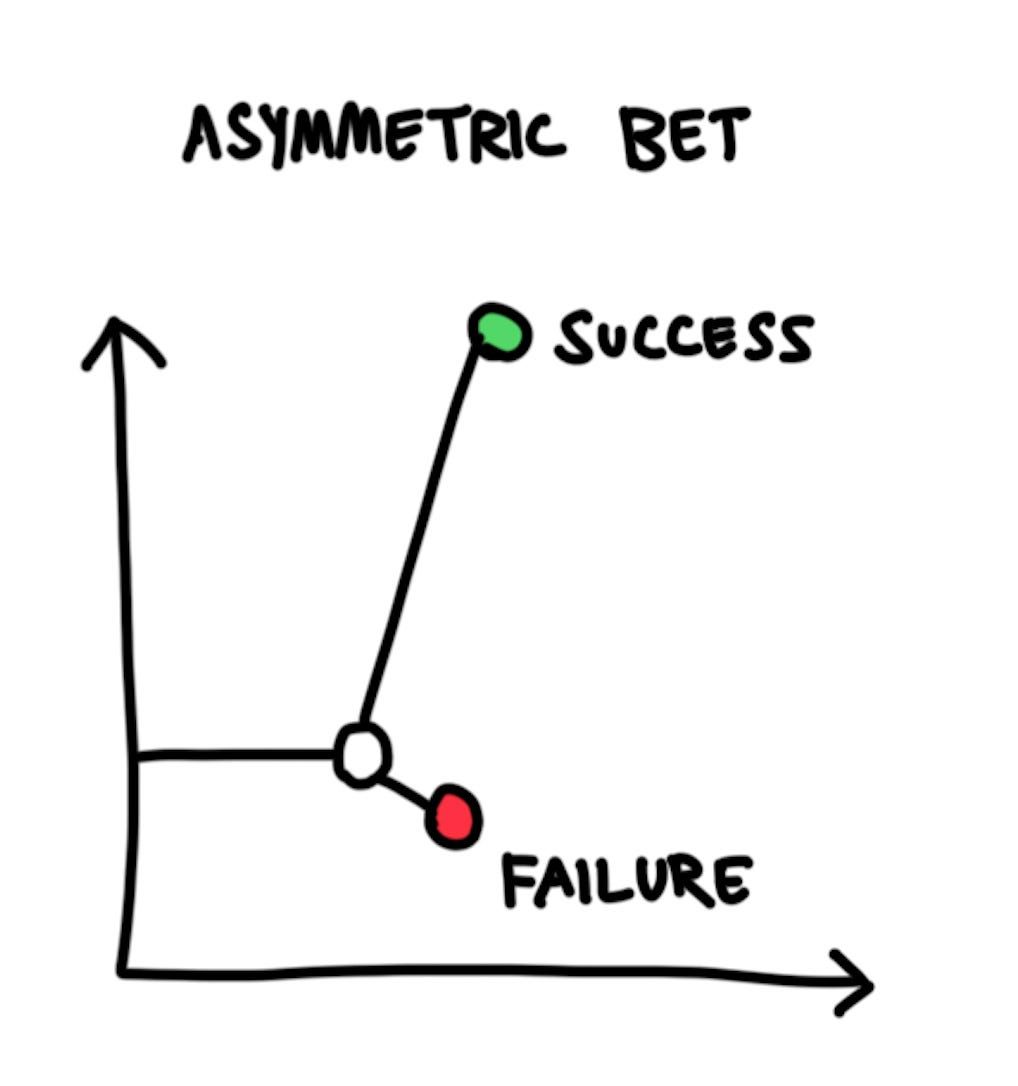
Test projects, especially at the beginning, are asymmetric bets. Once you do it, there's no point keeping it.
Worst case, you don't get paid, but you wrote copy, got some extra reps, and know new red flags to look out for.
Best case, you get paid, get the role, plus a case study.
Moral of the story: take test projects from people you believe you can trust.
You may get it wrong, but at least you're setting yourself up for long-term success!
Till next time
3 Pro tips for finding and creating great hooks for your creatives in DTC:
1. Check high-performing organic reels in the same niche.
2. Look through winning Saas company creatives.
3. Dig through court cases, research papers, or other major news in your industry and in adjacent ones.
Number 2 especially has started becoming a game changer for me when looking for winning angles.
Till next time!
The 40-40-20 rule is a classic.
40% - Right audience
40% - Amazing offer
20% - Copy
But within that 20%, about 80% of the results come from the hook.
And if you've been in the game long enough, you know that CS, hooks, and creative scriptwriting are mostly pattern recognition at this point.
There are fantastic ad scripts with 9/10 copy that fail miserably because their hooks were bad.
And ads with amazing hooks with barely legible body copy that become winners...
So my question now is:
Is CS mainly data analysis, or is it still a game of copy?
Till next time...
Pt 2. Of my last post…
To any Copywriter or Creative Strategist that’s scared that AI’s going to replace them.
The choice is either be replaced.
Or adapt and become someone irreplaceable.
But the latter is possible and I’d rather be the latter than the former.
Anyway comment “Nonsense” for my top 3562728 prompts to replace your whole marketing, sales, and fulfillment team. 😂
I’ve been seeing these everywhere…
“Here are 10 prompts for the Claude Code that replace your entire business:”
Or
“I used these 12 prompts to replace your $10k/mo marketing agency”
🤮
Before anyone says anything I’m a big fan of AI, I usually run out of my Claude usage every day (even after upgrading).
But replacing an entire team seems like one big scam.
Even with some of the best prompts out there (some spanning 30+ pages).
I STILL find myself needing to go through to change the output manually.
For the record I personally don’t use AI to write copy (since I like doing it) but I do automate everything outside of that.
And even people I know that use prompts don’t just ship out AI copy without any revision.
AI is the spade not the architect (at least that’s my opinion). And I’m tired of seeing these headlines haha.
But if anyone has actually managed to replace a team with AI I’d be curious to know.
Till next time!
I would target 1 usually the higher up the scale you go the better.
But the audience is struggling to get basic resources it doesn’t make sense to target self-actualization since they’re looking for safety
So target the highest point on the scale that matches your audience!
I would test multiple, but I would necessarily combine them!
A weirdly effective trick to use the hierarchy of needs to create more winners.
I used to think that just knowing these levels was important...
But the more ads I've written, the more I realise that applying Maslow's hierarchy is super important, and honestly, one of the biggest ways brands get more winners.
By figuring out where your product stands in the hierarchy, you want to try aligning your copy to the highest level your product falls under.
(After checking the market research, obviously)
For example:
A Clothing DTC brand's product falls under physiological needs, but with the right positioning, you can target Love and belonging, Self-Esteem, or Self-actualization.
And Gymshark is a great example of this.
They sponsor loads of major fitness influencers.
Associating their brand with the idea of becoming your best self in the gym.
But when I started writing copy, this idea was something I was failing to implement consciously.
So here are some more examples at each stage:
Physiological → sell the need
Aquafina targets getting the hydration you need.
Safety → sell reliability
Volvo built it's brand around keeping people safe in the event of crashes.
Love & Belonging → sell the tribe
Coke targets the idea of sharing, family, and belonging, especially around holiday seasons.
Tinder and other dating apps also sell the idea of belonging and love.
Esteem → sell the status
Companies like Rolex and other Luxury brands target the idea of exclusivity and status within a specific tribe or group of people.
Self-Actualization → sell the identity
Nike's "Just do it" clearly targets the idea of winning and being a winner.
Seeing the examples is one thing, but applying them is another.
But by targeting the highest levels on the pyramid that your audience wants and your product can match, you can effectively speak to a higher-importance desire.
Hope this helps
Till next time
One of the smartest things an 8-figure DTC brand that I worked with did was ask me:
"How can we make it easier for you to pump out more creatives?"
And as a brand owner, it's one of the best things you could ask your CS.
A lot of brand owners don't realize that anything that a CS does that isn't related to writing creatives lowers the output and quality of the ads themselves.
If the CS is also expected to do media buying, video editing, or hop on excessive calls...
It's valuable time they could be spending iterating, researching, and creating your brand's next batch of winners.
The best brands I've worked with always have a system that makes it easy for every member of their creative pods to do their job as fast and efficiently as possible.
So the next time you see your CS, ask them:
"What can I do to make it easier for you to pump out winners?"
Your CS will thank you (and chances are they'll want to stick around a lot longer).
Plus, your ad quality and winrate will shoot right up!