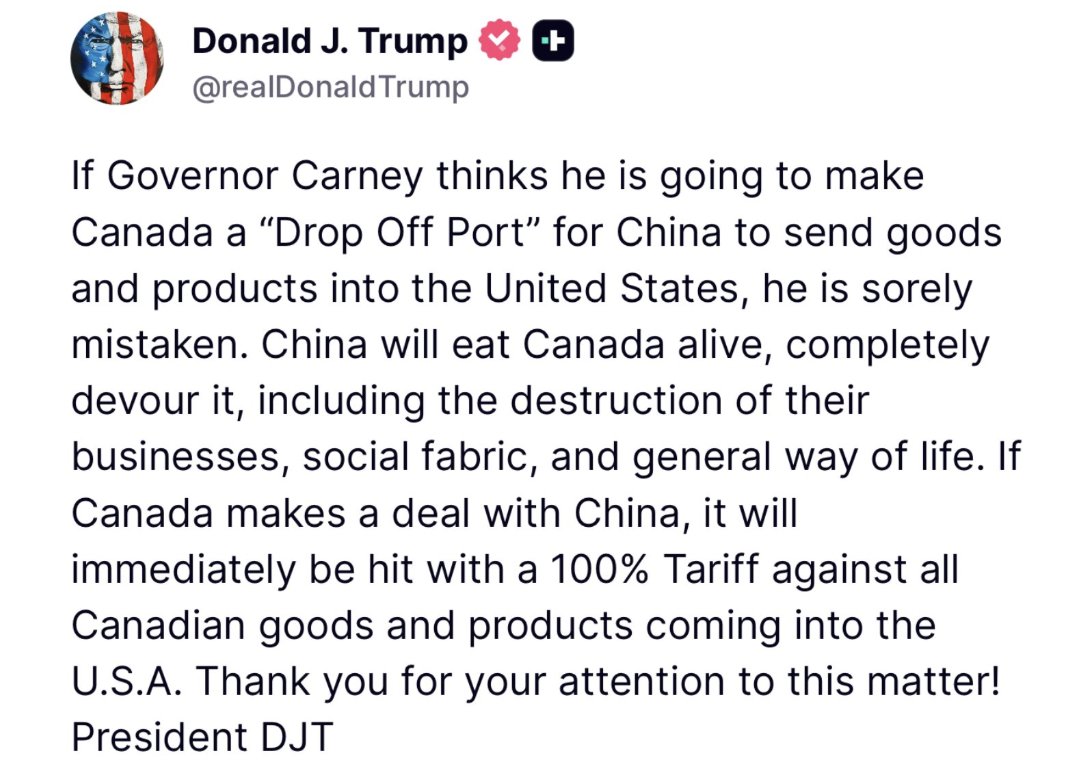
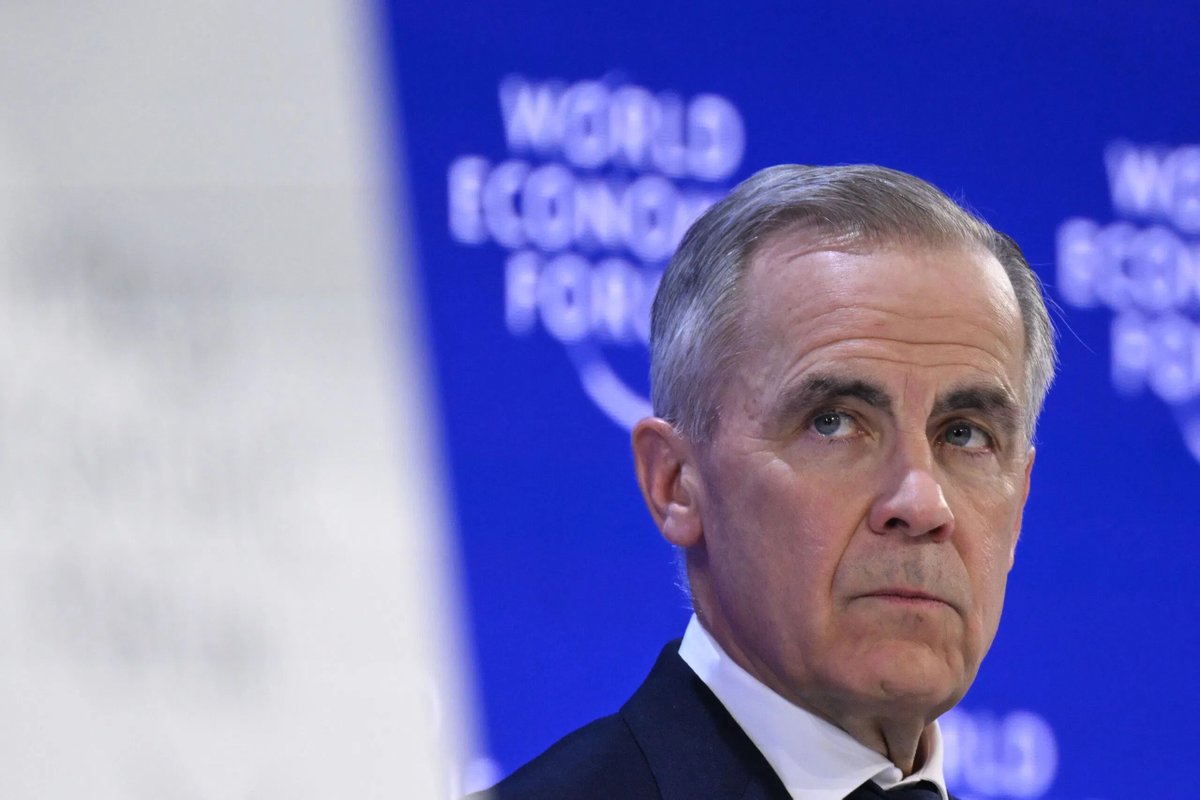
BREAKING: Mark Carney cancels the planned Canada‑China trade agreement just 3 days after announcing it, following Donald Trump’s threat to impose 100% tariffs on all Canadian goods if the deal went ahead.
Trump says that if “Governor Carney thinks he is going to make Canada a ‘Drop Off Port’ for China to send goods and products into the US, he is sorely mistaken” and warned “China will eat Canada alive, completely devour it, including the destruction of their businesses, social fabric, and general way of life.”
After a year in office, Carney has failed to secure a single deal with the EU, the U.S., or China. GDP growth is the worst in the G7 at just 1.6%, exports are stalling, debt is rising at fastest rate ever, and unemployment is skyrocketing, leaving the economy under heavy pressure.
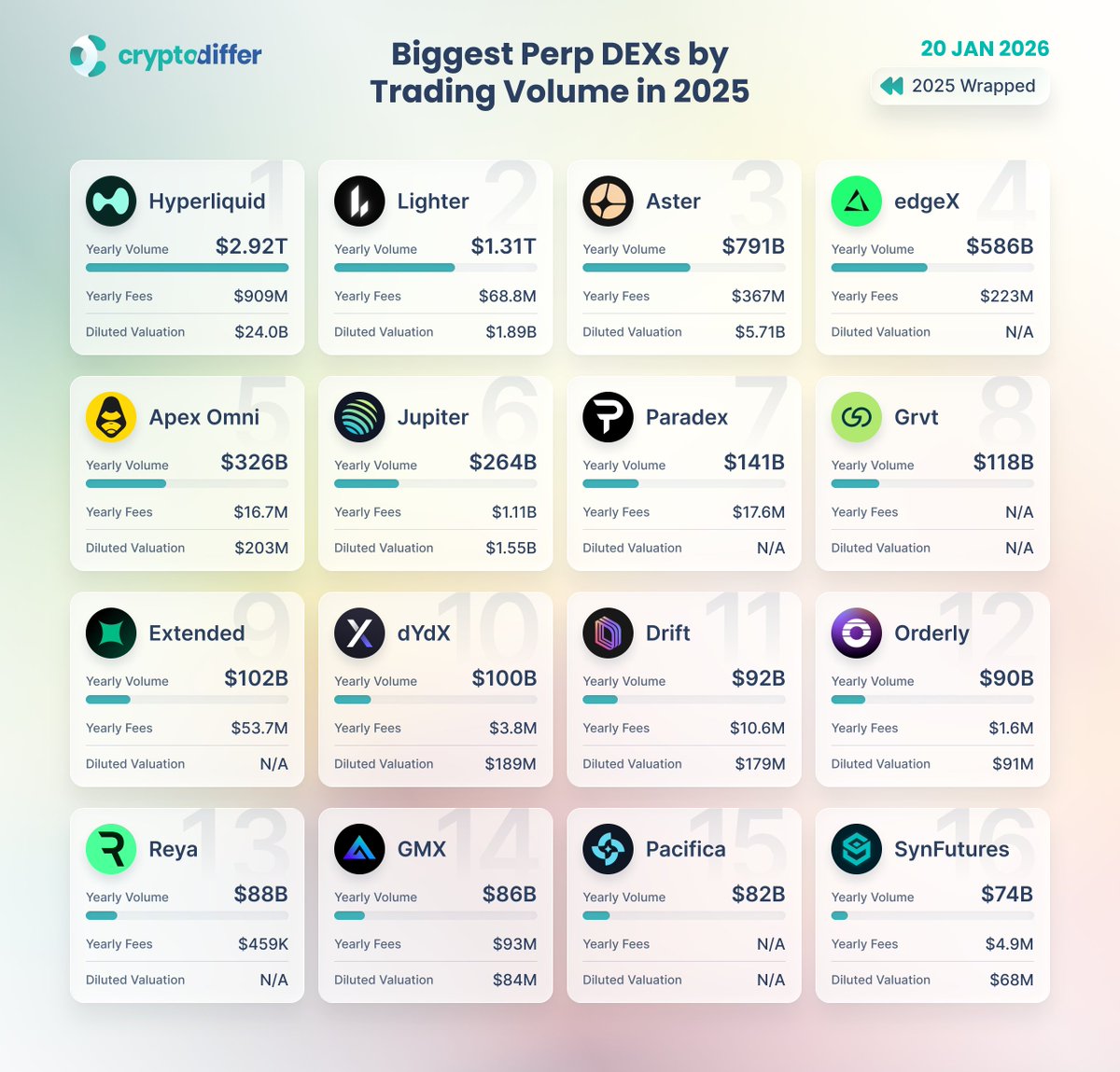
Biggest Perp DEXs by Trading Volume in 2025
Perpetual #DEXs hit record trading volumes as demand for on-chain leverage surged. Market leadership, however, stayed firmly in the hands of #Hyperliquid, #Lighter and #Aster.
$HYPE $LIT $ASTER $APEX $JUP $DYDX $DRIFT $ORDER $GMX $F
Now to our Dark Machine team again.
Carbuncle is the team where Kairi ends up after arriving in Chiba City.
Kairi, a newcomer with raw instinct.
Shin, a proven but volatile genius.
Bran, a strategist holding the balance.
Dark Machine is as much about team dynamics as raw skill.
Woke up this morning to news of a helicopter crash near Mount Aso in Japan.
Terrifying part: I was on that exact helicopter just over 10 days ago.
You never know whether tomorrow or an accident comes first. Life is short. Enjoy it while you can. 🙏
https://t.co/nwbIOfGZon and @GoVeem are expanding their partnership to make sending money from North America to the Philippines faster, cheaper, and more seamless than ever. 🇺🇸💸🇵🇭
Whether you're a business paying remote workers, contractors, or suppliers, or a Filipino professional receiving funds from abroad, this partnership means:
✨ Faster access to your money
💰 Lower fees and competitive FX rates
📲 More ways to receive funds right into your wallet or bank
Together, we are carefully building better payment experiences for the global Filipino community. 🙌💡
Learn more 👉 https://t.co/bmOh0ajFYq
I'm going to be in South Florida for iConnections next month (as value investors, we don't pay to attend--get better meetings that way too 🤣). Let me know if you're going to be around...👇
The scaling hierarchy in blockchains:
Computation > data > state
Computation is easier to scale than data. You can parallelize it, require the block builder to provide all kinds of "hints" for it, or just replace arbitrary amounts of it with a proof of it.
Data is in the middle. If an availability guarantee on data is required, then that guarantee is required, no way around it. But you _can_ split it up and erasure code it, a la PeerDAS. You can do graceful degradation for it: if a node only has 1/10 the data capacity of the other nodes, it can always produce blocks 1/10 the size.
State is the hardest. To guarantee the ability to verify even one transaction, you need the full state. If you replace the state with a tree and keep the root, you need the full state to be able to update that root. There _are_ ways to split it up, but they involve architecture changes, they are fundamentally not general-purpose.
Hence, if you can replace state with data (without introducing new forms of centralization), by default you should seriously consider it. And if you can replace data with computation (without introducing new forms of centralization), by default you should seriously consider it.
🚀 Institutional trust infrastructure just hit the spotlight: BitGo’s NYSE debut with a $2.59B valuation and Ledger’s planned >$4B listing underscore that capital markets are increasingly valuing security-centric crypto infrastructure.
(https://t.co/rQaP1b8tKr)
These moves aren’t just about IPOs — they reflect a broader structural shift: as fraud, theft, and custody risks grow, market participants are placing real capital behind entities that secure and verify digital assets.
Meanwhile regulatory timelines remain fluid, reminding us that governance and compliance layer risk still matters for long-term adoption.
#CryptoSecurity #Custody #Infrastructure #Web3 #MarketEvolution #LayeredTrust
I used to wave away quantum computing (QC) risks to Bitcoin as far-fetched. I don’t anymore.
The usual pushback goes like this: QC isn’t a threat for years, and if it is, then the whole financial system is in trouble anyway. That line of nihilistic thinking may be comforting to some, but it misses the point.
Big banks aren’t sitting idle. They’re already investing in quantum research, building internal teams, partnering with QC developers, and thinking about how to harden their systems over time. They’re not “quantum-safe” today — but they’re not starting from scratch either.
Bitcoin is different. It can upgrade, technically. But doing so requires slow, messy coordination across a decentralised network. There’s no risk committee, no mandate, no one who can just say “we’re switching now.”
So this isn’t about panic or pretending I know the precise timelines. Maybe QC is five years away. Maybe it’s fifteen. The problem is that quantum risk is low-probability but massive-impact — and those are exactly the risks decentralised systems struggle to deal with early.
Add AI into the mix, and it’s at least plausible that timelines compress rather than extend.
What’s interesting is the growing gap between developer confidence and institutional behaviour. Even if developers think there’s a zero percent chance of a quantum threat in the next five years, some institutions are clearly pricing it higher.
The recent decision by CLSA strategist Chris Wood to remove BTC from his widely followed portfolio due to QC risk may look like “paper hands,” but it matters. It signals that quantum risk is entering institutional risk frameworks — even if views differ widely.
And those views do differ. There’s plenty of counter-evidence. Harvard’s reported decision to increase its exposure by roughly 280% shows institutional support for Bitcoin isn’t disappearing. What’s changing isn’t demand, but dispersion — my guess is that institutional alignment on how to price tail risks diverges further as the QC threat rises.
It’s also plausible that Harvard’s decision had nothing to do with quantum risk at all. Falling volatility alone, consistent with their asset-allocation framework, would justify a higher weighting.
There’s nuance and a lot of in-depth technical understanding, which I’m still working through. But asking these questions is reasonable. @caprioleio has been pushing on this for a while, and he’s right to challenge the shrug-it-off attitude.
What is unreasonable is pretending that JPMorgan and Bitcoin face the same problem. One can prepare in advance and mandate change. The other has to convince everyone, in advance, that a future threat is worth acting on.
Which brings me to the incentive problem.
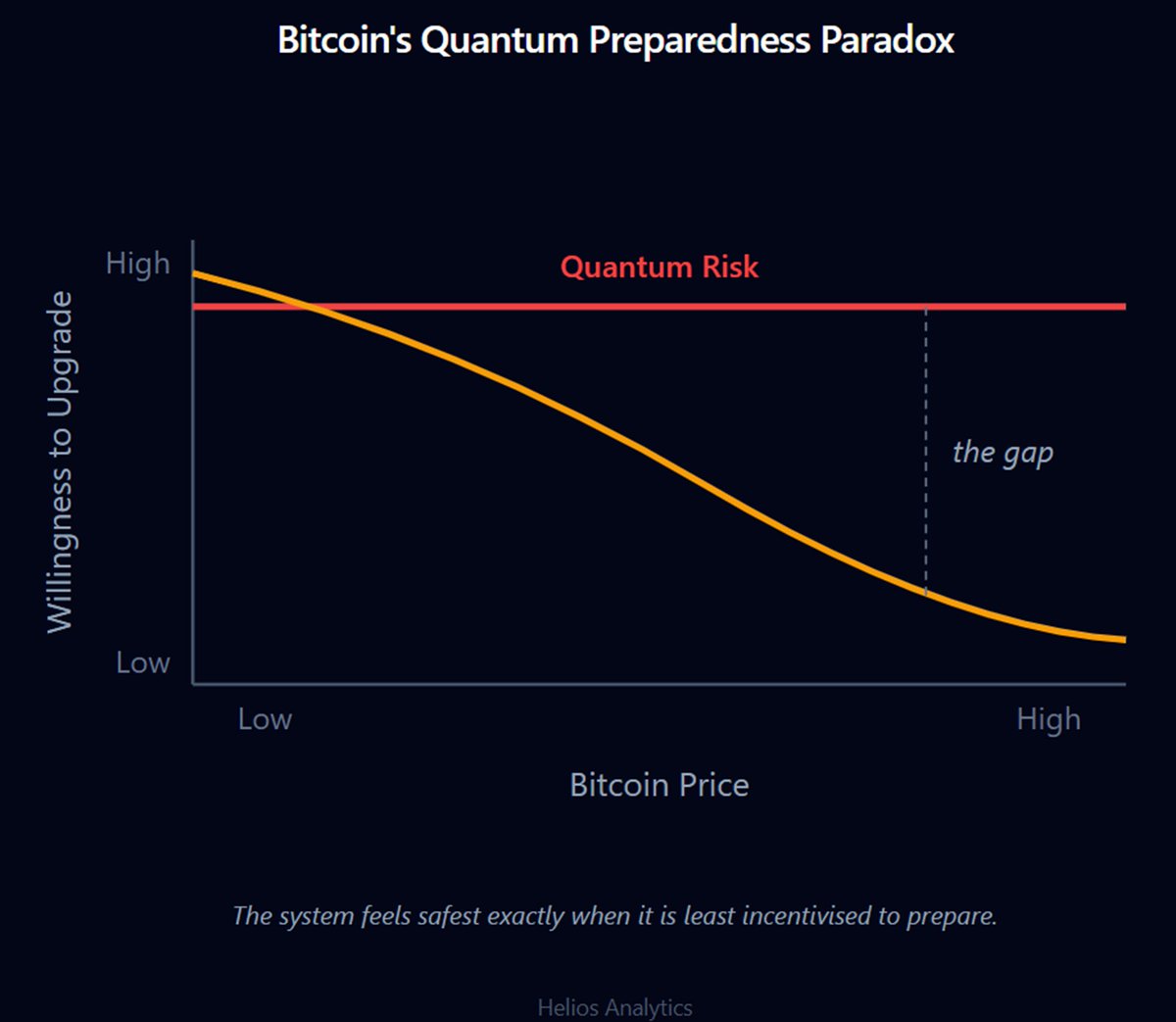
As Bitcoin’s price rises, confidence rises — and the willingness to push through disruptive, precautionary upgrades falls. The system feels safest exactly when it is least incentivised to prepare.
Quantum risk doesn’t move with price, but the gap does.
Yesterday was a phenomenal day in the mention market trenches 🤝🔥
Hit my first 2% play on Melania speech.
Today has some good markets, Trump, Mamdani, a full slate of NFL playoff mentions and more.
Have a great day everyone.
Nifty Gateway, the NFT trading platform which had facilitated $300M in sales by mid-2021, enters withdrawal-only mode and plans to shut down on Feb. 23, 2026 (CoinDesk)
https://t.co/aa9A7pvVUj
https://t.co/7fXGe1kPmI
📥 Send tips! https://t.co/wlNZvXuhJs
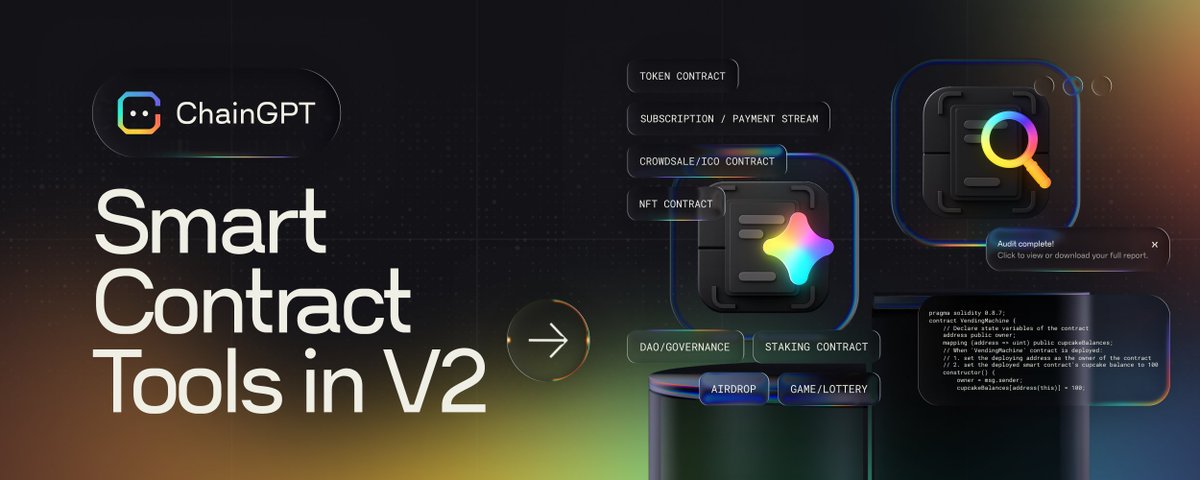
This is what vibe coding looks like when applied to smart contracts.
AI Hub V2 changes the old flow of write → copy → guess → audit-at-the-end into something far more natural:
generate contracts in plain language, iterate fast, run lightweight audits while you build, then request a deeper audit when you’re close to shipping.
One workflow. Two levels of assurance. No context switching.
It doesn’t replace professional audits. It helps builders move faster, catch issues earlier, and ship with more confidence.
$CGPT #ChainGPTAIHub @Chain_GPT
https://t.co/S2kVJs1kVg