Reportagem da @dw_brasil com meus comentários sobre a relação Brasil e EUA na nova rodada de tarifas. https://t.co/USNng9Y2Pl
Para entender mais, eu e @filipeamendonca discutimos o tema no texto Brazil's Response to Trump's Threats https://t.co/Ce1gGwt8S1
The Brazilian Supreme Court has voted to condemn Eduardo Bolsonaro, a federal deputy and son of former Brazilian president Jair Bolsonaro. The right-wing deputy lobbied the White House for Trump tariffs against Brazil in support of his father's trial.
https://t.co/eFDtDHjkv1
@drewcrawford_ There is a lot of optimism surrounding the role of China in Brazil and the capabilities of the Brazilian government to make autonomous decisions. But the material conditions do not support this view. I recommend reading my policy paper. https://t.co/5GaCrlE12l
Lançamento do Livro de Giorgio Romano com Igor Fuser do @epm_ufabc. Os autores exploram a transições energéticas em sua perspectiva da geopolítica mundial, com os casos dos EUA, China, África, UE e Brasil. Leitura recomendada para entender as transformações ordem mundial.
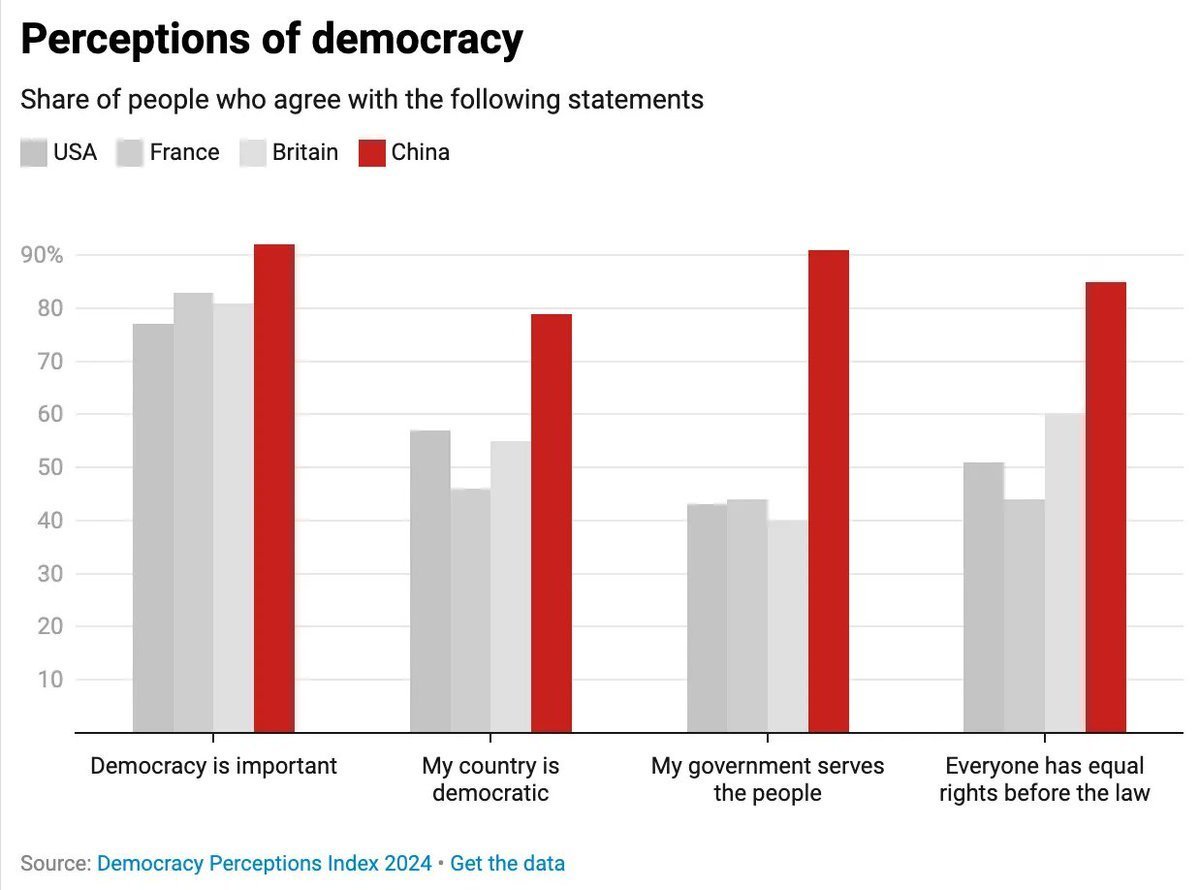
Findings from an alternative democracy study, carried out by the Alliance of Democracies Foundation (a Danish-based NGO), stand in stark contrast to The Economist's Democracy Index.
The study finds that perceptions of democracy in China — a country labelled undemocratic by The Economist — are higher than in many Western countries.
This should make you think twice about how reliably The Economist measures democracy.
Yesterday, the USTR criticised the Brazilian payment system, known as PIX. @filipeamendonca and I wrote a policy paper that delves deeper into Trump's threats, exploring Brazil's asymmetric interdependence and its limited autonomy. In @GIGA_Institute https://t.co/TUYmsqcfxn
I’m excited to share our collaborative article “Reimagining Global Governance: ...” published in published in Global Studies Quarterly, January 2026,. https://t.co/F5rTOzqp4W
Special thanks to all co-authors Dr. Julia Gurol-Haller, @arielmhernandez and Miriam Prys
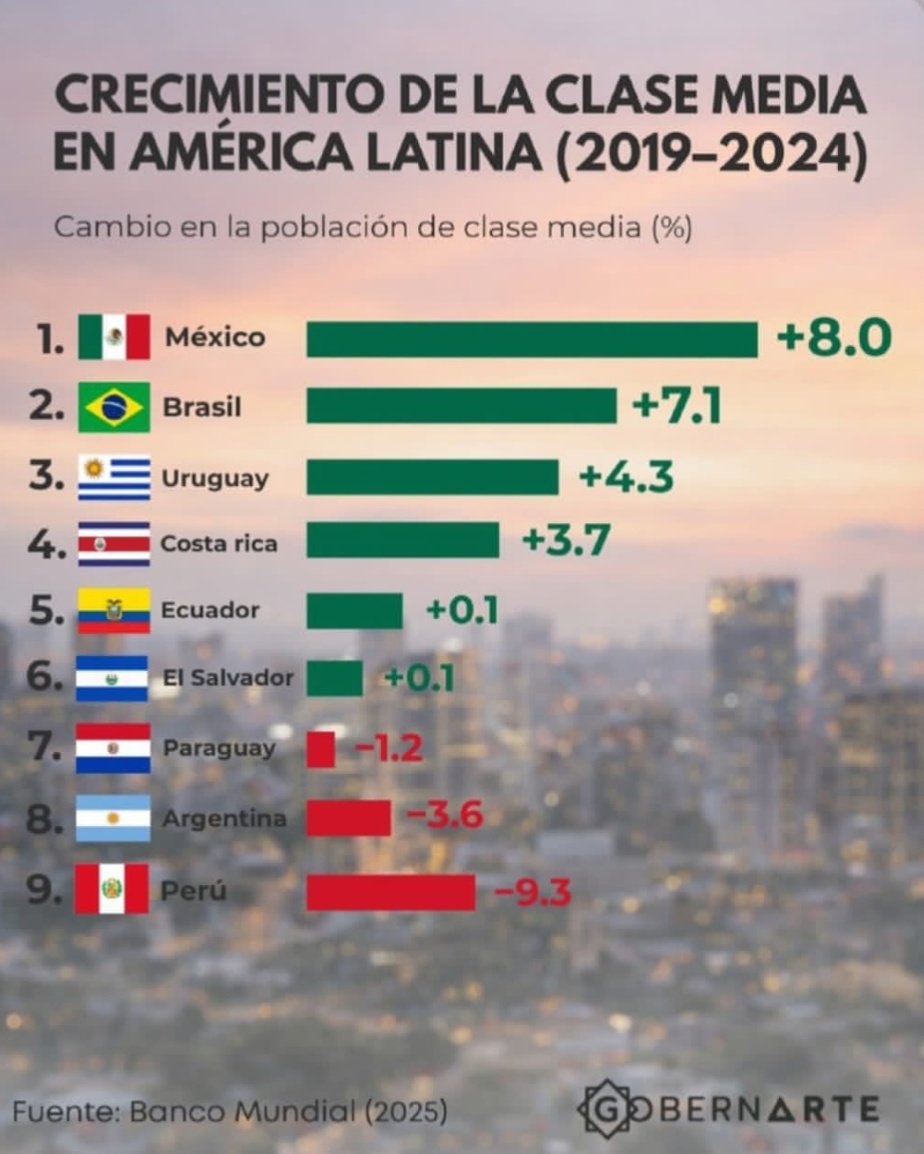
Peru’s middle class is shrinking despite years of consistent economic growth.
Their free-market model is designed to enrich a few + ensure that none of it ever trickles down. Now their biggest problem is urban poverty causing a massive wave of violent crime this past year.
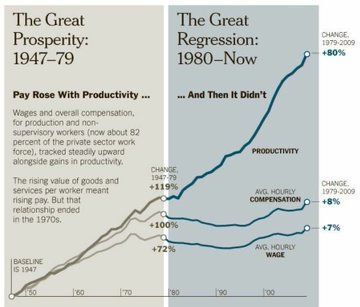
From 1947 to 1979, wages and productivity rose in tandem, driving broad-based prosperity. After 1980, productivity kept climbing while wages and compensation stalled. This disconnect defines the Great Regression, a period in which workers produce more but receive far less in return.
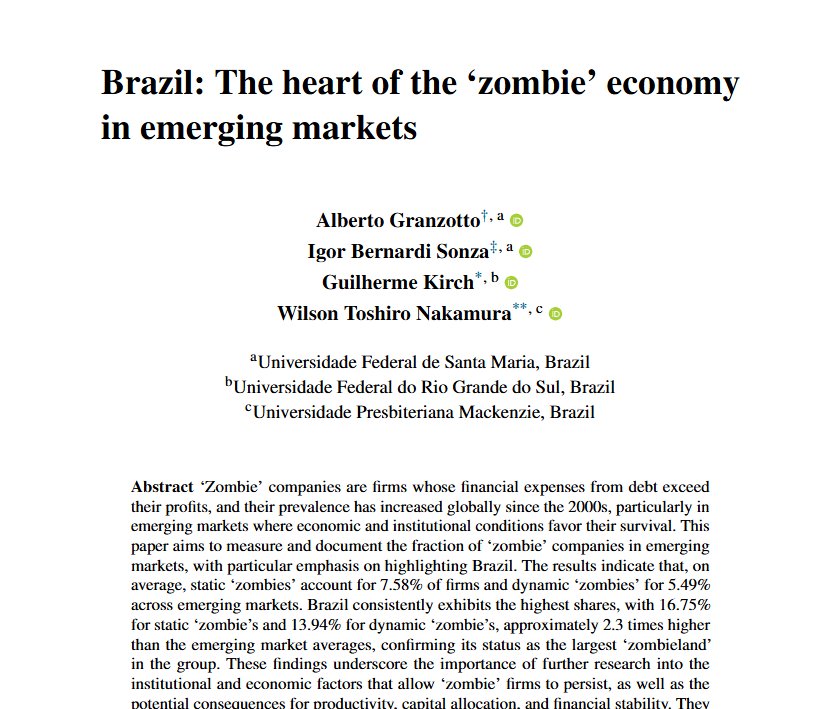
When we look at the Brazilian economy and wonder why growth has been so low for so long, an uncomfortable part of the answer lies in the private sect itself. Brazil is a notorious breeding ground for zombie companies. These are firms that cannot generate enough profit even to pay the interest on their own debt, but remain in existence because the financial system allows for the constant rollover of this liability. They do not innovate, they do not grow, they do not increase productivity.
According to an article by Granzotto et al. (2025) in the Brazilian Review of Finance, which compares companies in various emerging markets, on average 7.6% of firms are "static zombies" (firms with EBITDA/Financial Expenses < 1) and 5.5% are "dynamic zombies" (EBITDA/Financial Expenses >/= 1) in these markets.
In the Brazilian case, 16.75% of companies are classified as static zombies and 13.94% as dynamic zombies! In other words, more than double the average for emerging markets. The authors themselves bluntly state that Brazil is the "heart of the zombie economy" among emerging markets, about 2.3 times above the international standard.
To clarify what this means: we are talking about companies that cannot generate enough profit to cover their financial costs, meaning that investors will have to wait longer to recover their principal, and that workers will be employed in firms without the capacity to invest in new technologies and processes that could improve their human capital and productivity.
The article shows that this mass of zombie companies distorts capital allocation, reduces aggregate productivity, and weakens investment dynamics. Credit, labor, and resources are trapped in financially fragile firms, while more productive companies face a hostile financing environment. And this, of course, has a cost in terms of potential economic growth.
As long as the Brazilian government does not address the problem of reforming the business environment and its capital markets, these types of inefficiencies will continue to persist and condemn workers and investors to remain trapped in firms that should be defunct.
SOURCE: https://t.co/a8MPL6y7xz
#Economía #econtwitter #Economics #Finance #Brazil
Remarkable (and consistent across time and countries) decrease in inequality in Latin America
(after-tax income per capita); @lisdata
Brazil from 62 in 1991 to 48 now (-14 Gini points)
Mexico from 55 in 1992 to 44 now (-11 Gini points)
Peru from 55 in 2005 to 44 now (-11 Gini points).
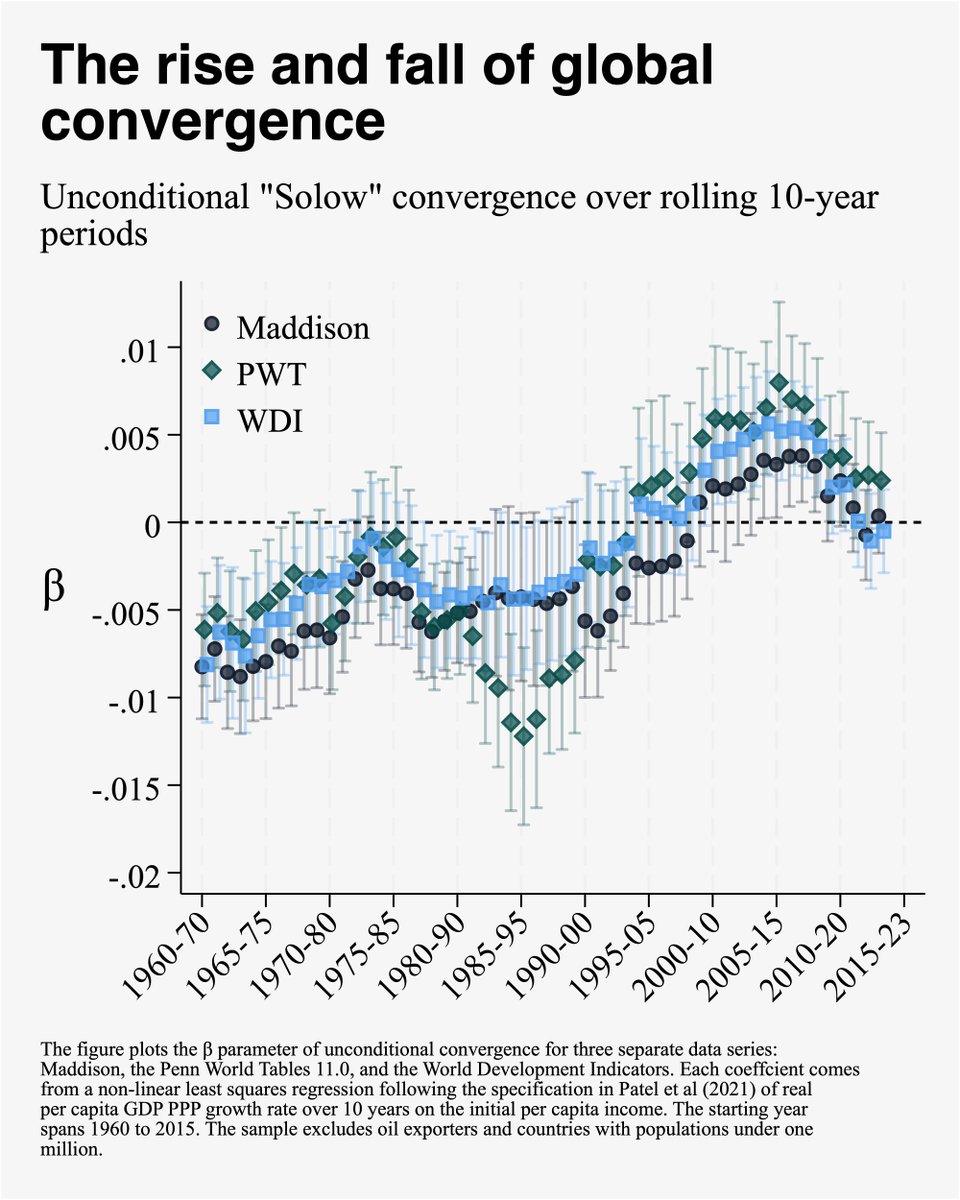
New from @dev_a_patel@arvindsubraman & me:
"We were wrong about convergence."
A few years back, we wrote a paper pointing out that Solow convergence had finally arrived. The developing world was catching up. Alas, it seems all good things come to an end.
1/
After discussing different questions with the editor, the article was published with some of my quotes. Unfortunately, the most important one didn't make the cut. To understand dependency, we need to look beyond trade and consider FDI and ownership in GVC
https://t.co/vkDRM1ytaM
For those like @FT who skipped geography classes, it is important to remember that America is a continent rather than a country. However, the EU will not decouple from the US because it lacks the political and military autonomy to do so.
This is amusing title. Europe has already a plan for decoupling - “strategic autonomy”.
But it will not work because Europeans will never make the sacrifices required for the strategic autonomy to be implemented.
In reality, Europe wants to have the geopolitical cake and eat it.
The world needs a plan for decoupling from the US (sorry @FT, America is a continent, not a country). However, this will never happen due to political and military forces, rather than economic reasons.