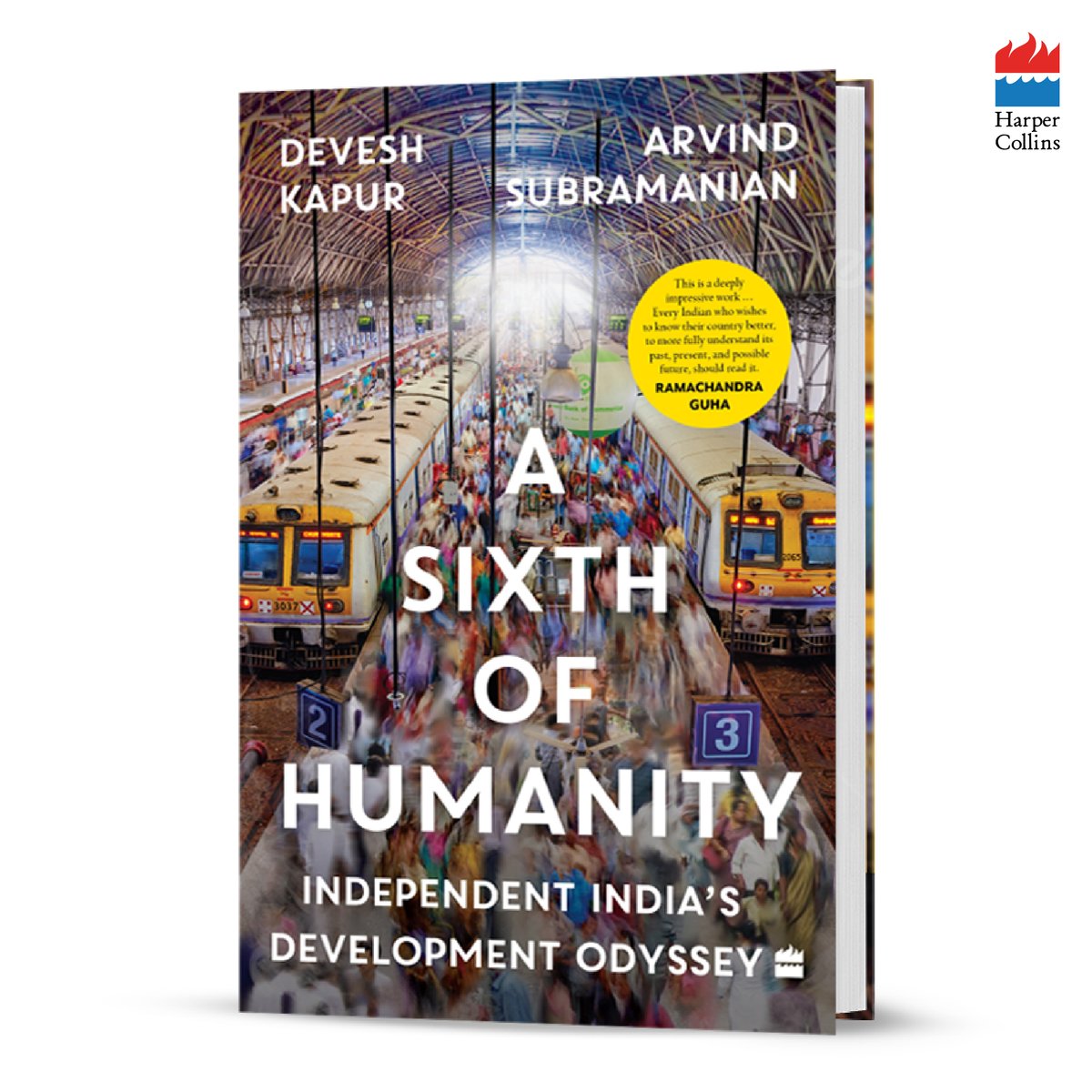
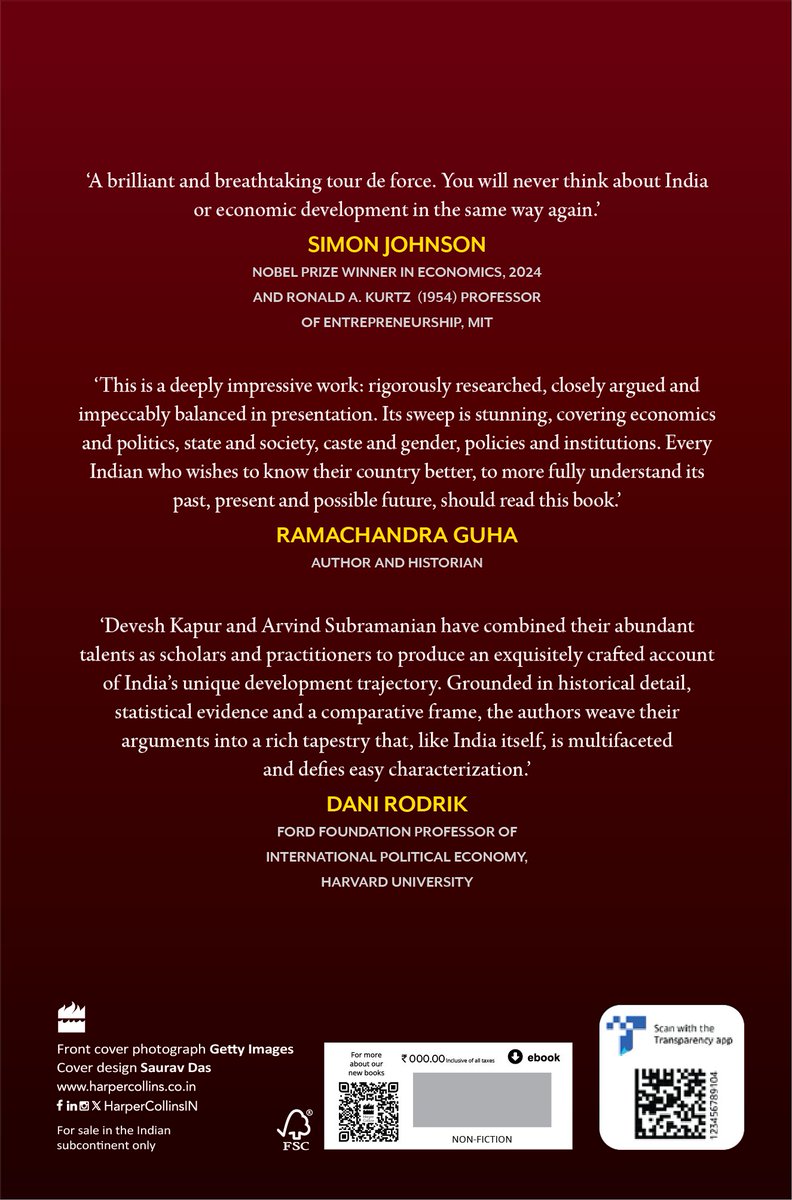
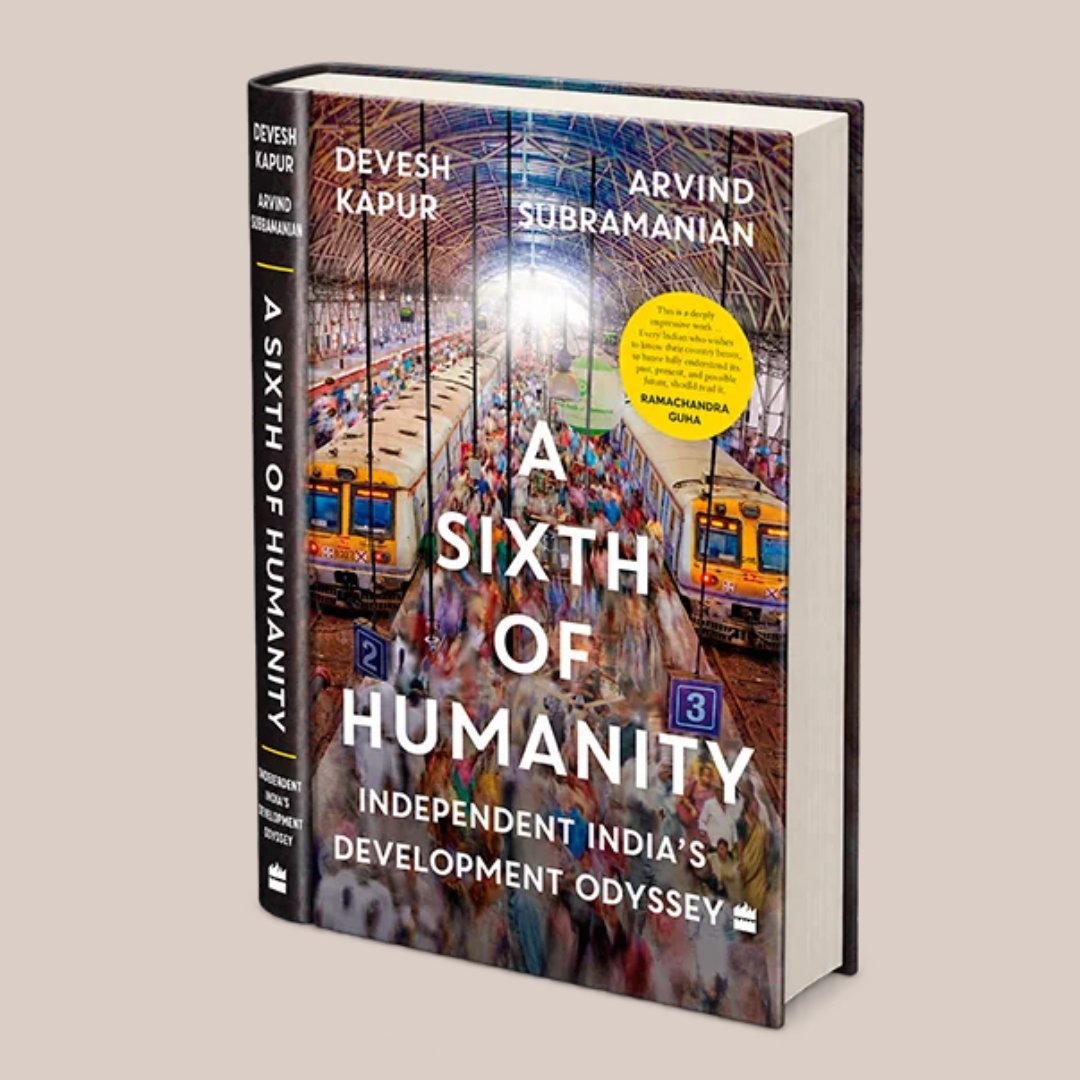
Devesh Kapur & I are pleased that, after 4-5 years of researching & writing & decades of reflection, our @HarperCollinsIN book on 75 years of Indian development (A SIXTH OF HUMANITY) will be out in October
Announcement: https://t.co/Z6fRQLLsUU
Pre-order: https://t.co/3wpPNNAxp1
.@arvindsubraman & @shoumitro_c's "China Squeeze" work—how China's manufacturing export strength is curbing poorer countries' opportunities to industrialize—attracted considerable response. They addressed 5 of their critics' incorrect propositions. https://t.co/caLv1aYuMM
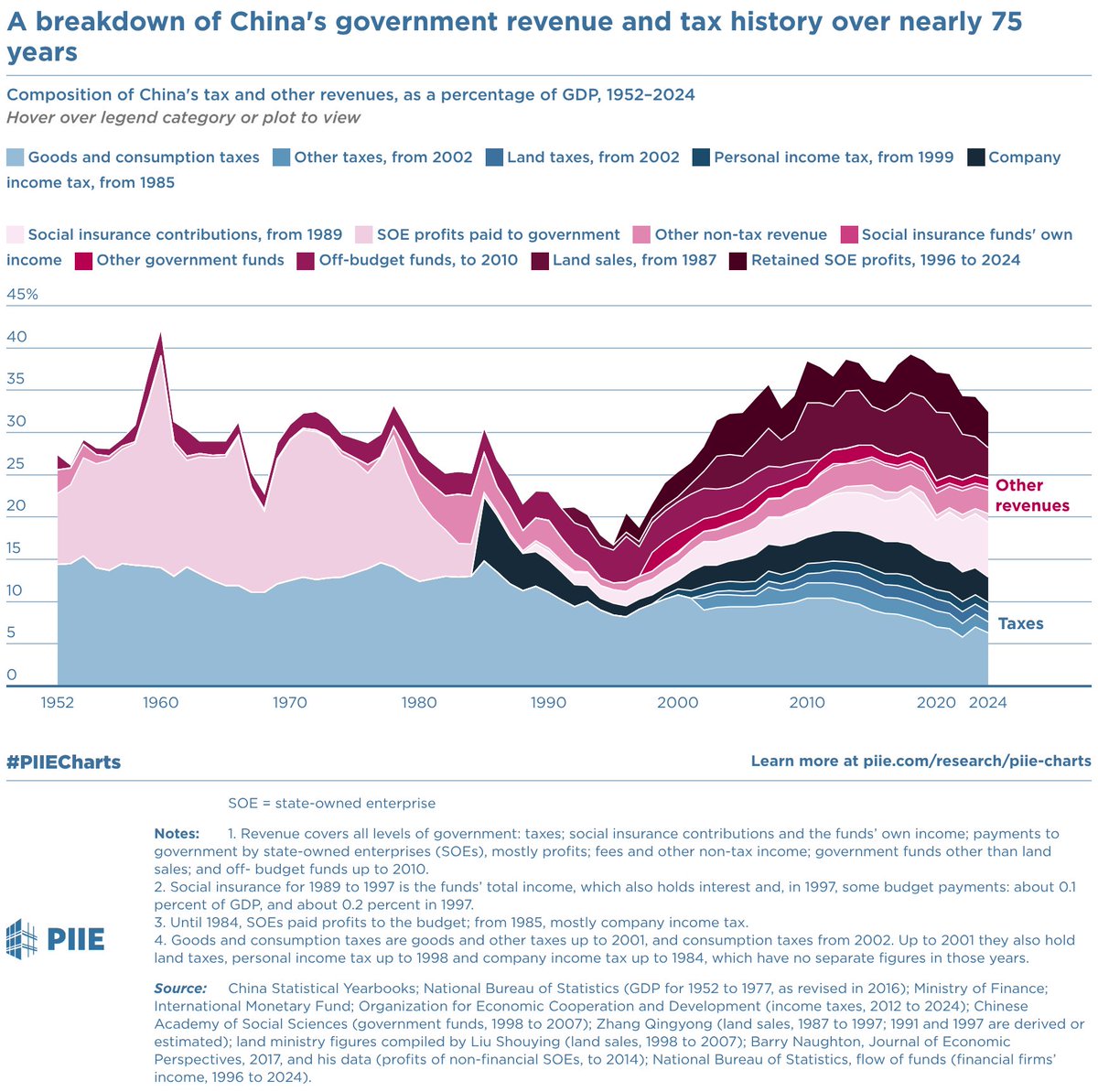
China has generated a substantial share of revenue from sources other than taxes on its people, which is surprising for a communist state, @arvindsubraman finds. #PIIECharts
Explore the interactive version: https://t.co/219qOak6Xo
❗️❗️❗️❗️❗️❗️❗️❗️❗️❗️
RARE long-term data: CHINA’s government revenue composition, 1952–2024 by Navneeraj Sharma and @arvindsubraman
👏👏👏👏
While long-term tax and revenue series for the United States and major European economies are frequently shared, China’s nearly 75-year breakdown has been far less visible on X.
This chart shows the composition of China’s tax and other government revenues as a percentage of GDP from 1952 to 2024. Total revenue has fluctuated significantly: it spiked above 40% of GDP in the early 1960s, fell sharply in later decades, and then rose again after 2000, remaining in the 30–37% range in recent years.
What stands out is the relatively large role of non-tax revenues. For much of the period, taxes on goods, consumption, personal income, and companies formed only part of the total. Land sales, retained SOE profits, social insurance contributions, and other non-tax sources have often accounted for a substantial shar, particularly after the 1980s and 2000s. This structure differs from the more tax-heavy revenue systems commonly seen in many advanced economies
Source: @PIIE
China has generated a substantial share of revenue from sources other than taxes on its people, which is surprising for a communist state, @arvindsubraman finds. #PIIECharts
Explore the interactive version: https://t.co/219qOak6Xo
.@arvindsubraman & @shoumitro_c's "China Squeeze" work—how China's manufacturing export strength is curbing poorer countries' opportunities to industrialize—attracted considerable response. They addressed 5 of their critics' incorrect propositions. https://t.co/caLv1aYuMM
Highly recommended: New interactive chart breaking down China's government and tax revenue history over the last 75 years. By @arvindsubraman@PIIE
and Navneeraj Sharma @ADB_HQ
Apologies to the authors for my earlier misattribution
Devesh Kapur and @arvindsubraman discuss A Sixth of Humanity with @CSVenkatak17434 and moderator @SonalRShah , exploring India's journey through economic growth, Nov 15, Bohemian National Hall, NYC
Free to attend. Register at https://t.co/LynbJfUDF0
#IAACLitFest
@arvindsubraman, @CSVenkatak17434 of Barclays and moderator @SonalRShah join at IAAC Literary Festival 2026 for a conversation on India's development and economy.
Nov 15, 12–1:30 PM
Bohemian National Hall, NYC
Free to attend. Register at https://t.co/LynbJfUDF0
#IAACLitFest
We are speaking on our book in New York on Sunday afternoon, Nov. 15. The session will be moderated by @SonalRShah and feature @CSVenkatak17434 CEO of @Barclays.
IAAC welcomes Devesh Kapur and @arvindsubraman with A Sixth of Humanity, joined by Chip Kaye and C.S. Venkatakrishnan. Moderated by Sonal Shah, Sun, Nov 15, NYC.
Free to attend, register at https://t.co/LynbJfVbuy
#IAACLitFest
Communist China’s revenue/tax history in one chart: https://t.co/8CVDpu5cd1
2 takeaways:
Non-tax revenues (incl. land sales) have been sizeable which is surprising for a coercive state
Ominously, revenues/taxes have declined sharply in last decade (see our @ProSyn piece)
China has generated a substantial share of revenue from sources other than taxes on its people, which is surprising for a communist state, @arvindsubraman finds. #PIIECharts
Link to interactive chart in next tweet ⬇️
Communist China’s revenue/tax history in one chart: https://t.co/8CVDpu5cd1
2 takeaways:
Non-tax revenues (incl. land sales) have been sizeable which is surprising for a coercive state
Ominously, revenues/taxes have declined sharply in last decade (see our @ProSyn piece)
It is the Report on Emotional Integration, from a committee set up in 1961. A state anxious enough about whether its people felt like one people to commission a report on the question.
Devesh Kapur thinks we underestimate how close things came to falling apart before 1962, and that the war with China is part of what held the country together, because it supplied a common enemy.
Kapur and Subramanian organise the whole book around four tasks: building a state, building a nation, transforming society and building markets. This is the one they think India did in a way nobody else did.
A Sixth of Humanity by Devesh Kapur and Arvind Subramanian (HarperCollins).
Shortlisted for the Kamaladevi Chattopadhyay NIF Book Prize.
#kcbp2026 #newindiafoundation #bookprize #indiandevelopment #indianeconomy #bookrec #nonfiction #indiannonfiction
@NandiniNai@arvindsubraman@HarperCollinsIN
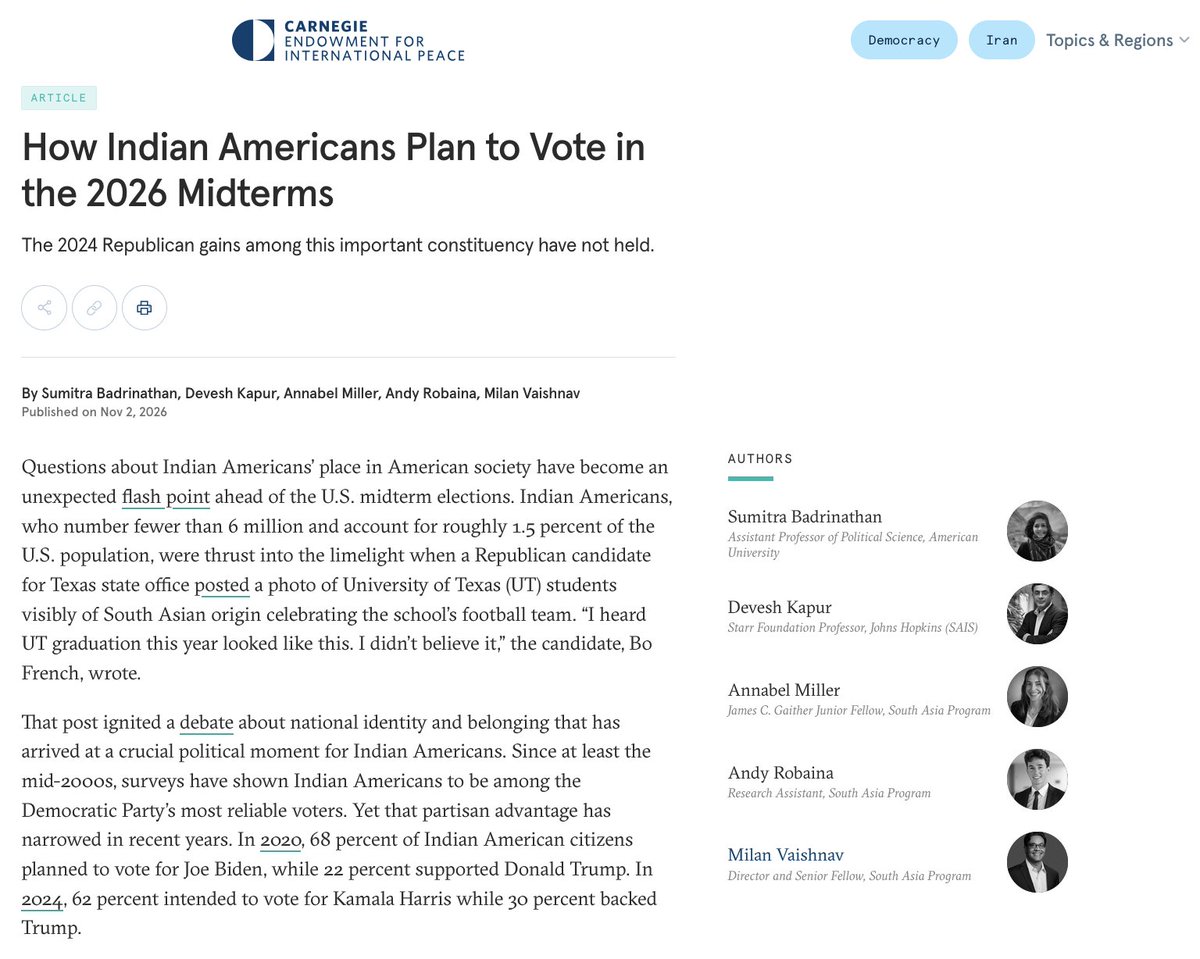
🧵 1/ Hot off the press: Ahead of the U.S. midterms, new IAAS survey data on the political preferences of Indian Americans. https://t.co/KNuQBNnTWh
This is joint work w/ @kharibiskut of @AmericanU, Devesh Kapur of @SAISHopkins, and Annabel Miller & Andy Robaina @CarnegieSAsia
I will be speaking on our book A SIXTH OF HUMANITY at the Geneva Graduate Institute on Nov. 3 at 615 PM moderated by Professor @upanizza
Details below.
Link: https://t.co/bcSmBpTB2c
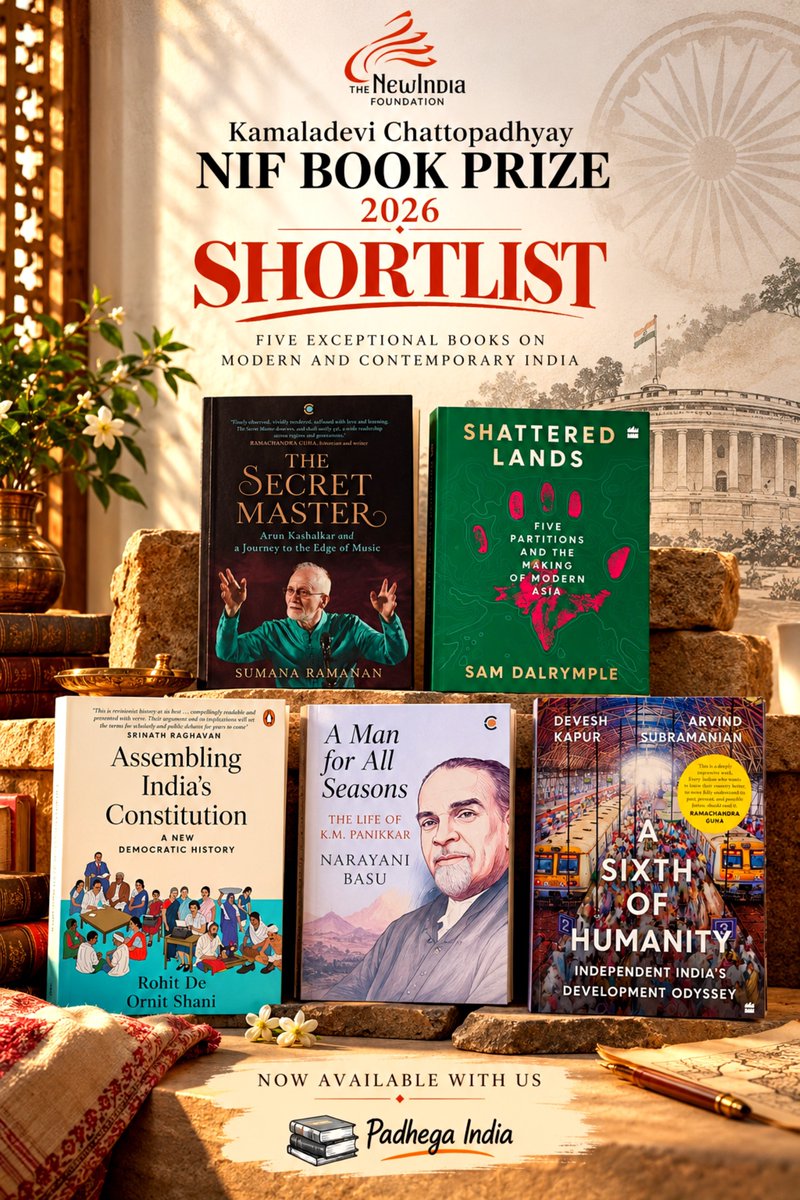
We came across something particularly interesting for readers of history, politics and culture. The complete collection of all five books shortlisted for the Kamaladevi Chattopadhyay NIF Book Prize 2026 is now available with us!
Explore the complete five-book set here:
https://t.co/LoKYrn5iwr
Introducing the five books in this remarkable collection:
1. The Secret Master: Arun Kashalkar and a Journey to the Edge of Music
By @Sumana_Ramanan
A fascinating journey into Hindustani classical music through the life and musical legacy of vocalist Arun Kashalkar.
2. Shattered Lands: Five Partitions and the Making of Modern Asia
By @SamDalrymple123
An exploration of five partitions that transformed the Indian subcontinent and reshaped the political geography of modern Asia.
3. Assembling India's Constitution: A New Democratic History
By @itihaasnaama and @OrnitShani
A compelling account of the making of India's Constitution, bringing into focus not just its celebrated architects but also the ordinary citizens whose voices and aspirations helped shape the world's largest democracy.
4. A Man for All Seasons: The Life of K. M. Panikkar
By @narayani_basu
A biography exploring the life and legacy of K. M. Panikkar, the historian, diplomat and statesman whose contributions helped shape modern India.
5. A Sixth of Humanity: Independent India's Development Odyssey
By Devesh Kapur and @arvindsubraman
An examination of independent India's development journey, its economic choices, political decisions and the challenges that continue to shape its future.
Together, these five books offer an expansive reading experience spanning India's history, constitutional journey, geopolitics, economic development and cultural heritage.
The Kamaladevi Chattopadhyay NIF Book Prize, instituted by the New India Foundation, recognises outstanding non-fiction writing on modern and contemporary India.
Congratulations to all seven authors, and the publishers (@HarperCollinsIN, @WestlandBooks & @PenguinIndia) for making it to the shortlist, and to the @newindiafndtion for bringing these remarkable works into the spotlight.