The Scouting Classroom #14
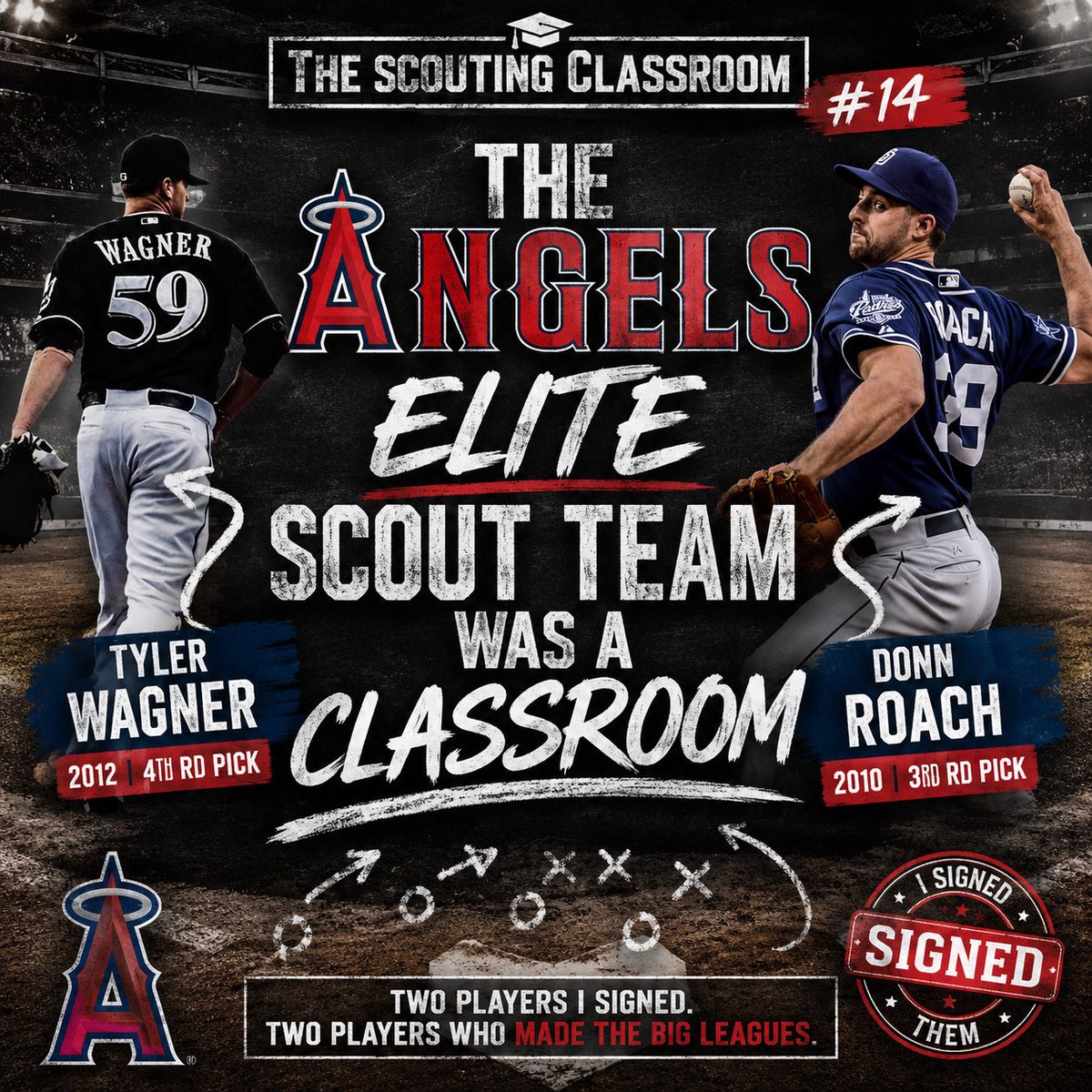
THE ANGELS ELITE SCOUT TEAM WAS A CLASSROOM
People hear the words scout team and automatically think baseball games, travel schedules, uniforms, and exposure opportunities.
That was part of it.
But for me, the Angels Scout Team from 2006–2009 became something much bigger.
It became a classroom.
Not a classroom with desks and whiteboards.
A scouting classroom.
An environment where evaluations didn’t happen in one look or one weekend. It became a place where I could repeatedly watch players over time and study something every scout is really trying to find:
Patterns.
Because one of the biggest mistakes people make in player evaluation is believing one game tells the story.
It doesn’t.
One game can fool you.
A player can go 3-for-4 and not be a future big leaguer.
A player can go 0-for-4 and eventually play ten years in the Major Leagues.
One day gives you a snapshot.
Repeated exposure gives you truth.
That is what made the Angels Elite Scout Team so valuable.
Over four years, that roster eventually included:
Kris Bryant - 1st Rd
Kevin Gausman - 1st Rd
Greg Bird - 5th Rd
Tyler Wagner - 4th Rd
Aaron Blair - 1st Rd
Joey Rickard - 9th Rd
Donn Roach - 3rd Rd
Johnny Field - 5th Rd
Taylor Cole - 29th Rd
Paul Sewald - 10th Rd
Andy Burns - 11th Rd
Eleven future Major Leaguers eventually came through the program.
And the interesting part is they looked nothing alike.
Different bodies.
Different tools.
Different personalities.
Different levels of physical maturity.
Different timelines.
Different paths.
That became one of the greatest educational experiences of my scouting career because no two players developed the same way.
Some players looked like future professionals immediately.
Others grew into it.
Some physically matured early.
Others made huge jumps later.
Some overwhelmed you with tools.
Others slowly convinced you through performance, instincts, competitiveness, and feel.
And that’s where repeated looks matter.
The scout team environment gave me something many scouts rarely get:
The opportunity to keep coming back.
To keep watching.
To keep learning.
Over time you start seeing things that one game never reveals.
You begin seeing how players respond after failure.
How they adjust when good competition punches back.
How they handle adversity.
How they interact with teammates.
How they compete on days they don’t feel great.
How their tools actually play against better players.
Because tools on paper and tools in games can become two completely different things.
Velocity is one thing.
Pitchability is another.
Raw power is one thing.
Hitting is another.
Running a 60 yard dash is one thing.
Playing baseball is another.
And the longer you watch players, the more patterns begin to emerge.
Patterns in body language.
Patterns in confidence.
Patterns in makeup.
Patterns in consistency.
Patterns in adjustment.
Patterns in competitiveness.
That is where real scouting begins.
Because scouting isn’t simply collecting tools.
It is collecting evidence.
And evidence takes time.
Looking back now, the Angels Elite Scout Team was one of the greatest classrooms I ever had because I wasn’t just evaluating players.
I was learning.
Learning how players develop.
Learning how projections work.
Learning that there is no one formula.
And learning that if you stay around players long enough, patterns eventually tell you the truth.
One game gives you a snapshot.
A scout team season gives you patterns.
And patterns are where real evaluation begins.
That’s Scouting
#BehindTheRadarGun 🔎
@theaiportfolios@grok give me the full list of stocks. And returns since Claud said to buy. Then sort the ones that have the lowest gain %. I want to buy those ones today.
@PBDsPodcast Trump ran on. No new wars, reduce the national debt, deportations. America first. None of that is happening. No one is saying vote democrat, we are saying vote for republicans that are actually America first.