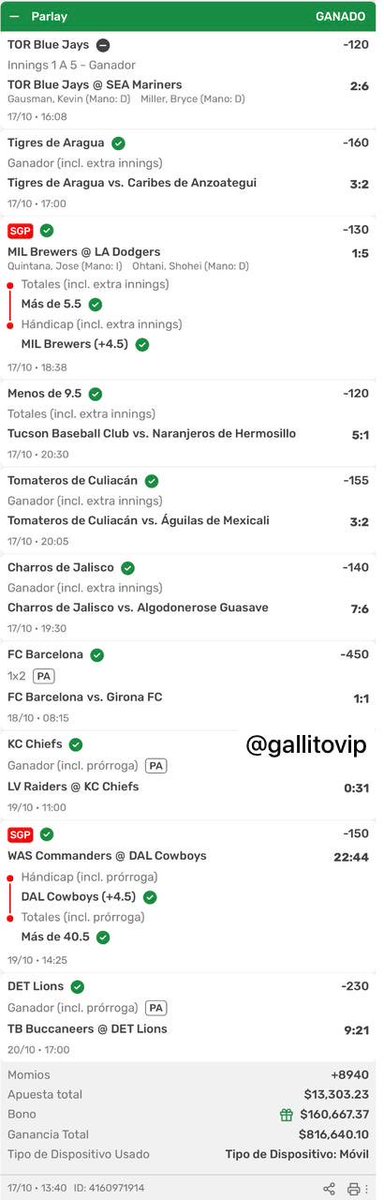
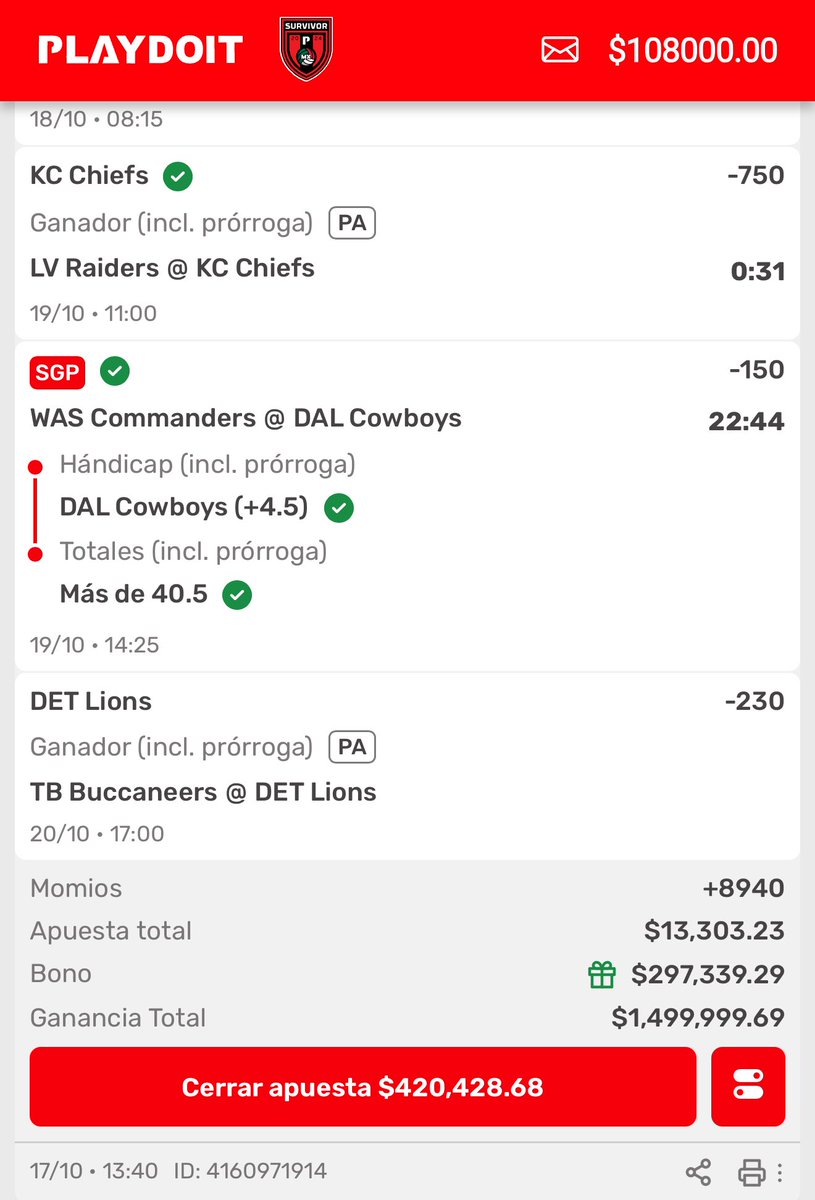
HICIMOS HISTORIA UNA VEZ MÁS 💣
GANAMOS EL PARLEY MILLONARIO💵
154 PERSONAS GANARON CONMIGO EL PARLEY DE SUS SUEÑOS
SE VUELVE A DEMOSTRAR QUE SOMOS ÚNICOS EN ESTA INDUSTRIA Y DIFERENTES❤️
RESPETEN RANGOS 😎
VOY A REGALAR 100,000 ENTRE LOS QUE DEN RT Y ❤️ A ESTE TWEET
GRUPO GRATIS DE PICKS 👇🏻
https://t.co/TruqD2bPjD
A una jugada de volver hacer historia en este mundo de las apuestas, pura buena vibra todo México junto apoyando una aventura más del gallito
Se gane o se pierda ya estamos del otro lado, vamos hacer un free roll con bucs y que sea lo que Dios quiera
La especialidad de la casa : callar bocas
Respeten rangos😎
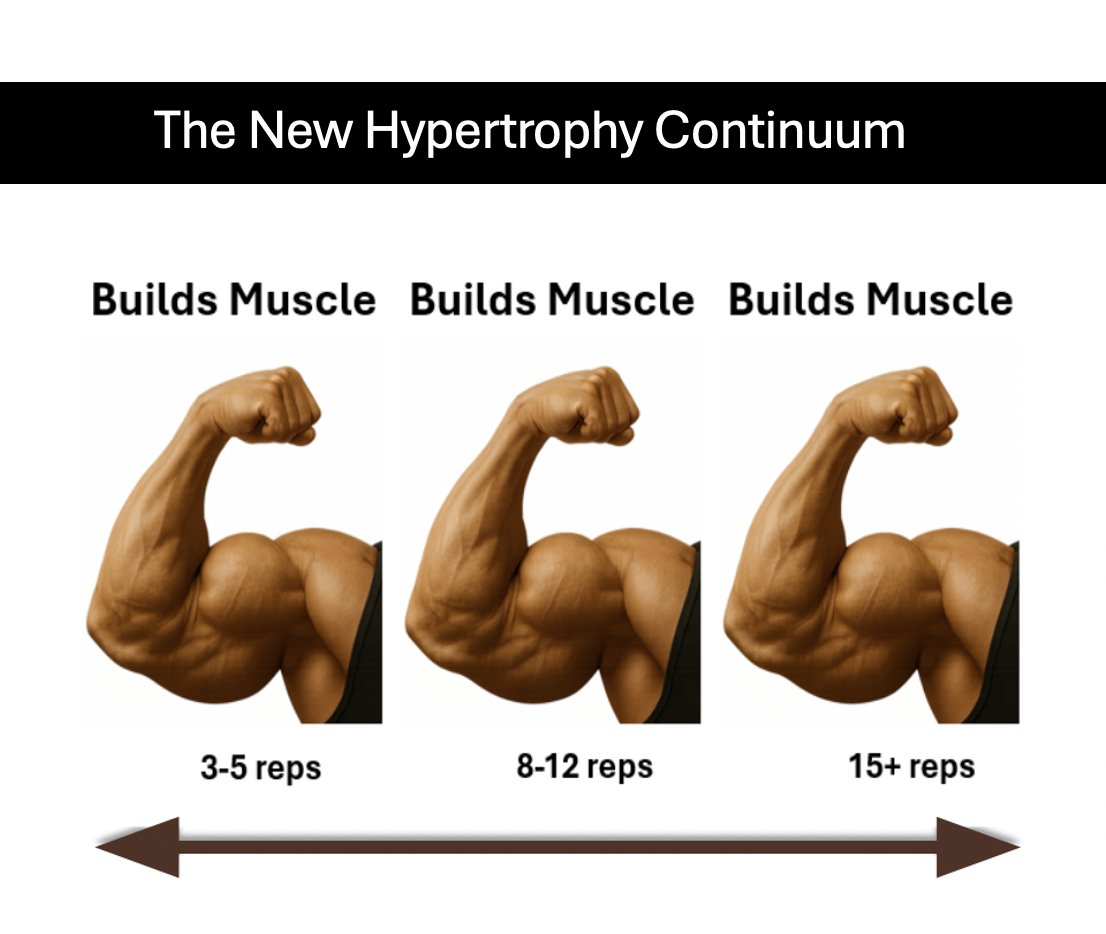
Yet another study showing similar whole muscle hypertrophy when training with heavy vs light loads. The evidence is overwhelming. May be a benefit to varying rep ranges for optimal results; for the gen pop likely doesn't make a meaningful difference 💪
https://t.co/j70oznRX6U
🚨Published Today🚨
New Perspectives for the Resistance Training of Runners: Flywheel Approach
By Chloe Ryan, John Cronin, Sabian Kulczynski and John Ireland
📲Hit the link below to read the full article for 🆓🔓
https://t.co/iA9JbPWmkG
🚨Published Today🚨
Which Metrics Can I Monitor? Test-Retest Reliability of Countermovement Jump and Countermovement Rebound Jump Force-Time Metrics in Youth Soccer Players In-Season
By Andrew Badby, Paul Comfort, Nicholas Ripley, Matthew Cuthbert, Francisco Robles-Palaźon, Peter Mundy and John McMahon
📲Hit the link below to read the full paper for 🆓🔓
https://t.co/w5SwN0otdu
La sarcopenia, entendida como la pérdida progresiva de la masa y la función muscular asociada al envejecimiento, es considerada un problema de salud pública debido a su creciente prevalencia y su implicación en la pérdida de capacidad funcional en las personas mayores.
La percepción del músculo esquelético como un órgano meramente involucrado en la generación de contracción ha evolucionado en los últimos años.
Este tejido representa el 40% del peso corporal, constituyendo el mayor reservorio proteico del organismo y poseyendo un rol crucial en la salud metabólica, siendo diferencialmente el tejido que más glucosa almacena y consume.
Además, en los últimos años el músculo ha ganado reconocimiento como un órgano endocrino, con efectos sistémicos, y como un importante regulador de la función inmune.
En ausencia de intervenciones farmacológicas útiles, la actividad física aparece como la única opción en la promoción de la salud musculoesquelética en la edad avanzada.
Pero ¿es realmente efectiva? ¿Qué sabemos al respecto?
En este artículo el Dr. Juan Luis Sánchez, Investigador Postdoctoral en el Instituto de Envejecimiento del Gérontopôle de Toulouse, analiza la evidencia disponible sobre el rol de la actividad física y el ejercicio en el manejo de la sarcopenia.
Puedes leerlo pinchando 👇
https://t.co/1ITTnZAAup
Es de los artículos por los que merece la pena ser de Fissac.
🧵 ¿Se puede perder peso sin perder músculo?
Una revisión recién publicada explora cómo los aminoácidos (EAAs y BCAAs) pueden ayudar a mantener masa muscular durante una dieta hipocalórica.
Vamos con los datos. 👇
🚫 Mito: “Baños en agua fría aceleran la recuperación muscular.”
✅ Realidad: Tras un HIIT intenso (6x30s contracciones), 10 min a 10°C NO mejoran la recuperación ni el rendimiento al día siguiente.
🧊 Evita el agua fría después de tus entrenamientos.
Post-exercise cold water immersion has been shown to impair muscle development. New study suggests it may not do much for performance recovery either...
https://t.co/H49hOV1jM4
🔬 The Role of Micronutrients in ATP (energy) Production 🔬
Micronutrients, although required in minute quantities, are indispensable catalysts in the metabolic pathways that convert food into energy. These pathways, include glycolysis, the Krebs cycle, and the electron transport chain. All of which are dependent vitamins and minerals to function.
For example, vitamin B1 (Thiamine) plays a pivotal role in facilitating the conversion of pyruvate from glucose into acetyl-CoA. B2 (Riboflavin) and B3 (Niacin), serve as precursors for what are called coenzymes FAD (metabolite/coenzyme of B2) and NADH (metabolite/coenzyme of B3), respectively. These are crucial for reactions in the Krebs cycle and electron transport chain.
Minerals like magnesium act as cofactors (different from a coenzyme. Note that all coenzymes are cofactors but not all cofactors are coenzymes) for ATP synthesis. Interestingly, magnesium is also needed to convert thiamine into its active form, thiamine diphosphate that, again, is used to convert pyruvate into acetyl-CoA.
Iron is central to oxygen transport and electron transfer. Trace elements such as zinc and copper are important components of enzymes and proteins that maintain energy flow in during these processes.
Deficiency in micronutrients can lead to compromised energy production, resulting in fatigue and many other health issues. Thus, a balanced diet rich in these vitamins and minerals is needed to maintain metabolic integrity.
In summary, the role of micronutrients in energy production is a testament to the the importance of a nutrient-rich diet for sustaining energy production and life.
Lonsdale, D.; Marrs, C. Thiamine Deficiency Disease, Dysautonomia, and High Calorie Malnutrition; Academic Press: Cambridge, MA, USA, 2017.
Post-exercise infrared sauna use may improve neuromuscular performance 🌡️
This new study investigated the effects of infrared sauna use (10 min, 50℃) after training three times per week for 6-weeks 🗓️
40 female team sport athletes were recruited to the study who were allocated to either sauna or control ⛹️♀️
Body composition (via DXA) and performance was assessed pre- and post- the 6-week strength and power training period 🏋️♀️
Results 📊
Training improved neuromuscular performance and muscle hypertrophy in both groups 📈
But, the sauna group showed significant improvements in…
🆙 Jump performance (with +15% bodyweight)
⏩ Acceleration performance (in initial meters of sprinting)
No other differences were observed for body composition or neuromuscular performance ❌
Incorporating regular sauna sessions (10 min, 50℃) post-exercise may lead to improved neuromuscular performance ✅
These improvements are minor but could warrant some further investigation 🔍
Estás perdiendo el cabello…
Así que tomas finasteride para salvarlo.
Lo que no te dicen:
Te estás castrando químicamente solo para mantener tu línea de cabello.
Aquí tienes la forma real de solucionar la caída del cabello (sin destruir tus hormonas):👇
A recent randomized controlled trial (PMID: 39364857) looked at the impact of a 10-week break from resistance training on long-term muscle size and strength adaptations. The study compared individuals who trained continuously for 20 weeks to those who trained for 10 weeks, took a 10-week break, and then resumed training for another 10 weeks.
The study included 42 untrained adults (55% men, 45% women) aged 18–40 years. Participants completed a standardized, supervised resistance training program consisting of two whole-body workouts per week. Strength was
Findings:
During the 10-week detraining period, the group that paused training experienced expected declines in muscle size and strength:
- Leg press 1RM decreased by 5.4%
- Biceps curl 1RM decreased by 3.6%
- Vastus lateralis cross sectional area decreased by 9.9%
- Biceps brachii cross sectional area decreased by 7.3%
However, within just 5 weeks of retraining, participants in the periodic training group fully regained lost muscle size and strength, and by the end of the study, there were no significant differences between the groups in overall muscular adaptations. The rate of muscle and strength gains was greater during the retraining period for those who took a break, demonstrating the role of muscle memory in restoring lost adaptations efficiently.
While the findings suggest that taking an extended break from resistance training does not significantly impair long-term progress in untrained individuals, they may not be fully applicable to highly trained individuals with years of resistance training experience. Well-trained individuals may experience greater losses in strength and hypertrophy during prolonged detraining due to their higher baseline levels of muscle mass and neuromuscular efficiency.
Additionally, while periodic training can facilitate rapid regains, continuous training optimizes the time spent making new gains, rather than simply recovering lost adaptations. For those seeking to maximize long-term hypertrophy and strength, maintaining at least a minimal training volume during periods of reduced training availability may be beneficial. Previous research suggests that reducing trai
Creatine supplementation for traumatic brain injuries 🧠
Mild traumatic brain injuries (mTBI) are concussions that can be common injures in contact sports 💥
Although creatine is widely regarded as a performance-related supplement, this new review outlined how creatine may be able to prevent and treat brain injuries 📚
Here are the key takeaway messages ⬇️
In clinical trials🔬
Patients who supplemented with creatine for 60-days (0.4 g/kg/day), starting within 4-hrs of their TBI exhibited less…
🤕 Headache
😵💫 Dizziness
😮💨 Fatigue
Similar research also showed neuroprotective effects with patients showing…
😵💫 Less amnesia
🏥 Less time in intensive care
🗣️ Improved communication
🧠 Improved cognition
👣 Improved locomotion
Importantly, both above clinical trials showed no deleterious side-effects ✅
Animal-based research has also shown creatine supplementation prior to TBI to reduce damage by up to 50% 🐭
But how does this occur? 🧐
Following a TBI…
📉 Brain creatine levels are reduced
🪫 Random membrane depolarisation causes neuronal firing 👉 reducing ATP stores
🩸 Blood flow to the brain is reduced
Creatine can…
🔋 Help restore membrane potentials and act as an energy source for brain cells
⏰ Delay hypoxia-induced membrane depolarisation and maintain neuronal integrity
🛡️ Prevent impaired protein synthesis and axonal damage protecting against synaptic transmission breakdown which can cause neuronal death
⚡️ Support energy balance after TBI when energy supply and demand are unequal
📉 Reduce cell loss in hippocampus and protect GABAergic function
🧬 Reduce reactive oxygen species by scavenging free radicals
🧯 Prevent cerebral oedema and act as an anti-inflammatory agent
🧠 Restore mitochondrial function, generating energy reserves for healing neuronal tissue
Creatine is a cheap supplement with limited side effects which could offer both preventative and therapeutic benefits in cases of TBI and/or concussion ✅
El entrenamiento en Zona 2 debe realizarse a intensidades situadas inmediatamente por debajo del primer umbral de lactato o ventilatorio, con sesiones continuas largas siendo la estrategia más recomendada. (lee el artículo completo en BLOG JL Chicharro en https://t.co/ghlyA0rsYU) https://t.co/Xf0Yl1FXrz