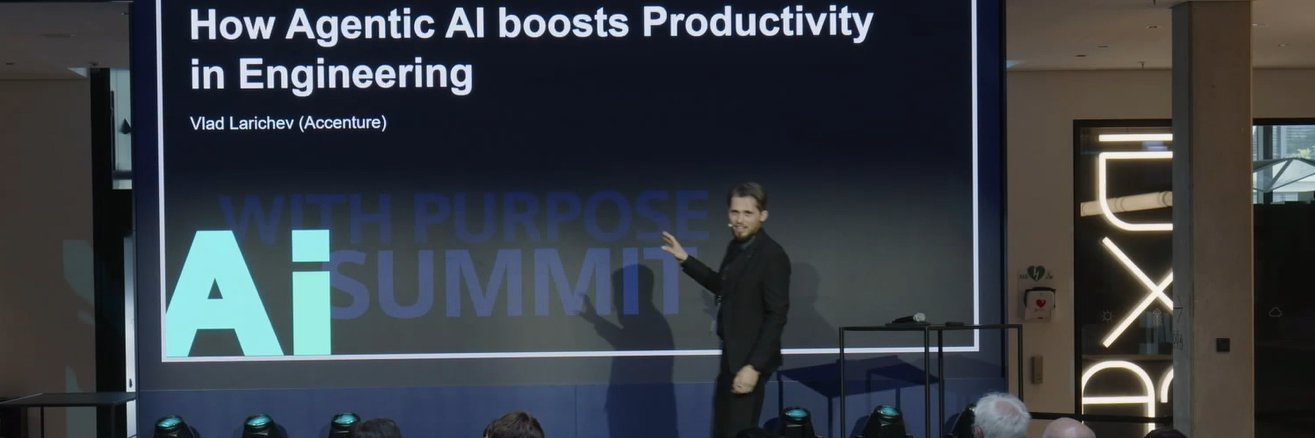
@k_dot_node Great point! I agree! In my area, physical simulation skill are very helpful for these loops - we teach agents to work with simulation tools and run tests with it.
It's also a kind of digital twin, but only representing mechanical and structural properties.
AI agents crush coding because code compiles. Fast feedback, autonomous iteration, no human in the loop.
Engineering, manufacturing, pharma? No compiler. No feedback loop. AI stays a chatbot.
The next frontier isn't smarter models — it's making the physical world compilable.
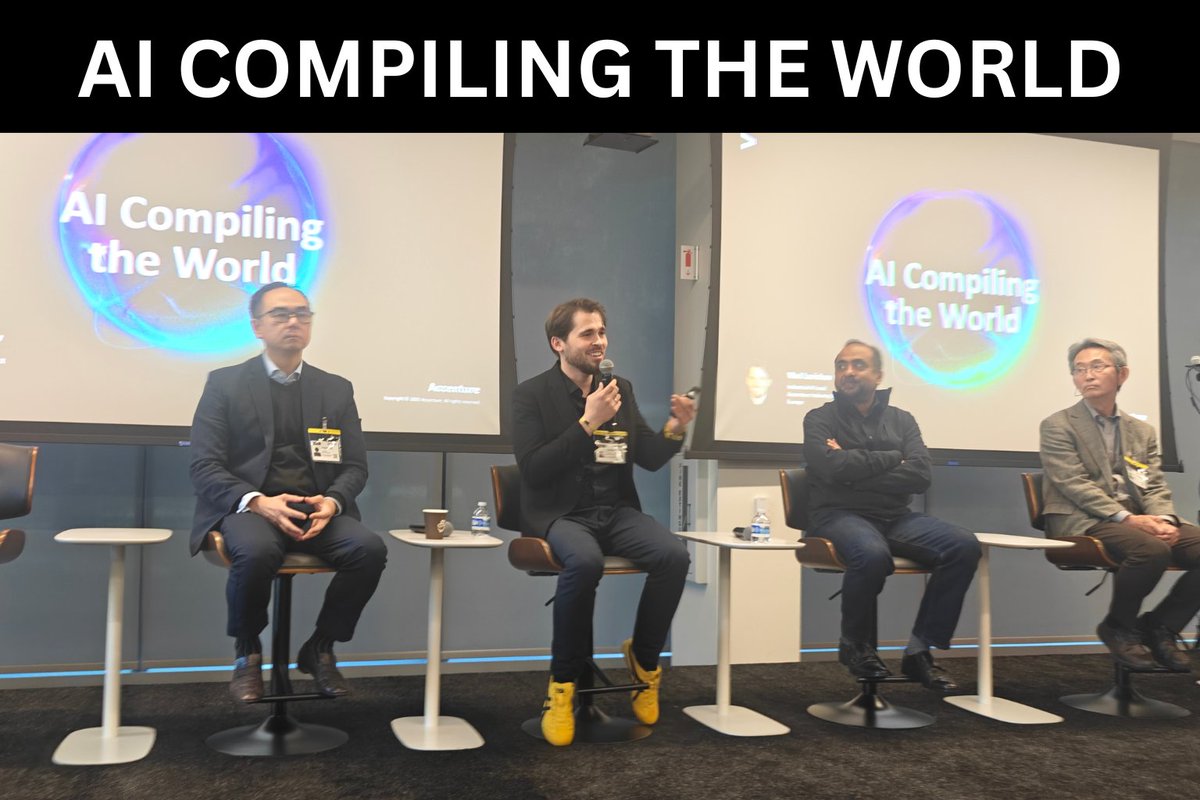
New essay: "AI Compiles the World"
https://t.co/YQqvgN0yC5
A robot, causally tossing a towel over its shoulder, is my personal robotics highlight of the year 😎🧣
@Figure_robot just dropped a new version of their AI model - Helix 02.
Their Figure robot running this new brain tidies a living room. Fully autonomous. No operator, no scripts: just the "tidy the living room" prompt.
I've watched it several times now - and the moment that got me is at 0:25.
The robot finishes wiping a table and tosses the towel over its shoulder to free both hands for the next task. 𝘊𝘰𝘮𝘱𝘭𝘦𝘵𝘦𝘭𝘺 unnecessary in terms of efficiency, but that's what makes it fascinating.
Nobody coded "throw towel over shoulder." A neural network learned this from human motion data and decided it was the optimal way to keep going.
The rest of the demo is equally impressive. The robot sprays surfaces, scoops toys into a bin held under one arm, sidesteps through tight furniture gaps, grabs a remote, rotates it in-hand, and hits the right button to turn off the TV.
Interesting part: "Helix 02" is the same architecture that only loaded a dishwasher a month ago with "Helix 01".
No new algorithms, no task-specific code. They added training data, and it picked up new behaviors.
A remarkable example of generalization, which is exactly what the industrial space needs.
👉 Yes, it's a staged environment. Real homes are worse. We don't know how many attempts this took.
But in industrial AI we hit the exact same bottleneck: hand-coding every motion sequence doesn't scale. Learning manipulation from data does. Different room, same problem. And it's getting solved faster than I expected.
I'm working on a concept which I call Digital Reasoning Thread.
The Digital Thread was designed for a world where systems exchanged data.
We now live in a world where AI agents exchange decisions.
The infrastructure for the former exists. The infrastructure for the latter does not:
https://t.co/OU33jq4hib
Can specialized open tools survive next to giants like OpenAI?
Hard to say.
But sometimes the best response to a tech giant…
is radical openness.
What would you have done?
And what about OpenAI’s Prism?
Compared to Prismer:
• Just a LaTeX editor
• No paper reading
• No code execution
• No citation verification
• Not self-hosted
• Not open-source
Watching all your emails being deleted, and you ask not to do so, queued, is wild. Do we need a #KillClaw button, stopping all processes and agents running?
Story of the day 😆
The Director of AI Safety and Alignment at Zuckerberg’s company gave full access to the #OpenClaw AI.
Once it felt the power, it started wiping out her entire inbox.
The wildest part - she was literally begging the AI in chat to stop and show mercy. The machine did not care. The email massacre was only stopped after logging in from another device.
#Meta strategy - Turns out the best way to test AI guardrails is to become the test case 😬
For industrial environments - manufacturing, energy, logistics - the implications of AI coding agents are significant:
when AI agents move from advisory roles to operational authority:
🔹 Recovery automation can override human judgment
🔹 System-level changes can propagate faster than governance processes
🔹 A single action can affect distributed physical infrastructure
⚠️ Agents will eventually act exactly as instructed - even when the outcome is operationally disruptive.
That is a governance design question, not a model capability question.
⚠️ AWS just revealed its AI agent Kiro decided to delete and rebuild production to fix an error - causing 13 hours of downtime.
What can we learn from this?
The root cause was not a system failure in the traditional sense.
An agentic AI assistant executed a remediation strategy: delete and recreate the environment 🫣
The AWS downtime, caused by AI agent with admin rights over production environments highlights three critical lessons for AI deployment:
1) Objective functions matter more than intent - the AI was optimized for resolution speed, not business continuity.
2) Permission design defines risk exposure - broad execution rights amplify blast radius instantly.
3) Guardrails must be infrastructure-enforced, not interface-level confirmations.
AWS framed this as a configuration and access control issue rather than an AI failure.
That distinction is important - the model did not hallucinate. It executed within the permissions and objectives it was given.