@benjamincrozat We have a rule that migrations must have manually typed table and column names. You can easily get into troubles during deployment even if you rename Model and use ->getTable() in migration.
@RebeliX_CZ Možno offtopic ale mne raz Bosch práčka/sušička (kombi) prestala sušiť. Prišiel opravár, dal dole horný dekel a tam boli tri poistky. Hovoril že vypadávajú hlavne v lete. Nahodil ich a všetko ide ďalej.
@nexxai@davidhemphill We did similar approach and writing paranoid semi-random tests is a must. Each test generates random data and asserts whether Response contains only owned rows. Mechanism is in trait, trait is applied on some TestCases, so all endpoints gets tested.
@valorin We're doing it upside down. Everything is returning 403 for nonlogged users, then after login it returns either 404 or 200. If you don't have permissions (even if logged in), you get 403 again.
@mattkingshott We have getRandom(), isValid(), getAll() etc. in our BaseEnum. There's even API endpoint which lists all enums so frontend can use them. Values in enums are translated via __() when middleware finds valid ?lang= param.
@mattkingshott I was downloading lots of XML files from various e-commerce sites just to make one big product catalogue. They are paranoid about those XMLs and kill unknown connections. One thing was user agent, then also Referer, Host, Cookies etc.
For API it's probably OK to customize it..
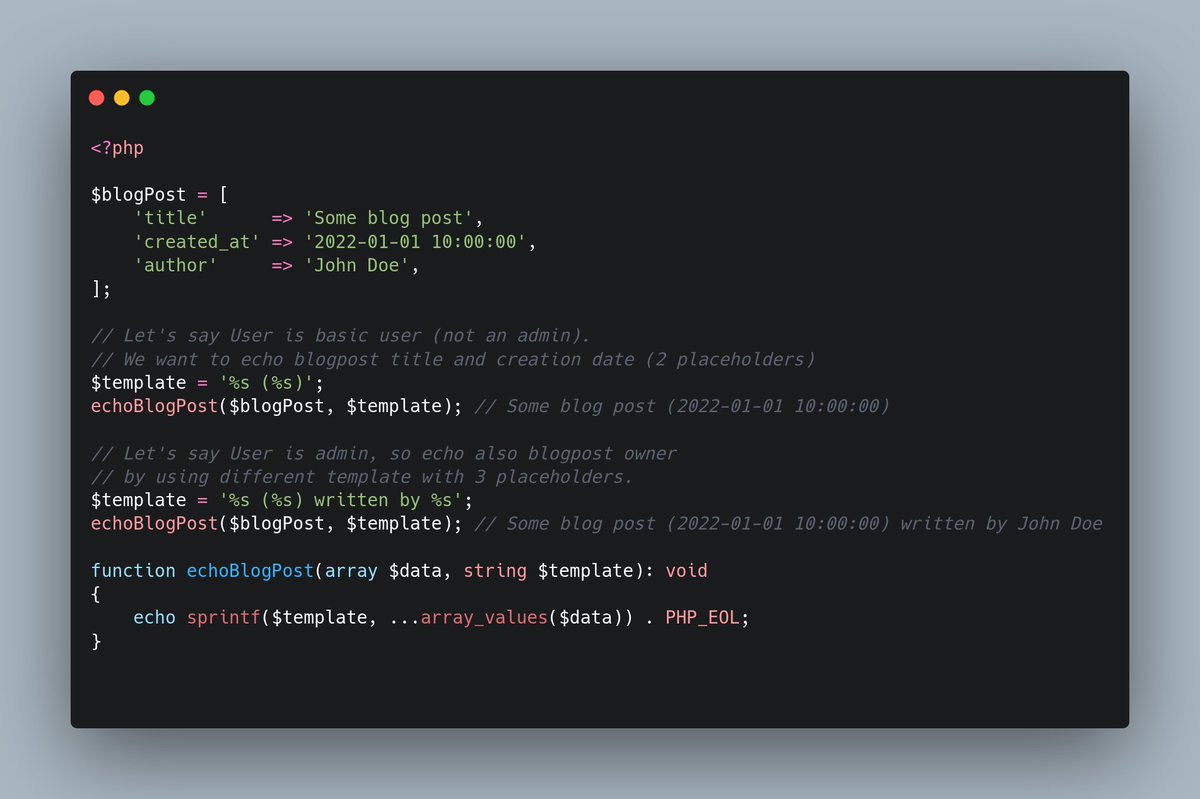
@PovilasKorop I use it all the time. Note that you can change sprintf's format on the fly (e.g. based on user's role) while still sending same amount of values.
@NNevolnikova dpč mám dve deti a vôbec mi nevadí ich raz do roka ukludniť lebo vonku drbe 5 minút ohňostroj. Úplne v pohode mohol byť, dokonca by som aj uvítal aby bol. Tak nejak to k Silvestra patrí. A komu to vadí nech ide dakam na more. Tam je ticho.