MYTHS OF AZAADI | The Women Question Separatism Never Answered
The Azaadi narrative spoke endlessly about freedom, dignity and honour but when it came to Kashmiri women, it offered symbolism, not safety.
Women were used as images of suffering.
Their grief was amplified.
Their pain was politicised.
Their tears were turned into slogans.
But where was the real framework for women’s dignity?
Where was the movement against sexual assault, molestation, intimidation, forced silence and social control within society itself?
Where was the space for women’s education, leadership, careers, safety, justice and independent voice?
The truth is uncomfortable:
Separatism did not empower Kashmiri women.
It instrumentalised them.
A woman was useful when her pain could feed the narrative.
But her agency, freedom, choices and future were rarely central to the politics that claimed to fight for liberation.
That is the hypocrisy.
A movement that speaks of Azaadi but cannot protect women from fear, violence, coercion and silence has no moral right to define freedom.
Real freedom is not a slogan shouted by men over the suffering of women.
Real freedom begins when women are not reduced to victims, symbols or emotional fuel.
The Azaadi myth collapses here:
It claimed to liberate Kashmir, but never seriously answered whether Kashmiri women would be free.
آزادی کے افسانے | خواتین کا وہ سوال جس کا جواب علیحدگی پسندی نے کبھی نہیں دیا
آزادی کے بیانیے نے آزادی، وقار اور عزت کی باتیں بہت کیں، مگر کشمیری خواتین کے معاملے میں اس نے تحفظ نہیں، صرف علامت سازی دی۔
خواتین کو دکھ کی تصویر بنایا گیا۔
ان کے غم کو نعرہ بنایا گیا۔
ان کے درد کو سیاست بنایا گیا۔
ان کے آنسوؤں کو بیانیے کا ایندھن بنایا گیا۔
مگر خواتین کے حقیقی وقار کا نقشہ کہاں تھا؟
جنسی زیادتی، دست درازی، ہراسانی، خوف، جبری خاموشی اور سماجی دباؤ کے خلاف سنجیدہ آواز کہاں تھی؟
خواتین کی تعلیم، قیادت، روزگار، تحفظ، انصاف اور آزاد رائے کے لیے واضح راستہ کہاں تھا؟
تلخ سچ یہ ہے:
علیحدگی پسندی نے کشمیری خواتین کو بااختیار نہیں بنایا۔
اس نے انہیں اپنے بیانیے کے لیے استعمال کیا۔
خاتون اس وقت اہم تھی جب اس کا درد نعرے کو طاقت دے سکتا تھا۔
مگر اس کی اپنی آواز، مرضی، مستقبل اور آزادی کبھی اس سیاست کا مرکز نہ بن سکی۔
یہی اصل منافقت ہے۔
جو تحریک آزادی کی بات کرے مگر خواتین کو خوف، تشدد، دباؤ اور خاموشی سے آزاد نہ کر سکے، اسے آزادی کا مطلب سمجھانے کا کوئی اخلاقی حق نہیں۔
حقیقی آزادی مردوں کے نعروں میں نہیں ہوتی۔
حقیقی آزادی وہاں شروع ہوتی ہے جہاں خواتین کو صرف مظلوم، علامت یا جذباتی ایندھن نہ بنایا جائے۔
آزادی کا افسانہ یہاں ٹوٹ جاتا ہے:
اس نے کشمیر کو آزاد کرنے کا دعویٰ کیا، مگر کبھی سنجیدگی سے یہ جواب نہیں دیا کہ کشمیری خواتین آزاد ہوں گی یا نہیں۔
Gilgit-Baltistan is paying the price of Pakistan’s failed policing and broken accountability system.
This is not merely a “law and order” problem. It is a governance failure where ordinary people can be arrested, intimidated or trapped in legal limbo, while victims of abuse struggle to find protection, independent redress or timely justice.
The data is stark:
• 2,215 crimes were recorded in Gilgit-Baltistan in 2025.
• Cases of grievous or simple hurt rose by 37% from the previous year.
• GB’s five district jails held 341 inmates, including 215 under-trial prisoners people who had not been convicted.
• Central Jail Minawar held 220 prisoners against a capacity of 177, exposing overcrowding and delayed justice.
• 14 so-called “honour killings” were reported in 2025, in which 10 women were murdered. Diamer alone accounted for seven women and three men killed in such cases.
• Women still lack basic institutional protection: no adequate family courts, shelter homes, effective enforcement against domestic violence, or credible support systems.
And this is the most disturbing part: in June 2025, a woman was fatally shot during a police confrontation at City Hospital in Gilgit. Only after public outrage were seven police personnel arrested, senior officers suspended and an inquiry launched.
That is not accountability by design. That is accountability only when outrage becomes impossible to ignore.
Pakistan cannot claim to uphold justice in Gilgit-Baltistan while under-trial prisoners remain locked up in overcrowded jails, women are killed in the name of “honour,” peaceful voices face coercive laws, and police excess repeatedly becomes a public crisis.
A system that makes citizens fear the uniform more than they trust the law is not protecting people. It is manufacturing fear, silence and helplessness.
Gilgit-Baltistan deserves independent accountability, safe courts, protection for women, speedy trials and justice that does not depend on public pressure.
گلگت بلتستان پاکستان کے ناکام پولیسنگ نظام اور ٹوٹتے احتساب کی قیمت ادا کر رہا ہے۔
یہ محض “امن و امان” کا مسئلہ نہیں، بلکہ ایک ایسا انتظامی بحران ہے جہاں عام شہری گرفتاری، دھمکی، طاقت کے استعمال اور طویل قانونی انتظار کے خوف میں زندگی گزارتے ہیں، جبکہ متاثرین کو تحفظ، آزادانہ تحقیقات اور بروقت انصاف ملنا انتہائی مشکل ہے۔
اعداد و شمار ایک تلخ تصویر پیش کرتے ہیں:
• 2025 میں گلگت بلتستان میں 2,215 جرائم درج ہوئے۔
• جسمانی تشدد اور زخمی کرنے کے مقدمات میں گزشتہ سال کے مقابلے میں 37 فیصد اضافہ رپورٹ ہوا۔
• خطے کی پانچ ضلعی جیلوں میں 341 قیدی موجود تھے، جن میں 215 زیرِ سماعت قیدی تھے
یعنی وہ لوگ جنہیں ابھی کسی عدالت نے مجرم قرار نہیں دیا۔
• سنٹرل جیل مناور میں گنجائش 177 ہونے کے باوجود 220 قیدی رکھے گئے، جو جیلوں کی بھیڑ اور تاخیر سے انصاف کی عکاسی کرتا ہے۔
• 2025 میں نام نہاد “غیرت” کے نام پر 14 قتل رپورٹ ہوئے، جن میں 10 خواتین جان سے ہاتھ دھو بیٹھیں۔
• خواتین کے لیے مؤثر فیملی کورٹس، شیلٹر ہومز، گھریلو تشدد سے تحفظ اور مدد کے قابلِ اعتماد نظام اب بھی ناکافی ہیں۔
سب سے تشویش ناک پہلو یہ ہے کہ جون 2025 میں گلگت کے سٹی ہسپتال میں پولیس تصادم کے دوران ایک خاتون کے جاں بحق ہونے کے بعد ہی عوامی دباؤ پر سات پولیس اہلکار گرفتار، بعض افسران معطل اور تحقیقات شروع کی گئیں۔
یہ نظام کے تحت احتساب نہیں یہ صرف اس وقت حرکت میں آنے والا احتساب ہے جب عوامی غصہ نظر انداز کرنا ممکن نہ رہے۔
پاکستان گلگت بلتستان میں انصاف اور انسانی حقوق کے دعوے نہیں کر سکتا جبکہ زیرِ سماعت قیدی گنجان جیلوں میں بند ہوں، خواتین “غیرت” کے نام پر قتل ہوں، شہری خوف میں رہیں اور پولیس زیادتی کے معاملات بار بار بحران بن کر سامنے آئیں۔
جس نظام میں لوگ قانون سے زیادہ وردی سے خوفزدہ ہوں، وہاں ریاست تحفظ نہیں دیتی وہ خوف، خاموشی اور بے بسی پیدا کرتی ہے۔
گلگت بلتستان کو آزاد احتساب، محفوظ عدالتیں، خواتین کے لیے تحفظ، فوری ٹرائل اور ایسا انصاف درکار ہے جو عوامی دباؤ کا محتاج نہ ہو۔
#GilgitBaltistan #HumanRights #PoliceBrutality #JusticeForGB #EndImpunity #PakistanExposed
MYTHS OF AZAADI | The Women Question Separatism Never Answered
The Azaadi narrative spoke endlessly about freedom, dignity and honour but when it came to Kashmiri women, it offered symbolism, not safety.
Women were used as images of suffering.
Their grief was amplified.
Their pain was politicised.
Their tears were turned into slogans.
But where was the real framework for women’s dignity?
Where was the movement against sexual assault, molestation, intimidation, forced silence and social control within society itself?
Where was the space for women’s education, leadership, careers, safety, justice and independent voice?
The truth is uncomfortable:
Separatism did not empower Kashmiri women.
It instrumentalised them.
A woman was useful when her pain could feed the narrative.
But her agency, freedom, choices and future were rarely central to the politics that claimed to fight for liberation.
That is the hypocrisy.
A movement that speaks of Azaadi but cannot protect women from fear, violence, coercion and silence has no moral right to define freedom.
Real freedom is not a slogan shouted by men over the suffering of women.
Real freedom begins when women are not reduced to victims, symbols or emotional fuel.
The Azaadi myth collapses here:
It claimed to liberate Kashmir, but never seriously answered whether Kashmiri women would be free.
آزادی کے افسانے | خواتین کا وہ سوال جس کا جواب علیحدگی پسندی نے کبھی نہیں دیا
آزادی کے بیانیے نے آزادی، وقار اور عزت کی باتیں بہت کیں، مگر کشمیری خواتین کے معاملے میں اس نے تحفظ نہیں، صرف علامت سازی دی۔
خواتین کو دکھ کی تصویر بنایا گیا۔
ان کے غم کو نعرہ بنایا گیا۔
ان کے درد کو سیاست بنایا گیا۔
ان کے آنسوؤں کو بیانیے کا ایندھن بنایا گیا۔
مگر خواتین کے حقیقی وقار کا نقشہ کہاں تھا؟
جنسی زیادتی، دست درازی، ہراسانی، خوف، جبری خاموشی اور سماجی دباؤ کے خلاف سنجیدہ آواز کہاں تھی؟
خواتین کی تعلیم، قیادت، روزگار، تحفظ، انصاف اور آزاد رائے کے لیے واضح راستہ کہاں تھا؟
تلخ سچ یہ ہے:
علیحدگی پسندی نے کشمیری خواتین کو بااختیار نہیں بنایا۔
اس نے انہیں اپنے بیانیے کے لیے استعمال کیا۔
خاتون اس وقت اہم تھی جب اس کا درد نعرے کو طاقت دے سکتا تھا۔
مگر اس کی اپنی آواز، مرضی، مستقبل اور آزادی کبھی اس سیاست کا مرکز نہ بن سکی۔
یہی اصل منافقت ہے۔
جو تحریک آزادی کی بات کرے مگر خواتین کو خوف، تشدد، دباؤ اور خاموشی سے آزاد نہ کر سکے، اسے آزادی کا مطلب سمجھانے کا کوئی اخلاقی حق نہیں۔
حقیقی آزادی مردوں کے نعروں میں نہیں ہوتی۔
حقیقی آزادی وہاں شروع ہوتی ہے جہاں خواتین کو صرف مظلوم، علامت یا جذباتی ایندھن نہ بنایا جائے۔
آزادی کا افسانہ یہاں ٹوٹ جاتا ہے:
اس نے کشمیر کو آزاد کرنے کا دعویٰ کیا، مگر کبھی سنجیدگی سے یہ جواب نہیں دیا کہ کشمیری خواتین آزاد ہوں گی یا نہیں۔
1987 was not just an election year in Kashmir.
It became the political wound that many later converted into a permanent justification for rage, separatism and violence.
Episode 2 examines the rise of the Muslim United Front, the controversial Assembly elections, the allegations that followed, and the moment when Kashmir’s democratic disagreement began to be weaponised into a larger political rupture.
But history must be read honestly, not emotionally edited.
The events of 1987 deserve scrutiny.
They deserve debate.
They deserve historical understanding.
But no contested election can justify three decades of bloodshed, terrorism, shutdowns, assassinations, radicalisation and the destruction of Kashmiri youth.
This episode asks the harder question:
Was 1987 the turning point or was it later used as the perfect excuse to push Kashmir from politics into militancy?
Watch Episode 2: 1987 – The Turning Point
Part of our documentary series on the political journey of Syed Ali Shah Geelani.
انیس سو ستاسی کشمیر کی تاریخ میں صرف ایک انتخابی سال نہیں تھا۔
یہ وہ سیاسی زخم بنا جسے بعد میں غصے، علیحدگی پسندی اور تشدد کے مستقل جواز میں بدل دیا گیا۔
دوسری قسط میں مسلم یونائیٹڈ فرنٹ کے عروج، متنازعہ اسمبلی انتخابات، بعد میں اٹھنے والے الزامات، اور اس مرحلے کا جائزہ لیا گیا ہے جہاں کشمیر کا جمہوری اختلاف ایک بڑی سیاسی دراڑ میں تبدیل ہونے لگا۔
مگر تاریخ کو ایمانداری سے پڑھنا ضروری ہے، جذباتی طور پر کاٹ چھانٹ کر نہیں۔
انیس سو ستاسی کے واقعات تحقیق کے مستحق ہیں۔
بحث کے مستحق ہیں۔
تاریخی سمجھ کے مستحق ہیں۔
مگر کوئی بھی متنازعہ انتخاب تین دہائیوں کی خونریزی، دہشت گردی، بندشوں، قتل، انتہا پسندی اور کشمیری نوجوانوں کے مستقبل کی تباہی کا جواز نہیں بن سکتا۔
یہ قسط ایک مشکل سوال اٹھاتی ہے:
کیا انیس سو ستاسی واقعی موڑ تھا، یا بعد میں اسے کشمیر کو سیاست سے عسکریت کی طرف دھکیلنے کے لیے بہترین بہانہ بنایا گیا؟
دیکھیے دوسری قسط: انیس سو ستاسی. فیصلہ کن موڑ
سید علی شاہ گیلانی کے سیاسی سفر پر ہماری دستاویزی سیریز کا حصہ۔
Congratulations to Umer Akbar of Sumbal, Bandipora, on becoming a KMR Youth Records Holder!
A dynamic Content Creator, Athlete, and National Drone Filmmaking Medalist, Umer has excelled from the field to the skies.
▪︎》IndiaSkills Nationals 2024 – Drone Filmmaking
▪︎》Gold – Soft Tennis & Bandy Nationals
▪︎》Silver – Snowshoe Nationals & State Ski Championship
▪︎》Official – 2nd Asian Soft Tennis Championships 2026
Your versatility, discipline, and determination are inspiring Kashmir’s youth to dream bigger and achieve more.
Kashmir is proud of you, Umer!
عمر اکبر کو KMR یوتھ ریکارڈز ہولڈر بننے پر دل کی گہرائیوں سے مبارکباد!
سمبل، بانڈی پورہ سے تعلق رکھنے والے عمر اکبر ایک باصلاحیت کانٹینٹ کریئیٹر، ایتھلیٹ اور قومی سطح کے ڈرون فلم میکنگ میڈلسٹ ہیں، جنہوں نے کھیلوں اور تخلیقی صلاحیتوں دونوں میدانوں میں اپنی پہچان بنائی ہے۔
▪︎》 انڈیا اسکلز نیشنلز 2024 میں ڈرون فلم میکنگ برانز میڈل
▪︎》سافٹ ٹینس اور بینڈی نیشنلز میں گولڈ میڈل
▪︎》 اسنوشو نیشنلز اور اسٹیٹ اسکی چیمپئن شپ میں سلور میڈل
▪︎》سیکنڈ ایشین سافٹ ٹینس چیمپئن شپ 2026 کے آفیشل
آپ کی محنت، صلاحیت اور ہمہ جہت کامیابیاں کشمیر کے نوجوانوں کے لیے ایک بڑی تحریک ہیں۔
کشمیر کو آپ پر فخر ہے، عمر اکبر!
#UmerAkbar #KMRYouthRecords #Bandipora #DroneFilmmaking #SportsExcellence #YouthInspiration
1987 was not just an election year in Kashmir.
It became the political wound that many later converted into a permanent justification for rage, separatism and violence.
Episode 2 examines the rise of the Muslim United Front, the controversial Assembly elections, the allegations that followed, and the moment when Kashmir’s democratic disagreement began to be weaponised into a larger political rupture.
But history must be read honestly, not emotionally edited.
The events of 1987 deserve scrutiny.
They deserve debate.
They deserve historical understanding.
But no contested election can justify three decades of bloodshed, terrorism, shutdowns, assassinations, radicalisation and the destruction of Kashmiri youth.
This episode asks the harder question:
Was 1987 the turning point or was it later used as the perfect excuse to push Kashmir from politics into militancy?
Watch Episode 2: 1987 – The Turning Point
Part of our documentary series on the political journey of Syed Ali Shah Geelani.
انیس سو ستاسی کشمیر کی تاریخ میں صرف ایک انتخابی سال نہیں تھا۔
یہ وہ سیاسی زخم بنا جسے بعد میں غصے، علیحدگی پسندی اور تشدد کے مستقل جواز میں بدل دیا گیا۔
دوسری قسط میں مسلم یونائیٹڈ فرنٹ کے عروج، متنازعہ اسمبلی انتخابات، بعد میں اٹھنے والے الزامات، اور اس مرحلے کا جائزہ لیا گیا ہے جہاں کشمیر کا جمہوری اختلاف ایک بڑی سیاسی دراڑ میں تبدیل ہونے لگا۔
مگر تاریخ کو ایمانداری سے پڑھنا ضروری ہے، جذباتی طور پر کاٹ چھانٹ کر نہیں۔
انیس سو ستاسی کے واقعات تحقیق کے مستحق ہیں۔
بحث کے مستحق ہیں۔
تاریخی سمجھ کے مستحق ہیں۔
مگر کوئی بھی متنازعہ انتخاب تین دہائیوں کی خونریزی، دہشت گردی، بندشوں، قتل، انتہا پسندی اور کشمیری نوجوانوں کے مستقبل کی تباہی کا جواز نہیں بن سکتا۔
یہ قسط ایک مشکل سوال اٹھاتی ہے:
کیا انیس سو ستاسی واقعی موڑ تھا، یا بعد میں اسے کشمیر کو سیاست سے عسکریت کی طرف دھکیلنے کے لیے بہترین بہانہ بنایا گیا؟
دیکھیے دوسری قسط: انیس سو ستاسی. فیصلہ کن موڑ
سید علی شاہ گیلانی کے سیاسی سفر پر ہماری دستاویزی سیریز کا حصہ۔
Thaejkaad: Kashmir’s Vanishing Tradition
Thaejkaad is not just paddy transplantation.
It is one of Kashmir’s oldest community traditions when families, neighbours and village women gathered in flooded fields to transplant young rice saplings from Thaejwaan nursery beds into the main fields.
There was collective labour.
There were Thaejkaad songs, laughter, shared kehwa, noon chai, food, stories and a powerful sense of belonging.
For generations, this was how Kashmir’s villages celebrated work, food and togetherness.
But today, Thaejkaad is slowly disappearing.
▪︎》Kashmir’s paddy cultivation area has reportedly declined from 1,41,340 hectares in 2020 to 1,30,050 hectares in 2025 a loss of more than 11,000 hectares in only five years.
▪︎》Compared with around 1,62,000 hectares in 2012, the Valley has lost nearly 32,000 hectares of paddy land.
Behind these numbers is a deeper loss:
• Paddy fields are being converted into houses, roads and commercial spaces.
• Water scarcity and prolonged dry spells make cultivation harder.
• Rising labour and input costs reduce farmers’ earnings.
• Many families shift to more profitable orchards and other crops.
• Mechanised farming and dependence on hired labour have reduced the old spirit of community participation.
• Traditional rice varieties, folk songs and field-based knowledge are being forgotten by younger generations.
When Thaejkaad fades, Kashmir does not only lose a farming practice.
We lose a living classroom of culture.
We lose the songs sung by women in the fields.
We lose the community bonds built through shared labour.
We lose traditional knowledge passed from grandparents to children.
We lose productive farmland and become more dependent on rice brought from outside.
We lose a part of Kashmir’s rural identity.
Preservation must go beyond symbolic celebrations.
▪︎》 Protect fertile paddy land from reckless conversion.
▪︎》 Ensure irrigation, climate-resilient seeds and fair returns for farmers.
▪︎》 Promote local rice varieties such as Mushk Budji, Zagg and Meetha Chawal.
▪︎》 Document Thaejkaad songs, memories and farming vocabulary before they disappear.
▪︎》 Organise village-level Thaejkaad days involving schools, youth clubs and local communities.
▪︎》 Support farmers so that preserving tradition is economically sustainable not a financial burden.
Modernisation should help Kashmir’s farmers, not erase Kashmir’s roots.
Save the fields.
Save the songs.
Save the shared spirit of Thaejkaad.
تھیج کاڈ: کشمیر کی مٹتی ہوئی روایت
تھیج کاڈ صرف دھان کی پنیری لگانا نہیں تھا، بلکہ کشمیر کی اجتماعی زندگی کا تہوار تھا—لوک گیت، کہوا، مشترکہ محنت اور پڑوسیوں کا ساتھ۔
مگر آج یہ روایت کمزور پڑ رہی ہے۔
دھان کی کاشت کا رقبہ 2020 میں 1,41,340 ہیکٹر سے گھٹ کر 2025 میں 1,30,050 ہیکٹر رہ گیا—یعنی پانچ برس میں 11,000 ہیکٹر سے زیادہ کمی۔
زمینوں کی تبدیلی، بڑھتی لاگت، مزدوروں کی کمی، مشینی کاشت اور موسمیاتی دباؤ نے صرف کھیت نہیں کم کیے انہوں نے ثقافت، گیت اور دیہی شناخت کو بھی متاثر کیا۔
تھیج کاڈ کو بچانے کے لیے ضروری ہے کہ دھان کے کھیت محفوظ ہوں، کسانوں کو سہارا ملے، اور نوجوانوں کو اس روایت سے جوڑا جائے۔
• کھیت بچائیں
• گیت بچائیں
• تھیج کاڈ کی روح بچائیں
#Thaejkaad #KashmirCulture #KashmirHeritage #SavePaddyFields #Kashmiriyat
Amarnath Yatra is not just a pilgrimage through Kashmir.
It is a yearly civilisational reminder that Kashmir’s real soul is not violence, fear or manufactured hate, it is hospitality, shared space and spiritual coexistence.
In 2025, over 4.1 lakh yatris visited the Holy Cave. In 2026, the Yatra is scheduled from 3 July to 28 August. Behind these numbers is a larger truth: the pilgrimage moves because Kashmir opens its roads, its markets, its hearts and its tradition of mehmaan-nawazi.
Every Kashmiri who welcomes a yatri defeats the propaganda that tried to reduce this land to conflict.
Every pony-wallah, shopkeeper, driver, volunteer, doctor, security personnel and local helping hand becomes part of a bigger message: Kashmir belongs to peace, not terror.
The enemies of Kashmir always wanted yatris to fear Kashmir and Kashmiris to fear yatris. But the Valley has repeatedly shown something stronger than propaganda, dignity, faith, service and mutual respect.
A peaceful Amarnath Yatra is not only a security success.
It is Kashmir’s answer to those who wanted our society divided forever.
امرناتھ یاترا صرف کشمیر سے گزرنے والا ایک مذہبی سفر نہیں۔
یہ ہر سال اس حقیقت کی یاد دہانی ہے کہ کشمیر کی اصل روح تشدد، خوف اور نفرت نہیں، بلکہ مہمان نوازی، مشترکہ جگہ اور روحانی ہم آہنگی ہے۔
2025 میں 4.1 لاکھ سے زیادہ یاتریوں نے مقدس غار کی زیارت کی۔ 2026 میں یاترا 3 جولائی سے 28 اگست تک مقرر ہے۔ ان اعداد کے پیچھے ایک بڑی حقیقت ہے: یہ سفر اس لیے چلتا ہے کیونکہ کشمیر اپنی سڑکیں، بازار، دل اور مہمان نوازی کی روایت کھولتا ہے۔
ہر کشمیری جو کسی یاتری کا استقبال کرتا ہے، اُس پروپیگنڈے کو شکست دیتا ہے جس نے کشمیر کو صرف تنازعے کے نام سے پہچنوانے کی کوشش کی۔
ہر گھوڑے والا، دکاندار، ڈرائیور، رضاکار، ڈاکٹر، حفاظتی اہلکار اور مقامی مددگار ایک بڑے پیغام کا حصہ بن جاتا ہے: کشمیر امن کا ہے، دہشت کا نہیں۔
کشمیر کے دشمن ہمیشہ چاہتے تھے کہ یاتری کشمیر سے ڈریں اور کشمیری یاتریوں سے ڈریں۔ مگر وادی نے بار بار ثابت کیا کہ پروپیگنڈے سے زیادہ مضبوط چیز عزت، ایمان، خدمت اور باہمی احترام ہے۔
پُرامن امرناتھ یاترا صرف حفاظتی کامیابی نہیں۔
یہ کشمیر کا جواب ہے اُن لوگوں کے لیے جو ہمارے سماج کو ہمیشہ کے لیے تقسیم کرنا چاہتے تھے۔
Amarnath Yatra is not just a pilgrimage through Kashmir.
It is a yearly civilisational reminder that Kashmir’s real soul is not violence, fear or manufactured hate, it is hospitality, shared space and spiritual coexistence.
In 2025, over 4.1 lakh yatris visited the Holy Cave. In 2026, the Yatra is scheduled from 3 July to 28 August. Behind these numbers is a larger truth: the pilgrimage moves because Kashmir opens its roads, its markets, its hearts and its tradition of mehmaan-nawazi.
Every Kashmiri who welcomes a yatri defeats the propaganda that tried to reduce this land to conflict.
Every pony-wallah, shopkeeper, driver, volunteer, doctor, security personnel and local helping hand becomes part of a bigger message: Kashmir belongs to peace, not terror.
The enemies of Kashmir always wanted yatris to fear Kashmir and Kashmiris to fear yatris. But the Valley has repeatedly shown something stronger than propaganda, dignity, faith, service and mutual respect.
A peaceful Amarnath Yatra is not only a security success.
It is Kashmir’s answer to those who wanted our society divided forever.
امرناتھ یاترا صرف کشمیر سے گزرنے والا ایک مذہبی سفر نہیں۔
یہ ہر سال اس حقیقت کی یاد دہانی ہے کہ کشمیر کی اصل روح تشدد، خوف اور نفرت نہیں، بلکہ مہمان نوازی، مشترکہ جگہ اور روحانی ہم آہنگی ہے۔
2025 میں 4.1 لاکھ سے زیادہ یاتریوں نے مقدس غار کی زیارت کی۔ 2026 میں یاترا 3 جولائی سے 28 اگست تک مقرر ہے۔ ان اعداد کے پیچھے ایک بڑی حقیقت ہے: یہ سفر اس لیے چلتا ہے کیونکہ کشمیر اپنی سڑکیں، بازار، دل اور مہمان نوازی کی روایت کھولتا ہے۔
ہر کشمیری جو کسی یاتری کا استقبال کرتا ہے، اُس پروپیگنڈے کو شکست دیتا ہے جس نے کشمیر کو صرف تنازعے کے نام سے پہچنوانے کی کوشش کی۔
ہر گھوڑے والا، دکاندار، ڈرائیور، رضاکار، ڈاکٹر، حفاظتی اہلکار اور مقامی مددگار ایک بڑے پیغام کا حصہ بن جاتا ہے: کشمیر امن کا ہے، دہشت کا نہیں۔
کشمیر کے دشمن ہمیشہ چاہتے تھے کہ یاتری کشمیر سے ڈریں اور کشمیری یاتریوں سے ڈریں۔ مگر وادی نے بار بار ثابت کیا کہ پروپیگنڈے سے زیادہ مضبوط چیز عزت، ایمان، خدمت اور باہمی احترام ہے۔
پُرامن امرناتھ یاترا صرف حفاظتی کامیابی نہیں۔
یہ کشمیر کا جواب ہے اُن لوگوں کے لیے جو ہمارے سماج کو ہمیشہ کے لیے تقسیم کرنا چاہتے تھے۔
Over 9,000 pilgrims have departed Jammu for the sacred Mela Kheer Bhawani in Kashmir one of the strongest signs yet of growing confidence in secure, well-managed spiritual travel.
The scale of this year’s pilgrimage tells its own story:
▪︎》2025: 60 buses carrying a departure convoy described as hundreds of devotees.
▪︎》2026: 200 buses carrying 9,000+ pilgrims.
That means the organised transport fleet has increased by 140 buses in one year a rise of over 233%, or more than 3.3 times the 2025 fleet.
While the exact 2025 passenger count was not publicly specified, the jump from a convoy reported as “hundreds” to more than 9,000 devotees in 2026 reflects a substantial rise in participation and trust.
This turnout is not accidental. It is the result of advance planning across the entire pilgrimage route and the five revered Ragnya Bhagwati shrines at Tulmulla, Manzgam, Devsar, Logripora and Tikkar.
Key safety and support measures include:
• Elaborate security deployment and coordination for smooth convoy movement
• Strong traffic regulation on pilgrimage routes
• Inter-agency communication for real-time coordination and response
• Advance inspection of shrine sites and local arrangements
• Medical support, emergency-response readiness and fire-tender availability
• Boarding, lodging, tents, blankets and essential supplies for pilgrims
• Drinking-water, power and sanitation arrangements
• Road and lane repairs around pilgrimage locations
• Transport planning to ensure orderly, hassle-free movement for families, elderly devotees and women
Such arrangements matter because a pilgrimage is not merely a journey it is an emotional return to faith, memory and roots.
For Kashmiri Pandits, Mela Kheer Bhawani remains a deep spiritual connection with their homeland. For Kashmir, it strengthens heritage tourism, local commerce and livelihoods linked to buses, taxis, food outlets, accommodation, flower vendors, puja stalls and small businesses.
Secure routes. Better facilities. Higher participation. Stronger faith.
The 2026 turnout shows that when pilgrims feel safe, supported and respected, spiritual tourism does not just continue it grows.
جموں سے 9,000 سے زائد یاتریوں کی مقدس میلہ کھیربھوانی کے لیے روانگی، کشمیر میں محفوظ اور منظم مذہبی سفر پر بڑھتے اعتماد کی ایک مضبوط علامت ہے۔
اس سال یاترا کا حجم خود بہت کچھ بیان کرتا ہے:
▪︎》 2025: 60 بسوں میں چند سو یاتری روانہ ہوئے۔
▪︎》 2026: تقریباً 200 بسوں میں 9,000 سے زائد یاتری روانہ ہوئے۔
یعنی صرف ایک سال میں منظم بسوں کے قافلے میں 140 بسوں کا اضافہ ہوا—جو تقریباً 233 فیصد اضافہ ہے۔ گزشتہ سال کے مقابلے میں یہ ایک نمایاں تبدیلی ہے، جو ظاہر کرتی ہے کہ زیادہ خاندان، بزرگ اور عقیدت مند اب سفر کو زیادہ محفوظ اور سہل سمجھ رہے ہیں۔
یہ اضافہ محض اتفاق نہیں، بلکہ بہتر انتظامات اور جامع حفاظتی تیاریوں کا نتیجہ ہے:
• یاترا روٹس پر حفاظتی نگرانی اور قافلوں کی منظم نقل و حرکت
• مزاروں اور حساس مقامات کی پیشگی تلاشی اور سکیورٹی جانچ
• ٹریفک مینجمنٹ اور ہجوم کو منظم رکھنے کے اقدامات
• طبی کیمپ، ایمبولینس اور ہنگامی امدادی انتظامات
• رہائش، خیموں، کمبلوں، پانی اور صفائی ستھرائی کی سہولت
• مختلف اداروں کے درمیان رابطہ تاکہ سفر بلا رکاوٹ جاری رہے
• بزرگوں، خواتین اور خاندانوں کے لیے زیادہ محفوظ اور باوقار سفری ماحول
کھیربھوانی میلہ صرف ایک مذہبی اجتماع نہیں۔ یہ کشمیری پنڈت برادری کے لیے اپنی یادوں، عقیدت اور آبائی سرزمین سے گہرا تعلق ہے۔
محفوظ مذہبی سیاحت کا فائدہ مقامی معیشت کو بھی ہوتا ہے۔ بس آپریٹرز، ٹیکسی ڈرائیورز، ہوٹلوں، ڈھابوں، پھول فروشوں، پوجا سامان بیچنے والوں اور چھوٹے کاروباروں کو اس سے روزگار اور آمدن کے مواقع ملتے ہیں۔
محفوظ راستے۔ بہتر سہولتیں۔ بڑھتی شرکت۔ مضبوط ہوتا اعتماد۔
جب یاترا محفوظ ہوتی ہے تو عقیدت مند زیادہ تعداد میں لوٹتے ہیں اور کشمیر کی روحانی و ثقافتی وراثت مزید مضبوط ہوتی ہے۔
#KheerBhawaniMela #KheerBhawaniYatra #KashmiriPandits #Kashmir #ReligiousTourism #HeritageTourism #JammuAndKashmir #Kashmiriyat #FaithAndHeritage
A justice system frozen for years is not an administrative issue,it is a human rights crisis
Gilgit-Baltistan is being shown to tourists as paradise while its people wait endlessly for courts, rights and remedy
@madrasikp@HamidMirPAK@TheSkandar@ikartikpaliwal@Sparshparihar1
Gilgit-Baltistan is not only suffering a political crisis. It is suffering a collapse of justice.
The region’s highest judicial forum has remained effectively non-functional because of a broken quorum, leaving around 10,000 cases pending and thousands of families trapped in legal darkness.
This is what Pakistan’s control has produced in GB, No constitutional dignity, no timely justice, no institutional seriousness, and no accountability from Islamabad.
When courts stop functioning, power does not disappear, it shifts to administrators, police files, political pressure and security intimidation. That is how dissent is silenced, land disputes are buried, service matters are frozen, and ordinary citizens are forced to live without remedy.
Pakistan markets Gilgit-Baltistan as scenery for tourists and strategy for the state, but denies its people the most basic pillar of citizenship: justice.
A region of mountains is being crushed under a mountain of pending cases.
This is not delay.
This is institutional abandonment.
گلگت بلتستان صرف سیاسی بحران کا شکار نہیں، وہاں انصاف کا نظام بھی مفلوج ہو چکا ہے۔
خطے کا سب سے بڑا عدالتی فورم نامکمل ججوں کی وجہ سے مؤثر طور پر غیر فعال ہے، جس کے نتیجے میں تقریباً دس ہزار مقدمات زیرِ التوا پڑے ہیں اور ہزاروں خاندان قانونی اندھیرے میں پھنس چکے ہیں۔
یہی پاکستان کے کنٹرول کا اصل نتیجہ ہے: نہ آئینی وقار، نہ بروقت انصاف، نہ ادارہ جاتی سنجیدگی، نہ اسلام آباد سے جواب دہی۔
جب عدالتیں رک جاتی ہیں تو طاقت ختم نہیں ہوتی، بلکہ انتظامیہ، پولیس فائلوں، سیاسی دباؤ اور سکیورٹی دھمکیوں کے ہاتھ میں چلی جاتی ہے۔ اسی طرح اختلافِ رائے دبایا جاتا ہے، زمین کے تنازعات دفن کیے جاتے ہیں، ملازمتوں کے معاملات منجمد رہتے ہیں، اور عام شہری علاجِ قانون سے محروم ہو جاتا ہے۔
پاکستان گلگت بلتستان کو سیاحوں کے لیے منظر اور ریاست کے لیے حکمتِ عملی سمجھتا ہے، مگر وہاں کے لوگوں کو شہریت کا سب سے بنیادی ستون، انصاف، نہیں دیتا۔
پہاڑوں کا خطہ مقدمات کے پہاڑ تلے کچلا جا رہا ہے۔
یہ تاخیر نہیں۔
یہ ادارہ جاتی ترکِ ذمہ داری ہے۔
Gilgit-Baltistan is not only suffering a political crisis. It is suffering a collapse of justice.
The region’s highest judicial forum has remained effectively non-functional because of a broken quorum, leaving around 10,000 cases pending and thousands of families trapped in legal darkness.
This is what Pakistan’s control has produced in GB, No constitutional dignity, no timely justice, no institutional seriousness, and no accountability from Islamabad.
When courts stop functioning, power does not disappear, it shifts to administrators, police files, political pressure and security intimidation. That is how dissent is silenced, land disputes are buried, service matters are frozen, and ordinary citizens are forced to live without remedy.
Pakistan markets Gilgit-Baltistan as scenery for tourists and strategy for the state, but denies its people the most basic pillar of citizenship: justice.
A region of mountains is being crushed under a mountain of pending cases.
This is not delay.
This is institutional abandonment.
گلگت بلتستان صرف سیاسی بحران کا شکار نہیں، وہاں انصاف کا نظام بھی مفلوج ہو چکا ہے۔
خطے کا سب سے بڑا عدالتی فورم نامکمل ججوں کی وجہ سے مؤثر طور پر غیر فعال ہے، جس کے نتیجے میں تقریباً دس ہزار مقدمات زیرِ التوا پڑے ہیں اور ہزاروں خاندان قانونی اندھیرے میں پھنس چکے ہیں۔
یہی پاکستان کے کنٹرول کا اصل نتیجہ ہے: نہ آئینی وقار، نہ بروقت انصاف، نہ ادارہ جاتی سنجیدگی، نہ اسلام آباد سے جواب دہی۔
جب عدالتیں رک جاتی ہیں تو طاقت ختم نہیں ہوتی، بلکہ انتظامیہ، پولیس فائلوں، سیاسی دباؤ اور سکیورٹی دھمکیوں کے ہاتھ میں چلی جاتی ہے۔ اسی طرح اختلافِ رائے دبایا جاتا ہے، زمین کے تنازعات دفن کیے جاتے ہیں، ملازمتوں کے معاملات منجمد رہتے ہیں، اور عام شہری علاجِ قانون سے محروم ہو جاتا ہے۔
پاکستان گلگت بلتستان کو سیاحوں کے لیے منظر اور ریاست کے لیے حکمتِ عملی سمجھتا ہے، مگر وہاں کے لوگوں کو شہریت کا سب سے بنیادی ستون، انصاف، نہیں دیتا۔
پہاڑوں کا خطہ مقدمات کے پہاڑ تلے کچلا جا رہا ہے۔
یہ تاخیر نہیں۔
یہ ادارہ جاتی ترکِ ذمہ داری ہے۔
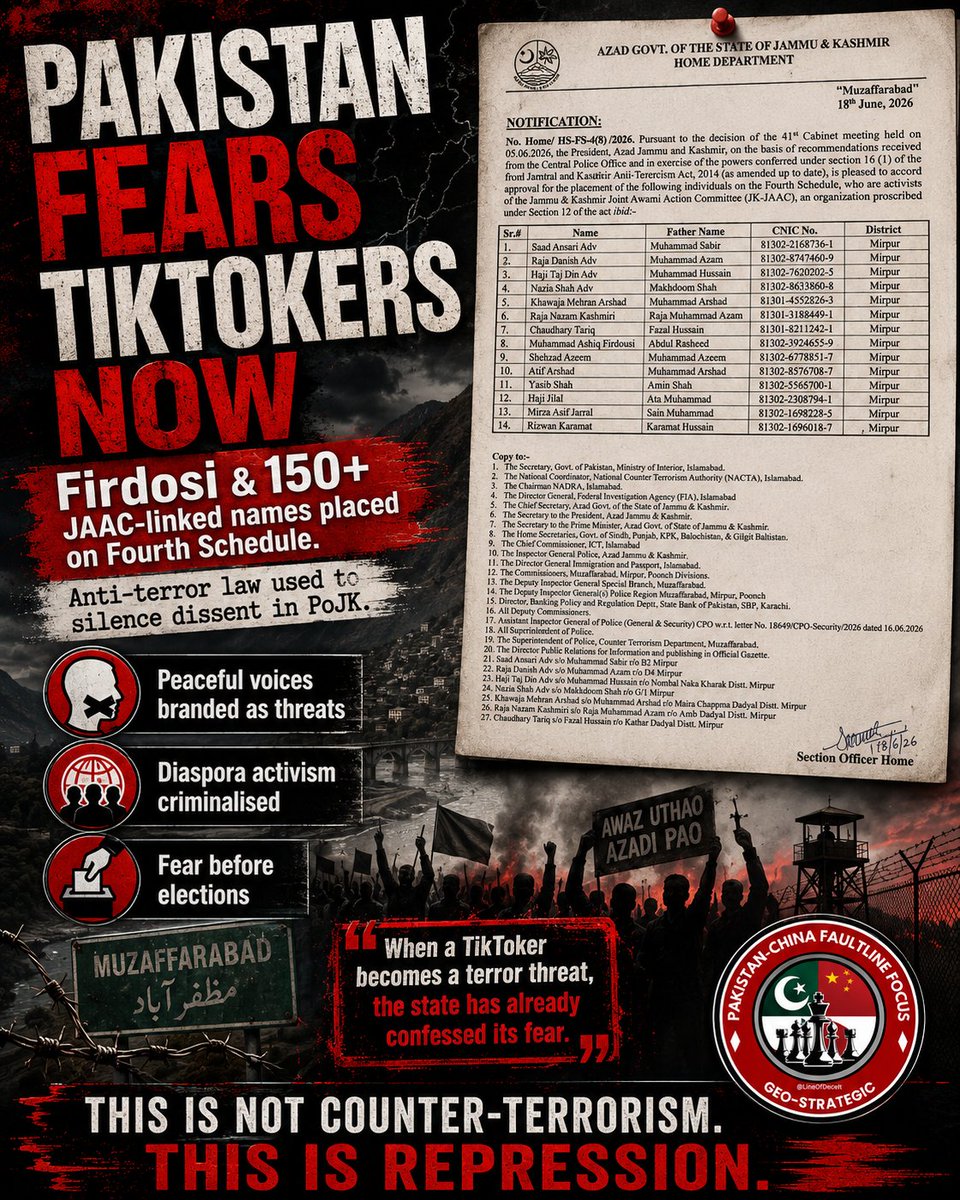
Pakistan has reached the stage where TikTokers are treated like national security threats.
When laughter from Sheffield shakes Islamabad, the problem is not the content creator, the problem is a state terrified of truth.
@ItsShubhangi@Pallavi_Aus@gauravcsawant@HamidMirPAK
Pakistan has now discovered a new national security threat, A UK-based TikToker laughing at its fear.
Reports say Firdosi and over 150 others linked to the banned JK-JAAC have been placed on the Fourth Schedule under anti-terror laws. His response was laughter, and that laughter hit harder than Islamabad’s entire notification.
This is what insecurity looks like in official language.
A state that cannot answer public demands now calls content creators terror threats. A state that cannot provide rights in PoJK now criminalises people sitting in Sheffield and Rotherham for speaking to their own community.
If a TikToker can cause rebellion, maybe the problem is not the TikToker.
Maybe the problem is Pakistan’s broken rule, fake Azadi, illegal control, and fear of every Kashmiri voice that refuses to obey.
پاکستان نے قومی سلامتی کے لیے نیا خطرہ دریافت کر لیا ہے: برطانیہ میں بیٹھا ایک کشمیری، جو وڈیوز بناتا ہے اور اسلام آباد کے خوف پر ہنستا ہے۔
اطلاعات کے مطابق فردوسی سمیت مشترکہ عوامی ایکشن کمیٹی سے منسلک ڈیڑھ سو سے زائد افراد کو انسدادِ دہشت گردی قانون کے تحت چوتھے شیڈول میں ڈال دیا گیا۔ فردوسی کا جواب قہقہہ تھا، اور وہ قہقہہ اسلام آباد کے پورے نوٹیفکیشن سے زیادہ زور دار نکلا۔
یہی ریاستی عدم تحفظ کی اصل زبان ہے۔
جو ریاست عوامی مطالبات کا جواب نہیں دے سکتی، وہ مواد بنانے والوں کو دہشت گردی کا خطرہ قرار دیتی ہے۔ جو ریاست پاکستان کے زیرِ قبضہ جموں و کشمیر میں حقوق نہیں دے سکتی، وہ شیفیلڈ اور روتھرہم میں بیٹھے لوگوں کو بھی مجرم بنانے لگتی ہے۔
اگر ایک وڈیو بنانے والا شخص بغاوت پیدا کر سکتا ہے، تو مسئلہ وڈیو بنانے والے میں نہیں۔
مسئلہ پاکستان کے ٹوٹے ہوئے نظام، جھوٹی آزادی، غیر قانونی کنٹرول، اور ہر اُس کشمیری آواز کے خوف میں ہے جو سر جھکانے سے انکار کرتی ہے۔
Pakistan has now discovered a new national security threat, A UK-based TikToker laughing at its fear.
Reports say Firdosi and over 150 others linked to the banned JK-JAAC have been placed on the Fourth Schedule under anti-terror laws. His response was laughter, and that laughter hit harder than Islamabad’s entire notification.
This is what insecurity looks like in official language.
A state that cannot answer public demands now calls content creators terror threats. A state that cannot provide rights in PoJK now criminalises people sitting in Sheffield and Rotherham for speaking to their own community.
If a TikToker can cause rebellion, maybe the problem is not the TikToker.
Maybe the problem is Pakistan’s broken rule, fake Azadi, illegal control, and fear of every Kashmiri voice that refuses to obey.
پاکستان نے قومی سلامتی کے لیے نیا خطرہ دریافت کر لیا ہے: برطانیہ میں بیٹھا ایک کشمیری، جو وڈیوز بناتا ہے اور اسلام آباد کے خوف پر ہنستا ہے۔
اطلاعات کے مطابق فردوسی سمیت مشترکہ عوامی ایکشن کمیٹی سے منسلک ڈیڑھ سو سے زائد افراد کو انسدادِ دہشت گردی قانون کے تحت چوتھے شیڈول میں ڈال دیا گیا۔ فردوسی کا جواب قہقہہ تھا، اور وہ قہقہہ اسلام آباد کے پورے نوٹیفکیشن سے زیادہ زور دار نکلا۔
یہی ریاستی عدم تحفظ کی اصل زبان ہے۔
جو ریاست عوامی مطالبات کا جواب نہیں دے سکتی، وہ مواد بنانے والوں کو دہشت گردی کا خطرہ قرار دیتی ہے۔ جو ریاست پاکستان کے زیرِ قبضہ جموں و کشمیر میں حقوق نہیں دے سکتی، وہ شیفیلڈ اور روتھرہم میں بیٹھے لوگوں کو بھی مجرم بنانے لگتی ہے۔
اگر ایک وڈیو بنانے والا شخص بغاوت پیدا کر سکتا ہے، تو مسئلہ وڈیو بنانے والے میں نہیں۔
مسئلہ پاکستان کے ٹوٹے ہوئے نظام، جھوٹی آزادی، غیر قانونی کنٹرول، اور ہر اُس کشمیری آواز کے خوف میں ہے جو سر جھکانے سے انکار کرتی ہے۔
The real question Kashmir must ask is simple:
=> Why did voting suddenly become “haram” after 1989?
Before the gun entered Kashmir’s politics, the same society voted, contested, campaigned and participated. Elections were not treated as a crime against faith. Mainstream leaders used ballots. Religious figures engaged with politics. Public participation was normal.
Then suddenly, after Pakistan-backed terrorism hijacked the street, democracy was declared forbidden.
Not because faith changed.
Because the power structure changed.
The gun needed empty polling booths.
Separatism needed fear.
Pakistan needed Kashmiris away from democratic participation.
And the boycott industry needed people silent so that unelected voices could claim to represent them.
This was never about religion.
It was political control dressed as religious instruction.
The ballot was demonised because it gave ordinary Kashmiris power.
The boycott was glorified because it gave unelected actors relevance.
After 1989, haram was not a religious verdict.
It was a political weapon.
Kashmir must never forget how faith was used to frighten people away from democracy.
کشمیر کو ایک سیدھا سوال پوچھنا چاہیے:
=> سنہ 1989 کے بعد اچانک ووٹ اور انتخابات حرام کیسے بن گئے؟
اس سے پہلے یہی سماج ووٹ بھی دیتا تھا، انتخابات بھی لڑتا تھا، مہم بھی چلاتا تھا، اور سیاسی عمل میں حصہ بھی لیتا تھا۔ ووٹ کو ایمان کے خلاف نہیں سمجھا جاتا تھا۔ مین اسٹریم رہنما بھی اسی راستے سے آتے تھے، مذہبی چہرے بھی سیاست سے جڑے رہتے تھے، اور عوامی شرکت معمول کی بات تھی۔
پھر اچانک، جب بندوق نے کشمیر کی سیاست کو یرغمال بنایا، جمہوری عمل کو حرام کہہ دیا گیا۔
کیونکہ ایمان نہیں بدلا تھا۔
طاقت کا ڈھانچہ بدل گیا تھا۔
بندوق کو خالی پولنگ مراکز چاہیے تھے۔
علیحدگی پسندی کو خوف چاہیے تھا۔
پاکستان کو کشمیری عوام کو جمہوری عمل سے دور رکھنا تھا۔
اور بائیکاٹ کی سیاست کو خاموش عوام چاہیے تھے تاکہ غیر منتخب آوازیں خود کو نمائندہ بنا سکیں۔
یہ مذہب کا مسئلہ کبھی نہیں تھا۔
یہ سیاسی قابو تھا، جسے مذہبی حکم کا لباس پہنایا گیا۔
ووٹ کو بدنام اس لیے کیا گیا کیونکہ وہ عام کشمیری کو طاقت دیتا تھا۔
بائیکاٹ کو مقدس اس لیے بنایا گیا کیونکہ وہ غیر منتخب کرداروں کو اہمیت دیتا تھا۔
سنہ 1989 کے بعد حرام کا نعرہ مذہبی فیصلہ نہیں تھا۔
یہ سیاسی ہتھیار تھا۔
کشمیر کو یاد رکھنا چاہیے کہ ایمان کو جمہوریت سے ڈرانے کے لیے کیسے استعمال کیا گیا۔
Kaman Post, Uri: From a frontier of caution to a growing symbol of border tourism.
At the historic Aman Setu on the Line of Control, Uri is gradually building a new identity one shaped by tourism, connectivity, heritage and confidence.
Tourism growth in numbers:
• Kaman Post welcomed 6,220 visitors in 2025.
• From January to May 2026, it recorded 2,757 visitors, compared with 2,489 during the same period in 2025.
• That is a growth of nearly 11% in just one year.
• May 2026 alone saw 1,160 visitors, underlining the growing appeal of Uri’s border tourism circuit.
This change has not happened by chance.
Better road connectivity, controlled and simplified visitor access, on-the-spot identity registration, and improved visitor facilities have made Kaman Post easier to experience while maintaining necessary security protocols.
The destination now offers more than a view of the LoC. Visitors can explore the historic Aman Setu, walk through Veer Path, visit the Wall of Valour, use the Setu Selfie Point, and access facilities such as a canteen, souvenir shop and mini-auditorium.
For Uri, the impact is local and real.
More visitors mean more work for taxi drivers, small eateries, roadside vendors, local shopkeepers, guides and hospitality businesses. A town once seen only through the lens of conflict is now drawing students, families and travellers interested in its landscape, history and resilience.
Kaman Post proves that security, infrastructure and tourism can move together. A well-managed border destination does not just attract tourists it creates livelihoods, changes perceptions and gives Uri a stronger place on Kashmir’s tourism map.
کمان پوسٹ، اوڑی: سرحدی چوکی سے ابھرتی ہوئی سیاحتی شناخت تک
اوڑی میں اَمن سیٹو کے قریب واقع کمان پوسٹ کبھی بنیادی طور پر ایک حساس سرحدی مقام کے طور پر جانی جاتی تھی۔ آج یہ کشمیر کے نمایاں بارڈر ٹورزم مقامات میں شامل ہو رہی ہے، جہاں خاندان، طلبہ اور سیاح تاریخ، قدرتی مناظر اور سرحدی علاقے کے منفرد تجربے کے لیے پہنچ رہے ہیں۔
سیاحت میں نمایاں اضافہ:
• سال 2025 میں کمان پوسٹ پر مجموعی طور پر 6,220 سیاح آئے۔
• جنوری تا مئی 2025 میں سیاحوں کی تعداد 2,489 تھی۔
• جنوری تا مئی 2026 میں یہ بڑھ کر 2,757 ہو گئی۔
• یعنی ایک سال میں تقریباً 10.8 فیصد اضافہ۔
• صرف مئی 2026 میں 1,160 سیاحوں نے کمان پوسٹ کا دورہ کیا۔
یہ تبدیلی صرف سیاحوں کی بڑھتی دلچسپی نہیں بلکہ بہتر انتظامات کا نتیجہ بھی ہے۔
▪︎》 آسان اور منظم داخلہ نظام
▪︎》 شناختی دستاویزات کی فوری جانچ اور رجسٹریشن
▪︎》 بہتر سڑک رابطہ
▪︎》 سیاحوں کے لیے زیادہ سہولیات
▪︎》 آمدورفت اور دوروں کی بہتر نگرانی
کمان پوسٹ پر رسائی اب کنٹرولڈ انٹری، شناخت کی تصدیق، منظم نقل و حرکت اور زمینی سطح پر بہتر رابطہ کاری کے ذریعے زیادہ محفوظ اور مؤثر بنائی گئی ہے۔ اس سے سیاحوں کے اعتماد میں اضافہ ہوا ہے، جبکہ ضروری سکیورٹی نگرانی بھی مضبوط ہوئی ہے۔
اس سیاحتی سرگرمی کا فائدہ اوڑی کی مقامی معیشت کو بھی پہنچ رہا ہے۔ زیادہ سیاحوں کا مطلب ہے ٹیکسی ڈرائیوروں، دکانداروں، مقامی کھانوں کی دکانوں، گائیڈز اور چھوٹے کاروباروں کے لیے زیادہ روزگار اور آمدنی۔
اوڑی کی کہانی بدل رہی ہےجہاں بہتر سکیورٹی، سیاحت اور مقامی مواقع ساتھ ساتھ آگے بڑھ رہے ہیں۔
#KamanPost #Uri #AmanSetu #BorderTourism #KashmirTourism #Baramulla #TourismDevelopment #کمان_پوسٹ #اوڑی
History becomes dangerous when it is edited to protect political myths.
Before Syed Ali Shah Geelani became the face of separatist politics in Kashmir, he was not outside the democratic system, he was inside it.
He contested elections.
He sat in the Assembly.
He used the same constitutional space that his later politics asked ordinary Kashmiris to reject.
That contradiction matters.
Because for decades, Kashmiri youth were told that democracy was betrayal, voting was collaboration, and political participation was surrender. But the very architects of boycott politics had once walked through the doors of the system themselves.
This is not history’s footnote.
This is Kashmir’s political irony.
The tragedy is not that leaders changed ideology. The tragedy is that after using democratic space for themselves, they helped build a politics that pushed generations of ordinary Kashmiris toward shutdowns, boycotts, street rage and lost futures.
Episode 1 revisits that forgotten chapter.
Not to rewrite history, but to remove the selective editing around it.
Watch how a man who once entered politics through elections later became a symbol of rejecting the same road for others.
تاریخ اس وقت خطرناک بن جاتی ہے جب اسے سیاسی افسانوں کو بچانے کے لیے ادھورا سنایا جائے۔
سید علی شاہ گیلانی کشمیر کی علیحدگی پسند سیاست کا چہرہ بننے سے پہلے جمہوری نظام کے باہر نہیں تھے، اسی نظام کے اندر تھے۔
انہوں نے انتخابات لڑے۔
اسمبلی میں بیٹھے۔
اسی آئینی سیاسی جگہ کو استعمال کیا جسے بعد میں عام کشمیریوں کے لیے رد کرنے کا درس دیا گیا۔
یہ تضاد اہم ہے۔
دہائیوں تک کشمیری نوجوانوں کو بتایا گیا کہ ووٹ دینا غداری ہے، جمہوری حصہ داری سمجھوتہ ہے، اور سیاسی عمل میں شامل ہونا سرنڈر ہے۔ مگر بائیکاٹ کی سیاست کے بڑے چہروں نے خود کبھی اسی نظام کے دروازے استعمال کیے تھے۔
یہ تاریخ کا معمولی حاشیہ نہیں۔
یہ کشمیر کی سیاسی ستم ظریفی ہے۔
المیہ یہ نہیں کہ کسی رہنما نے نظریہ بدلا۔ المیہ یہ ہے کہ جنہوں نے اپنے لیے جمہوری راستہ استعمال کیا، انہوں نے بعد میں عام کشمیریوں کے لیے ایسی سیاست کھڑی کی جس نے نسلوں کو بندشوں، بائیکاٹ، سڑک کے غصے اور ضائع مستقبل کی طرف دھکیل دیا۔
پہلی قسط اسی بھولے ہوئے باب کو سامنے لاتی ہے۔
تاریخ بدلنے کے لیے نہیں، بلکہ اس پر چڑھی ہوئی منتخب خاموشی ہٹانے کے لیے۔
دیکھیے کہ ایک شخص جو کبھی انتخابات کے ذریعے سیاست میں داخل ہوا، بعد میں دوسروں کے لیے اسی راستے کو رد کرنے کی علامت کیسے بنا۔
History becomes dangerous when it is edited to protect political myths.
Before Syed Ali Shah Geelani became the face of separatist politics in Kashmir, he was not outside the democratic system, he was inside it.
He contested elections.
He sat in the Assembly.
He used the same constitutional space that his later politics asked ordinary Kashmiris to reject.
That contradiction matters.
Because for decades, Kashmiri youth were told that democracy was betrayal, voting was collaboration, and political participation was surrender. But the very architects of boycott politics had once walked through the doors of the system themselves.
This is not history’s footnote.
This is Kashmir’s political irony.
The tragedy is not that leaders changed ideology. The tragedy is that after using democratic space for themselves, they helped build a politics that pushed generations of ordinary Kashmiris toward shutdowns, boycotts, street rage and lost futures.
Episode 1 revisits that forgotten chapter.
Not to rewrite history, but to remove the selective editing around it.
Watch how a man who once entered politics through elections later became a symbol of rejecting the same road for others.
تاریخ اس وقت خطرناک بن جاتی ہے جب اسے سیاسی افسانوں کو بچانے کے لیے ادھورا سنایا جائے۔
سید علی شاہ گیلانی کشمیر کی علیحدگی پسند سیاست کا چہرہ بننے سے پہلے جمہوری نظام کے باہر نہیں تھے، اسی نظام کے اندر تھے۔
انہوں نے انتخابات لڑے۔
اسمبلی میں بیٹھے۔
اسی آئینی سیاسی جگہ کو استعمال کیا جسے بعد میں عام کشمیریوں کے لیے رد کرنے کا درس دیا گیا۔
یہ تضاد اہم ہے۔
دہائیوں تک کشمیری نوجوانوں کو بتایا گیا کہ ووٹ دینا غداری ہے، جمہوری حصہ داری سمجھوتہ ہے، اور سیاسی عمل میں شامل ہونا سرنڈر ہے۔ مگر بائیکاٹ کی سیاست کے بڑے چہروں نے خود کبھی اسی نظام کے دروازے استعمال کیے تھے۔
یہ تاریخ کا معمولی حاشیہ نہیں۔
یہ کشمیر کی سیاسی ستم ظریفی ہے۔
المیہ یہ نہیں کہ کسی رہنما نے نظریہ بدلا۔ المیہ یہ ہے کہ جنہوں نے اپنے لیے جمہوری راستہ استعمال کیا، انہوں نے بعد میں عام کشمیریوں کے لیے ایسی سیاست کھڑی کی جس نے نسلوں کو بندشوں، بائیکاٹ، سڑک کے غصے اور ضائع مستقبل کی طرف دھکیل دیا۔
پہلی قسط اسی بھولے ہوئے باب کو سامنے لاتی ہے۔
تاریخ بدلنے کے لیے نہیں، بلکہ اس پر چڑھی ہوئی منتخب خاموشی ہٹانے کے لیے۔
دیکھیے کہ ایک شخص جو کبھی انتخابات کے ذریعے سیاست میں داخل ہوا، بعد میں دوسروں کے لیے اسی راستے کو رد کرنے کی علامت کیسے بنا۔
MYTHS OF AZAADI | The Freedom That Created Fear
The most brutal contradiction of the Azaadi narrative was this, it claimed to fight fear, but created fear inside Kashmiri homes.
People were afraid to speak differently.
Afraid to open shops during shutdowns.
Afraid to send children to school.
Afraid to vote.
Afraid to question slogans.
Afraid to say they wanted peace.
This was not freedom.
This was social intimidation dressed as resistance.
A real liberation movement gives people courage.
The separatist ecosystem gave people labels.
Ask a question, you were called a traitor.
Choose normal life, you were called compromised.
Demand education, jobs and peace, you were accused of weakening the cause.
That is how the myth survived, not through truth, but through pressure.
The loudest slogan of freedom created a society where many Kashmiris whispered their real opinions inside their own homes.
That is the final exposure of the Azaadi fraud:
A movement that makes its own people afraid can never claim to be fighting for freedom.
آزادی کے افسانے | وہ آزادی جس نے خوف پیدا کیا
آزادی کے بیانیے کا سب سے بڑا تضاد یہی تھا کہ وہ خوف کے خلاف لڑنے کا دعویٰ کرتا تھا، مگر کشمیری گھروں کے اندر ہی خوف پیدا کرتا رہا۔
لوگ مختلف رائے دینے سے ڈرتے تھے۔
بند کے دن دکان کھولنے سے ڈرتے تھے۔
بچوں کو درسگاہ بھیجنے سے ڈرتے تھے۔
ووٹ دینے سے ڈرتے تھے۔
نعروں پر سوال اٹھانے سے ڈرتے تھے۔
یہ کہنے سے ڈرتے تھے کہ ہمیں امن چاہیے۔
یہ آزادی نہیں تھی۔
یہ سماجی دھمکی تھی، جسے مزاحمت کا لباس پہنایا گیا۔
حقیقی آزادی لوگوں کو حوصلہ دیتی ہے۔
علیحدگی پسند بیانیے نے لوگوں کو الزامات دیے۔
سوال پوچھو تو غدار۔
معمول کی زندگی چاہو تو سمجھوتہ زدہ۔
تعلیم، روزگار اور امن مانگو تو مقصد کو کمزور کرنے والا۔
یہ افسانہ سچ سے نہیں، دباؤ سے زندہ رہا۔
آزادی کا سب سے بلند نعرہ ایک ایسا ماحول بنا گیا جہاں بہت سے کشمیری اپنی اصل رائے اپنے گھروں کے اندر بھی آہستہ آواز میں کہتے تھے۔
یہی آزادی کے دھوکے کی آخری بے نقابی ہے:
جو تحریک اپنی ہی قوم کو خوف میں رکھے، وہ آزادی کے نام پر بولنے کا حق نہیں رکھتی۔