After nearly 50 years, Voyager 1 has traveled more than one light-day from Earth.
Hear about what the Voyager mission has taught us about our solar system—and beyond—in the newest episode of our Curious Universe podcast: https://t.co/myZespHoPz
The African Energy Chamber (AEC) has called on Namibia to accelerate petroleum licensing, reduce regulatory delays and finalise outstanding commercial agreements to attract further investment as the country prepares for its first commercial oil production.
According to the State of African Energy 2027 Outlook, developed by the AEC in collaboration with S&P Global Energy, Namibia could contribute more than 300,000 barrels per day (bpd) to Africa's oil production by the mid-2030s, supported by major offshore discoveries and investment in petroleum development projects.
However, the chamber warned that prolonged licensing procedures, regulatory uncertainty and delays in concluding commercial agreements could affect project development timelines and discourage further investment.
“Namibia has done the hard part by proving that its offshore basins hold world-class resources and attracting some of the biggest names in global energy. Now it needs to move. Investors cannot afford to wait indefinitely for licenses, approvals and regulatory clarity,” AEC Executive Chairman NJ Ayuk said.
https://t.co/VH5F1MlEvu #namibia #mining #petroleumlicenses #oilandgas #investment @MME_Nam@CoMinesNamibia@NAMPOA_@SAOGA1@nj_ayuk@nogconference@NIEConference@energy_african@african_energyC
Namibia generated N$3.4 billion from uranium exports to China in September 2026, making uranium the country's largest export commodity during the month, according to the Namibia Statistics Agency (NSA).
The latest International Merchandise Trade Statistics Bulletin shows that uranium accounted for 27.7% of Namibia's total export earnings of N$12.2 billion, with all uranium exports destined for China.
Non-monetary gold was the country's second-largest export commodity, generating N$1.4 billion and accounting for 11.2% of total exports, with all shipments destined for South Africa.
The NSA reported that uranium and gold remained among Namibia's leading sources of export revenue, contributing significantly to the country's merchandise trade earnings.
https://t.co/8CZQgidPT2 #namibia #mining #uranium #exports #exportcommodity @MME_Nam@CoMinesNamibia@namstatsagency
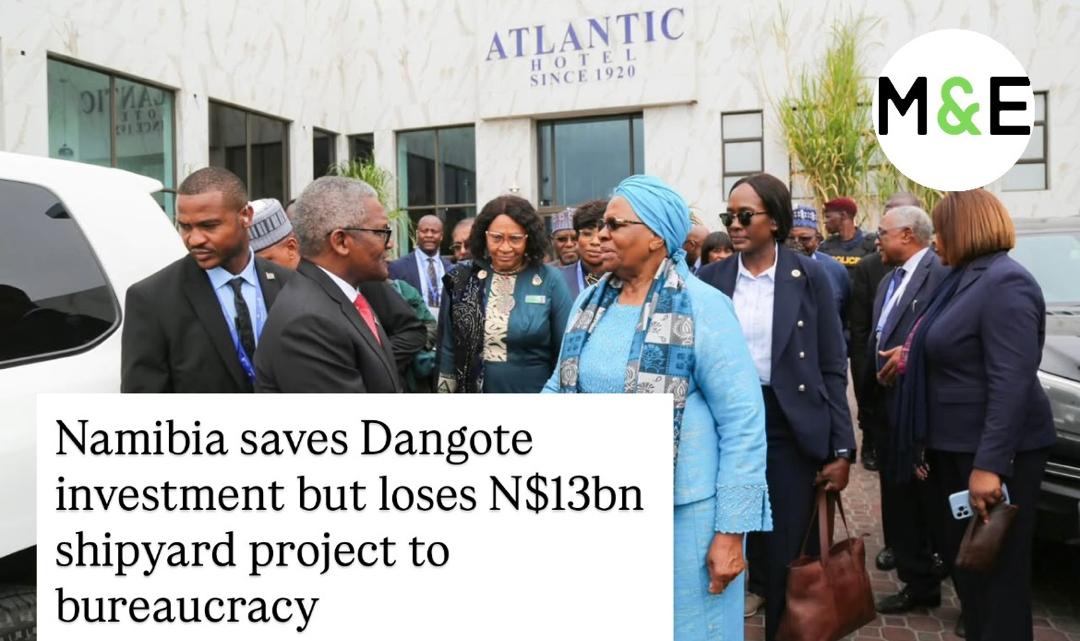
Namibia has managed to retain Dangote Industries Limited's US$2.5 billion fuel storage and regional pipeline investment after President Netumbo Nandi-Ndaitwah personally intervened, but lost a proposed N$13 billion drydock shipyard development at Walvis Bay following four years of bureaucratic delays.
Nandi-Ndaitwah revealed that the two projects had encountered administrative obstacles, with the shipyard investors eventually withdrawing while Dangote Industries remained committed to its investment following her intervention.
Speaking at the launch of the Dangote Namibia Tank Farm and Regional Pipeline Project in Walvis Bay, the President acknowledged that delays in government processes had nearly cost Namibia the investment.
"I apologise for all the delays you have experienced. At times, the frustrations were such that we could have lost this project," Nandi-Ndaitwah said.
https://t.co/H0HhYWeH3C #namibia #mining #investment #fuelstorage @MME_Nam@CoMinesNamibia@NPC_Namibia@nogconference@NIEConference@NamcorNamibia@nj_ayuk@NAMPOA_@SAOGA1@AlikoDangote@DangoteGroup
Elevate Uranium plans to test higher-grade ore from its Marenica Uranium Project during the December 2026 quarter as the company advances its pilot plant programme following initial results that achieved a sevenfold increase in uranium grade.
According to the company's September 2026 Quarterly Activities Report, the planned testing campaign will use newly excavated ore with a resource grade of 180 parts per million (ppm) uranium oxide (U₃O₈), compared with the 89 ppm feed grade used during initial pilot plant testing.
The report states that the programme will also focus on optimising the fifth and final stage of the company's patented U-pgrade beneficiation process, with integrated results from all five stages expected during the December quarter.
Results from the first four stages showed that approximately 88% of the original ore mass was rejected while 79% of the uranium was recovered. The uranium grade increased from 89 ppm to 590 ppm, representing an upgrade ratio of approximately seven times.
https://t.co/c1up4tLsI4 #namibia #mining #uranium #elevateuranium @MME_Nam@CoMinesNamibia@Elevateuranium
Usakos, Karibib, Arandis, Uis and Omaruru are mining towns in the Erongo region. Yet none have anything to show for the mineral extraction generating billions—only poverty, high unemployment and crumbling infrastructure.
BREAKING: Formula 1 returns to Africa with 10 year agreement to race in Rwanda
The African Grand Prix is set to join the F1 calendar in the early 2030s
#F1
According to the 2025 Kimberley Process Statistics, Namibia achieved an average price of US$282.54 per carat, which is significantly higher than the averages recorded by the world’s three largest diamond-producing nations by volume: the Russian Federation, Botswana and Canada.
BREAKING … TotalEnergies will supply all petrol and diesel to Namibia for three months, starting in November. Energy minister Modestus Amutse on Monday evening announced that TotalEnergies’ trading firm Totsa won a competitive bidding process involving four companies, with the minister signing the award. Update: Nishi Felton
Elevate Uranium achieves 79% recovery at Marenica pilot plant
Elevate Uranium has achieved a 79% uranium recovery rate from the first four stages of its U-pgrade™ pilot plant at the Marenica Uranium Project in Namibia, as the company advances testing of its proprietary beneficiation process.
The company said the first four stages of the five-stage pilot plant rejected about 88% of the original ore mass while increasing the uranium grade from 89 parts per million (ppm) to 590 ppm.
The results represent a seven-fold increase in uranium grade and are broadly in line with the design basis and historical bench-scale testing undertaken in 2013.
Elevate Uranium Managing Director Murray Hill said all five stages of the pilot plant are now operating on ore from Marenica, with optimisation work continuing across the circuit.
“All five stages of the pilot plant are now operating on ore from Elevate’s Marenica Uranium Project. The pilot plant is rejecting 88% of the ore mass and thereby upgrading the ore from 89 ppm to 590 ppm, before it reaches the final concentration stage, which is in line with historical bench-scale results,” Hill said.
https://t.co/4UFVgvuPmb #namibia #mining #uranium #operaions #pilotplant @MME_Nam@CoMinesNamibia@Elevateuranium
The National Upstream Petroleum Local Content Policy Validation Workshop is underway in Windhoek, bringing together government, industry stakeholders and other key players to discuss how Namibian businesses and citizens can participate and benefit from the development of the petroleum sector.
The discussions will focus on local employment, skills development, procurement, and opportunities for Namibian companies across the upstream petroleum value chain.
What will this mean for Namibians, local businesses and the future of the country’s oil and gas industry?
Tune in LIVE on NBC 1 and stream the proceedings on the NBC Digital News YouTube channel.
REPORT: RICHOLENE ǂOUSES
#NBCNews #nbcdigitalnews #nbcDSTV282 #nbcGOtv20 #nbcPlusApp