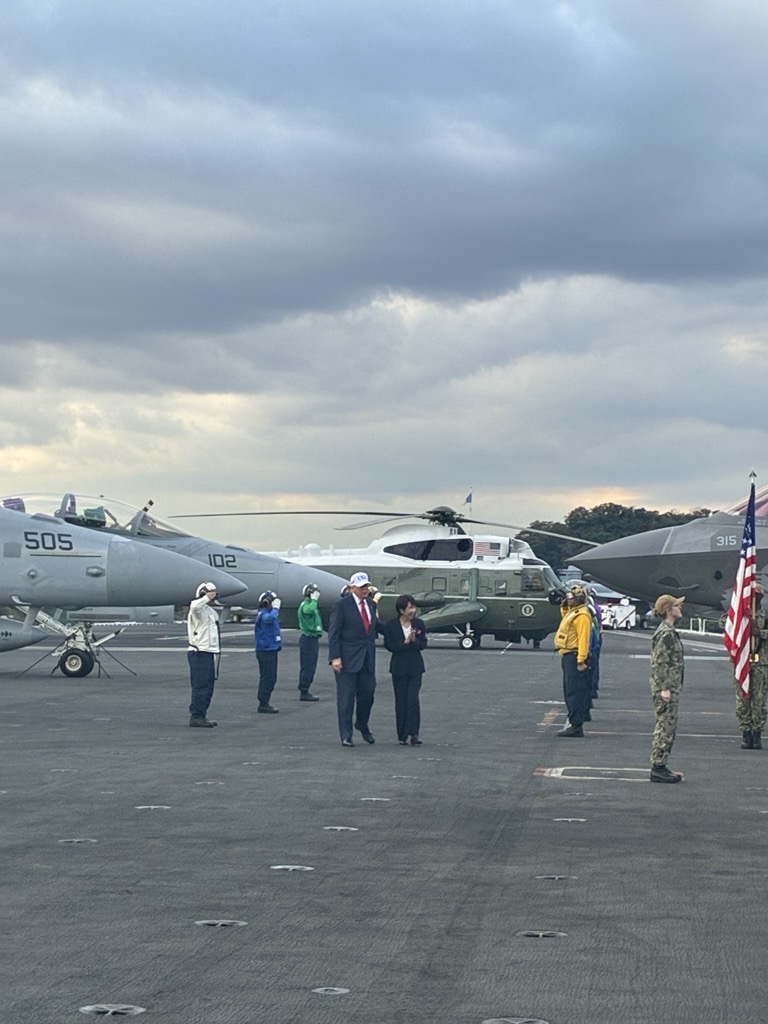
🚨🇺🇸🇰🇷 Freedom on Display in Gyeongju!
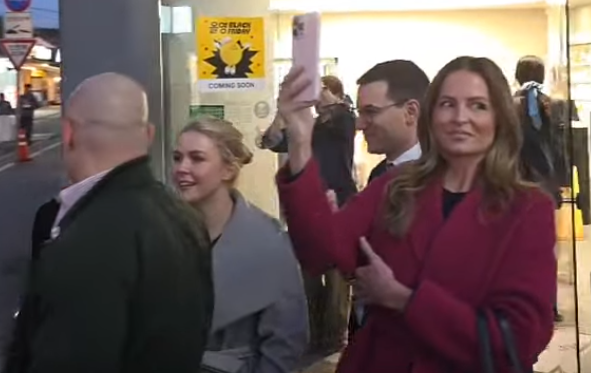
At a massive rally opposing China Lee Jae-myung, a White House spokesperson for President Trump stood among the crowd, witnessing the voice of liberty firsthand. The rally’s energy was unstoppable, a true testament to the power of freedom. Keep your eyes on the gray-coated figure — representing American support for the people’s fight for choice, justice, and national pride.
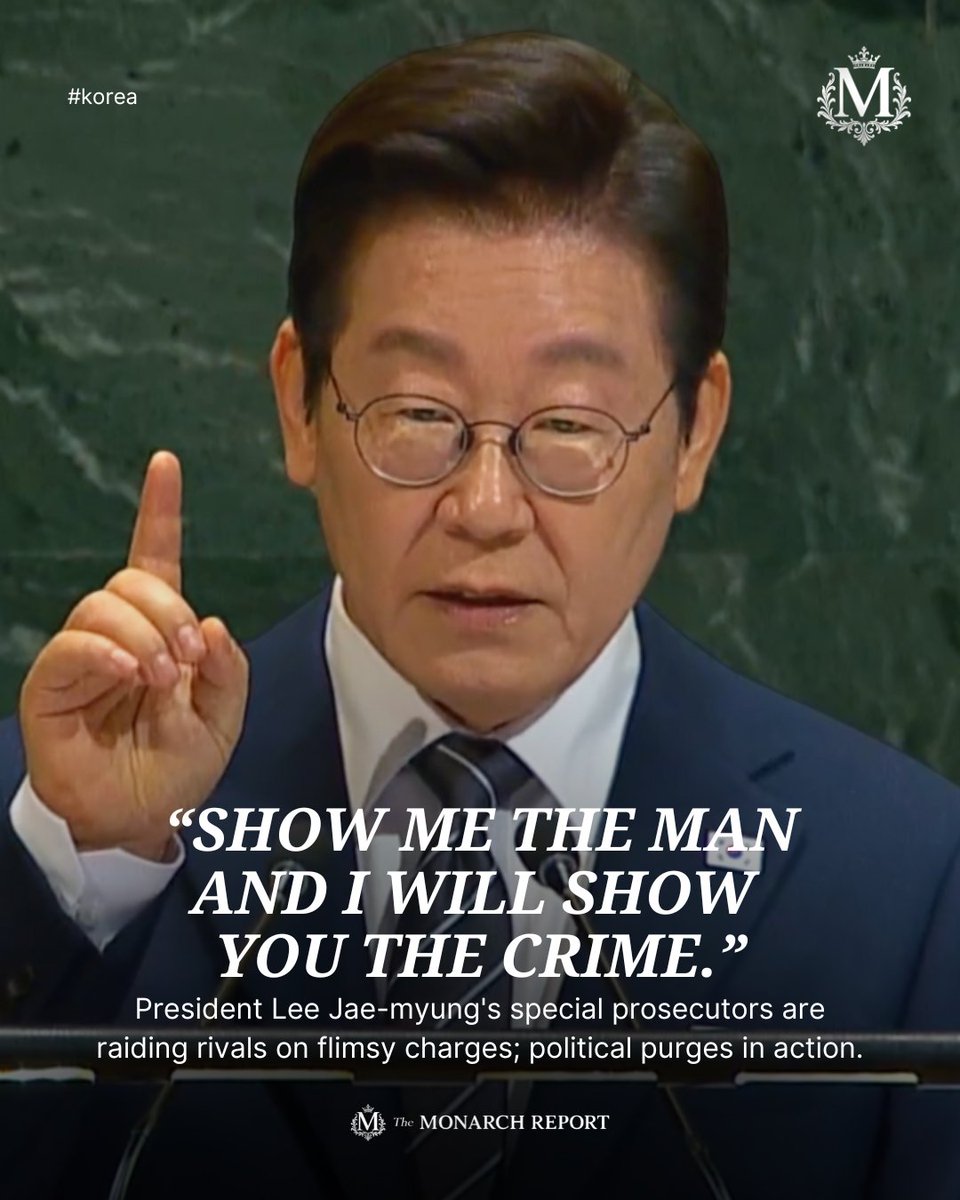
"Show me the man, I'll show you the crime." - Beria, the head of the Soviet secret police (NKVD) under Joseph Stalin
President Lee Jae-myung's special prosecutors are raiding rivals like Hwang Kyo-ahn on flimsy charges—political purges in action.
1. Targeting former Prime Minister Hwang Kyo-ahn first via social media monitoring, then raiding his home to "show" crimes of inciting rebellion through posts urging arrests after martial law.
2. Identifying a 57-year-old Yangpyeong County official as linked to opposition land deals, then applying high-pressure questioning by special prosecutors to extract evidence, leading to his suicide amid coercion claims.
3. Focusing on US military base personnel and networks perceived as Yoon-allied, then raiding facilities to uncover alleged election meddling and foreign interference crimes.
4. Pinpointing Unification Church offices as opposition-tied, then conducting multiple raids (over 10 locations) to build bribery and corruption cases linked to ex-first lady Kim Keon-hee.
5. Selecting Unification Church leader Hak Ja Han as a key figure in conservative networks, then issuing an arrest warrant for bribery without prior solid evidence.
6. Detaining Hak Ja Han first, then extending probes to "find" additional charges, prompting abuse complaints against prosecutor Min Jung-ki.
7. Targeting People Power Party (PPP) headquarters as opposition hub, then raiding it post-Kim Keon-hee's arrest to probe election meddling.
8. Reviving focus on ex-first lady Kim Keon-hee as Yoon's spouse, then arresting her on layered charges of stock fraud, bribery, and influence peddling.
9. Indicting Kim Keon-hee first in a consolidated probe, then expanding to include luxury gifts and stock schemes to amplify the "crimes."
10. Singling out PPP lawmaker Kim Sun-gyo for ties to ex-first lady's family, then investigating land deals with public shaming tactics.
11. Identifying PPP lawmaker Yoon Sang-hyun as a vocal rival, then probing him for election meddling, including manipulated polls.
12. Focusing on PPP lawmaker Kweon Seong-dong as part of opposition leadership, then launching election-related accusations.
13. Targeting former Defense Ministry official Lim Jong-deuk linked to Yoon, then investigating marine death cover-up.
14. Selecting Lee Chul-kyu for his role in Yoon's administration, then probing interference in marine Cpl. Chae Su-geun's death investigation.
15. Aiming at 45 opposition lawmakers who opposed Yoon's arrest, then pushing for their expulsion to "reveal" obstruction crimes.
16. Reviving focus on Yoon Suk-yeol post-impeachment, then probing his martial law declaration for insurrection charges.
17. Targeting Yoon directly, then arresting him via CIO for martial law interrogation.
18. Indicting Yoon without full investigation, prioritizing the man over evidence gathering.
19. Issuing three summonses for Yoon, building a defiance narrative to justify arrest and charges.
20. Consolidating suspicions around Kim Keon-hee first, then appointing special counsel to dig into general allegations.
21. Focusing on Yoon's alleged interference in marine death case, then adding it as a crime layer.
22. Appointing special counsels (Cho Eun-seok, Min Joong-ki, Lee Myeong-hyeon) to target Yoon and allies, then expanding probes.
23. Stacking six assistant special counsels for Yoon's martial law probe, overwhelming targets to uncover "crimes."
24. Adding two ex-judges to Kim Keon-hee's probe team, ensuring biased scrutiny to fit crimes to the person.
25. Granting special teams access to 19,000 communication records (marine team: 10,209), mass-surveilling Yoon allies to retroactively build cases.
26. Targeting Justice Ministry officials like former Minister Park Sung-jae, then raiding offices for martial law-related records.
27. Focusing on Supreme Prosecutors' Office and former Prosecutor General Shim Woo-jung, then seizing documents to pressure regime holdouts.
28. Singling out Special Prosecutor Min Jung-ki's targets in Unification Church probe, then facing complaints for coercive tactics to force evidence.
29. Detaining elderly Hak Ja Han first, then probing amid health concerns to "find" framing evidence against religious opposition.
30. Identifying Unification Church as conservative bastion, then raiding over 10 sites to link to bribery scandals.
31. Targeting PPP headquarters post-arrests, then probing election meddling to weaken opposition timing-wise.
32. Reviving old allegations against Kim Keon-hee upon Lee's election, then arresting her as payback.
33. Focusing on US-linked networks as foreign opposition ties, then raiding bases to implicate in interference crimes.
34. Targeting opposition mayors via Ministry of the Interior, then probing martial law roles ahead of elections.
35. Interrogating Yangpyeong official intensely (12+ hours), then linking suicide notes to coercion in land deal probes.
36. Disclosing suicide note of Yangpyeong official to highlight pressure, building case against prosecutors while targeting the man.
37. Raiding homes/offices of PPP lawmakers tied to ex-first lady, fishing broadly for improprieties.
38. Appointing Special Counsel Cho Eun-suk for martial law, consolidating to target Yoon's cabinet.
39. Targeting Yoon's office post-impeachment, then raiding to ensure no political comeback via probes.
40. Pushing indictment of opposition on "hypocrisy," escalating partisan targeting.
41. Ordering rigorous probe into drug case involving specific officials, raising vendetta flags.
42. Reviving Yoon's marine death interference probe, layering offenses on the targeted individual.
43. Issuing rejected summonses for Yoon, using defiance to justify harsher charges.
44. Rushing Yoon's indictment in January 2025 without full probe, predetermining guilt.
45. Appointing multiple assistants (six) for martial law, stacking resources to overwhelm and find crimes.
46. Including ex-judges in Kim's team, perceived as biasing to fit crimes.
47. Campaigning against Unification Church/Family Federation ideologically, then using probes for purge.
48. Probing Chief Justice's alleged secret meeting, extending to opposition-sympathetic judiciary.
49. Consolidating prior Kim Keon-hee investigations, reopening to fit new narratives.
50. Pushing to expel 45 lawmakers for blocking arrest, directly removing rivals under obstruction guise.
<The Grave Diplomatic Fiasco of Lee Jae-myung’s Disrespectful Diplomacy>
.
President Donald J. Trump visited South Korea — yet the warm smile he showed in Japan was gone.
His expression told everything: deep disappointment and clear disapproval.
Why?
Within minutes of their first meeting, South Korean President Lee Jae-myung brought up the most sensitive issues imaginable — nuclear-submarine construction, nuclear-fuel supply, and uranium cooperation — and did so publicly, during the official welcoming ceremony.
Such remarks are not diplomacy; they are a serious breach of protocol that any experienced leader should have known to avoid.
The first encounter of a state visit is symbolic — a moment to reaffirm trust and friendship, not to present technical or military demands before the world’s cameras.
To raise nuclear issues at that moment looked less like cooperation and more like pressure.
President Trump, who values respect and timing, would naturally find it offensive.
He is generous toward partners who treat the United States as an ally — but he turns cold when someone turns an alliance into a transaction.
Did President Lee not see how Japan received Trump?
In Tokyo, everything began with dignity and warmth.
When Trump stepped onto the red carpet, Japan greeted him with unity and respect.
The same hospitality marked his visits to the Middle East and Malaysia.
Everywhere he went, leaders spoke one clear message:
“We stand with America in defending the free world. Thank you for visiting our nation.”
That is what true diplomacy looks like.
South Korea’s reception, by contrast, felt sterile and chaotic — a drafty hall lined with soldiers, music blaring, emotionless faces, no sincerity.
It looked more like a state event in a communist country than a celebration of alliance.
Trump’s expression turned stone-cold; the warmth was gone.
Only Lee Jae-myung smiled, proudly presenting a golden crown as if the show itself were the goal.
He seemed not to grasp the basic meaning of the occasion or the respect it demanded.
Diplomacy is form and timing.
The first meeting should open hearts, not launch demands.
Instead of honoring the guest, Lee embarrassed him — and in doing so, weakened the trust between the two nations.
Just one day earlier, in Japan, Trump met with the families of citizens abducted by North Korea.
Secretary of State Marco Rubio declared, on Trump’s behalf, that the United States fully supports Japan’s call for an immediate resolution of the abduction issue and strongly condemns North Korea’s human-rights abuses.
That statement signaled that the Trump administration now wields not only the sword of tariffs but also the shield of moral pressure — combining economics and human rights in a dual strategy.
And yet, in this tense environment — when Seoul most needed to secure a fair trade deal — the South Korean leader began by provoking and posturing.
Worse still, he repeated the same arrogance he showed in Washington: lecturing and “advising” Trump as though speaking to a subordinate, then boasting about stock-market numbers as if that were real diplomacy.
Such behavior is beyond undiplomatic; it is self-destructive.
If the Lee Jae-myung administration fails to understand what the Trump government truly expects — respect, clarity, and alignment within the free world — South Korea could soon face a very serious crisis.
And it began here, with this astonishingly tone-deaf “welcome.”
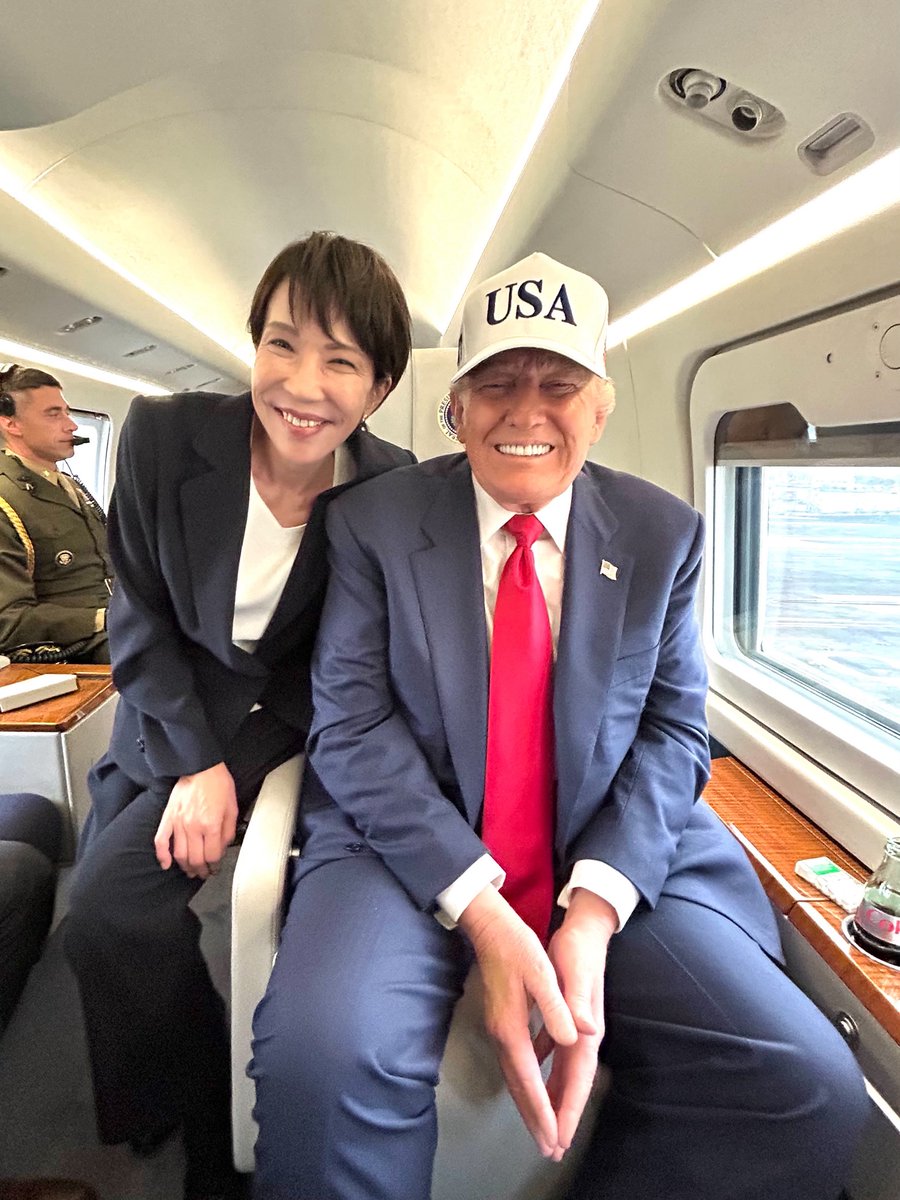
🚨 WATCH: Japan’s Prime Minister Sanae Takaichi is literally joyfully jumping up and down with Trump
I freaking absolutely LOVE this Prime Minister
The people of Japan are very blessed
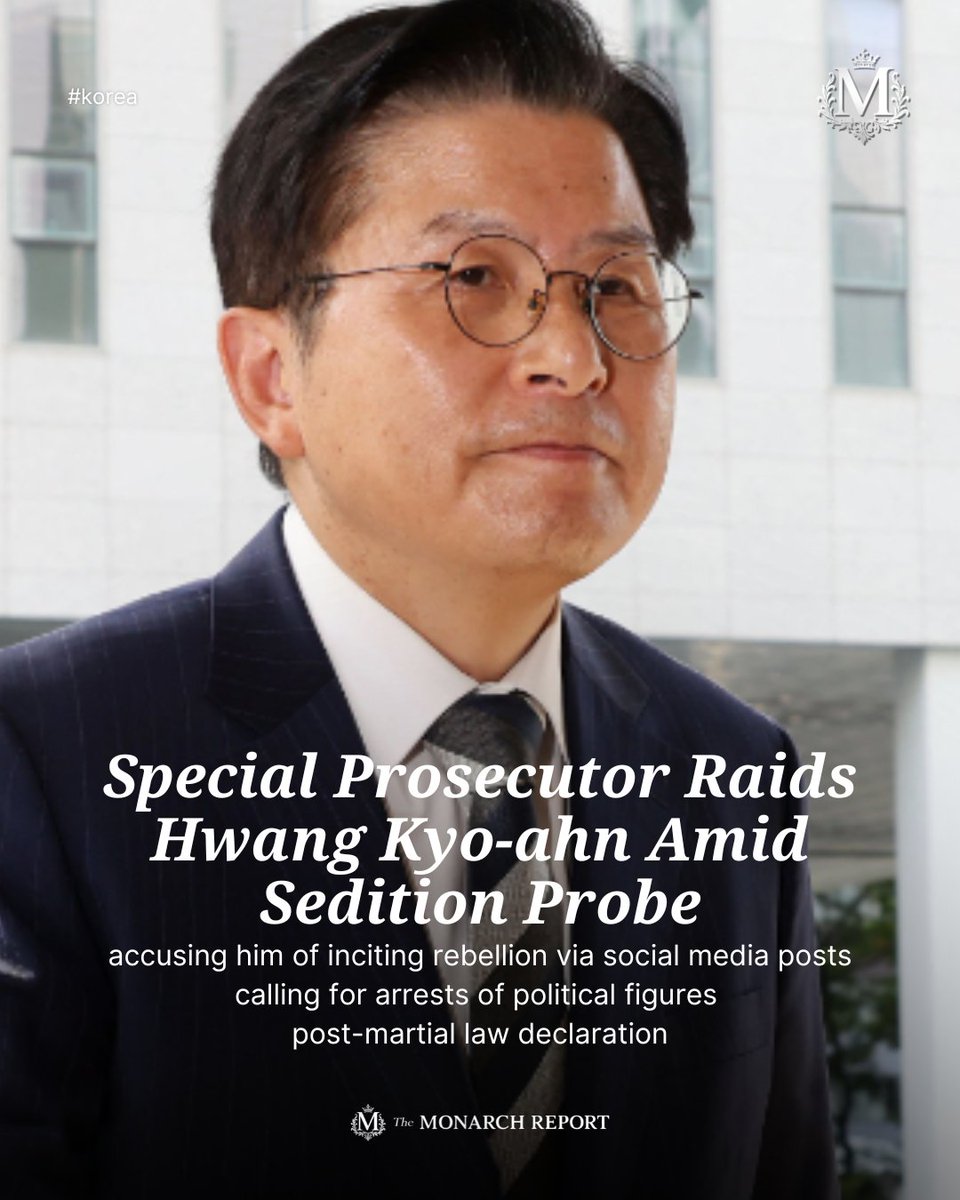
🚨Breaking: South Korea's special prosecutor on sedition raided the home of former Prime Minister Hwang Kyo-ahn, accusing him of inciting rebellion via SNS posts calling for arrests of political figures post-martial law declaration. Supporters gathered in protest; entry denied. Investigation ongoing.
This story is highly controversial in South Korea's polarized political landscape. On one side, critics argue the raid represents overreach and political revenge by the current administration (led by figures like Lee Jae-myung), stifling free speech and targeting conservatives who opposed the government or raised election fraud claims.
Hwang's posts, made amid last year's martial law chaos, are seen by supporters as protected expression under the constitution's Article 21 (freedom of speech, assembly), not sedition. They link the timing to blocking potential meetings with U.S. President Trump during his rumored visit, to prevent discussions on alleged pro-China influences in Korean politics.
Opponents, however, view Hwang's calls to "arrest" officials like National Assembly Speaker Woo Won-sik as direct incitement to disrupt constitutional order, punishable under criminal law with at least three years' imprisonment.
This fits into broader probes of the Yoon Suk-yeol era's martial law attempt, seen as an anti-democratic power grab. The standoff, with protesters blocking investigators and media like JTBC, highlights fears of escalating "revenge politics" eroding democratic norms, while others see it as necessary accountability for threats to stability.
🚨Former PM Hwang is Facing Arrest by the “Insurrection Prosecutor Team” — the Deranged K-Jack Smith of Korea.
The deranged “K-Jack Smith” who jailed the First Lady, the President, and pastors is now outside Rep. Hwang Kyo-ahn’s home, preparing to arrest him on unknown charges.
Hwang, a former Prime Minister of South Korea, has long spoken out against election fraud and dedicated his life to restoring South Korea’s democracy — starting with election integrity.
About a month ago, he visited Washington, D.C., where he gave a speech on election fraud and the collapse of democracy in South Korea.
Recently, the South Korean government introduced a bill that would allow imprisonment or fines of up to $1 million for spreading so-called “fake news.”
They have been targeting Hwang — the same man who once dismantled a pro–North Korean political party that had plotted terrorist acts against the Republic of Korea under direct orders from Pyongyang.
@NewshamGrant@ColonelRETJohn2@MorseHTan@SecRubio@bmarcois@CarlaHSands@newtgingrich@mschlapp@CPAC@TPUSA
Indeed. Lee Jae Myung and henchmen are hiding something. All former PM Hwang is doing is calling for honest elections. All honest citizens want this. If this scares LJM one concludes he favors fraudulent elections - and fears an examination of ROK elections - past and present.
From a friend in Korea, about money laundering in that country:
“I wanted to share an alarming financial-crime case from South Korea that raises serious concerns regarding global anti–money-laundering (AML) standards and the overall security framework within the U.S.–Korea alliance.
According to parliamentary audit data obtained by Rep. Kang Min-kook and verified by multiple Korean reports, Jeonbuk Bank’s Cambodian subsidiary, Phnom Penh Commercial Bank, has maintained extensive financial ties not only with the Prince Group, but also with another Cambodian criminal network known as the Huione Group, accused of laundering funds through cryptocurrency and virtual-asset channels.
Key facts:
• The subsidiary earned around $29 million USD in net profit last year alone.
• It has maintained a checking account with the Huione Group since August 2018, making Jeonbuk Bank the only Korean financial institution with direct dealings with that organization.
• The account is an on-demand deposit, allowing unrestricted withdrawals and check issuance — a structure highly vulnerable to laundering misuse.
• Through the same subsidiary, Jeonbuk Bank also conducted approximately $91 million USD in transactions over the past six years with the Prince Group, already under scrutiny for large-scale fraud, human-trafficking, and organized-crime activity.
• Between 2019 and 2025, the Prince Group placed 51 time deposits, representing over half of all funds handled by the five Korean banks operating in Cambodia.
Full article (Jeonju MBC, Oct 27 2025):
https://t.co/PEj0EmdbTx
These findings suggest that a major financial institution in a U.S.-aligned nation has been maintaining relationships with two Cambodian crime syndicates deeply involved in transnational money-laundering, cyber-fraud, and human-trafficking operations across Southeast Asia.
This situation poses significant implications for AML oversight, regional financial integrity, and broader Indo-Pacific security cooperation.
It also illustrates how global corruption networks continue to exploit weak regulatory systems to move illicit capital across borders.”
From a friend in Korea, about an international criminal organization operating in Seoul:
“I am writing to share verified information regarding an international criminal organization that has been officially sanctioned by both the United States and the United Kingdom.
Overview
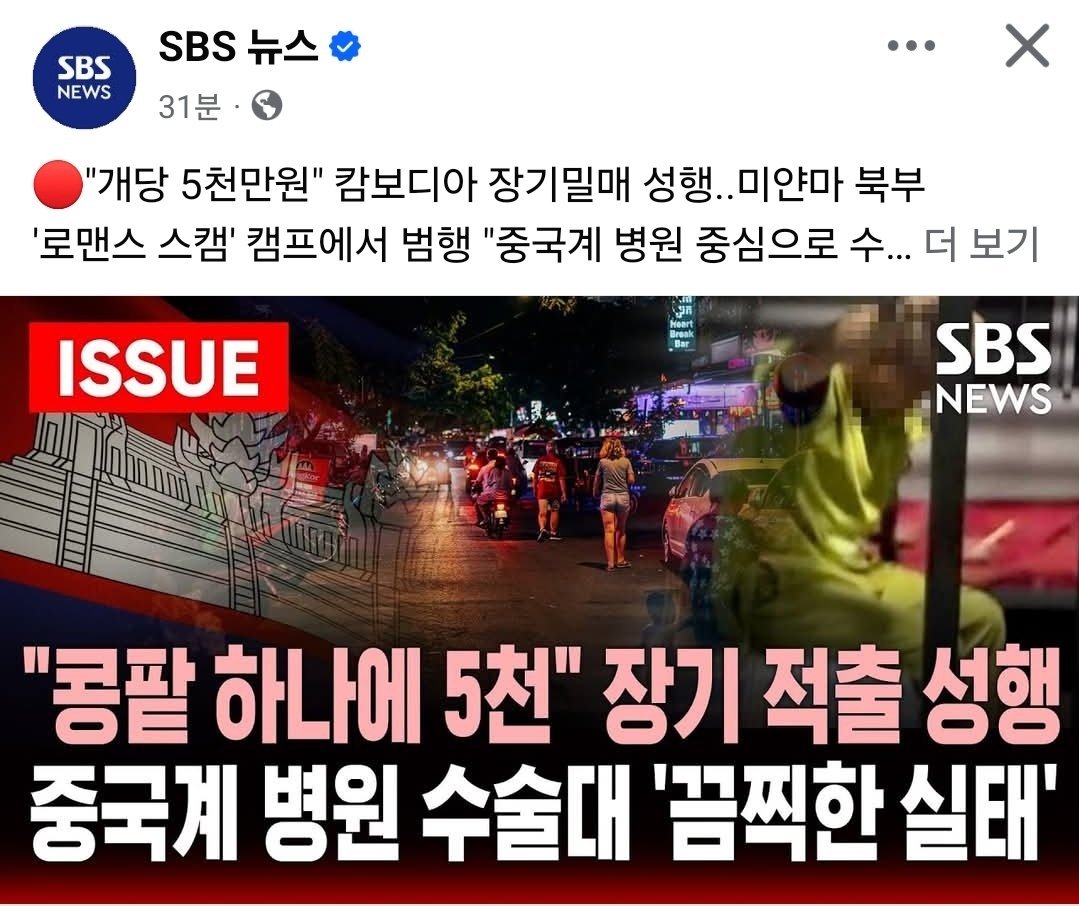
On October 16, 2025, South Korean broadcaster SBS reported that Prince Holdings Group (Cambodia) — a conglomerate already sanctioned by the U.S. and U.K. governments for human trafficking, online fraud, and money laundering — had operated a branch office in central Seoul, South Korea.
Key Facts
Seoul Office Confirmed:
The group’s real estate subsidiary, Prince Real Estate, held a property investment seminar in Seoul in May 2025 and opened a ‘Korea Office’ located near Seoul City Hall.
Field verification revealed no company signage at the site, and the shared-office management confirmed that the tenant vacated several months ago.
Background of Sanctions:
Prince Holdings and its chairman, Chen Zhi, were sanctioned by the U.S. Department of the Treasury and the U.K. government for running a large-scale ‘scam network’ involving fraud, human trafficking, cryptocurrency crimes, and money laundering.
Authorities in both countries imposed 146 sanctions and seized over 21 trillion KRW (approx. 15 billion USD) worth of cryptocurrency assets.
Domestic Implications:
Although the group publicly presented itself as a real-estate and investment firm, its activities in South Korea — including the Korea Office and investment seminar — may have functioned as a channel for laundering illicit proceeds linked to transnational criminal activity.
Political Acknowledgment:
South Korean lawmakers have publicly raised concerns that the group’s real-estate arm could have been used for money laundering, with potential ties to cryptocurrency and organized-crime networks.
Source:
SBS Exclusive (October 16, 2025):
‘Prince Holdings Group Operated Office in Seoul Despite U.S., U.K. Sanctions.’
https://t.co/s1BPPnyRdE”