Parsing this evening's events:
- The U.S. government approved the release of Fable 5 to the public, clearly under the presumption that the model's cybersecurity capabilities cannot be accessed by hackers, authoritarian regimes, etc.
- Recently (today?), "another company" showed the U.S. government that a jailbreak of Fable 5 *is possible*. Yes, a minor jailbreak - but how can a non-technical government official be assured that there aren't also other, more dangerous, jailbreaks in this model that won't be discovered by the CCP?
- Anthropic states, completely correctly, that: "We suspect that perfect jailbreak resistance is not currently possible for any model provider. Every safeguard used in the industry is vulnerable to non-universal jailbreaks (which can elicit some cyber information in specific circumstances), and it is likely that universal jailbreaks will eventually be found in the future. We stated this clearly when we released Fable 5."
- My best guess is that the U.S. government did not fully realize this at the time when the release of Fable 5 was approved.
- Per Axios, the government contacted Anthropic and asked to "pause releasing the... models but was unsuccessful" - i.e., Anthropic told the government to pound sand.
- Per Axios, this "prompt[ed] the export control letter".
- Per Axios, the U.S. government is *NOT* looking to restrict access to Fable to U.S. nationals forever. "The model needs to remain locked down until the U.S. governent's national security apparatus is hardened", which "could happen in a few weeks".
- I interpret Anthropic's reaction as challenging the government: "we believe the government should have the ability to block unsafe deployments, as part of a statutory process that is transparent, fair, clear, and grounded in technical facts. This action does not adhere to those principles."
If the Axios article is correct, I do not think any other model providers have anything to fear based solely on this evening's events, because: (1) they would hopefully be smarter than downright rejecting a request by the U.S. government to pause releasing a model, and (2) they will be required anyway under the recent executive order to give the U.S. government at least 30 days to test the model for cybersecurity capabilities - during which time the U.S. government would also be able to shore up its own cybersecurity defenses with the same model.
I remain extremely concerned that actions by one particular U.S. lab over the last few months might be moving us closer and closer to the scenario where at least that lab - and potentially all others - will be nationalized.
i hooked my whoop to my work calendar to find which coworker gives me the most stress 🚨
thanks to fable, I reverse engineered whoop to pull per minute heart rate. nd matched spikes with cal events and attendees
I now have a leaderboard and I think about it daily.
few info masked for obvious reasons ;)
Full podcast episode with @rauchg, @maxhodak_, and @bscholl.
40 minutes of unreleased material.
The AI Industrial Revolution
Part 1: Waste Tokens, Save Time
0:00 Three Frontier Founders
1:27 AI Software Factories
4:15 Waste Tokens, Save Time
5:47 Models Instructing Humans
9:29 Is Pure Software Dead?
12:03 You Don't Get Stuck Anymore
Part 2: Vibe Coding Hardware
14:39 Vibe Coding a Turbine Blade
18:07 Open Source Compounds China's Advantage
20:15 You Always Want the Smartest Model
22:44 Software Still Needs Hands
24:43 Humans Are Becoming Verifiers
Part 3: The Regulatory Frontier
27:53 The Regulatory Red Queen Race
32:32 Why There's No Innovation in Healthcare
36:49 We Need a True 50-State Experiment
40:31 China's FDA Is Beating Ours
43:37 Healthcare Is a Communist Society Inside Capitalism
45:57 Sid's Story: N-of-1 Medicine
Part 4: The Autonomous Company
47:49 Autonomous Infrastructure
51:25 Your Job Is to Train the Agent
54:54 The Next Lord of the Rings
59:08 What's Your Definition of Art?
1:05:00 Can AI Have New Ideas?
1:07:03 A Large Number of Small Teams
One of the new, buzzy jobs in Silicon Valley is the AI Forward Deployed Engineer (FDE), an engineer who is embedded within a client organization to help customize solutions, such as building and tuning agentic workflows that suit the client’s particular needs. I’ve heard from people who are wondering anew about the FDE career path since OpenAI and Anthropic started building new teams to place FDEs within client organizations.
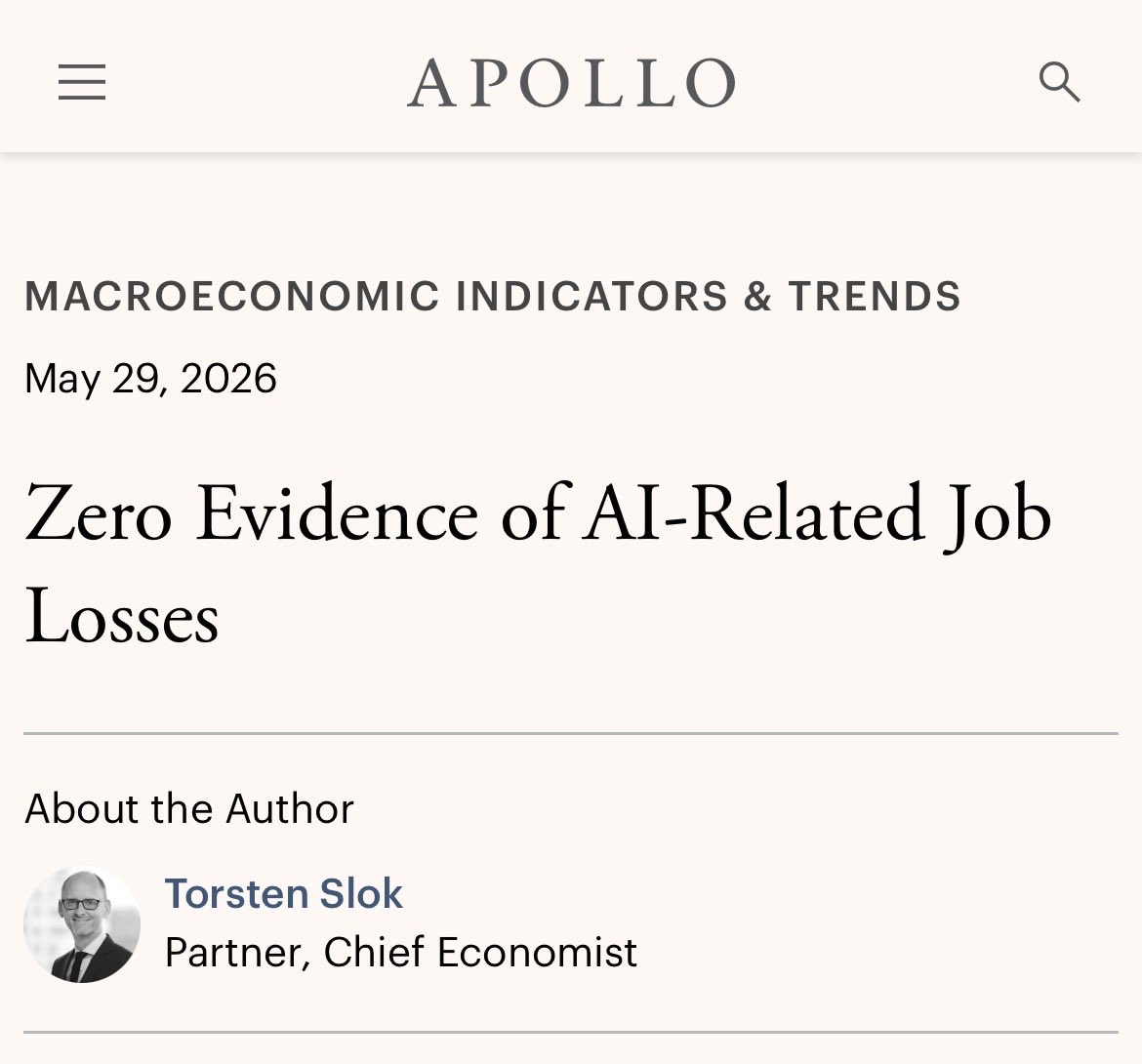
The rise of FDEs for AI workloads is one way AI is creating new jobs (and why the jobpolcalypse narrative of upcoming job market collapse is false -- there will be many AI and non-AI jobs). However, I believe there will be far more AI Engineer jobs than FDEs, as I explain below.
The FDE role was pioneered about two decades ago by Palantir, which sent engineers to government locations to work on secure, air-gapped networks. In addition to having good technical skills, FDEs need communication skills and sometimes business skills. For example, they may need to speak with clients to understand their needs, formulate a strategy to prioritize projects, explain complex technology, and respectfully push back if a client asks for something unrealistic. They’re enjoying a resurgence because of the amount of work involved in taking an off-the-shelf LLM and building it into a custom agentic workflow that fits particular business needs.
However, I believe the number of AI Engineer jobs will be far larger. A company might accept a few FDEs to be embedded within its organization. But most companies will want far more of their own employees working on their projects. While my organizations do hire FDEs, we hire far more AI Engineers! Also, a common client concern is that it is hard to find vendor-neutral FDEs — they are, after all, there to deeply integrate a particular vendor’s product into a company. In this moment when it’s hard to predict which AI service will be the best one in a year’s time, optionality (the ability to pick whatever vendor turns out to fit best in the future) is very valuable. In contrast, letting FDEs tightly bind a company’s processes significantly reduces optionality.
Right now, I see surging demand for AI Engineers who can build software applications using AI software components (like LLM prompting, agentic frameworks, evals, etc.) and effectively use AI coding agents (like Claude Code, Codex, Antigravity CLI, and OpenCode). As the AI Engineer role matures, I expect it to fragment into more specialized roles, like the generic Software Engineer role from decades ago fragmented into frontend, backend, mobile, data engineering, devops, and so on.
What will be the future, specialized AI engineering roles? I don’t know. Perhaps there will be AI FDEs, LLMOps Engineers, Evals Engineers, AI Data Engineers, Harness Engineers, and other roles we don’t have names for yet. But for now, I see a lot of AI engineers who are generalists create a lot of value. Skilled AI Engineers are in very high demand! As our field continues to mature over the coming decade, I look forward to new specializations within AI Engineering that create even more job opportunities.
[Original text: The Batch newsletter]
@pmarca Because of Airbnb, I talk with city officials and housing experts all the time. Whatever the online discourse says, this book has meaningfully influenced a lot of people who actually have the power to build
SITUATION EXPLAINED: Why is every AI lab starting a deployment company?
@matt_slotnick on what's driving the trend:
"The thing we currently call FDE is gonna blossom into a lot more different jobs... all really about how do we bring applied intelligence into the flow of work and out of the data center and into the real world."
"Every company will, in some ways, become a deployment company."
SITUATION EXPLAINED: Why is creative writing the hardest domain for AI to get right?
@SeanZCai: "There are three aspects to verification of any domain: asymmetry, proliferation, and veracity. All three contribute to exactly how unverifiable a domain is."
"Asymmetry: how many granular steps do we have to break a task into for each step to be verifiable?
Proliferation: how often are we supplied universally correct examples of a task being done in the real world?
Veracity: how often do people agree on whether a task was done correctly?"
"In creative writing, only you would probably agree that a certain version generated is 100% correct, because you have a unique taste."
"Culture changes every single day. How can we create benchmarks for teaching an AI model to min-max on cultural taste when the benchmarks have to change every single day as well?"
🗣️
new bets:
1) memory and data ingestion/processing is important. particularly for enterprise use cases - everyone from @Target to @Tesla is going agentic. agents need context/situational awareness. models wil need to be trained on specialized domain knowledge. ingest, process, action- loop. knowledge graphs is also a key component here. pastures are vast in this vertical and still green but the early, are healthy and scaling.
@glean congrats on the $300mm. qq: would love to learn about your thoughts on the anthropic and openai enterprise forward deployed motion - does that align with your framing of AI adoption in enterprise? Bottlenecks to unclogging AI ROI? cc: @jainarvind
2) eventually continual learning. . if i’m making bets in tech they’re safest pointed towards AGI. agents are a political topic considering your views on agi dictates your views on robots ->human labor… -> species. best not get into the philosophy - im betting on agents. long-time horizon tasks, embeddings & attention, eventually continual learning.
3) energy. particularly anyone building with lasers @mynaric 👀. everyone is betting on space. who else is out there? @Bloom_Energy🤘 @Helion_Energy 🙌







![deredleritt3r's tweet photo. Parsing this evening's events:
- The U.S. government approved the release of Fable 5 to the public, clearly under the presumption that the model's cybersecurity capabilities cannot be accessed by hackers, authoritarian regimes, etc.
- Recently (today?), "another company" showed the U.S. government that a jailbreak of Fable 5 *is possible*. Yes, a minor jailbreak - but how can a non-technical government official be assured that there aren't also other, more dangerous, jailbreaks in this model that won't be discovered by the CCP?
- Anthropic states, completely correctly, that: "We suspect that perfect jailbreak resistance is not currently possible for any model provider. Every safeguard used in the industry is vulnerable to non-universal jailbreaks (which can elicit some cyber information in specific circumstances), and it is likely that universal jailbreaks will eventually be found in the future. We stated this clearly when we released Fable 5."
- My best guess is that the U.S. government did not fully realize this at the time when the release of Fable 5 was approved.
- Per Axios, the government contacted Anthropic and asked to "pause releasing the... models but was unsuccessful" - i.e., Anthropic told the government to pound sand.
- Per Axios, this "prompt[ed] the export control letter".
- Per Axios, the U.S. government is *NOT* looking to restrict access to Fable to U.S. nationals forever. "The model needs to remain locked down until the U.S. governent's national security apparatus is hardened", which "could happen in a few weeks".
- I interpret Anthropic's reaction as challenging the government: "we believe the government should have the ability to block unsafe deployments, as part of a statutory process that is transparent, fair, clear, and grounded in technical facts. This action does not adhere to those principles."
If the Axios article is correct, I do not think any other model providers have anything to fear based solely on this evening's events, because: (1) they would hopefully be smarter than downright rejecting a request by the U.S. government to pause releasing a model, and (2) they will be required anyway under the recent executive order to give the U.S. government at least 30 days to test the model for cybersecurity capabilities - during which time the U.S. government would also be able to shore up its own cybersecurity defenses with the same model.
I remain extremely concerned that actions by one particular U.S. lab over the last few months might be moving us closer and closer to the scenario where at least that lab - and potentially all others - will be nationalized.](https://pbs.twimg.com/media/HKqnjPCW8AA0RaL.png)

![AndrewYNg's tweet photo. One of the new, buzzy jobs in Silicon Valley is the AI Forward Deployed Engineer (FDE), an engineer who is embedded within a client organization to help customize solutions, such as building and tuning agentic workflows that suit the client’s particular needs. I’ve heard from people who are wondering anew about the FDE career path since OpenAI and Anthropic started building new teams to place FDEs within client organizations.
The rise of FDEs for AI workloads is one way AI is creating new jobs (and why the jobpolcalypse narrative of upcoming job market collapse is false -- there will be many AI and non-AI jobs). However, I believe there will be far more AI Engineer jobs than FDEs, as I explain below.
The FDE role was pioneered about two decades ago by Palantir, which sent engineers to government locations to work on secure, air-gapped networks. In addition to having good technical skills, FDEs need communication skills and sometimes business skills. For example, they may need to speak with clients to understand their needs, formulate a strategy to prioritize projects, explain complex technology, and respectfully push back if a client asks for something unrealistic. They’re enjoying a resurgence because of the amount of work involved in taking an off-the-shelf LLM and building it into a custom agentic workflow that fits particular business needs.
However, I believe the number of AI Engineer jobs will be far larger. A company might accept a few FDEs to be embedded within its organization. But most companies will want far more of their own employees working on their projects. While my organizations do hire FDEs, we hire far more AI Engineers! Also, a common client concern is that it is hard to find vendor-neutral FDEs — they are, after all, there to deeply integrate a particular vendor’s product into a company. In this moment when it’s hard to predict which AI service will be the best one in a year’s time, optionality (the ability to pick whatever vendor turns out to fit best in the future) is very valuable. In contrast, letting FDEs tightly bind a company’s processes significantly reduces optionality.
Right now, I see surging demand for AI Engineers who can build software applications using AI software components (like LLM prompting, agentic frameworks, evals, etc.) and effectively use AI coding agents (like Claude Code, Codex, Antigravity CLI, and OpenCode). As the AI Engineer role matures, I expect it to fragment into more specialized roles, like the generic Software Engineer role from decades ago fragmented into frontend, backend, mobile, data engineering, devops, and so on.
What will be the future, specialized AI engineering roles? I don’t know. Perhaps there will be AI FDEs, LLMOps Engineers, Evals Engineers, AI Data Engineers, Harness Engineers, and other roles we don’t have names for yet. But for now, I see a lot of AI engineers who are generalists create a lot of value. Skilled AI Engineers are in very high demand! As our field continues to mature over the coming decade, I look forward to new specializations within AI Engineering that create even more job opportunities.
[Original text: The Batch newsletter]](https://pbs.twimg.com/media/HJvWmCHagAAnTxQ.jpg)


