@VitalikButerin I think we need to create distributed data solution like portal, but index-centric, generic enough to easily add new indexes, well incentivized. Hold there historical data including expiring state
2026 is the year that we take back lost ground in terms of self-sovereignty and trustlessness.
Some of what this practically means:
Full nodes: thanks to ZK-EVM and BAL, it will once again become easier to locally run a node and verify the Ethereum chain on your own computer.
Helios: actually verify the data you're receiving from RPCs instead of blindly trusting it.
ORAM, PIR: ask for data from RPCs without revealing which data you're asking, so you can access dapps without your access patterns being sold off to dozens of third parties all around the world.
Social recovery wallets and timelocks: wallets that don't make you lose all your money if you misplace your seedphrase, or if an online or offline attacker extracts your seedphrase, and *also* don't make all your money backdoored by Google.
Privacy UX: make private payments from your wallet, with the same user experience as making public payments.
Privacy censorship resistance: private payments with the ERC-4337 mempool, and soon native AA + FOCIL, without relying on the public broadcaster ecosystem.
Application UIs: use more dapps from an onchain UI with IPFS, without relying on trusted servers that would lock you our of practical recovery of your assets if they went offline, and would give you a hijacked UI that steals your funds if they get hacked for even a millisecond.
In many of these areas, over the last ten years we have seen serious backsliding in Ethereum. Nodes went from easy to run to hard to run. Dapps went from static pages to complicated behemoths that leak all your data to a dozen servers. Wallets went from routing everything through the RPC, which could be any node of your choice including on your own computer, to leaking your data to a dozen servers of their choice. Block building became more centralized, putting Ethereum transaction inclusion guarantees under the whims of a very small number of builders.
In 2026, no longer. Every compromise of values that Ethereum has made up to this point - every moment where you might have been thinking, is it really worth diluting ourselves so much in the name of mainstream adoption - we are making that compromise no longer.
It will be a long road. We will not get everything we want in the next Kohaku release, or the next hard fork, or the hard fork after that. But it will make Ethereum into an ecosystem that deserves not only its current place in the universe, but a much greater one.
In the world computer, there is no centralized overlord.
There is no single point of failure.
There is only love.
Milady.
@VitalikButerin We need a different hardware platform. Brain is 3D, chips should be too. Memory and CPU should be the same simple unit in a 3d matrix of myriads of them. This will cause the real revolution, especially in AI
In the upcoming Fusaka hardfork, Ethereum will modify the gas costs and allowed inputs for the ModExp precompile through two EIPs: EIP-7883 and EIP-7823.
We encourage all developers and infrastructure providers to review their smart contracts, gas estimation algorithms, and related tooling for potential impacts.
For a detailed impact analysis, refer to the reports by @nero_eth:
🔍 https://t.co/dD0bgtkKZc
https://t.co/EtztlyY2vI
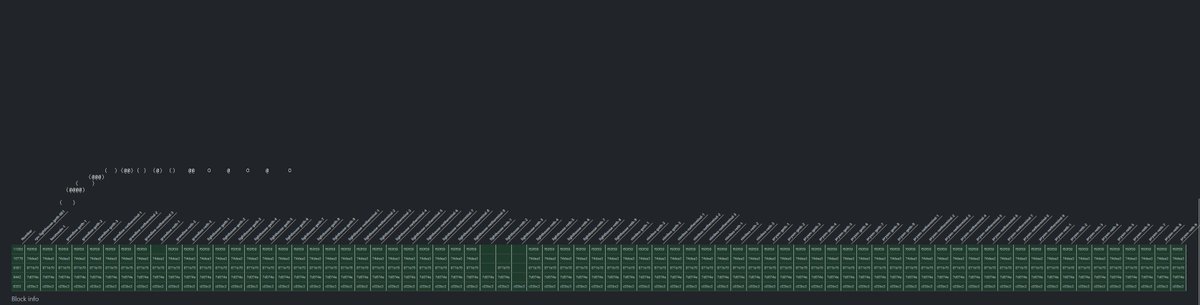
@bogdanoffi I like this graph. Every time someone says homestackers are not important, I have hard time understanding why that dude even joins the calls or chats
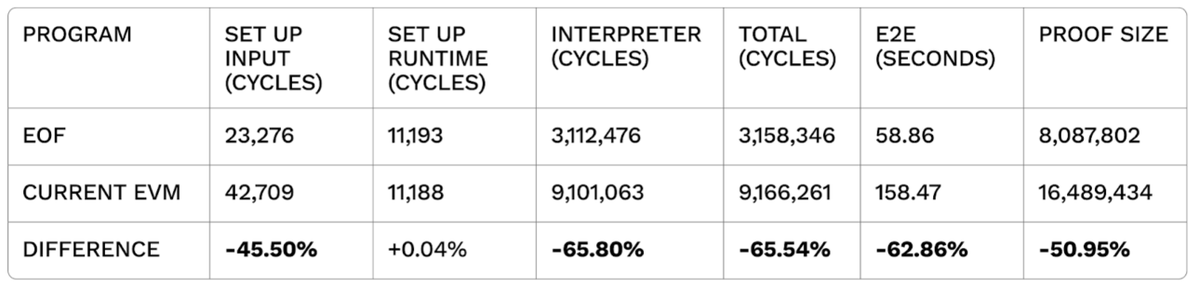
What are the performance benefits of EOF (EVM Object Format)?
At the @SuccinctLabs residency, my benchmarks reveal ZK proving EOF is ~3x more efficient and runs 2.69x faster than the current EVM version ⛽
(link below)
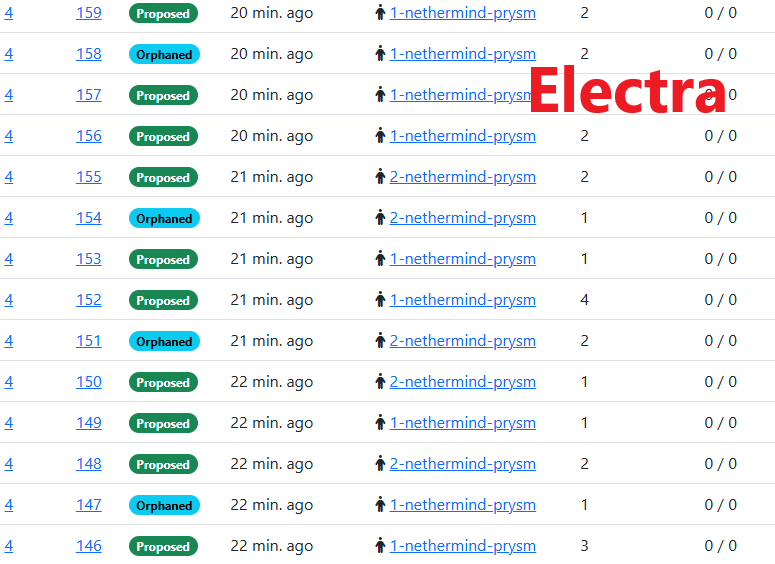
The next step is to make another devnet where multiple Fusaka EIPs are activated, moving towards more and more real setup that we will have on mainnet.
This train can't be stopped: PeerDAS is available for devs on new peerdas-devnet-6!
PeerDAS scales blobs a lot and goes live in Fusaka, a fork landing soon after Pectra.