DEAR @X
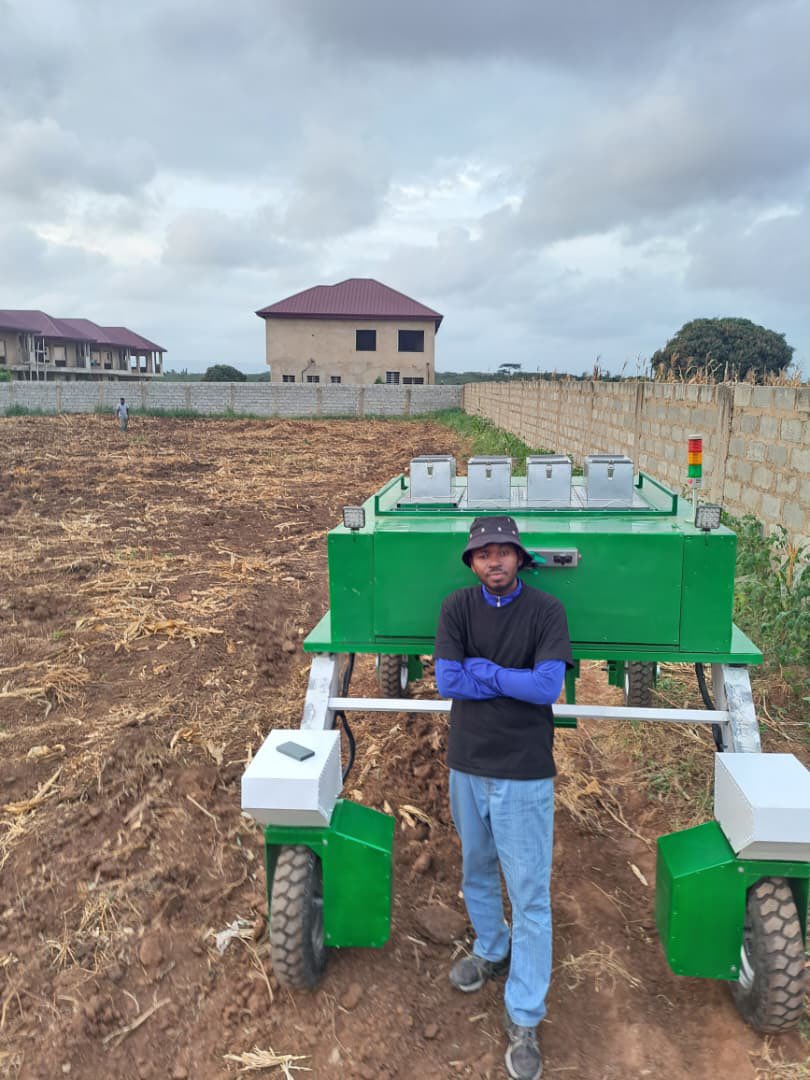
MY NAME IS MARK NII OFORIQUAYE, AND I AM THE HEAD OF AGRIBUSINESS AT @3FARMATEBOTS.
WE HAVE JUST LAUNCHED GHANA’S FIRST AUTONOMOUS AI-POWERED AGRIBOT (CHECK MY PINNED POST).
WE ARE BUILDING THE NEXT GENERATION OF MACHINES THAT WILL REVOLUTIONIZE FOOD PRODUCTION.
PART OF OUR VISION IS TO ESTABLISH REGIONAL FACTORIES THAT WILL EMPLOY SKILLED ENGINEERS TO MASS-PRODUCE AGRIBOTS AND OTHER WORLD-CLASS MECHANIZATION TECHNOLOGIES.
WE ARE TELLING THE AFRICAN STORY AND ADVANCING THE AFRICAN DREAM—ONE ROBOT AT A TIME, STARTING FROM GHANA, OUR MOTHERLAND.
IF YOU SEE THIS POST ON THE TIMELINE, KINDLY REPOST AND SHARE.
THE REINDUSTRIALIZATION OF AFRICA IS US.
LET’S GO VIRAL.
https://t.co/SXkmzBhVpJ
CC: @3FARMATEBOTS
We’ve reduced dance to entertainment, when in truth it is knowledge, identity, discipline, and history. Long before we wrote things down, we embodied them through movement, rhythm, and performance.
So when we ridicule dance, we are not just dismissing art. We are dismissing intelligence, culture, and legacy.
And this goes beyond dance.
It is how we treat art in general.
We consume it daily, but we refuse to respect it.
We celebrate it when it travels abroad, but undermine it at home.
CLEARING A FOREST TO PLANT TREES: HOW THEY BLEW 32.4 MILLION CEDIS
Watch to the end, and you'll understand why some people are still struggling to defend a 12-year old scandal and inciting Northerners against me.
I’m a walking artiste, brand /culture influencer. It’s won’t cost you anything to repost my works. My next client or plug might be on your timeline.
#glennsamm#akabutu
Not all heroes wear capes! ✨
A Ghanaian man from Korle Gonno in the Greater Accra Region has been praised for taking swift and timely action to save a young man from drowning.
Not all heroes wear capes! ✨
A Ghanaian man from Korle Gonno in the Greater Accra Region has been praised for taking swift and timely action to save a young man from drowning.
Since June, when Interpol issued a Red Notice for Ken Ofori-Atta, Ghana has been waiting. The Special Prosecutor declared him a fugitive, laid out the cases from the Agyapa royalties deal to the National Cathedral contracts, and promised firm action. Interpol confirmed the notice was live. That was supposed to be the line in the sand. And then, nothing. Silence.
This silence is not benign. It corrodes public trust. It leaves space for whispers that the system is stalling, that power has placed its thumb once again on the scales of justice. For ordinary Ghanaians who bore the brunt of reckless borrowing, collapsing pensions, and a broken cedi, the quiet feels like betrayal.
The facts are not in dispute. Ofori-Atta left Ghana in January. The OSP branded him a fugitive in February. His legal team promised cooperation, but by June 2nd he had failed to appear, triggering the reinstatement of fugitive status and the Interpol alert. The investigations are real: Strategic Mobilization Ghana contracts, ECG and BXC, National Cathedral procurement, the ambulance deal, and suspicious tax refund disbursements. The OSP rejected virtual interviews and demanded his physical presence. These are on the record.
What is not on the record is progress. Where is he? What cooperation has been sought from foreign governments? Has an extradition request been filed? Are courts abroad seized with this case, or are we waiting for some miracle of voluntary return? Has his medical evidence been independently verified, or are we once again swallowing letters at face value because of who he is? These questions matter because silence only serves the morally bankrupt elite, who have long mastered the art of delay, distraction, and deception.
Ken Ofori-Atta’s family insists he is not running. But his body is in America, while his fingerprints remain on Ghana’s broken economy. They say he is ready for a Zoom call, yet when it served his reputation he had no trouble attending summits, sitting on boards, and granting interviews. Illness is serious, but illness is not immunity. And certainly not immunity from accountability. Ghana’s justice system cannot become a playground where excuses are currency and privilege is due process.
If this were a young man from Madina accused of stealing public funds, would the courts wait for surgery abroad? Would Interpol be asked to consider character references from his family? Or would his face already be on the evening news, mugshot and all?
Justice cannot vanish into thin air when the accused is powerful. The OSP declared him a fugitive. Interpol issued the notice. The people are owed more than silence. If there are diplomatic hurdles, explain them. If there are legal obstacles, disclose them. If the case has stalled, admit it. What cannot continue is this deadly quiet, because justice unseen is justice undone.
This is not about vengeance. It is about precedent. If the man who presided over Ghana’s worst economic collapse can slip through the cracks of law and diplomacy, then Ghana has declared open season for impunity. We are not asking for theatre. We are asking for accountability, transparently pursued, and regularly explained to the public.
We are done being polite. Ghana deserves justice without delay, without performance, and without apology.
Reset Ghana. Strip the facade. Let justice breathe.
#DemoAgainstOspLoading
#OralMustWork
#Time2SanitiseTheSystem
Ghana is a country of deep contradictions.
1. We have an emigration eager population. A nation desperate to escape itself. 98 out of every 100 young people you meet want to jakpa. The remaining 2? They didn’t hear the question well.
2. At least two out of three Ghanaian families survive on the lifeline of a relative abroad. The third family, the one without that lifeline, has only bitterness and insults for the one who failed to “make it”, or fail to help those behind.
3. From Hamburg to Worcester, Ghanaian immigrants, who are the bloodlines of our welfare system work dah and night to cater for families back home.
3. In this, Ghana is no different from many African countries, where wicked leaders, broken systems, and stolen futures force the young to gamble their lives for a chance elsewhere.
4. You would think this shared reality would create compassion. That when a migrant is deported, our hearts would break, because we know it could just as easily have been us, or our brothers, or our cousins.
5. But no. Like crabs in a bucket, we clap. We laugh. We jeer. We find joy in the downfall of people whose only crime was dreaming of a better life. People whose struggles mirror the very struggles that drive us to beg our own relatives abroad for money every day.
6. The insults I have seen thrown at these deported men and women are vicious. You would think they were criminals. You would think they chose suffering. But all they wanted was a chance. A chance denied them not by laziness, but by the injustice of being born into the wrong passport, the wrong continent, under the wrong leaders.
7. So I ask: nti why paa do the poor hate themselves?
Why do we spit on those who carry the same wounds we bleed from? Why do we despise in others what we secretly fear in ourselves?
8. Until we can answer that, we will remain a country where empathy is deported long before people are.
@barkervogues Thanks for speaking my mind. I was just discussing this with a friend during the week and I stand by the point that Malik is being "wasted" where he is. I don't always agree with you but you're always rated high in my books. Incredible mind
@PremLeaguePanel Wharton had an outstanding game the only thing is there were periods in the game he was walking and nearly caused his team to concede. Technical ability up the roof