I'm in the top 2% of users on StackOverflow. My content there has been viewed by over 1.7M people. And it's unlikely I'll ever write anything there again.
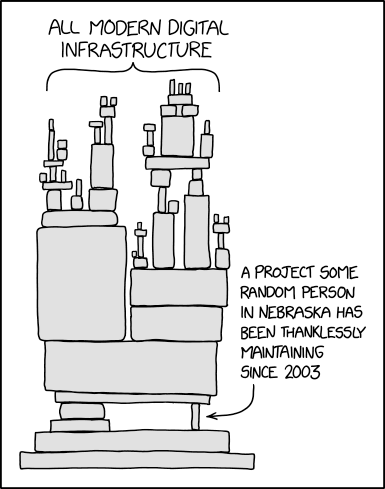
Which may be a much bigger problem than it seems. Because it may be the canary in the mine of our collective knowledge.
A canary that signals a change in the airflow of knowledge: from human-human via machine, to human-machine only. Don’t pass human, don’t collect 200 virtual internet points along the way.
StackOverflow is *the* repository for programming Q&A. It has 100M users & saves man-years of time & wig-factories-worth of grey hair every single day.
It is driven by people like me who ask questions that other developers answer. Or vice-versa. Over 10 years I've asked 217 questions & answered 77. Those questions have been read by millions of developers & had tens of millions of views.
But since GPT4 it looks less & less likely any of that will happen; at least for me. Which will be bad for StackOverflow. But if I'm representative of other knowledge-workers then it presents a larger & more alarming problem for us as humans.
What happens when we stop pooling our knowledge with each other & instead pour it straight into The Machine? Where will our libraries be? How can we avoid total dependency on The Machine? What content do we even feed the next version of The Machine to train on?
When it comes time to train GPTx it risks drinking from a dry riverbed. Because programmers won't be asking many questions on StackOverflow. GPT4 will have answered them in private. So while GPT4 was trained on all of the questions asked before 2021 what will GPT6 train on?
This raises a more profound question. If this pattern replicates elsewhere & the direction of our collective knowledge alters from outward to humanity to inward into the machine then we are dependent on it in a way that supercedes all of our prior machine-dependencies.
Whether or not it "wants" to take over, the change in the nature of where information goes will mean that it takes over by default.
Like a fast-growing Covid variant, AI will become the dominant source of knowledge simply by virtue of growth. If we take the example of StackOverflow, that pool of human knowledge that used to belong to us - may be reduced down to a mere weighting inside the transformer.
Or, perhaps even more alarmingly, if we trust that the current GPT doesn't learn from its inputs, it may be lost altogether. Because if it doesn't remember what we talk about & we don't share it then where does the knowledge even go?
We already have an irreversible dependency on machines to store our knowledge. But at least we control it. We can extract it, duplicate it, go & store it in a vault in the Arctic (as Github has done).
So what happens next? I don't know, I only have questions.
None of which you'll find on StackOverflow.
(I write on AI from a technical and product perspective. If you find that interesting then please do follow me for more)
@paulroho Beim ersten Mal Entschuldigen dachte ich auch, von dieser Bereitschaft, den eigenen Fehler zuzugeben, kann man viel lernen. Mittlerweile hat sich OpenGPT so oft bei mir entschuldigt, dass die Enttäuschung über die Fehlerrate langsam überwiegt.
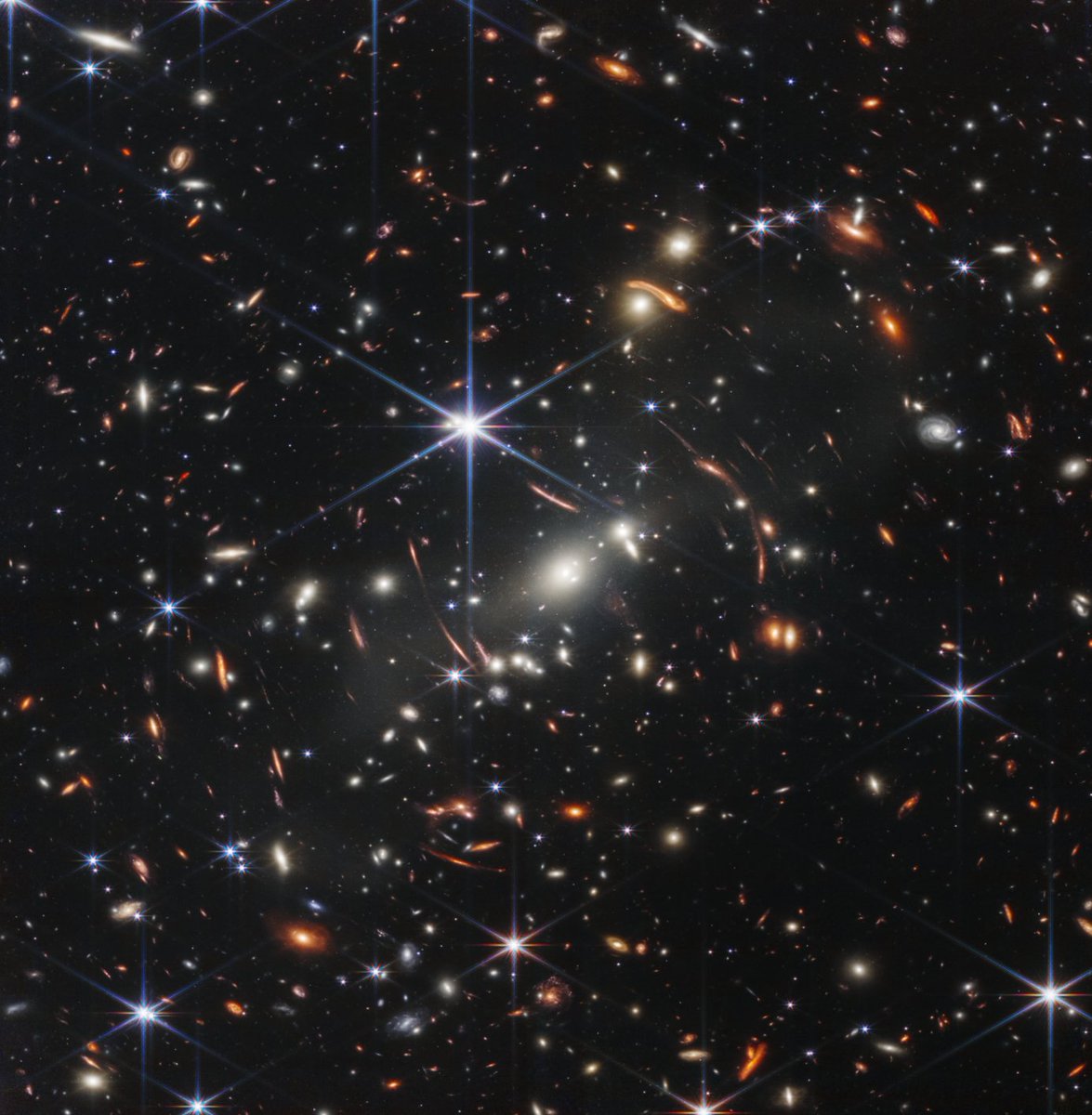
👀 Sneak a peek at the deepest & sharpest infrared image of the early universe ever taken — all in a day’s work for the Webb telescope. (Literally, capturing it took less than a day!) This is Webb’s first image released as we begin to #UnfoldTheUniverse: https://t.co/tlougFWg8B
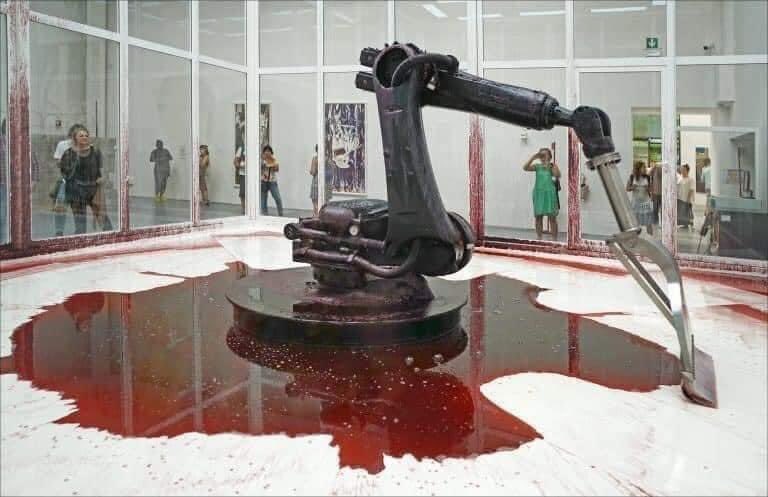
"No piece of art has ever emotionally affected me the way this robot arm piece has. It's programmed to try to contain the hydraulic fluid that’s constantly leaking out and required to keep itself running...
@evanbindz Thanks a lot for the kind words!! I need to find more time for that project. I have myriads of ideas for more tools, more features, more community, more everything. Have to try to make a living from combining acoustics and software dev...
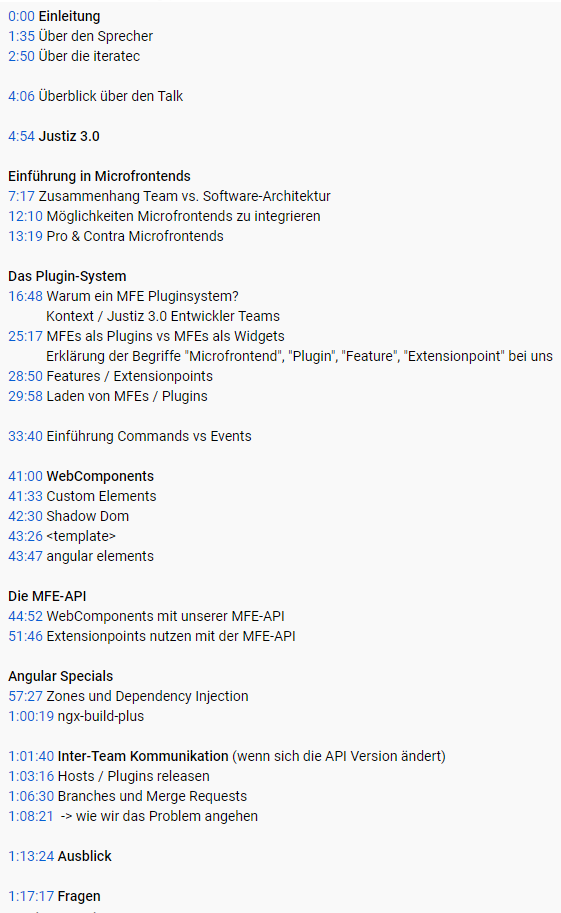
Had lots of fun presenting our #microservices plugin-system at the @reactivevienna meetup last week.
Thanks for the great questions regarding our way of using #webcomponents and #dddesign to decouple teams while presenting one coherent GUI to the user.
https://t.co/Y24koaMTLO
I've set up a little page for #storystorming. 😊 It emerged from playing with #eventstorming colors for other methods such as #domainstorytelling and by now developed into a mashup and small toolbox of two #DDDesign related methods and two "agile" methods. https://t.co/kld5VEpt0h
Unser Gründer Mark Goerke verrät in "Neue Wirtschaft - Der Podcast" warum er und sein Co-Gründer Klaus Eberhardt neue Wege der #Unternehmensnachfolge beschreiten. 🎧 Jetzt reinhören: https://t.co/lkHXZ5CeHU
#nurdemteam#genossenschaft#iteratec
First time ever we will stream the meetup to YouTube. And you can already set a reminder for it, so you are not going to miss it.
https://t.co/je6QlW83Ml
@considercosmos@marylizbender While "pressure-gradient microphones" (all directed mics) have the advantage to focus on one direction, they have the disadvantage to not be able to record very low frequencies. "pressure microphones" can be used to also record the deepest rumble of rockets.
Was passiert, wenn Mitarbeitende zu Unternehmer*innen werden? Gemeinsam mit Wolfgang Bürger von Kern beantworten @michaelgebhart und @Zoltan_Fazekas von iteratec diese und weitere Fragen in der Online-Panel-Diksussion am 13. Juli
https://t.co/LM3Rl13nPv
#Genossenschaft#newwork
@brosky117@Erdayastronaut NASA is shifting from building own stuff to funding commercial companies. By setting a max $ per ton of payload, companies need to come up with ideas that are safe enough while being this cheap => innovation