The Data Product Testing Strategy: Handbook
Goals & Components of the Data Product Testing Strategy, Testing Integration in the Data Product Lifecycle, Testing Facilitation Strategies & Technologies, and more!
https://t.co/i1pUQcQEWd
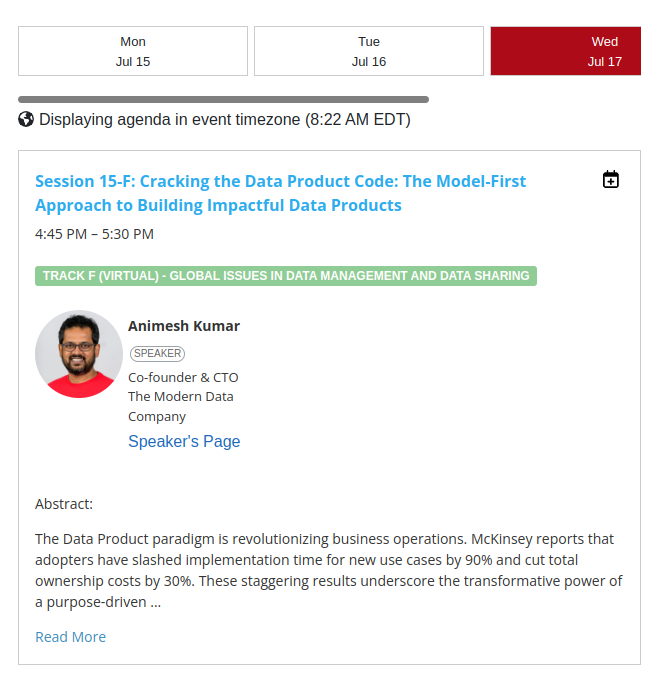
Heading to CDOIQ? Here's the agenda: https://t.co/fT2ZvaxJZn
Catch my session on Model-First Data Products at 4:45 PM EDT on July 17th! We'll be diving deep into some cool stuff.
Who else is attending? Let's connect!
I'm looking forward to meeting you all!
#DataProducts#CDOIQ
Cracking the Data Product Code at #CDOIQ 2024
Excited to be back at @CDOIQ_Program next week!
For years, we've been building a solution to bring a product mindset to data. Now, with the data community embracing "#DataProducts", our efforts are resonating!
Sneak peek...
(Thread)
Our focus on data product adoption has been about making the process smoother and less overwhelming.
We've created user journeys, backward business-value journeys, and adoption playbooks – all designed with the data user in mind.
🌟 Data Expert of the week: @LedouxCharlotte! 🌟
Meet Charlotte Ledoux — The Data and AI Governance expert with over 15 years of hands-on experience, shaping the journey of large enterprises.
Checkout her profile: https://t.co/ZktY3sWmbr
Key questions to consider:
1) How does governance fit into & enable a decentralized stack?
2) Does it resemble a product approach? If so, how?
3) How can a product approach benefit existing governance goals?
This article hits all the right angles:
https://t.co/DS7grR7K0F
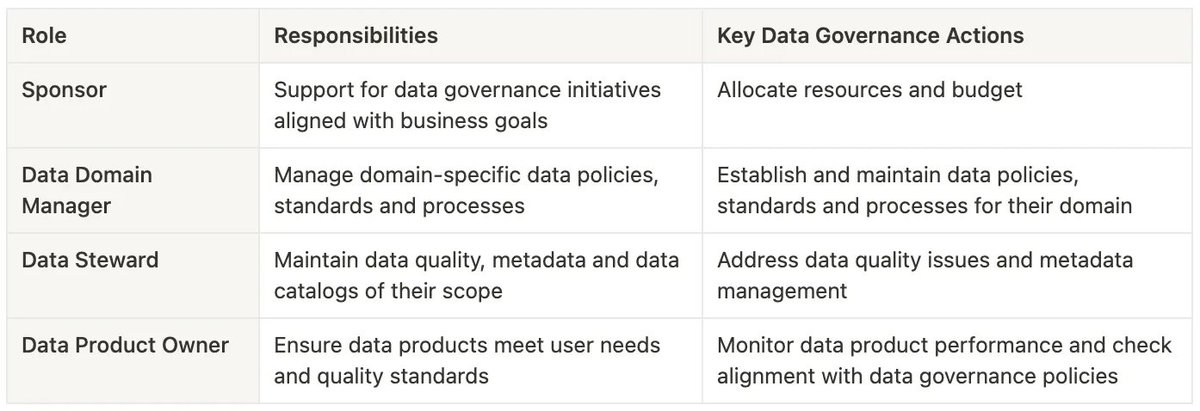
Strong data products rely on strong Data Governance!
It's no surprise that many Data Product features (DAUNTIVS) align with data governance principles.
Huge thanks to Modern Data 101 for sharing this fantastic resource by Charlotte Ledoux!
Here's a quick glance...
(Thread)
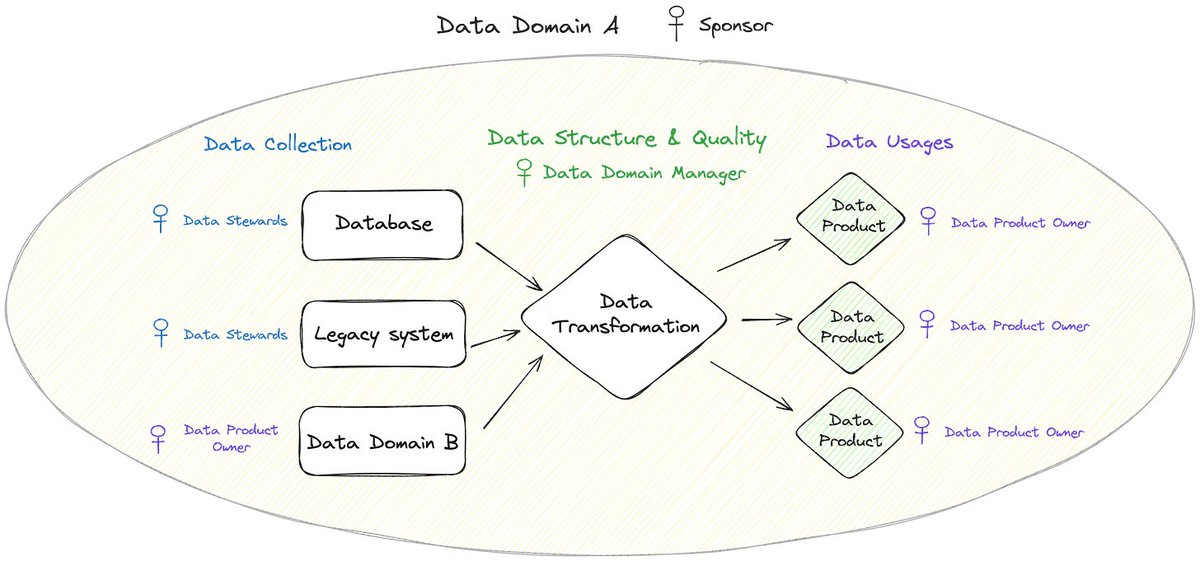
Charlotte's approach to governance is built for decentralization.
It is a game-changer, reflecting game theory's concept that it outperforms centralization in competitive environments.
This is especially true in data ecosystems where domains compete for resources & value.
These paved the way for BI tools we know today.
The semantic layer now, in essence, acts as a central translator, simplifying data access for various tools & users in a reusable & adaptable manner.
Find the works here:
https://t.co/wRHMmotgu0
Got questions? Let's chat!
Ever wonder how we got to the semantic layer?
In today's data world, it's crucial, but did you know it's actually an evolution of a foundation we've always had?
Find all about it here:
https://t.co/wRHMmotgu0
Here's a short summary...
(Thread)
Early data efforts used "semantic approaches" – essentially ways to make data meaningful.
We've come a long way, but the core concept remains!
Back then data cubes & marts emerged as workarounds, offering a more organized way to access information.
Well it does act as the "lever" to the data domain's north star metric "labs" 🥂
Love the way you're propagating & building the idea!💯
@_abhisivasailam
A bummer how quickly methods becomes memes and memes become meaningless. The memeification of data mesh and data contracts pretty clearly backfired. And in a smaller way that's happening now with "metric trees". My bad. 🙃
Classic sunk cost fallacy! Data analysts feel it too.
The solution:
Automated data validation & early exploratory analysis
This allows analysts to identify potential issues early (like digging in the wrong place) and course-correct before significant time is wasted.
Re: sunk cost fallacy:
First order effect: I dug a hole in the wrong place, but I don't want to start over.
Second order effect: Here's why we actually dug it in the right place.
https://t.co/oiEgQ3uGwJ
@ananthdurai@JohnKutay We got bored waiting, so we made accessing the database smarter instead:
Would love to hear your thoughts on this :)
https://t.co/0nbpLorIqc
cc: @ananthdurai@JohnKutay
@Ubunta Think of data developers as the rockstars of the data world. They craft amazing insights, but data wrangling slows them down.
Enters the Data Developer Platform: it's their backstage crew, automating tedious tasks & freeing them to focus on data alchemy.
https://t.co/u9yYkLSpqO
This aligns with the concept of "feature engineering"
We're not always creating entirely new data points, the magic lies in how you curate, analyze, and tell the story within the data.
It's all about creating that "aha!" moment and that's a skill worth its weight in terabytes.
The greatest teachers inspire us for the rest of our lives.
Did they invent the ideas they taught us? Typically, not even a little bit.
So 𝘩𝘰𝘸 you tell the story is more important than inventing something wholly original.
(I’m not the first to make this observation.)
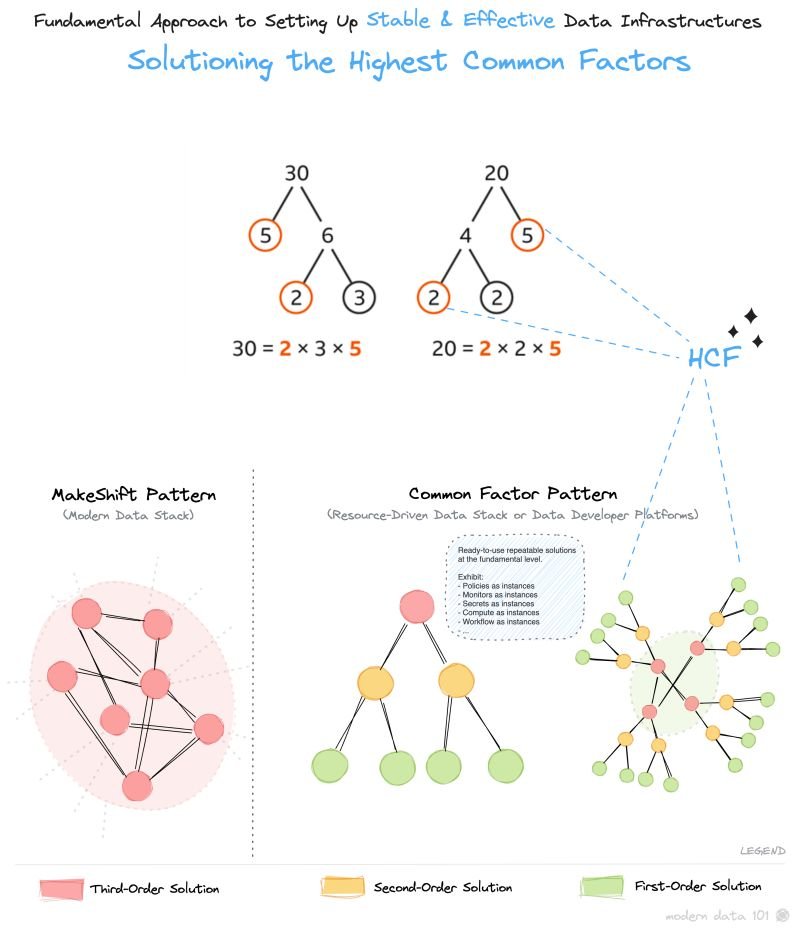
Here's a quick summary:
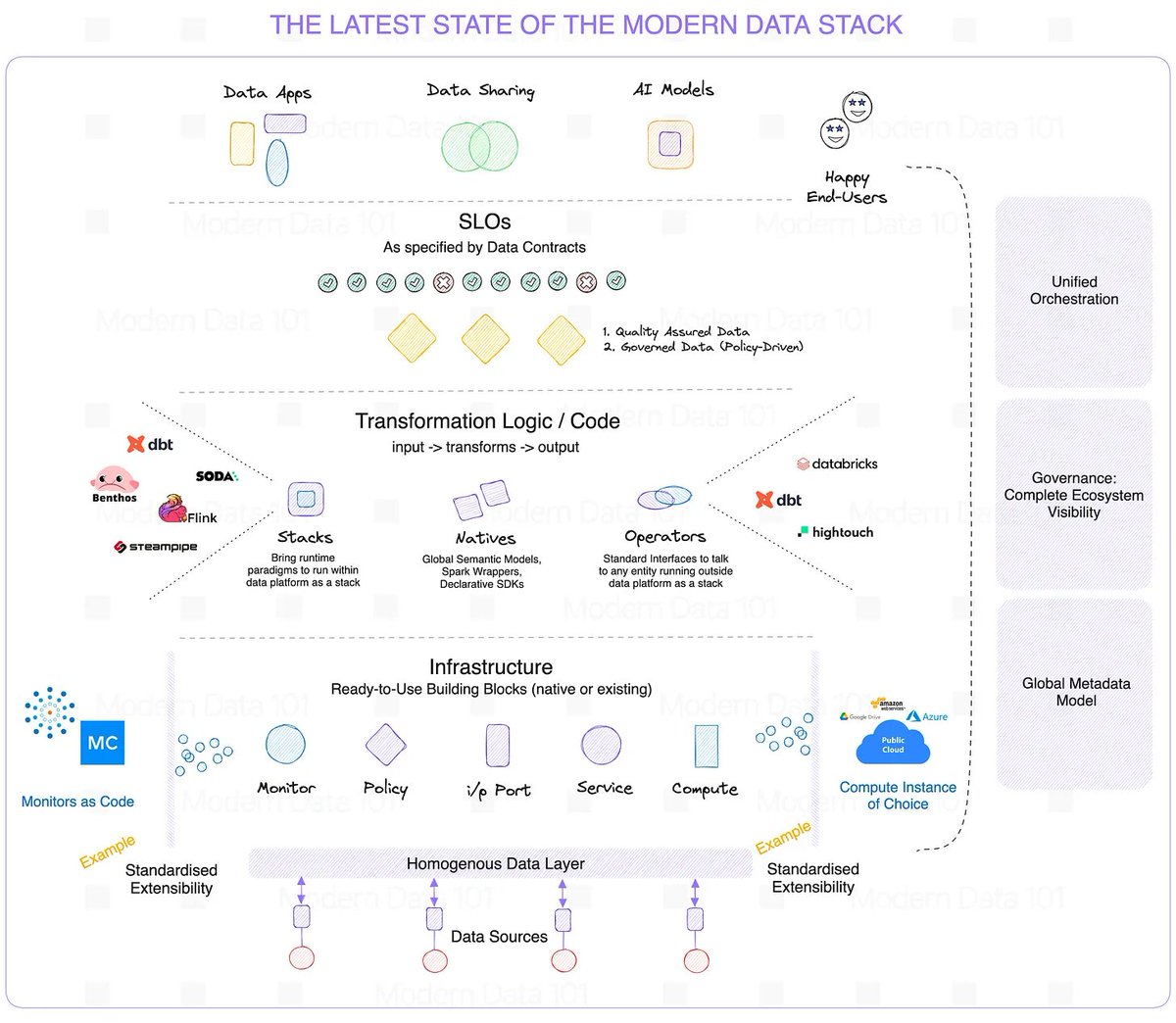
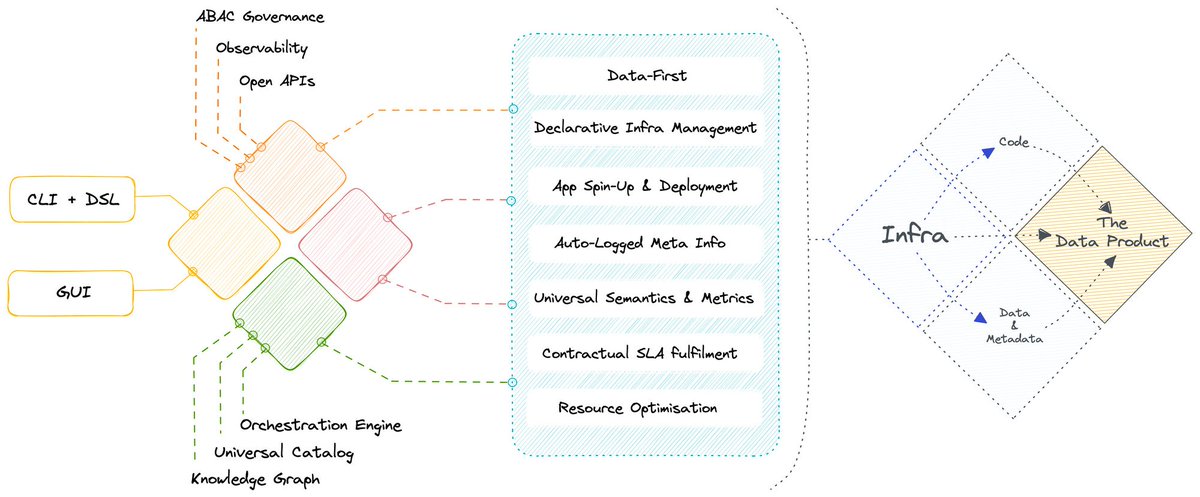
1. Building block infrastructure is key to scalability.
2. Composable resources allow for diverse solutions.
3. Simple foundations lead to robust systems.
Big Problems, Simple Solutions?
The bigger the problem, ironically simpler the approach to the solution should be. Think about it: data systems are simpler than ever, and even ancient philosophy tackled huge questions.
The key to BIG data problems lies in fundamentals.
(Thread)
Struggling with a complex data approach?
Go back to basics!
Validate if your solution has a fundamental scaffold built on simple principles.
If not, it's time to rethink.