Aroha Dr. Truely Harding for this Māori whakataukī. Ka pai.
Two incredible days of mahi + collaboration @ Te Anga Kaikōiwi me Taumata Kaikōiwi Aotearoa - developing future innovation + community to influence best possible outcomes for osteoarthritis in NZ and globally. @OA_AoNZ
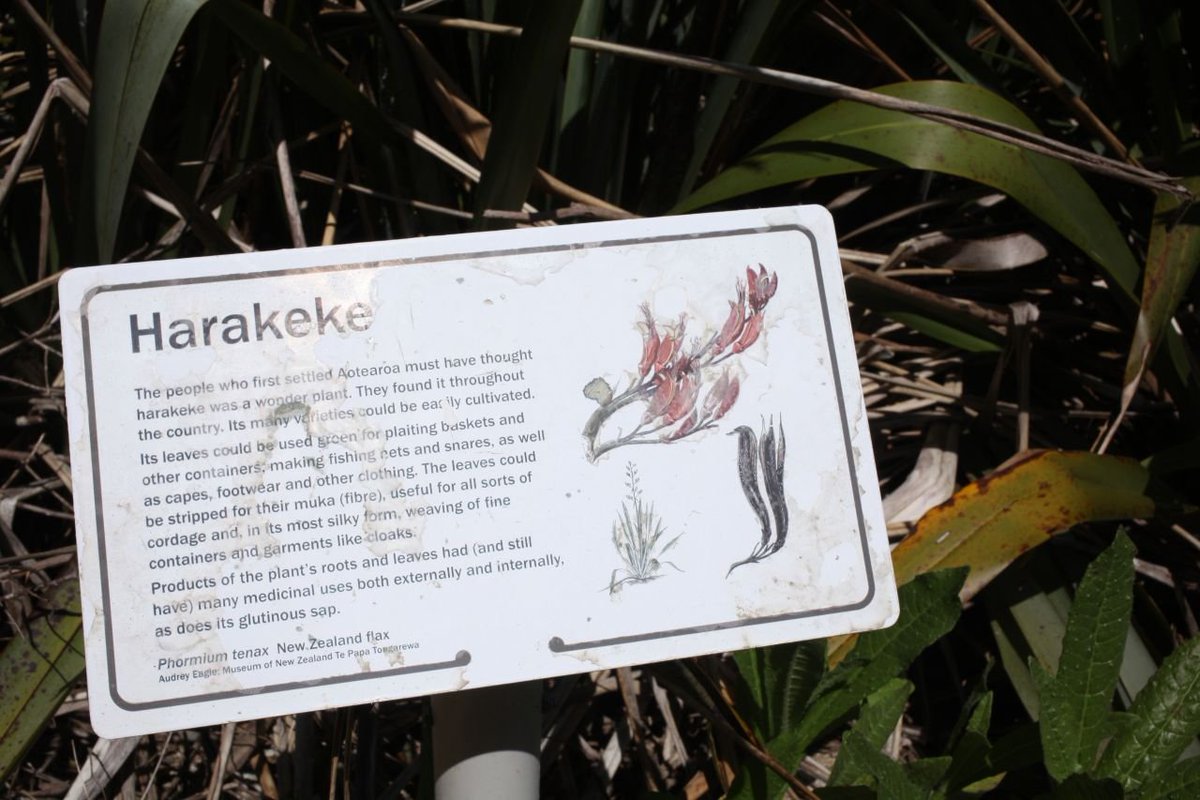
"Rokoā Māori reflects Māori understandings of health and healing across physical, mental, spiritual, relational, cultural and environmental dimensions. Rokoā includes use of rokoā rākau (plant-based healing) and many other healing approaches"
https://t.co/dH6aULJeMG
A new study in @SciReports suggests that nearly six in ten adults across 80 countries are either underweight or living with overweight or #obesity - the double burden of malnutrition.
Researchers from Bangladesh and the University of Bristol pooled nationally representative @WHO STEPS surveys from 2004–2024, with measured height and weight for 283,426 adults. Overall, 59.5% had a BMI outside the healthy range. 51% were living with overweight or obesity, while about 4% were underweight.
The burden was higher among women (64.3%) than men (54.3%), and higher in women in 88% of countries, mainly because of overweight and obesity. It also rose with national income, from about 37% in low-income countries to 78% in high-income ones. Rates ranged from 24% in Rwanda to over 90% in several Pacific and Caribbean countries. Underweight remains common in South Asia and sub-Saharan Africa.
It shows why #nutrition policies need to tackle both undernutrition and obesity together, as part of #NCDs noncommunicable diseases prevention.
https://t.co/fM0nKPNXAp
"Sex-based differences in outcomesfollowing primary TKA ... Because women typically present for TKA with worse preoperative status, observed differences may reflect underlying preoperative disparities rather than an independent effect of sex."
https://t.co/LEWtCp2lBa
"Syndecans are transmembrane receptors and as proteoglycans, bear covalently joined glycosaminoglycan chains on their extracellular domains. Usually, these are heparan sulfate, but syndecans may also possess chondroitin/dermatan sulfate chains."
https://t.co/ZX4IzqBIHp
"This is not the moment, then, to appease or fall in line but to stand against the powerful forces that use science as propaganda.
The rule of the science manipulation complex is not one we should accept."
https://t.co/u1yULwiRpV
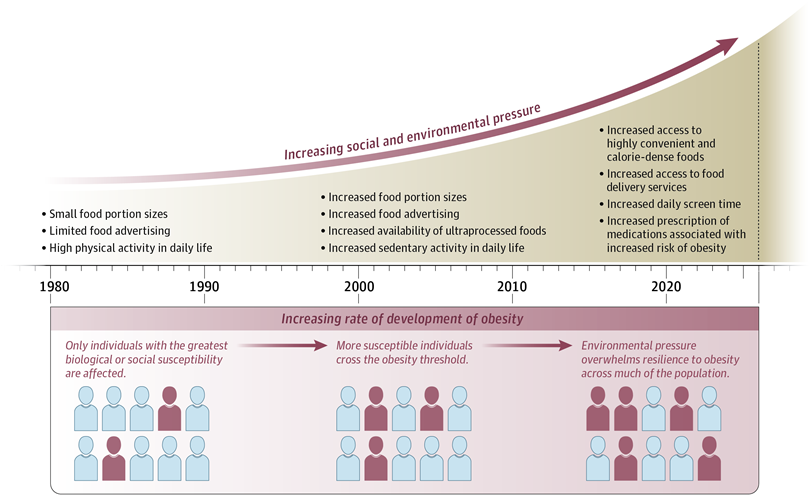
A new JAMA Summit Report on #obesity@JAMA_current makes a clear point: GLP-1 medicines are a major opportunity, but “no single intervention will be enough.”
Nearly half of US adults and 1 in 5 US children now meet the definition of obesity, and worldwide more than 1 billion people live with it. About 1 in 9 US adults takes a GLP-1 receptor agonist, and US prevalence may be falling for the first time in decades. Even so, severe obesity keeps rising. Access, cost, tolerability and high first-year discontinuation are still barriers.
The authors call for obesity to be managed as a chronic condition, with team-based and stigma-free care. They also want drug approvals to look beyond weight loss to metabolic, functional and patient-centred outcomes.
Prevention matters just as much: clearer food labelling, limits on marketing unhealthy food to children, and stronger school #nutrition standards.
Medicines can help individuals. Healthier food environments protect whole populations.
https://t.co/j97z3o6a2y
" ...One Nation’s migration policy has nothing to do with immigration at all. Rather, it is about providing thin populist cover to a political program shaped by billionaire interests and hostile to working people across the country."
https://t.co/pEcw0ZdGt5
IMPORTANT WARNING TO VICTORIAN VOTERS.
TOTAL FRAUD.
Voting has begun, and I want to draw your attention to a political party appearing on the ballot paper under the name Free Palestine.
Please do not assume that this party represents the Palestinian cause or the values of the Palestinian solidarity movement.
The party was established by Avi Yemini, who has publicly acknowledged that its purpose was to attract pro-Palestinian voters and redirect their support towards conservative political parties, including One Nation.
This is a serious issue for anyone who genuinely supports Palestinian freedom and justice.
Please do your research before voting. Check who is behind the party and what it actually stands for.
Do not be misled by a name on a ballot paper.
Your vote is your voice. Make sure it reflects your values, your principles and your conscience.
And let’s be clear: voting for this party is not simply a donkey vote. The concern is that voters who genuinely believe they are supporting Palestine may be misled about the political agenda behind the party.
I believe this raises serious questions about political transparency and the exploitation of people’s genuine solidarity with the Palestinian people.
Don’t let the name Free Palestine deceive you. Know exactly what you are voting for.
The 2026 British Society for Rheumatology (BSR) Guideline, first UK-specific guidance for diagnosing and managing systemic autoimmune rheumatic disease-associated interstitial lung disease (SARD-ILD), has been published in Rheumatology (doi:10.1093/rheumatology/keag550; 17 November 2026). It addresses under-recognition and undertreatment in UK practice. While drawing on international recommendations (ACR/CHEST, ERS/EULAR), it is adapted to NHS resources, licensing, and commissioning.
Overarching principles
Management must target both underlying SARD activity/symptoms and the ILD (inflammatory and/or fibrotic patterns on HRCT). Primary aims are improved survival and quality of life. Multidisciplinary team (MDT) involvement—rheumatology plus specialist ILD services—is essential for diagnosis, screening, and treatment decisions.
Screening
• All patients with SARDs require careful respiratory history and examination (including auscultation) at diagnosis and follow-up (1C, SoA 99%).
• Chest radiography alone is not recommended (1B, SoA 97%).
• Systemic sclerosis (SSc): screen all with HRCT + pulmonary function tests (PFTs) at diagnosis (1B, SoA 97%).
• Idiopathic inflammatory myopathies (IIM): screen with HRCT + PFTs according to subtype and high-risk antibodies (e.g., anti-MDA5, antisynthetase) (1C, SoA 96%).
• Rheumatoid arthritis (RA): consider HRCT + PFTs at diagnosis in higher-risk patients (male sex, high RF/ACPA, smoking, high BMI, older onset, high disease activity) (2C, SoA 97%).
• Any SARD patient developing respiratory symptoms should undergo HRCT and PFTs.
ILD prevalence is substantial: ~47% in SSc, 56% in mixed connective tissue disease (MCTD), 41% in IIM, 17% in primary Sjögren, 11% in RA, and 6% in SLE.
Monitoring
Assess clinically and with PFTs every 3–6 months after diagnosis, reducing to every 6–12 months once stable (1D, SoA 95%). Individualise frequency by subtype, progression risk, symptoms, and preference. SSc-ILD warrants more intensive monitoring (every 3–6 months for at least 3–5 years). Repeat HRCT if symptoms or PFTs worsen, to evaluate progression and exclude other causes.
Treatment
Guided by predominant pattern (inflammatory vs fibrotic) and severity.
Predominantly inflammatory SARD-ILD
• Start glucocorticoids (dose tailored to severity and risk) with early additional immunosuppression (1C, SoA 98%). Prefer high-dose intravenous steroids for hypoxia or extensive disease, except in SSc-ILD or predominantly fibrotic RA-ILD. In SSc-ILD, avoid >10 mg prednisolone equivalent in patients at high risk of scleroderma renal crisis.
• Mycophenolate mofetil (MMF) is preferred first-line; azathioprine or calcineurin inhibitors (CNIs) are alternatives if MMF is unsuitable (avoid CNIs in SSc because of renal-crisis risk).
• If first-line fails or is not tolerated, optimise, switch, or escalate (e.g., rituximab, cyclophosphamide) while minimising long-term steroid exposure. Rituximab is especially useful in RA-ILD for both joint and lung disease.
Progressive pulmonary fibrosis (PPF)
Defined by significant FVC decline (≥10% over 2 years, or 5–10% plus worsening fibrosis on HRCT) or progressive symptoms with fibrosis. Recommend nintedanib and/or nerandomilast, usually combined with immunosuppression (1B, SoA ~97–98%). Dose-reduce antifibrotics for intolerance. Pirfenidone may be considered in selected SSc-ILD cases.
Rapidly progressive SARD-ILD (worsening dyspnoea, hypoxia, or radiology within ~3 months without alternative cause) Urgent MDT discussion is mandatory. Induction with glucocorticoids + intravenous cyclophosphamide and/or rituximab is recommended (1C, SoA 99%). For IIM-associated rapidly progressive ILD (especially anti-MDA5 dermatomyositis): glucocorticoids + cyclophosphamide + CNI; consider tofacitinib, IVIg, or plasma exchange as adjuncts. Involve an ECMO-capable centre early for life-threatening disease.
Every Victorian should be able to obtain timely, high-quality care, regardless of where they live or which part of the system they enter. That requires investment across the patient journey, not an isolated response to whichever pressure is most visible on a given day.
AMA Victoria is asking the next Victorian Government for 10 commitments to improve the healthcare system. The first of which is to end dangerous delays in hospital care.
Beginning with its first budget, AMA Victoria calls on the next Victorian Government to fund the staffed acute, subacute, and rehabilitation capacity needed to reduce access block, require clinical and executive review and corrective action for every emergency department stay of more than 24 hours, and publish results for each hospital.
👉 View our #dontgetsickinvic election scorecard to see how parties are tracking on this commitment: https://t.co/4hQvmzgQCb
👉 Read more about the commitment: https://t.co/HbXgoYzMrn
👉 Sign the petition for further action: https://t.co/mttwUNorvh
Chronic pain affects around one in five Australians aged 45 and over. It is a major cause of disability, lost participation, and pressure across general practice, hospitals, and mental health services. Only a small minority of people living with chronic pain receive best practice multidisciplinary care, and AMA Victoria has heard of waits exceeding years for public pain services.
Barriers include inadequate public capacity, uneven regional access, workforce shortages, and funding and data systems that fail to recognise chronic pain properly.
This election, AMA Victoria calls on all parties to give chronic pain proper priority, as part of 10 commitments to improve the healthcare system.
👉 View our #dontgetsickinvic election scorecard to see how parties are tracking on this commitment: https://t.co/4hQvmzgQCb
👉 Read more about the commitment: https://t.co/HbXgoYzMrn
👉 Sign the petition for further action: https://t.co/mttwUNorvh
On the Radar Issue 769 is now available. This issue includes items on osteoarthritis of the knee, Long COVID, climate, fees, maternity care, clinical quality registries, and more https://t.co/8sTClmtQyb
Weight loss & getting fit isn't just about structural changes.
In RA patients, it's possibly dialling back inflammaging with real impacts for muscle-immune crosstalk.
That's not just feel good, that was disease activity & function.
Fascinating plenary ABST2803 #ACR26@RheumNow