Can a new way of analyzing brain scans help us decode deep states of meditation? 🧠
We explore this radical possibility using machine learning applied to advanced meditative absorption states. The studied meditation practices draw on the Buddhist tradition of jhāna.
In this study we analyzed 204 brain-scan segments from 22 advanced meditators.
The new analysis combines two kinds of information about brain activity: how activity rises and falls together across brain regions and how it slowly shifts in each region.
With our new analysis, the model more accurately distinguished brain scans from early and late stages of absorption. This suggests that the profound changes meditators describe in their own experience can also show up as patterns of brain activity across people.
This work helps us better connect subjective experiences of deep meditation with measurable brain activity - and could eventually inform meditation neurofeedback and other applications.
Congratulations to first author Jian Wang and co-authors Winson F. Z. Yang (@winsonfzyang), and Wugeng Zheng.
I'm delighted to share our new preprint: “ACAM-J-MARS: Multi-Atlas Riemannian Spectral Representations for Decoding Advanced Meditation States from fMRI.”
Preprint PDF: https://t.co/pFrV2hjVU4
May this work benefit many 🙏
What do you think:
How could this approach help us learn about brain activity across different meditative states?
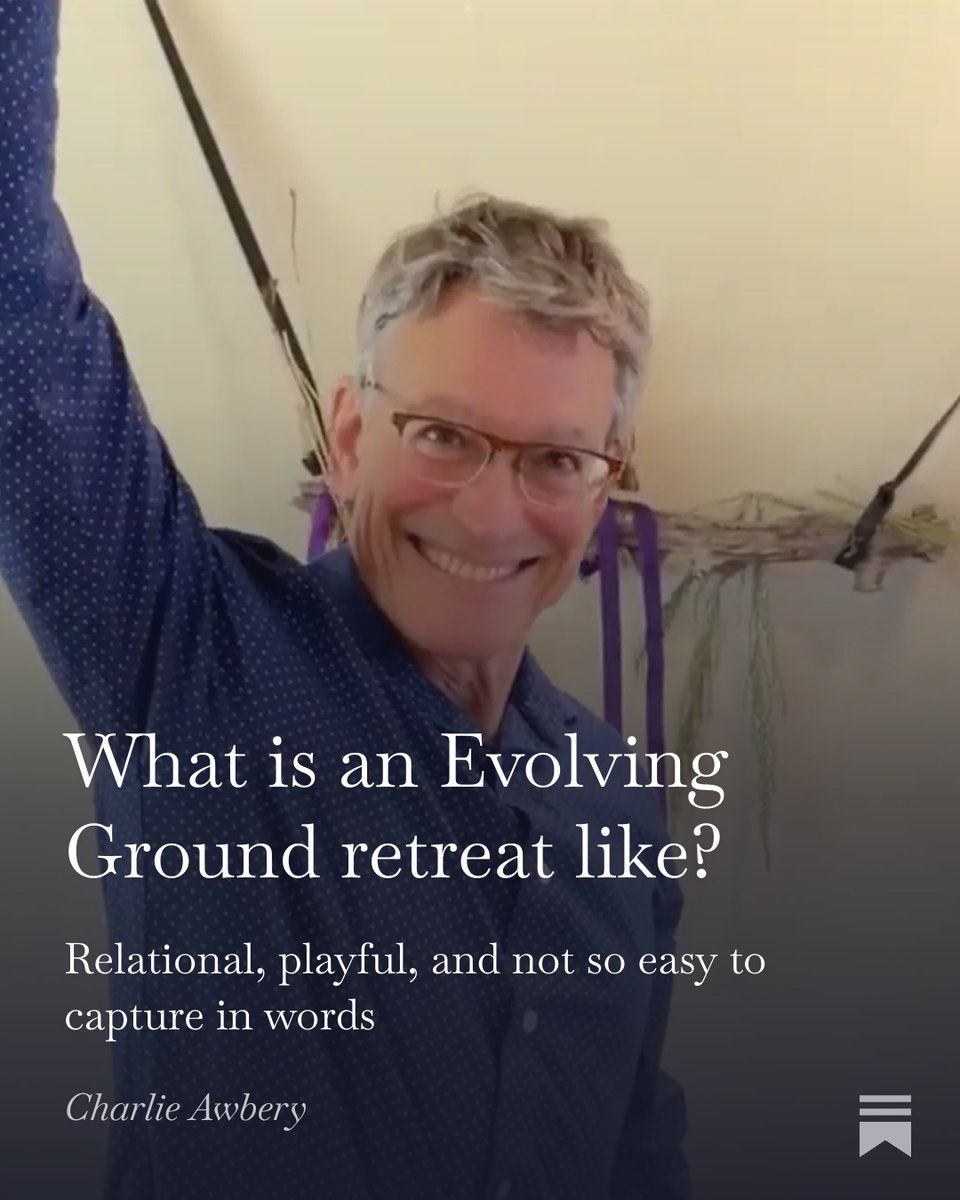
.@_awbery_ post: 📺 video and description of the atmosphere of an Evolving Ground Community Retreat. Quite different from mainstream meditation retreats, and also from traditional Vajrayana!
🔗 Link in reply tweet ⤵️
There are four sessions (Wednesdays @ 7 pm ET):
• February 18th: An overview of Kaleidoscope, including a framework for understanding patterns of interaction
• February 25th: Introducing Liberating Perception, and how to discover effortless awareness in perceptions
• March 4th: How perception connects to interpretation, and how to recognize interpretations when they arise
• March 11th: What to practice, plus connections to the remainder of the Kaleidoscope series
More with sign-up here:
https://t.co/6TokbKtv2D
Most of our relational problems aren't about events or beliefs, they're about deeply held stuckness in patterns of interaction.
Time for my Kaleidoscope of Interactions course again :-)
Big changes since its initial run in 2023. Evolving Ground has iterated over it and we've turned it into a three part series. We're running Part I as a managable 4 week introduction, starting this Wednesday, February 18th. More 👇
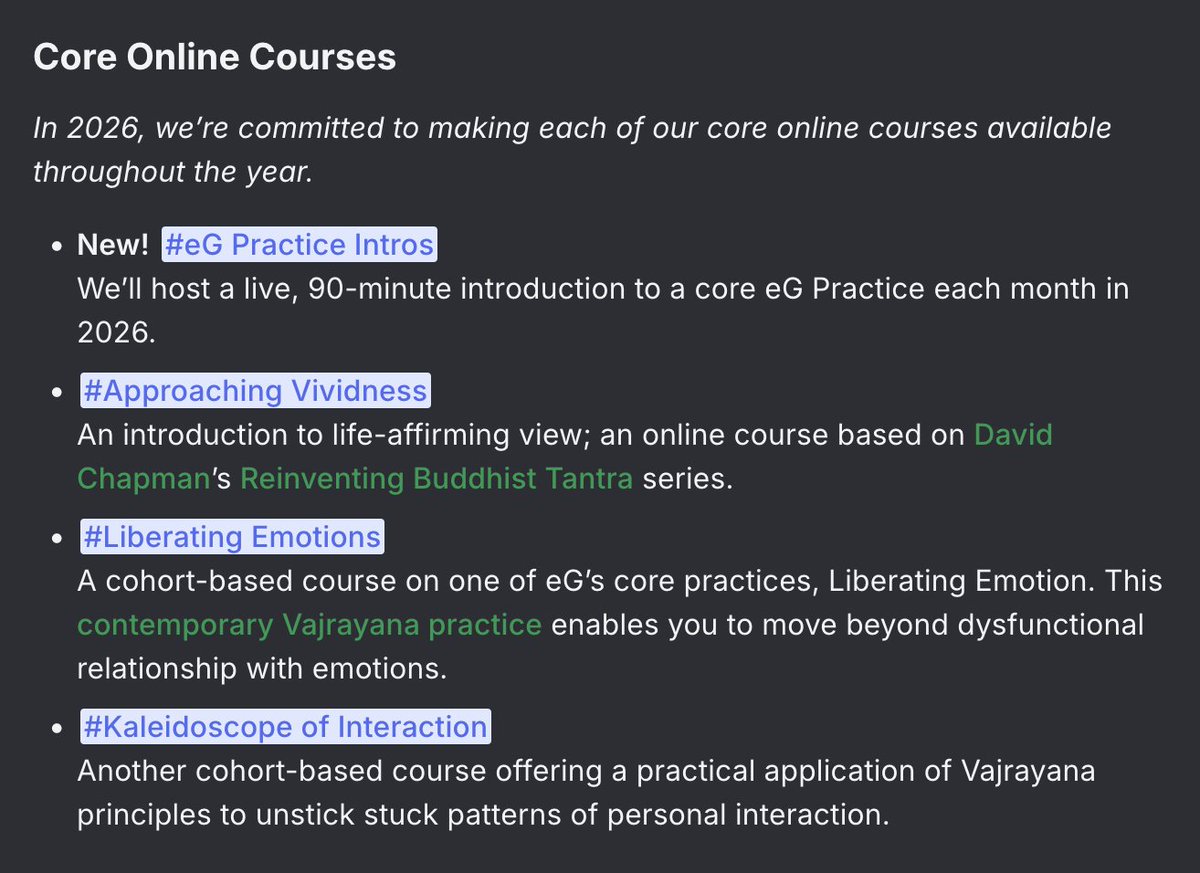
࿇Vajrayana࿇ is the Buddhist path of relationship—with the world, other people, and yourself. Evolving Ground's 2026 courses emphasize that theme!
"Approaching Vividness" is a great experiential introduction. The Core Practice Intros give you the tools to explore further.
🎆 Evolving Ground has an exciting new curriculum for 2026! Online events, core online courses, frequent local gatherings, and major in-person retreats. Here are regularly-scheduled online events... I particularly like the Interaction Studio and Interaction Dojo descriptions:
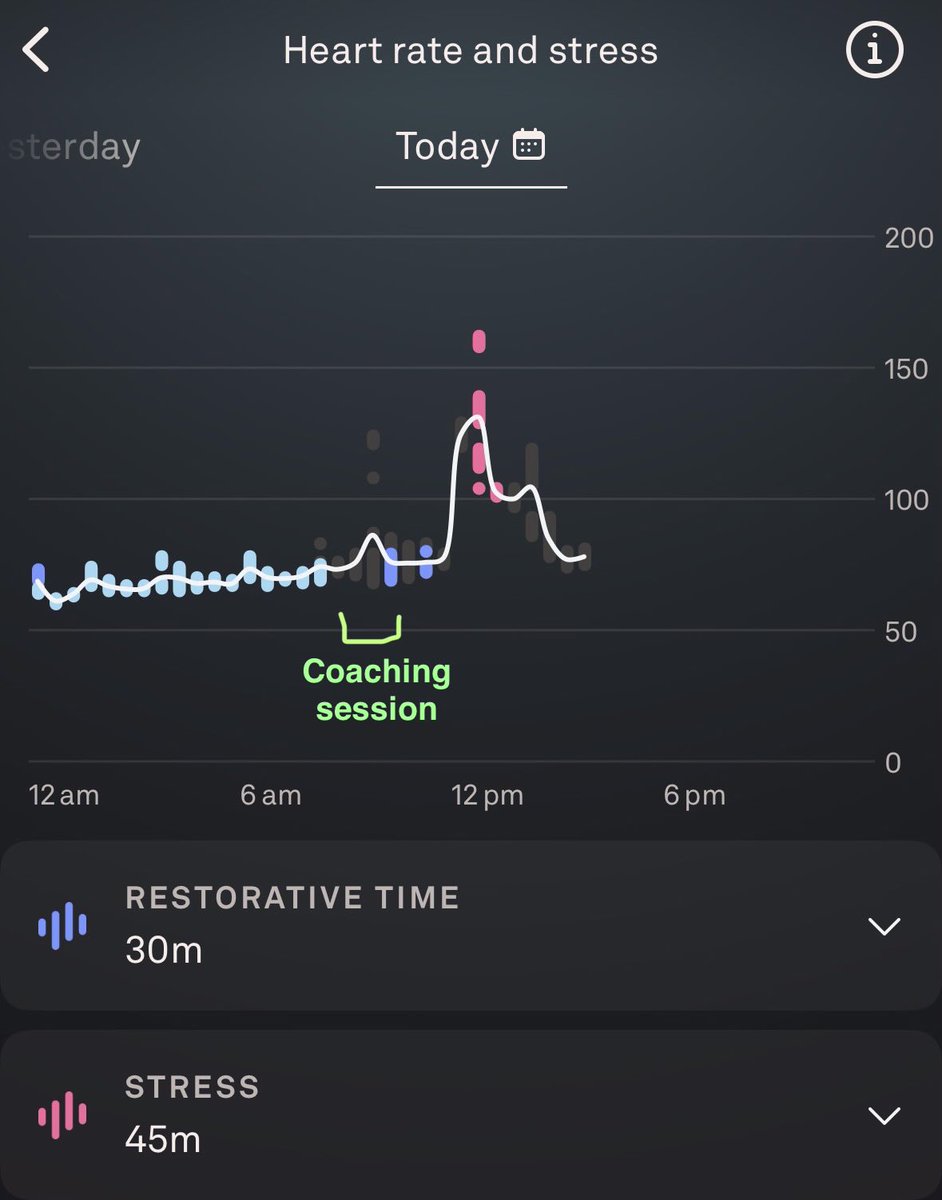
cool to see my heart monitor log both intense stress and deep relaxation during my emotional coaching session with @andrew0blevins. It always surprises me to see the relaxation bc I remember myself yelling and sobbing and stuff but ofc I also feel a subsequent deep comfort and security
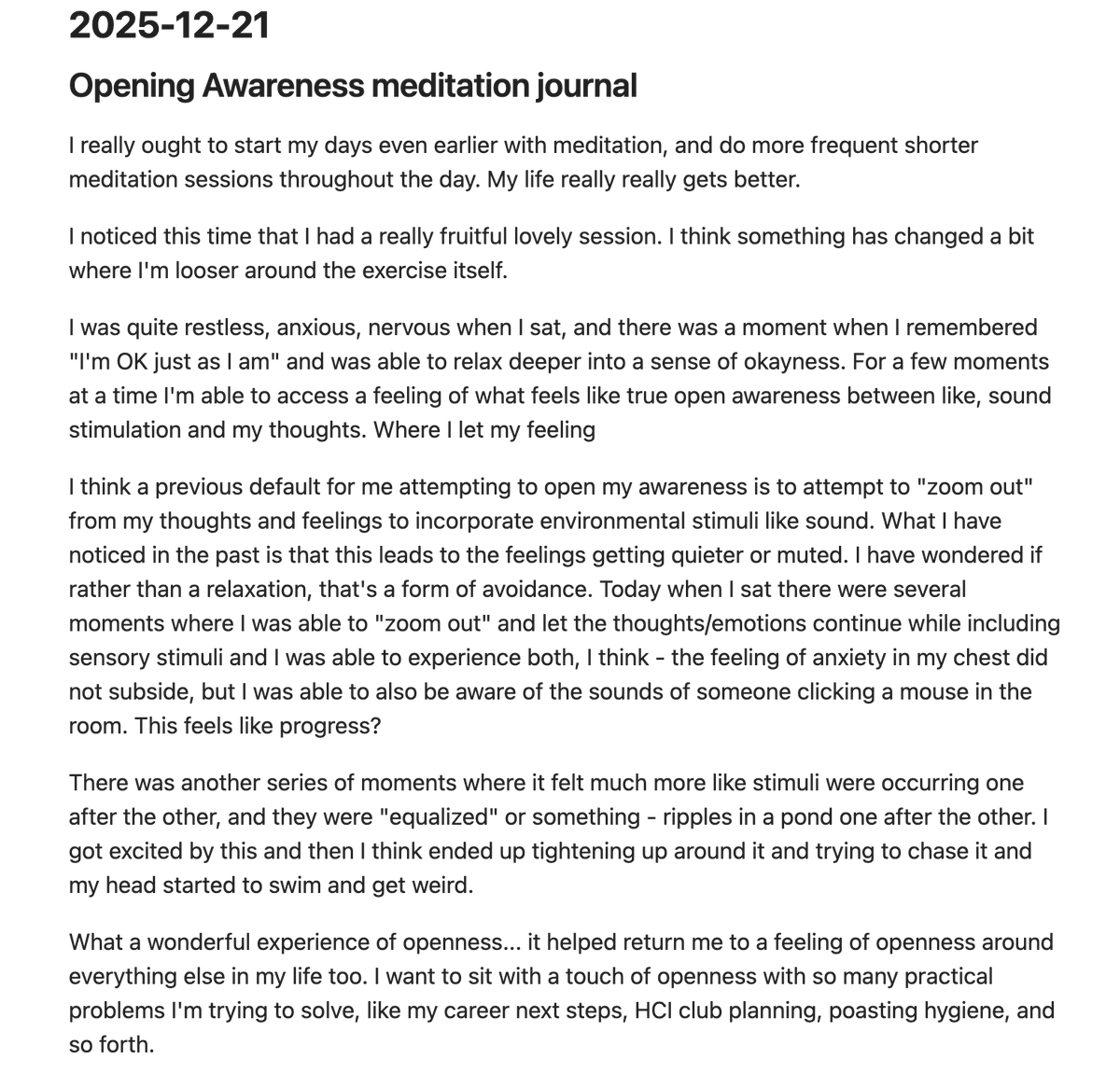
> I really ought to start my days even earlier with meditation, and do more frequent shorter meditation sessions throughout the day. My life really really gets better.
@mr_samosaman@andrew0blevins This is great. I like “relax disinclusion.” For someone coming from renunciative view in their meditation this might speak more than include, include. Love that you found this way to relax in your sir.
I’m enjoying reading @michael_nielsen notes on “Cosmos” over coffee this morning. Unexpectedly, many points he makes in passing sound like the way yidam practice works.
This, for example:
https://t.co/R3Vhynyq5D
The retreat was fitting with the Evolving Ground community theme of fearless intimacy. Earlier this year we introduced a Dzogchen approach to tonglen (སྟོང་ལེན giving-receiving) and Ling Gésar sadhana. Ying-rig's teaching on martial practices and opening the subtle body (རྩ་རླུང rTsa rLung) continued in that vein.
We finished an in person retreat at our place in Boulder yesterday with Lama Ying-rig from Finland. The purpose of the retreat was to learn some practices from the Tibetan lineages of Ling Gésar - practices like rLung Ta (windhorse), and dancing with opposition.