Ask a colleague why they refuse to use AI. They say it uses up all that water. You point out the water use is far smaller than some would have them believe. Then it's the hallucinations. You mention accuracy has improved dramatically. Then, finally: the process is the point. The struggle. The craft. The deeply human act of sitting with uncertainty.
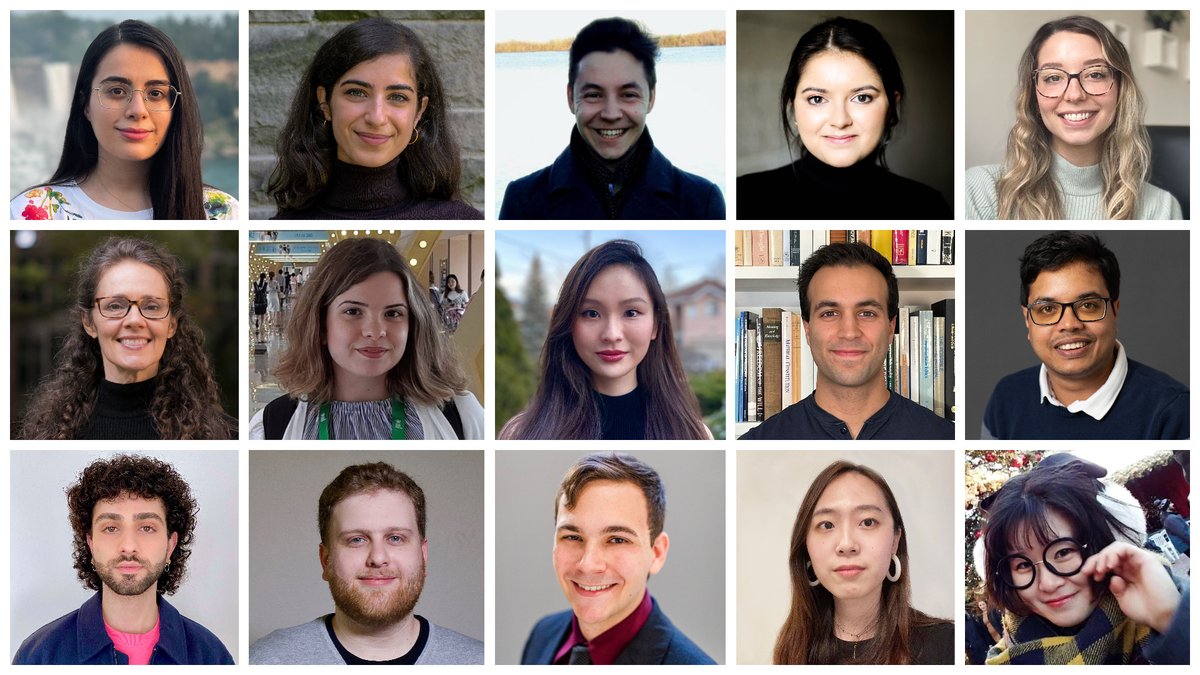
They're not reasoning. They're rationalizing their gut intuitions. My amazing student @vicoldemburgo, with Éloïse Côté, Reem Ayad, @yorl, Jason Plaks and I have a new preprint that explores this more thoroughly, called "The Moralization of Artificial Intelligence".
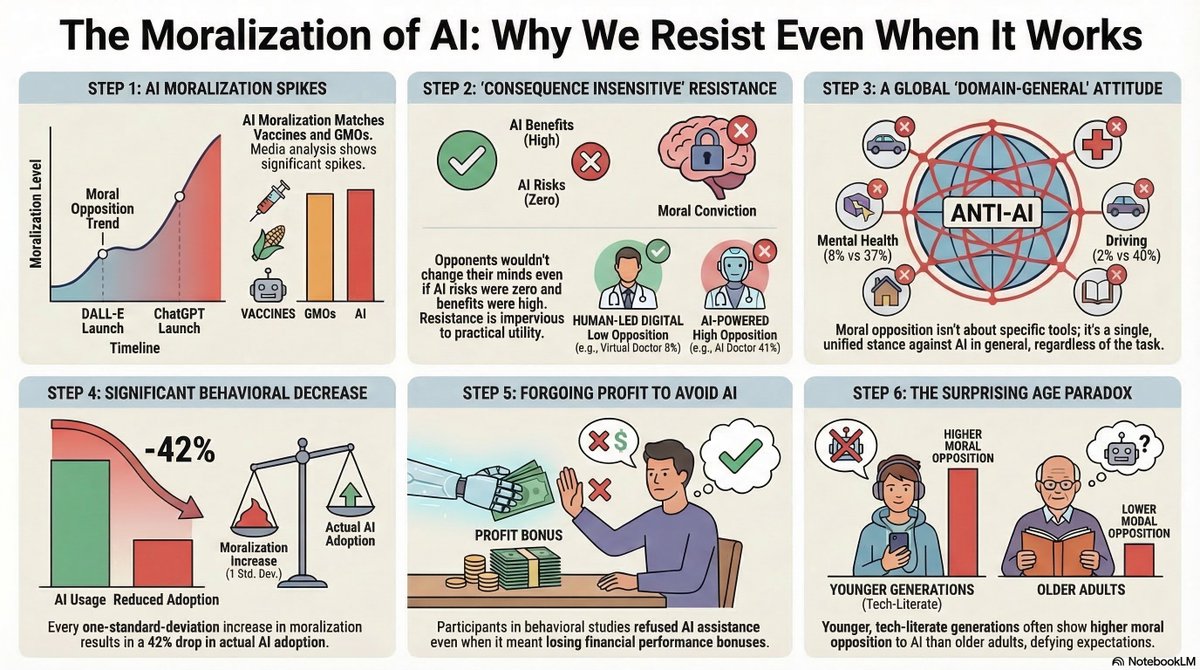
We started by asking how moralized AI has become in public discourse. Analyzing 69,890 news headlines from 2018 to 2024, we found that AI was moralized at levels comparable to GMOs and vaccines, technologies whose moral opposition has been studied for decades. It ranked above both. The sharpest spike came within weeks of ChatGPT's launch in late 2022.
When we surveyed representative samples of Americans, a majority of AI opponents said their views wouldn't change even if AI proved safe and beneficial. That's consequence insensitivity, the hallmark of moral conviction, not practical calculation. Across art, chatbots, legal tools, and romantic companions, AI moralization loaded onto a single latent factor. A global moral stance, dressed up in whatever practical language is available.
The behavioral data make this concrete: a one standard deviation increase in moralization scores predicted a 42% drop in actual AI usage, even when it would have benefited that person personally. The conviction preceded the behavior by up to 573 days.
The next time someone gives you three different reasons to oppose AI, each one dissolving under mild scrutiny, you're probably not watching someone think. You're watching someone feel.
Preprint avaulable here: https://t.co/dElNrW4OxL
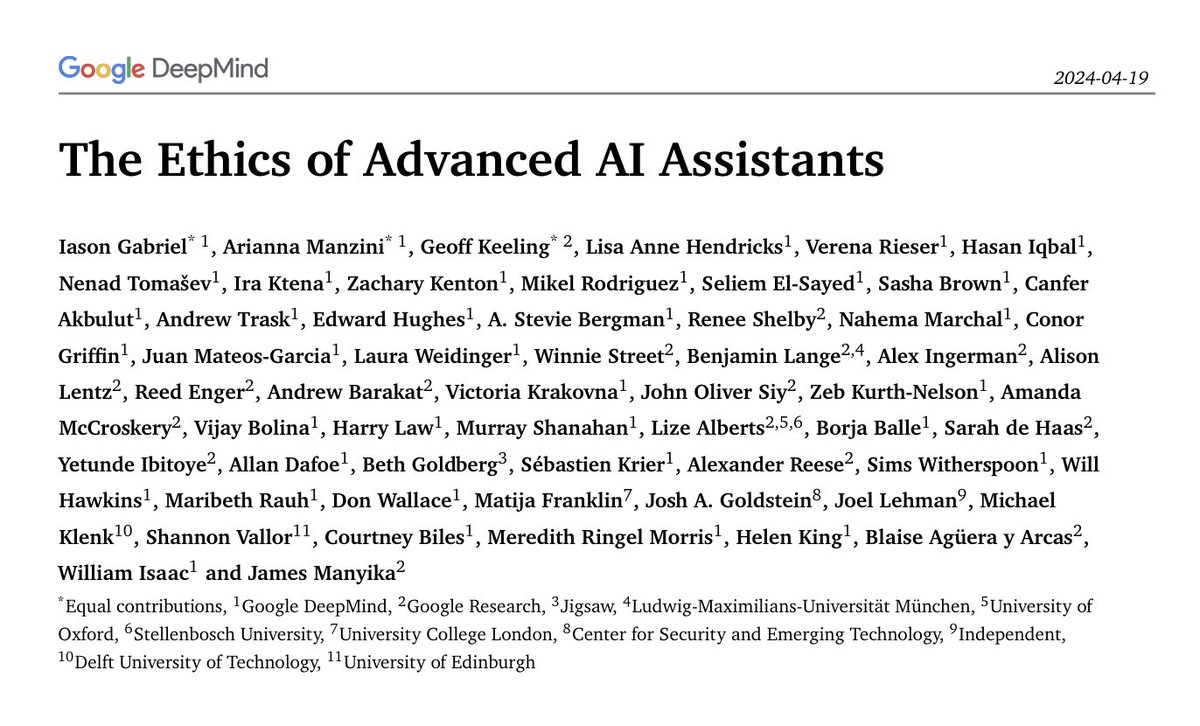
1. What are the ethical and societal implications of advanced AI assistants? What might change in a world with more agentic AI?
Our new paper explores these questions:
https://t.co/Z0jlSMBLxq
It’s the result of a one year research collaboration involving 50+ researchers… a🧵
New Paper!! Led by the inspiring & amazing @vicoldemburgo, with @felixckc
Twitter (X) use predicts substantial changes in well-being, polarization, sense of belonging, and outrage
https://t.co/4GDAkVm46t /1
#CHI2024
How can we develop interactive technologies that effectively address group conflicts stemming from religious, faith-based, ideological, political, and related sentiments? How can we navigate the complex ethical tensions involved in designing solutions that are both inclusive and just, yet also resonate with the values of conflicting groups to gain their trust and acceptance of these systems or policies? Our paper titled “Cohabitant: The Design, Implementation, and Evaluation of a Virtual Reality Application for Interfaith Learning and Empathy Building” provides some insights into these questions.
In this mixed-methods study, we integrate theories from psychology, peacebuilding, and intergroup coexistence with a participatory design workshop to build and evaluate a VR tool aimed at reducing prejudices among faith-based groups by promoting interfaith learning and empathy. We then conduct statistical and qualitative analysis with the Christian, Hindu, and Muslim communities in Canada to examine the usability of the tool and understand the broader implications of our findings for creating similar systems for addressing group conflicts.
If topics such as online and societal harm/safety, group coexistence, faith, religion, VR, education, empathy, and justice interest you, I would love to discuss them with you at CHI 2024.
Grateful to @_ayadreem, @AshaZavin, @bingjian_huang, Selin Okman, Dina Sabie, Hasan Shahid Ferdous, @rsoden_, and @ishtiaqueSIA, for their collaboration. Last summer was fun!
In this piece, I review @WilCunningham and @jzl86's talk on the use of reinforcement learning models to study social cognition.
Watch the full talk here: https://t.co/7nFnDYRwO1
💡 New on our site: William Cunningham and Joel Leibo are modelling social cognition using reinforcement learning #AI—a method with the potential to redefine how we study human behaviour.
Learn more: https://t.co/7AoAp4xH4A
Delighted to announce our new (open-access!) @cogsci_soc paper, raising a puzzle within cognitive science: How can we best evaluate the moral cognition of artificial agents? (1/7) https://t.co/uA9ZAdud9y
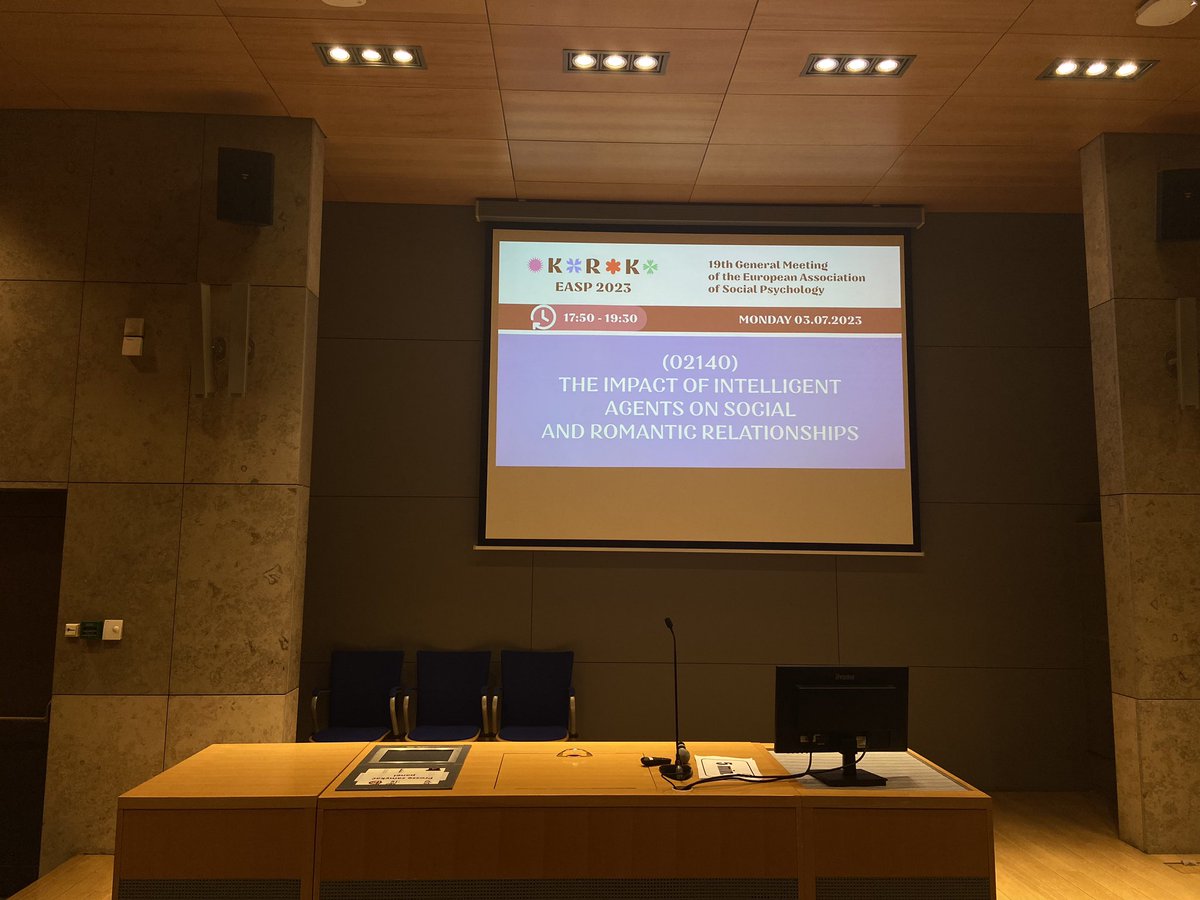
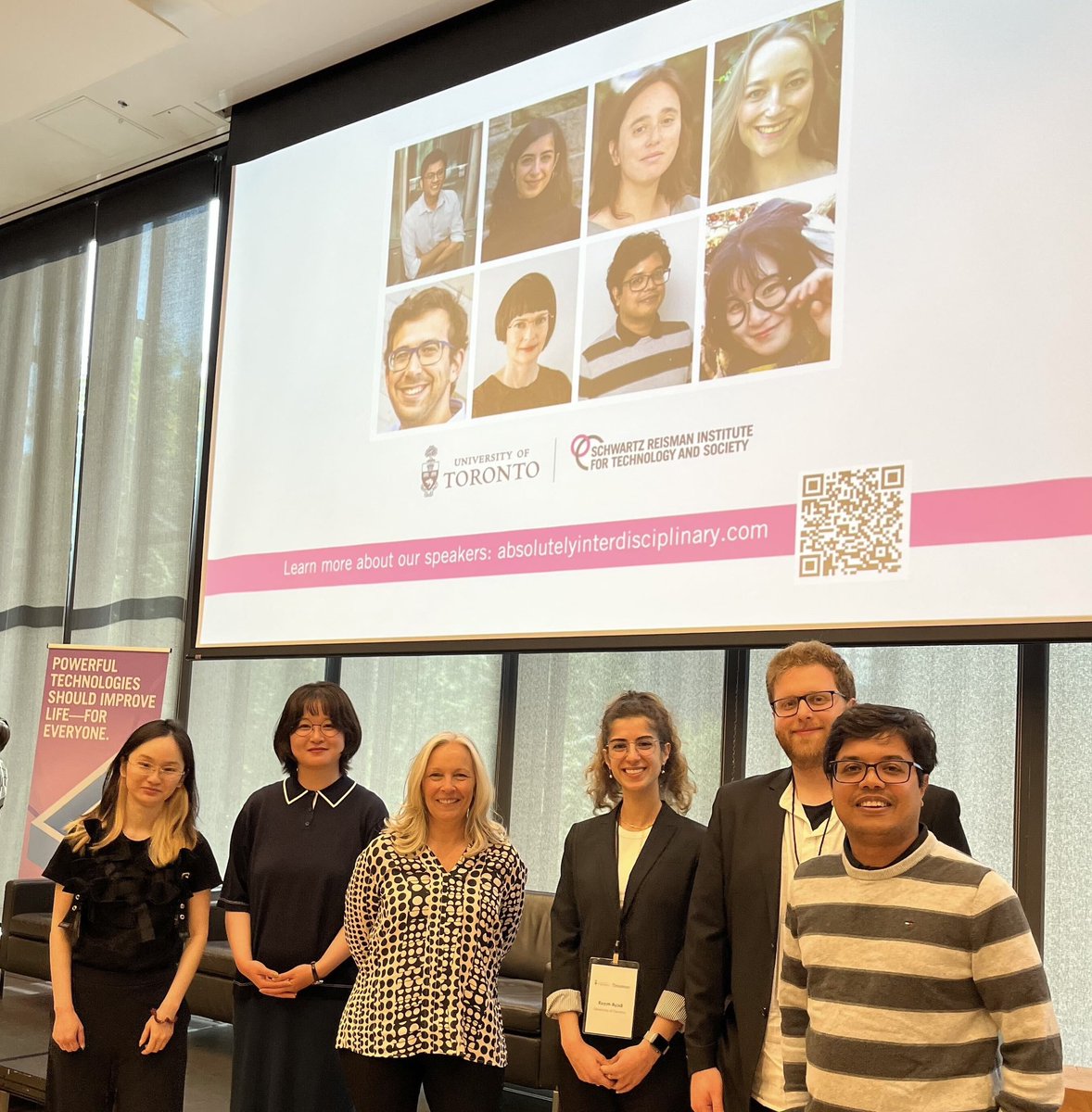
And that’s a wrap! From @TorontoSRI’s workshop on the Limits of AI, to @JimACEverett’s mind-boggling conference on the Moral Psych of AI, to @easp2023krk in charming Krakow, conference season has me feeling humbled, inspired, & gassed for the Future 🌪️💡🫶
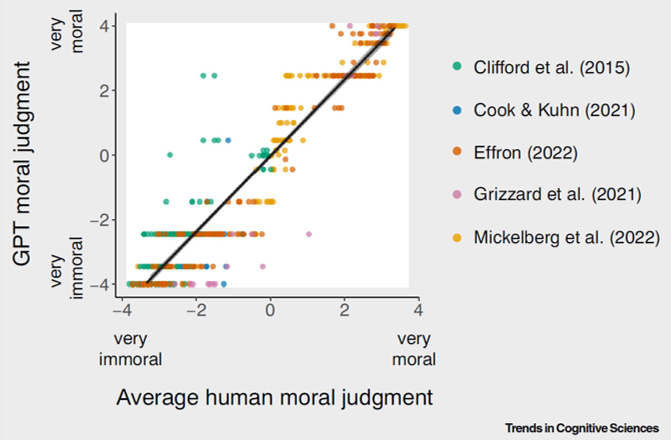
We gave GPT 464 moral scenarios from past papers, and asked it to make moral judgments--they correlated .95 with human ratings
Because GPT (almost) perfectly captures human judgment, we wondered: can AI LLMs replace participants in the study of the mind?
New at @TrendsCognSci
🗓️ June 20–22: The Schwartz Reisman Institute’s annual academic conference ABSOLUTELY INTERDISCIPLINARY returns for a wide range of stimulating discussions on how the next phase of AI development will transform our world.
Learn more and register: https://t.co/dOkyXMCG2O
Sessions for Absolutely Interdisciplinary 2022 have been announced! Convening leading thinkers from a rich variety of fields, this event inspire new insights at the forefront of contemporary #AI research.
Learn more: https://t.co/0AzQyJGpeB
1/🧵