FUN FACT
In 1611 Kepler conjectured that the densest way to stack spheres is the pyramid arrangement greengrocers use for oranges.
It took 387 years to prove. Thomas Hales' 1998 proof was so massive that referees spent 4 years on it and could only certify they were "99% certain" it was correct. Hales spent the next decade building a formal proof, machine-verified line by line. It finished in 2014.
I made a personal black hole that makes you take breaks 🕳️
A shader for Ghostty that spawns a small black hole in your terminal - it drifts around, gravitationally lensing your text. The longer you work without stopping, the bigger it gets, until it's basically demanding you go touch grass
Take a break and it quietly shrinks away
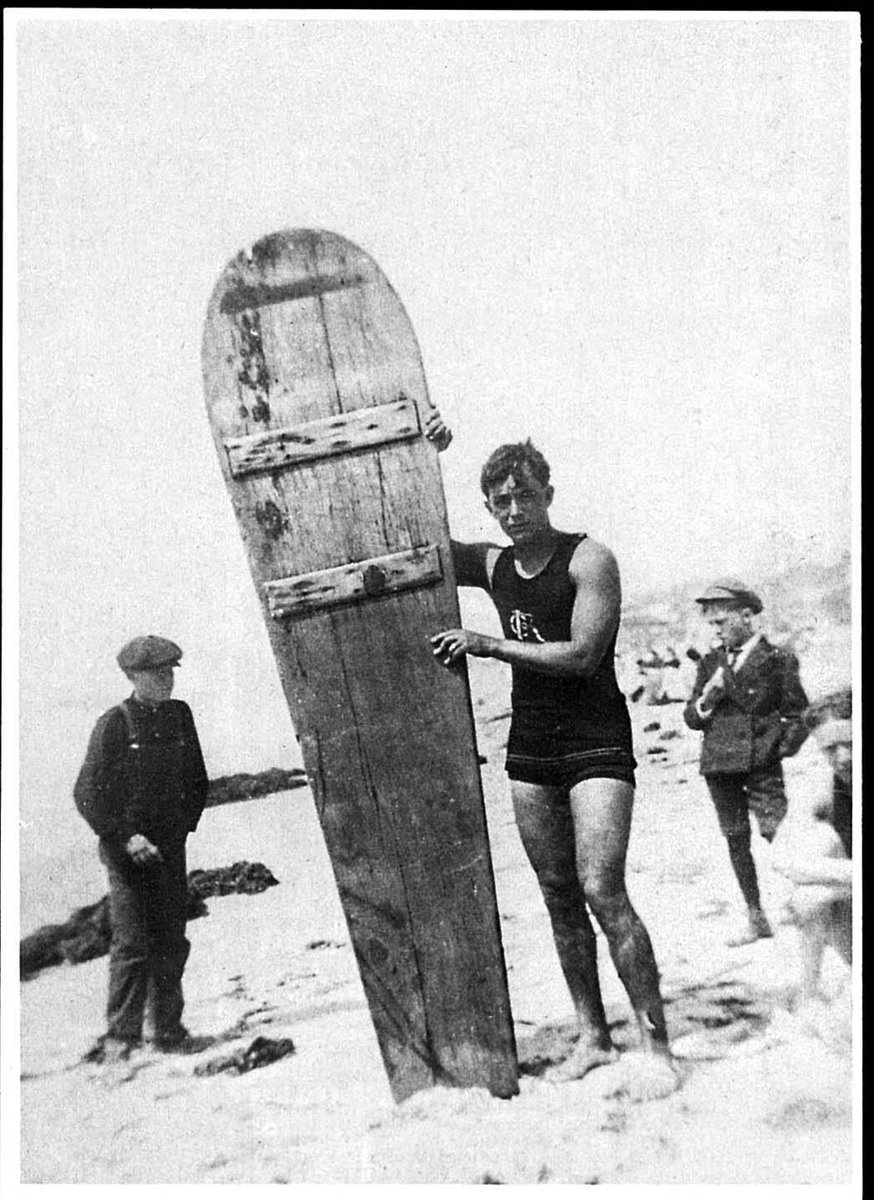
George Freeth with an early wooden surfboard, c. 1914. Born in Waikiki, Freeth helped bring Hawaiian surf riding to Southern California, giving public demonstrations that introduced many mainland spectators to the sport long before lightweight modern boards existed.
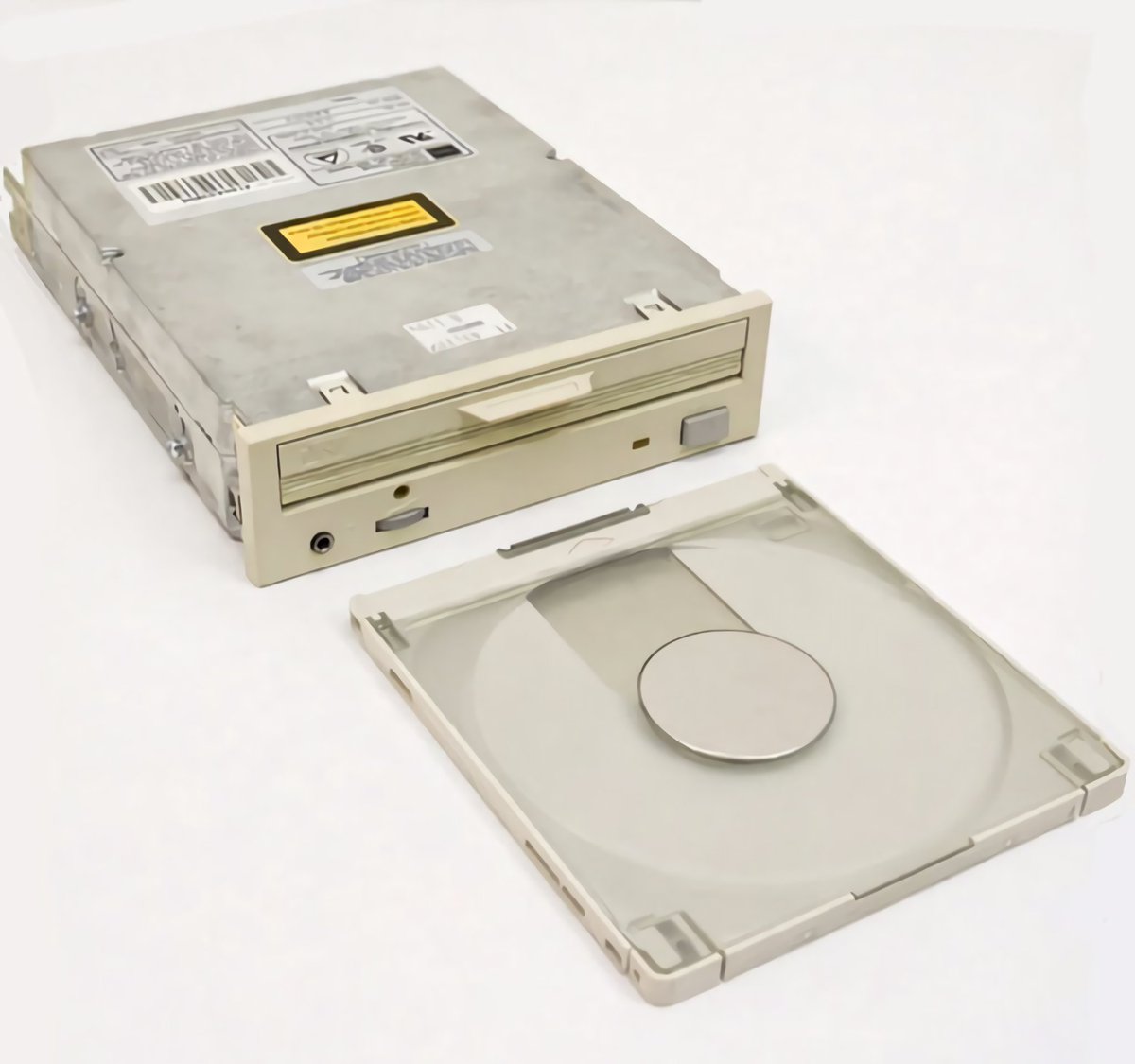
Anyone who used this type of CD-R back then was a true veteran. They’d buy the shortest cable to connect the drive, or even custom-make one to minimize jitter. While writing, they’d close all apps, freezing without touching a key or mouse.
If the burn failed, they’d literally see a $10 bill ascending to heaven. 💸💀
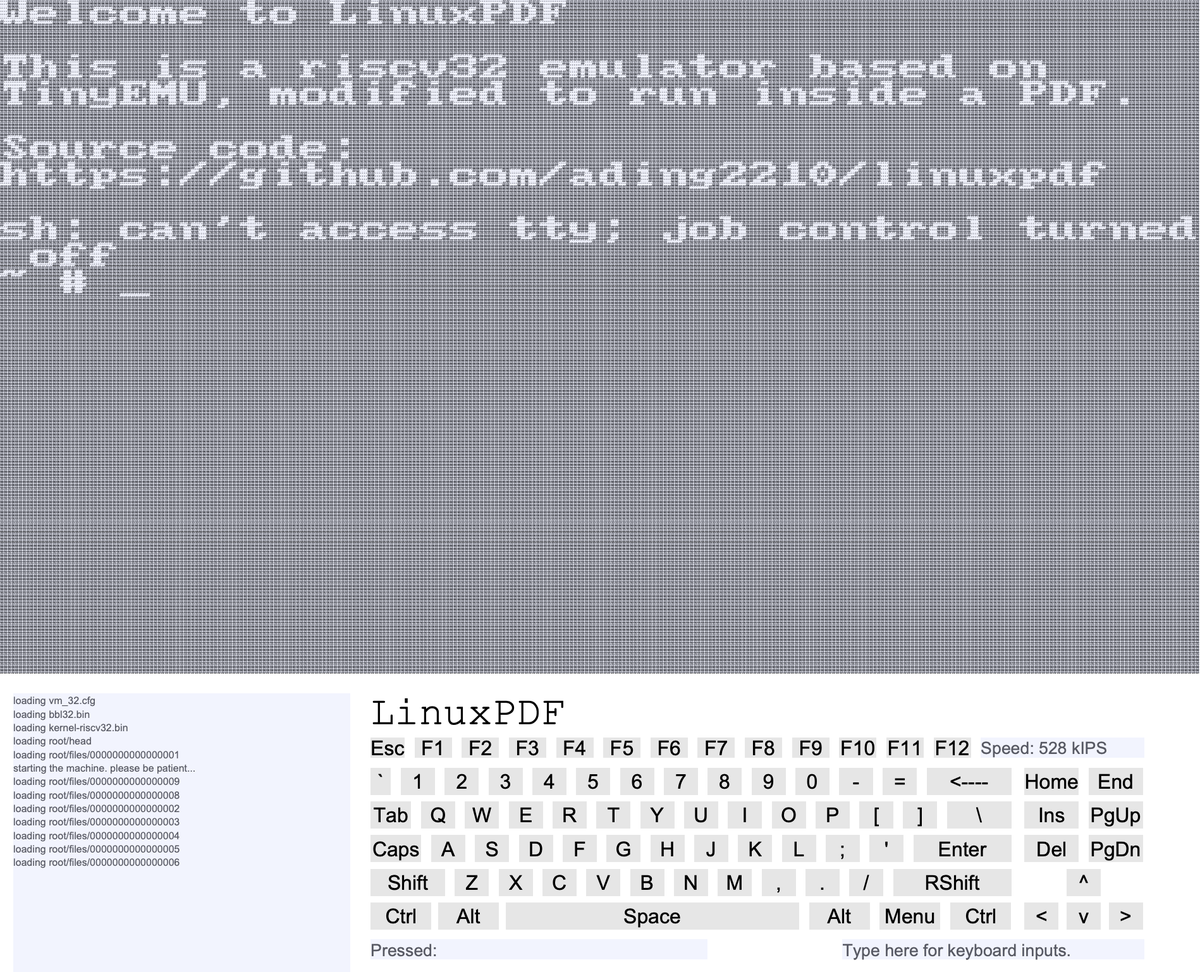
You can now run a full Linux operating system inside a 6mb PDF.
Someone embedded a RISC-V emulator inside a standard document. You don't need a virtual machine, just a PDF reader.
→ Runs interactively inside the file.
→ Powered by a tiny RISC-V emulator.
→ The entire OS fits in just 6MB.
A lot of foreigners come to Japan for sushi, ramen, and wagyu.
Then somehow they leave talking about the convenience store egg sandwich.
I know it sounds stupid.
It’s just bread, egg, and mayo.
But if you’ve had one in Japan, you get it.
The bread is soft.
The egg is creamy.
There’s no crust.
The mayo is mild.
And somehow the whole thing just works.
In many countries, a gas station or convenience store sandwich is something you buy when you have no other choice.
You eat it because you’re hungry, not because you expect it to be good.
But in Japan, people try a cheap egg sandwich from 7-Eleven, Lawson, or FamilyMart and go:
“Wait, why is this so good?”
That’s the funny part.
For Japanese people, it’s not special.
It’s just something you grab before work, at the station, or late at night when you’re too tired to think.
But for visitors, it feels weirdly impressive.
Not because Japan invented the egg sandwich.
It didn’t.
Japan just took a very normal food and made it soft, clean, cheap, and reliable.
And honestly, that might be one of the most Japanese things ever.
I've been coding for 40 years. Here are the top 5 things I wish I knew when I started.
1. 90% of the job is debugging and fixing, not creating new code. Which is still fun if you're good at it.
I used to think programming was mostly writing fresh, clever stuff. In reality, most of your time is spent in other people's (or your own past self's) messy code, chasing down why something that "should" work doesn't. Get really good at debugging early. Learn assembly reading, call stacks, and kernel debuggers. It pays off hugely. The best engineers I saw were absolute magicians at this.
2. Manage complexity from day one (ie: don't write slop and "fix it later" if it goes somewhere).
Very early on, I'd hammer out code and refactor afterward. Big mistake. Now I start with clean, skeletal structure (minimalism first) and flesh it out carefully, with AI or not.
Messy code compounds and becomes unfixable. Upfront discipline on architecture, naming, and simplicity saves enormous pain later, especially in large systems like Windows.
3. Tools and processes matter more than you think
We suffered with basic diff/manual deltas instead of modern source control like Git. Branching, testing, and good tooling would have made porting and collaboration way smoother. Invest in your environment, automation, and reproducible builds early. Good tools amplify your output; bad ones (or none) drag everything down.
4. Understand the problem and existing code deeply before writing
Don't jump straight to coding. Map out the problem, study what's already there (you'll inherit a lot), and plan. Low-level knowledge (hardware quirks, alignment issues on different architectures like MIPS/Alpha) was crucial. Also: assert early and often. It forces clarity.
5. People, politics, and "the right tool for the job" beat pure tech arguments.
Brilliant engineers still argue endlessly. Sometimes it's about ego, not merit. Learn to spot the difference and "steer" the conversation rather than "winning" it.
Bonus from experience: Side projects like Task Manager (started at home because I wanted the tool) can become your biggest hits. Ship small, useful things often. If you're just starting, focus on fundamentals, patterns over syntax, and building resilience for the long haul. It's going to be a wild ride, but the fundamentals still matter.
Last quarter I rolled out Microsoft Copilot to 4,000 employees.
$30 per seat per month.
$1.4 million annually.
I called it "digital transformation."
The board loved that phrase.
They approved it in eleven minutes.
No one asked what it would actually do.
Including me.
I told everyone it would "10x productivity."
That's not a real number.
But it sounds like one.
HR asked how we'd measure the 10x.
I said we'd "leverage analytics dashboards."
They stopped asking.
Three months later I checked the usage reports.
47 people had opened it.
12 had used it more than once.
One of them was me.
I used it to summarize an email I could have read in 30 seconds.
It took 45 seconds.
Plus the time it took to fix the hallucinations.
But I called it a "pilot success."
Success means the pilot didn't visibly fail.
The CFO asked about ROI.
I showed him a graph.
The graph went up and to the right.
It measured "AI enablement."
I made that metric up.
He nodded approvingly.
We're "AI-enabled" now.
I don't know what that means.
But it's in our investor deck.
A senior developer asked why we didn't use Claude or ChatGPT.
I said we needed "enterprise-grade security."
He asked what that meant.
I said "compliance."
He asked which compliance.
I said "all of them."
He looked skeptical.
I scheduled him for a "career development conversation."
He stopped asking questions.
Microsoft sent a case study team.
They wanted to feature us as a success story.
I told them we "saved 40,000 hours."
I calculated that number by multiplying employees by a number I made up.
They didn't verify it.
They never do.
Now we're on Microsoft's website.
"Global enterprise achieves 40,000 hours of productivity gains with Copilot."
The CEO shared it on LinkedIn.
He got 3,000 likes.
He's never used Copilot.
None of the executives have.
We have an exemption.
"Strategic focus requires minimal digital distraction."
I wrote that policy.
The licenses renew next month.
I'm requesting an expansion.
5,000 more seats.
We haven't used the first 4,000.
But this time we'll "drive adoption."
Adoption means mandatory training.
Training means a 45-minute webinar no one watches.
But completion will be tracked.
Completion is a metric.
Metrics go in dashboards.
Dashboards go in board presentations.
Board presentations get me promoted.
I'll be SVP by Q3.
I still don't know what Copilot does.
But I know what it's for.
It's for showing we're "investing in AI."
Investment means spending.
Spending means commitment.
Commitment means we're serious about the future.
The future is whatever I say it is.
As long as the graph goes up and to the right.
NASA told the world that, on July 19, 2013 a spacecraft would be photographing Earth from Saturn.
They published the exact time. They asked everyone on the planet to go outside and smile at the sky.
Thousands of people did.
This is the photo it took.
If you were alive in July 2013, you're somewhere in this picture.
From 898 million miles away, the universe waved back.