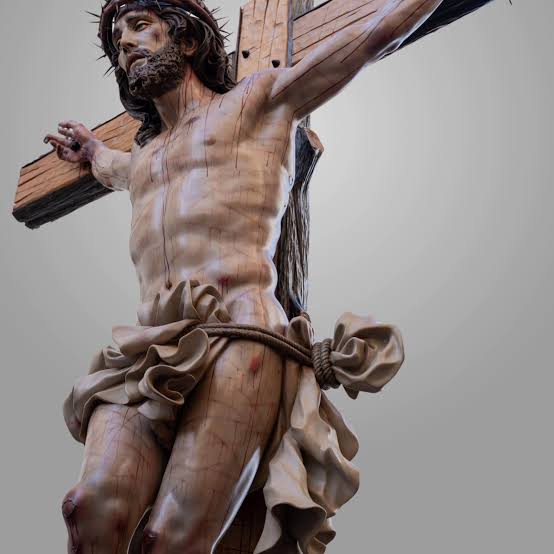
Jesus did not die for the sins of Ndị Ị̀gbò. I was not born with Original Sin. And no foreigner died for my sins on any cross. The only ones who died for me are my ancestors. They lived, sacrificed and died, to preserve our bloodline to thrive.
🧵
@Yawsikigh Christianity is built on hope, threats and fear of eternal damnation. God never told the Jews the righteous will live forever eternally but rather, …’the righteous will eat and enjoy the fruits of the earth’
This historic photograph records the formal opening of the restored Asante Confederacy Council in 1935 a landmark moment in Asante history. The event officially revived the Asante Confederacy after more than thirty years of British colonial rule, which had previously dismantled its central authority.
Seated from right to left are: Mr. Applegate (Assistant Chief Commissioner), Otumfoɔ Sir Osei Agyeman Prempeh II, K.B.E. (Asantehene), H.S. Newland, Nana Konadu Yiadom (Asantehemaa), and D.C. Conham.
Their presence highlights the delicate balance between the restored traditional Asante government and the British colonial administration at the time.
The restoration followed decades of struggle. After the exile of Otumfoɔ Agyeman Prempeh I and the royal family in 1896, Prempeh I returned to Kumasi in 1924. Full recognition finally came in 1935, when the British acknowledged the revival of the Asante Confederacy and the Asantehene’s office. Prempeh II became the first ruler to lead the restored confederacy.
The re-established Council reunited the various Asante states under the symbolic authority of the Golden Stool. As the kingdom’s highest traditional body, it brought together paramount chiefs to deliberate on important matters, uphold customary law, resolve disputes, and strengthen unity.
Far beyond a mere ceremony, this gathering symbolized the rebirth of Asante political institutions, the resilience of its people after conquest and exile, and the enduring strength of Asante identity. The 1935 restoration stands as one of the most significant achievements in Ghana’s traditional history proof that colonial rule could interrupt Asante sovereignty but could never destroy its spirit, customs, or proud legacy.
@AkanAxis@fantevoice Are you commenting as an individual or an organization?
I follow this account for it's educational contents. I as ordinary individual can use certain words you can not.
Learn to act professional by educating us on the tweet rather than joining us in the mud.
@dagbonyoutuber In a country where tribal sentiments is all time high, naming your YouTube account without using tribal elements help you target wider audience.