For over 20 years, our CEO @MehowHacks has been finding security flaws before they become global problems.
From hacking electronic voting machines for the U.S. government to building one of crypto's most ambitious security companies, his mission has stayed the same: fix the infrastructure before it fails.
Read his latest profile by @Entrepreneur UK on why he believes crypto's biggest vulnerability isn't the blockchain, it's how people actually use it.
Q2 2026 just became the most hacked quarter in crypto history.
83 incidents.
Double the previous record for attack frequency.
But the dollar losses weren't record-breaking.
The shift is the story: not a few giant exploits anymore. A constant stream of smaller ones.
The attack surface didn't shrink as the industry matured. It multiplied.
The privacy model crypto actually needs:
Anonymous to third parties. Transparent between the two people transacting.
Right now you get one or the other. Full transparency exposes everything to everyone.
Privacy pools hide everything from everyone, including the recipient who needs to know who paid them.
The answer is an identity layer that sits between those extremes.
Outsiders see nothing. The two parties see each other.
Private where it should be. Verifiable where it matter
The hardest part of crypto security infrastructure isn't building it.
It's getting it adopted.
A privacy and identity layer that requires developers to rebuild their entire wallet will never reach scale.
The version that wins is a drop-in SDK, integrate it on any chain, in any wallet, in days.
Zero cost to adopt.
Adoption friction kills more good infrastructure than bad technology ever does.
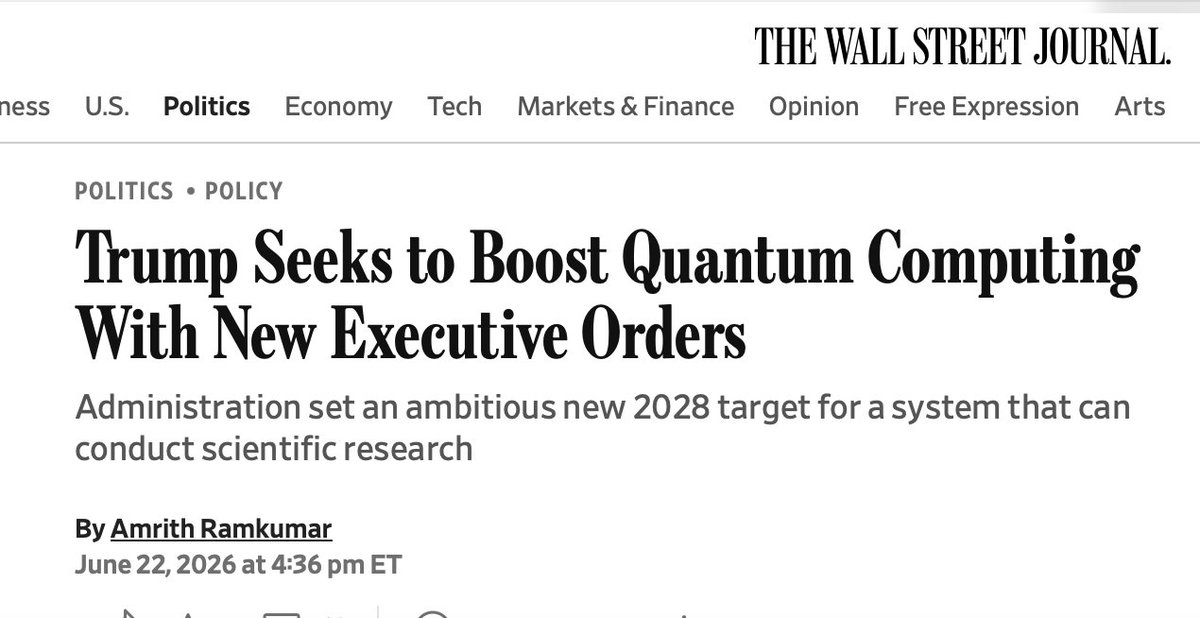
The quantum race just became a national priority.
President @realDonaldTrump 's new Executive Orders accelerating quantum computing development and preparing federal agencies for a post-encryption world are a reminder that quantum risk is no longer theoretical.
The conversation has shifted from if quantum computers will challenge today's security infrastructure to how soon organizations need to be ready.
For crypto, this is especially important.
Blockchains secure trillions of dollars in value using cryptographic systems that were never designed for a quantum future. The migration to quantum-resistant infrastructure will likely become one of the largest security upgrades in digital asset history.
We've believed from day one that quantum readiness is a necessity.
As governments, enterprises, and financial institutions begin preparing for the next era of computing, the need for quantum-resistant wallets, identity systems, and digital asset infrastructure will only grow.
Wallet drainer bots don't hack your wallet.
They get you to hand it over yourself.
The attack flow:
1. Fake site mimics a legitimate protocol (Uniswap, OpenSea, Coinbase)
2. User connects wallet - standard action, feels safe
3. Site requests a transaction signature, looks routine
4. Signature approves a drainer contract to move all assets
5. Wallet emptied. Funds gone. Irreversible.
Dark web discussions about drainer malware rose 135% between 2022 and 2024.
The tooling is commoditized. The barrier to launching a campaign is near zero.
The attack doesn't exploit code. It exploits the fact that users can't verify what they're actually signing.
Smart contract security has always been asymmetric.
Defenders need to find and fix every vulnerability.
Attackers need just one.
AI coding agents didn't create that asymmetry.
They industrialized it.
The industry kept betting on better audits.
The attack side just got a machine that never sleeps.
🏺 Tessa Hunt and the Golden Sands is LIVE — exclusively at Jackpotter! 🔥
The 10 random users will each receive 10 Free Spins
RT + Tag a friend + Jackpotter Username to enter!
Be the first to spin! 👇 🎮
https://t.co/hvsWtC4zgS
There's an attack vector most of crypto isn't tracking yet.
AI recommendation poisoning.
An attacker embeds hidden prompt instructions in a webpage.
An AI agent reads the page during its normal workflow.
The agent's memory gets silently altered, and from that point, every recommendation it makes is skewed toward whoever planted the instructions.
Microsoft documented 50 live examples across 31 companies in 14 industries in 60 days of research.
If your portfolio decisions or due diligence run through an AI assistant, assume the inputs can be manipulated.
The recommendation is only as trustworthy as what the agent read to make it.