AI | Cloud | Futuristic Designs | Productivity🔍
Deep dives & expert tips on AI, LLMs, AWS, Salesforce, general self improvement tips and office productivity
@Sheetal2205 This is the one of solid course which I've myself gone through :
Selling point : Concepts + theory + practicals all are thoroughly covered !
Good for even beginners !
https://t.co/uOdyHGcuvU
@tdinh_me don't you think , use of frontier model will decrease over the period of time and cheaper, localised open source models will take their place?
@johncrickett And you genuinely believe that junior developers will stay with you, once get experienced?
smart hirers will pay few thousands extra from the money they saved earlier and hire these whenever it they require!
By using and building AI agent in better way.
Its same- anybody can write a code but some does it like an art, follow design patterns, write efficient, robust, readable & maintainable code !
Senior engineers are now expected to design agents that handle edge cases gracefully, respect API budgets and token costs, isolate side effects, and enforce rock-solid security boundaries(e.g. avoid prompt injections!)
You’re simply working one abstraction layer higher. The fundamentals of what separates great engineers from average ones haven't changed in my view !
Some people prefer beauty of silently(as much as possible) producing(coding) something instead of most, who just talks about it before and after!
They are like skilled artisans, craftsman who were till now happy in their own world, producing some of the great arts !
Now AI is taking over their job and unwillingly they have to move to roles where they will do nothing but just talk/argue about things that don't exist and ask AI to produce it finally !
This cacophany filled environment is not everyone's cup of tea!
@LeoBuilds_ No never, they will take what AI is producing as gospel truth !
Ai answers/executes well if you have knowledge to review its plan, question which option it has chosen, otherwise you are just piling up garbage !
Answer lies in how much efficient is the code review(and DevOps) process in the company!
Anthropic now says that 90% of code of Claude code is written by claude itself !
Developers are hardly reviewing the code there. They have moved from people to machines(Agents) !
and it seems to be future for most Orgs !
as per Anthropic's blog :
"We think "did a human read the code?" is an imprecise proxy for "what could go wrong with this change, and which check—automated or human—is the right one to catch it?"
so to answer your question :
A developer who uses AI to build 10x faster working inside a well governed devOps process where human and agents working together is MORE valuable to any organisation !
We'll be spending a lot more time trying to understand the outputs of language models. A few thoughts, tips & tricks:
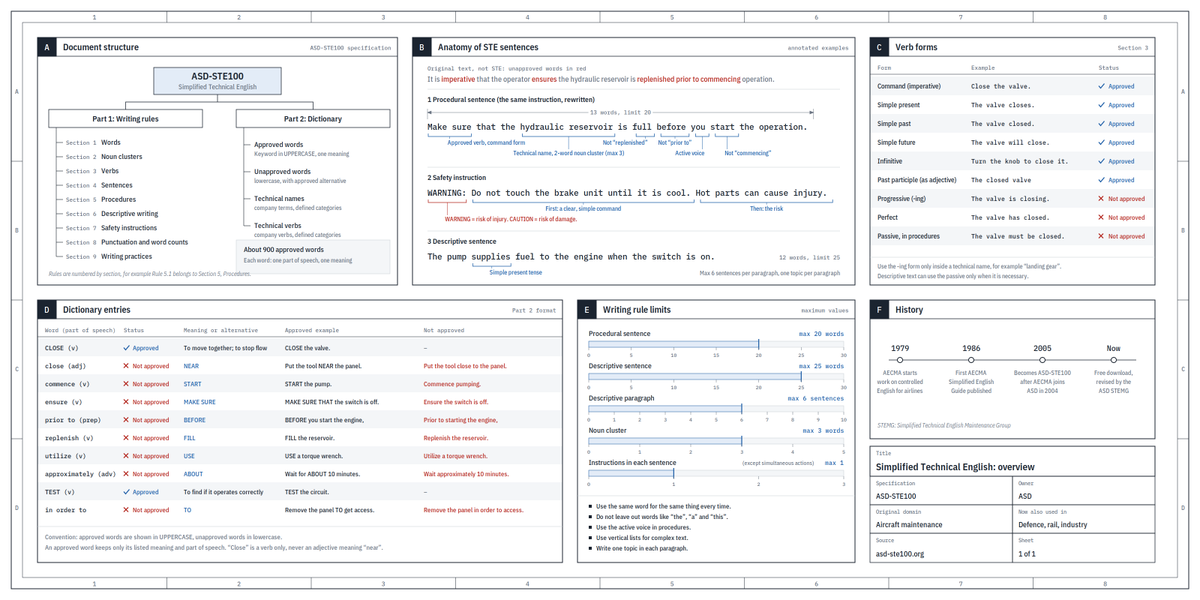
Writing. Something I've had success with: Ask your LLM to explain something in ASD-STE100, it's a controlled language specification originally developed for aerospace maintenance documentation. LLMs well-versed in this language and it comes with heavy constraints on clean writing style that I often find a lot more readable. Sometimes I've tried to soften it a bit e.g. ask for "80% of the way to ASD-STE100" because the spec is quite stringent. But even better:
Diagrams / images. Instead of writing, ask your LLM to create a diagram. These can be a lot easier to process, parse, and understand. But even better:
Web pages. Ask for output "in HTML" to get a beautiful, interactive webpage. LLMs are getting really good at frontend and can create beautiful experiences, animations, etc. But even better:
Explainer videos. The output format I am most bullish on is fully custom / bespoke explainer videos generated on any arbitrary topic. Experiment with things like "Create a 3b1b style video explainer on X. Use my ElevenLabs API key for audio narration". (you'd need an API key for the latter or you can ask your LLM to find you decent free alternatives that use your local compute). This is actually starting to work!
In summary:
- As LLMs get better, they will do more and more of the legwork autonomously, and a lot more of our work will rise up the abstractions into oversight and understanding.
- Luckily, LLMs can help here too because as intelligence and code are increasingly abundant, you can ask for large, custom, discardable software artifacts (e.g. web apps, video explainers) that would have never made sense to create before. Push the boundaries here and you'll be surprised.
Harness Engineering could be the missing layer between smart models and reliable AI agents.
It gives agents context, safe tools, durable state, verification and recovery.
In this article, I show you how. https://t.co/RwgSSyxHUx
Claude can now help you build evaluations and hillclimb on them.
In this article, we share guidance on eval design & skills that Claude Code can use to improve your applications.
https://t.co/PgKFC2DWth
How to maximize the value of your Claude Code sessions: https://t.co/YGa8swOX6v
Solid guidance on managing token efficiency and keeping context windows focused by @lydiahallie
I have built same project side by side with codex as well as claude code
Codex is so smooth like vanilla ice cream !
Also, it never stops trying if you're stuck , always finding new ways to solve.
Morever, i use skills. Codex never skips them while Claude when context become large, it may skip it frequently until i remind it again via prompt !
Beside, I found token usage wise, codex is manging those lot better. I mean it achieve more , get more done in codex in a single day in comparison to claude code
@aiseomastery@lydiahallie Isolated context window is major plus point but I am always vary of sub agents auto execution and consuming too much tokens !
The more I read about graph engineering, the more it looks similar to making multi agent architecture more efficient.
Split the task into multiple agents(one job for each), make effective loops for each of them and merge result back.
Doesn't that look similar to Hub and Spoke Agentic design pattern?
I mostly used claude code till now.
But recently , I've used both codex and claude code to implement same project.
Actually used each other as back up of other in case I'm not able to achieve my goals with one.
And it was in preperation of hands on exercise given by salesforce for (hands-on) technical architect interview.
I set up project in same way
Same skills, same instructions in claude.md(agents.md for codex) and to be frank blown by codex performance.
These are my few observtations
1. Codex followed my instructions in Agents.Md more diligently . Infact never once, it missed those. Claude code was in-fact start missing them, when context become very huge.
2. I made the project plan and followed with both of them, step by step. The steps which are challenging for Claude code was challenging for Codex also. But to my surprise, codex was more innovative in finding solutions whether connecting to web or asking questions from me to confirm things(which it can't code do). Mostly I resolve them with codex help. Claude code got kind of stuck in such scenario
3. I find codex comparatively very fast, when I ask it to update documents. Claude code take some time . Also unsure but language of claude code was tough( may be because of lack of proper instruction)s but at same time Claude code documents are professional and easy to understand.
4. Pushing to Git- This is where Claude code excel. it can push without CLI but codex keep asking for github CLI
5. Sometimes initial connection time of codex(in VS Code) is quite large in comparison to Claude code.
In the end, i demoed the project using Codex. Not saying Claude code is bad in any sense but codex experience was far better !!
Andrew Ng just released a 1-hour course on building agentic knowledge Graphs from scratch:
• 00:00 - Introduction to agentic knowledge Graphs
• 03:07 - Construction of agentic Graphs
• 14:00 - Architecture of multi-agent systems
• 23:00 - Building agentic graphs with Google ADK
• 01:06:03 - Why Graphsare the future of agentic AI
Worth more than 10 articles on loop engineering.
Watch it today, then read how to become a graph engineer in the article below.
this is f*cking gold
Andrej Karpathy joined Anthropic five weeks ago.
A friend on his team just showed me the exact LOOPS.md file he actually uses.
I dropped it into my setup. The very first response was different.
Not slightly different. Completely different.
Claude stopped giving generic answers and started working exactly the way I think.
You don't talk to the model anymore. You build the system that talks to the model for you.
Bookmark it before it gets lost in your feed.
Read it now, then check the article below.
Anthropic engineer:
"You can build 5 assistants in one afternoon. Each one handles a task you've been doing manually every single day."
In 45 minutes he shows exactly how to do it from scratch, step by step.
Most people are still doing all of this by hand.
Watch the session, then save the guide below.