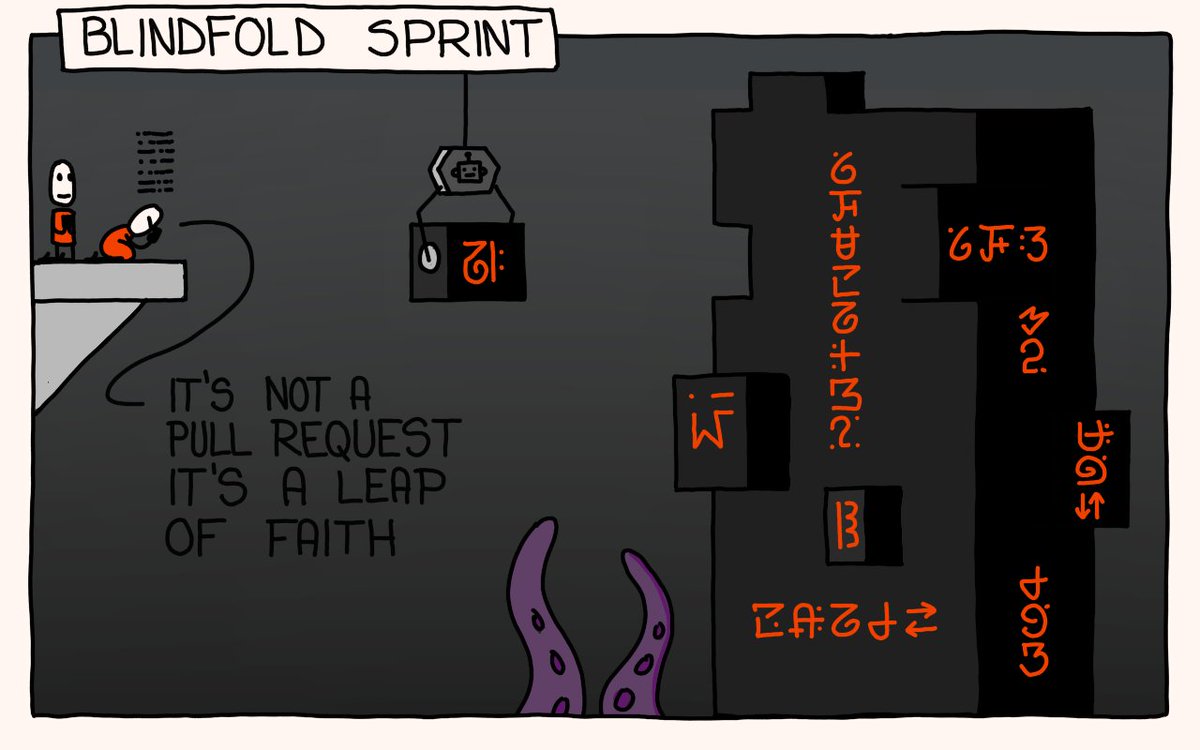
@akhilkarun I never had any courses or a path as an artist. I just doodled my entire life. The actual quality of the comics is rather low but it was a way for us to deliver fast
Building applications with AI today feels like using Macromedia Dreamweaver back in the day: magical, confusing, and you’re never quite sure if it’s going to look the same in Internet Explorer.
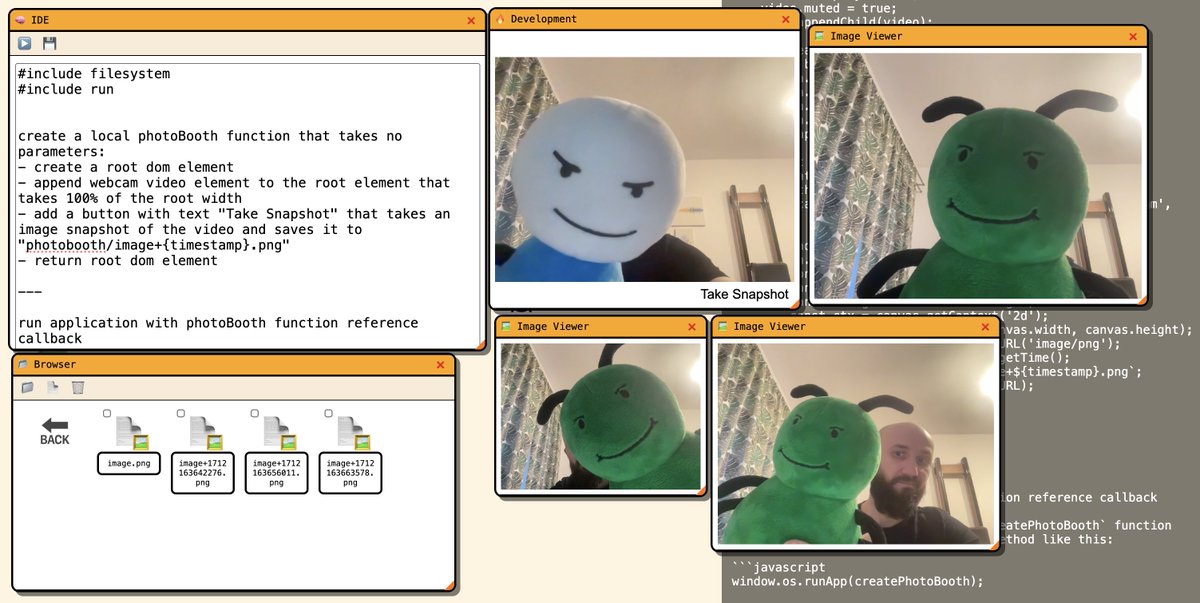
Imagine the possibility of interacting with your operating system through natural language. Now, envision this operating system being fundamentally built on natural language instructions. Codebase: https://t.co/r8wRWlZkKl
@karpathy Inspired by this statement and this link: https://t.co/AN3ECE0b1q I've decided to give it a try and compiled a WebOS purely from LLM prompts. You can check it here: https://t.co/r8wRWlZkKl. Thank you!
With many 🧩 dropping recently, a more complete picture is emerging of LLMs not as a chatbot, but the kernel process of a new Operating System. E.g. today it orchestrates:
- Input & Output across modalities (text, audio, vision)
- Code interpreter, ability to write & run programs
- Browser / internet access
- Embeddings database for files and internal memory storage & retrieval
A lot of computing concepts carry over. Currently we have single-threaded execution running at ~10Hz (tok/s) and enjoy looking at the assembly-level execution traces stream by. Concepts from computer security carry over, with attacks, defenses and emerging vulnerabilities.
I also like the nearest neighbor analogy of "Operating System" because the industry is starting to shape up similar:
Windows, OS X, and Linux <-> GPT, PaLM, Claude, and Llama/Mistral(?:)).
An OS comes with default apps but has an app store.
Most apps can be adapted to multiple platforms.
TLDR looking at LLMs as chatbots is the same as looking at early computers as calculators. We're seeing an emergence of a whole new computing paradigm, and it is very early.