@inferredbylisa@theakshsharma This is difficult, because each individual has different motives.
Scientists have immense curiosity in their field, engineers like to build, and entrepreneurs like to lead and solve problems. It’s very hard to be all three since you cannot truly subscribe to all 3 mindsets.
@alz_zyd_ you could say that for any sector actually. in general if people work very well together, things get done fast without many issues
its just that finance functions dont run well most times
Pursuing true causality in a set might not be worth if your correlation matrix is already incredibly accurate. most times mimicking P(x|y) is significantly better using attention compared to P(x|do(y)) since its incredibly difficult to get right via dag based scms.
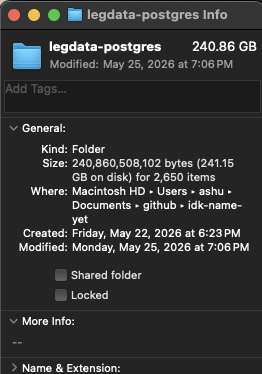
at my current ingestion rate for gov data, i will run out storage. (1tb). 800 of those gigs are just data.
may have to scale to fast storage online, any recs?
@justinskycak I’d agree to an extent, having foundational knowledge in something very niche can allow you to pattern recognise in a different way
building is great, but learning unorthodoxically with future application is arguably better
@zekramu this very true, the skill of understanding where to save money and if u need to build, how to build effectively is heavily under-appreciated.
its execution and workflows that changed not rlly system design, which is demand
@0xglitchbyte idk, rust is a very good language for perf, memory usage, and structure
not saying it should be used everywhere but for high perf systems.. id argue it should