India is about to face a MAJOR semiconductor bottleneck.
The Government of India has approved ~13 semiconductor projects under the India Semiconductor Mission, across 7 states. Three of these are full/compound fabs. Things are ramping up FAST, with ISM supported by an incentive framework of ₹76,000 crore.
But one massive question mark remains: where is the talent going to come from? The money is there. The fabs are going to be there soon. But what about the many thousands of skilled technicians required to run these semiconductor fabrication plants? Much of the knowledge in this industry is tightly-guarded trade secrets kept under lock and key by the nations that lead global semiconductor production.
One way India can quickly close this knowledge gap is by ensuring that young people across the country are learning how to fabricate semiconductors from first principles. Ideally at the university level if not earlier. But because this is an entirely new industry segment in India, most of the country’s top colleges haven't caught up. Semiconductor fabrication is not accessible to Indian students. Until the Graduate or PhD level, most students never even get to touch a silicon wafer.
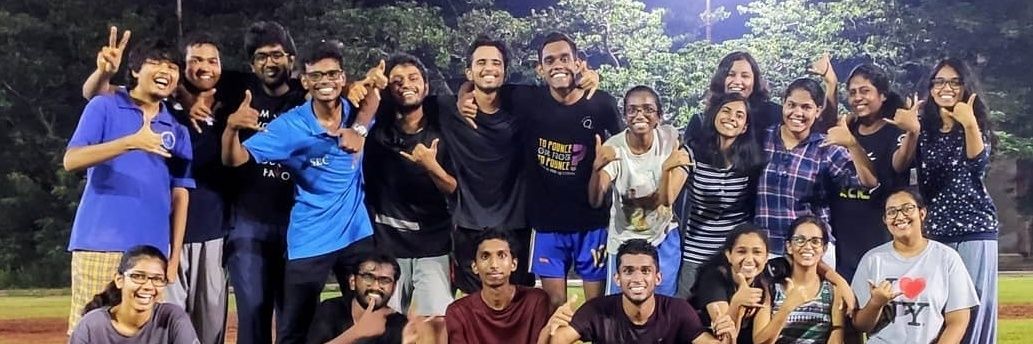
A group of 15 students at IIT Bombay wants to change this. 10 months ago they launched the HackerFab at IIT Bombay. So far, they’ve raised ₹30 lakh to built DIY machines like a DLP-based lithography machine, a tube furnace to oxidise silicon, and a DC plasma sputter.
They realised that existing institutions weren’t going to give them the early education they needed to develop REAL chip fabrication experience, so they took up the challenge themselves and created everything from scratch.
HackerFab IITB is one of the most important developments in India’s semiconductor story, not just because the students passing through this programme will become leaders in India’s future semiconductor industry, but because they’re open-sourcing the India-specific recipes they’ve developed to build their machines and processes. They’re doing this so that other Indian colleges can replicate their work. No more gatekeeping.
This movement started at IIT Bombay, but it will spread to other Indian colleges soon. As a result, India will see young people graduating from college with practical semiconductor fabrication experience first the very first time.
The Union Government has launched "Abhigyan", a mobile application that allows police officials to capture fingerprints on a smartphone and match them against the National Automated Fingerprint Identification System (NAFIS) within seconds. The app significantly expands the reach of biometric identification in India. 1/n
Read More: https://t.co/q1OTycUJJB
Statement : Shutting down Telegram is a band aid solution and is a disproportionate answer to exam fraud
The Internet Freedom Foundation objects to the directions announced today in the National Testing Agency's press release on action against the Telegram platform. On the NTA's recommendation, the Ministry of Electronics and Information Technology has, under Section 69A of the Information Technology Act, 2000, restricted access to the whole of Telegram in India until 22 June 2026, and has separately ordered the platform to switch off message-editing for every Indian user until 30 June 2026. This is a blunt, nationwide measure aimed at the conduct of rampant fraud rackets, and on the Government's own admission is constitutionally incompatible.
At the outset it is important to note that Section 69A and the Blocking Rules of 2009 framed under it allow the Government to block access to specific “information” on a computer resource. They do not extend to switching off an entire intermediary, still less to ordering a company to redesign its product by removing a feature for a whole country. In Shreya Singhal v Union of India, the Supreme Court upheld Section 69A because it is narrow and hedged with procedural safeguards. Reading it to authorise shutting down a platform that lakhs use is an overbroad restriction by the NTAs own admission. For the message-editing direction the release identifies no source of power at all. If one exists, the order must say so.
The release argues against itself
A restriction on access has to be the least intrusive measure that achieves its aim as per the constitutional test of proportionality laid down in Justice K.S. Puttaswamy v. Union of India (2017) and applied in Anuradha Bhasin v. Union of India (2020). The NTA's own narration shows the block fails its nodal agency, the release says, “has secured the prompt take-down of a substantial number of Telegram channels, groups and bots”, and this targeted work “is the reason the harm caused by these rackets has been contained to the extent it has”. If channel level takedown contained the harm, the case for a blanket block collapses and hence the Government has reached for a heavier tool while conceding that a lighter one was working. The collateral cost sits on the record too as noted in the press release. The block, the NTA accepts, “affects lakhs of citizens who use the Telegram platform for legitimate personal, educational, professional and informational purposes”. The release also says there is "no such paper available outside the secured examination chain" and that “the security of the examination is unaffected by the action taken”. If the exam is secure and no leak exists, what is being suppressed is rumour, and rumour cannot justify closing a platform when specific blocking and criminal prosecution remain available.
Students use of Telegram
The block of telegram is reactive and ineffective and will punish ordinary users instead of addressing the systemic source of exam leaks. This blocking comes in the final days of NEET preparation, when thousands of students depend on Telegram for study groups, doubt-clearing, and shared resources. Also, it is important to consider that the source of exam papers leak will occur from inside the system, among insiders and across the printing and logistics chain, with the platform being the most downstream channel for distribution. Hence, switching off Telegram, is merely a deflection from the repeated failures that will continue while media attention is directed towards this Telegram ban.
Lack of transparency
At present only a press release from the NTA has been provided, which recommended the block but the reasoned order of MeitY, the authority that issued it, has not been released. The Anuradha Bhasin decision requires that orders restricting access be published so they can be tested in court. Here the order, and the reasoning of the committee behind it, stay out of view, and we do not know whether Telegram was heard at all. An announcement of a block is no substitute for an order the affected party can challenge.
Blunt to enforce and very easy to evade
Usually, app-level blocks run through IS-level DNS and IP filtering. They are over inclusive, sweeping in lawful use, yet simple to evade as a determined exam leak racket moves to a VPN or a mirror within minutes while ordinary users lose the service for a week.
We ask the Government to:
1) Publish the MeitY Section 69A order and the NTA recommendation behind it, with reasons;
2) State the legal basis for the message editing direction, or withdraw it;
3) Confirm whether Telegram was given a hearing under the Blocking Rules, and place the committee's record before any court that hears a challenge; and
4) Lift the platform-wide restriction and rely on the targeted takedowns the NTA itself credits with containing the harm.
We emphasise that the NEET (UG) 2026 re-examination is worth protecting and it concerns the future of lakhs of aspirants. It requires securing the entire process of examination rather than reaching for purported band aid solutions that instead cause more harm. The State cannot switch off a service used by lakhs to answer the wrongdoing of a few, and cannot do it through an order no one affected is allowed to read. On its own facts, the Government has done both.
New Delhi, 16 June 2026.
wishing death on someone is so funny like... they are going to die... such is life... why are you wishing for an eventuality when you could be wishing for non-death outcomes which are far more random
Purchased the FIFA WC'26 + All Access plan based on the advertised "3 Devices" benefit and faced the same issue?
Sign here
https://t.co/A3eQmgDUnZ
Report it here: https://t.co/8B7yioY4Mw
Reply below if you're affected.
@jagograhakjago @CPC_India
#ZEE5
"Trust, me bro!" is not a satisfactory response given the available evidence in the public domain and the specific incident reports to CERT-In. IFF reiterates 4 demands it has made yesterday. 👇
ExpressVPN, @torproject, Tuta, Mozilla, @EFF and Mullvad, alongside 13 other organizations advocating for digital privacy rights, have published an open letter.
In the letter, they express serious concerns regarding the age verification measures planned for implementation across the internet following the introduction of a new child protection law.
The organizations argue that forcing users to prove their age across most websites and online services could severely undermine privacy, anonymity, and the open nature of the internet.
The central message of the letter is that protecting children should not come at the cost of jeopardizing the freedom, security, and privacy of all internet users. The signatories are calling for more balanced, privacy preserving solutions to be developed instead.
The 19 organizations that signed the letter are:
1- Big Brother Watch
2- Defend Digital Me
3- Electronic Frontier Foundation
4- ExpressVPN
5- Gamers Voice
6- Global Partners Digital
7- Index on Censorship
8- Internet Society
9- Mozilla
10- Mullvad
11- IPVanish
12- NO2ID
13- Open Rights Group
14- Privacymatters
15- Proton
16- Stop Killing Games
17- Tor Project
18- Tuta
19- VPN Trust Initiative
I'm being asked about Airtel's postpaid plan where they are providing priority service for Airtel customers. Here's my take:
As per my understanding of current Net Neutrality regulations, creating plans with higher speeds for does not violate Net Neutrality, as long as you don't prioritise speeds for specific apps, services or sectors, or price access to different apps, services or sectors differently.
It's important for TRAI to look into this, because this rollout should not lead to the degradation of experience for other customers of Airtel.
Just because 5G technology is capable of network slicing, doesn't mean that network slicing is used to discriminate between apps, services or sectors either on speed or data pricing.
I think principle that Vishal Misra @vishalmisra, professor at Columbia University, had given us for Net Neutrality, that "the Internet must be maintained as an open platform, on which network providers treat all content, applications and services equally, without discrimination" should determine how we look at these developments.
A new Grt Nic Project Timeline - updated till Dec 2025. Nearly 350 dates, access to 800+ docs incl proposals, scientific papers, mins of meetings, court orders, everything...Scan the QR or access here: https://t.co/vfOHM13pOH For more info write to me at [email protected]
While Kerala is busy celebrating the election results, one question is worth asking.
How many more years will we continue to complain about the same potholes, garbage piles, and broken streetlights without any real accountability?
We all have seen people sharing videos of broken roads and potholes. Journalists and Media houses are doing special presentations on TV, yet nothing changes.
The complaints stay loud for a few days and disappear.
Muhammed Roshan P S just changed that.
He built ParathiPetty (പരാതിപ്പെട്ടി), a live online public complaint box that runs entirely on WhatsApp.
You spot a civic problem, such as a pothole, a garbage pile, a broken streetlight, or a waterlogged road. You click a photo and send the location.
ParathiPetty classifies the issue and pins it on a public map, and shows live district-wise civic issue trends on a leaderboard.
No app. No signup. Phone numbers hidden. Only verified reports go public.
He has turned individual complaints into a permanent, public, searchable civic map, giving ordinary people the power to raise issues in a way that local politicians and officials cannot overlook.
My biggest takeaway?
->This isn’t just another complaint tool.
->This is accountability infrastructure.
This is the kind of grounded, practical innovation we celebrate at Kerala Product Hunt.
Huge respect to Roshan for not just talking about problems, but building a system that forces them to be addressed.
Try it here: https://t.co/hdwimwvuff
Would love to hear your thoughts below on how tools like ParathiPetty can help drive meaningful accountability in our communities.
Eat all mangoes. Eat every mango you can. The small, juicy, fibrous, nameless ones you pluck off that old tree down the gully. The planted-a-Dussheri-seed-but-never-grafted Dussheri-ish mango from your masi’s garden in Bhopal.
Blushing Sindhuras. Sweet Kesars. Yes eat as many of those beautiful Alphonsos from Devgad packed carefully in cardboard boxes as you can. But also eat Pairi, Neelam, Ratna. And Sindu - a cross between the Ratna & the Alphonso which is slowly gaining more ground because climate change has wreaked havoc on the finicky Alphonso - ask farmers, yields have been down for a few years now, talk to farmers.
Eat with the season.
Eat the early mangoes from the south - Mankurad, Badami, Banganapalli, Imam Pasad in late April-May.
Eat your middle-India mangoes - Kesar, Bombay Green, and also Malgova and Mallika which are late season bloomers from the south, and your Himsagar, Gulabkhaas, beauties from Malda and Murshidabad - try to lay your hands on a Champa, Saranga, or Kohitoor in May-June!
And go both hands in, into piles of Amrapali, Chausa, Malihabadi Dussheris, Langdas in July.
This is just the tip of the mango iceberg, there are so many more loved & delicious varieties - India has near 1,500 varieties of mangoes.
Why would you eat just one? Of course have your favourites but also look at our beautiful biodiversity - please cherish it! Eat widely. Eat greedily. Eat because these mangoes are so delicious. Eat in RESISTANCE TO LOSS, eat like these mangoes might disappear because some of them already are!
In a 3-hour window, platforms are expected to verify the completeness of a notice, check the authority of the officer issuing it, and ensure the correct legal provisions are being applied. That’s a significant procedural burden in a very limited time. - Rakesh Maheshwari, Former Sr, Director MeitY on new compliance timelines.
The government’s latest changes to the IT Rules now push for constant AI-content labelling across all platforms, raising fresh questions on feasibility, free expression, and transparency. Public consultation is open till 7 May.
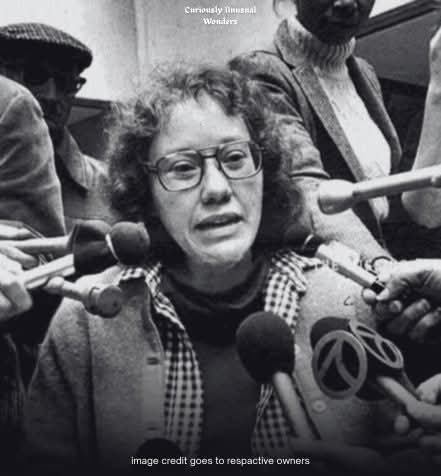
The FBI cut the phone lines during the 1977 disability rights sit-in. Then they turned off the hot water.
They locked the doors from the outside. One hundred and fifty people were trapped on the fourth floor. Half of them used wheelchairs. The government assumed they would leave.
Kitty Cone was thirty-three. She had muscular dystrophy. Her muscles were failing, but her logistics were flawless. She knew how to organize people.
The federal government had promised to sign regulations protecting disabled Americans from discrimination. The policy was known as Section 504. They printed the promise on paper. Then they stalled. Without a signature, it was just typography.
The protesters entered the regional Health, Education, and Welfare building in San Francisco on a Tuesday morning. They took the elevators to the director's office. They brought sleeping bags and catheters. They informed the staff they were not leaving until the law was signed.
By sunset, the police surrounded the exits. Kitty sat near the windows. She organized the floor plan. She assigned committees for security and sanitation. She kept her medication in a small cooler.
According to federal memorandums released decades later, the strategy to end the occupation relied on medical attrition. The building was not equipped for long-term habitation. The FBI calculated that a population requiring ventilators, specialized diets, and daily medical aides would voluntarily evacuate if the environment became sufficiently hostile. They instituted a blockade.
The blockade went into effect immediately. No food deliveries allowed. No medical supplies permitted through the lobby. Guards stood at the main doors checking identification.
Kitty's muscles deteriorated faster under the physical strain. She couldn't walk. When the phone lines went dead, the fourth floor lost contact with the press. The government waited for the quiet.
Kitty dropped to the floor. She realized the barricades were designed for standing adults. The police had blocked the hallways at waist height. They hadn't blocked the linoleum.
The floors were covered in cigarette ash and spilled coffee. She dragged her body through it. She crawled under the barricades to reach the restricted elevator shafts and unguarded offices.
She carried notes in her pockets. She found a single working payphone the FBI missed. She called the local news desks. She called the mayor's office.
She crawled back. When her arms failed, someone pulled her by her ankles. The Black Panthers heard the news reports. They crossed the police lines with hot meals. The FBI could not stop them without a riot.
They shut off the elevators, so she crawled.
The occupation lasted twenty-five days. It remains the longest non-violent occupation of a federal building in American history. On April 28, the Secretary of HEW signed the regulations without a single alteration.
The protesters left the building the next morning. They went back to their apartments. The Rehabilitation Act regulations laid the groundwork for every accessibility law that followed. The HEW building still stands on United Nations Plaza. The elevators run on a schedule. The doors are heavy glass.
Kitty Cone: the woman who crawled under the barricades.