@davidfolkenflik Hello David! I'm Edriana, a journalism student at Skyline College. As a journalist, when do you think you should abstain from covering a subject or event?
PETER SCHWEIZER: "I could read you, literally, dozens of quotes from Mexican presidents, Mexican senators, prominent people in journalism that say they are using mass migration as a means to reconquer or retake the territories that were lost to them."
"They have created an infrastructure in our country...there are more than a dozen senators and members of their house of representatives, of the Mexican congress, who live in the United States."
This post reflects ongoing discussion about how journalists use anonymous sources and how much attribution is needed for a quote to be meaningful in political reporting.
This line from Axios this morning is why I sometimes give up on inside-the-beltway journalism:
“‘The president is the most bloodthirsty, like a mad dog,’ another U.S. official said.”
US official? That could be Bernie Sanders. Or Melania. Or an intern at the Department of Agriculture.
The press gives away anonymity like a good neighbor on Halloween gives up candy.
This is a meaningless quote unless we are told who said it. It brings no value to good reporting.
The Career Closet is open on April 16 from 11 a.m. to 1 p.m. in Building 1, Room 1‑311. Students can pick up free professional outfits for interviews, conferences, and other career‑related events.
The Spring 2026 Career Fair takes place on April 14 from 10 a.m. to 2 p.m. in the Farallon Room. Students can meet employers, explore internships and job opportunities, and create connections across multiple industries.
At @RestoringWest, we examine the deeper crises facing our universities. In this essay, @jarobinson1 explains why polling only the parents of college graduates creates a classic case of survivorship bias—and fails to capture the growing public skepticism toward higher education.
https://t.co/tX6u6CHPS4
How do you make a university run better? Purdue Polytechnic's Chad Laux co-authored a new book bringing real-world, global case studies on operational excellence to higher education. https://t.co/kiBhNVOMgS
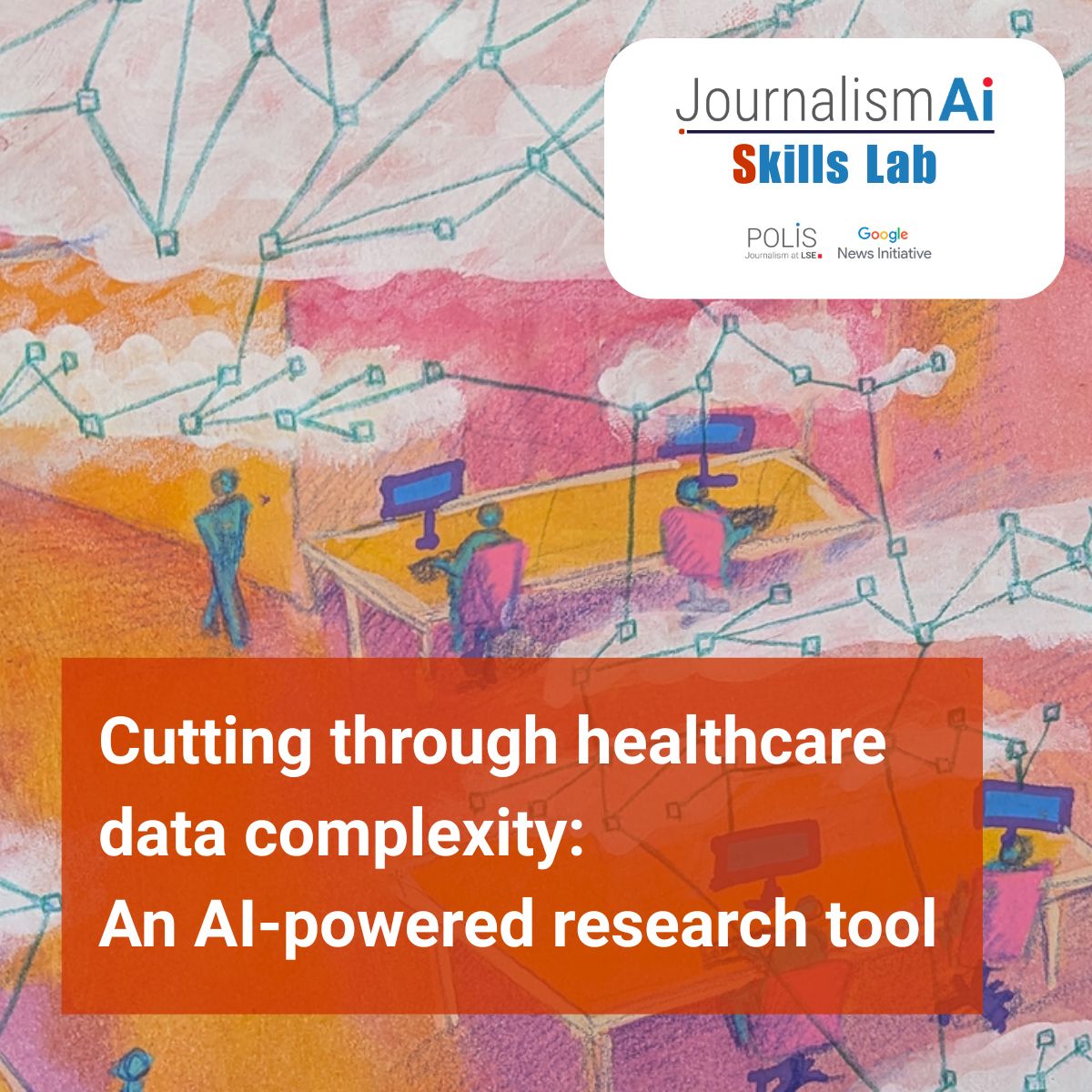
Fragmented data can stall investigations.
During the #JournalismAI Skills Lab, Niels van Nimwegen built a RAG-powered chat tool that lets journalists query complex healthcare datasets, no Python or R skills required. A version 2 is now in development at Pointer, KRO-NCRV.
👇
Transparency is the starting line.
Judgment is the real work.
In high-impact domains like journalism, AI will not remain a disclosure problem.
It will become a process & accountability problem, whether we design for it or not.
#JournalismAI#GenAI#FAIRNews
Rapid development of #AI is already changing how journalists operate. Reporters, editors, executives, and others across the news industry share their advice on how to engage—and where to draw the line. #AIjournalism
https://t.co/opWMIT46EJ
The other day I bought a magazine that looked interesting.
At home, I read the issue cover to cover with a highlighter, marking the things I had not seen before.
When I finished, I searched every item I had highlighted.
Every single one had already been reported somewhere else - often weeks earlier, sometimes months - and it made me realize something uncomfortable:
If nothing inside a publication is truly new, the entire issue could now be generated with the right prompts - from the layout to tone, design and even the articles themselves. No newsroom required.
So does that mean journalism is dead?
Of course not.
But it does mean journalism is entering one of the most important transitions in its history.
I spent more than 20 years in media and have many friends in the profession whom I deeply admire and respect. So this realization felt personal.
For most of its history, journalism controlled the means of production and distribution.
Over the past 20 years, distribution became democratized through digital and social media.
Now we are seeing the same thing happen to production.
Anyone can publish, the algorithms can generate and AI can remix almost everything that already exists.
For most of journalism’s history, writing was the scarce skill. In the age of AI, discovery is.
This means the value of journalism can no longer simply be producing content. Rather, the value must be in producing new knowledge.
In a world of AI, journalism becomes data. And the most valuable data in the world is "new data" into these systems, specifically: breaking news and / or facts the public does not know.
But journalism has always been more than discovery.
It is also verification, context and trust.
And that combination is something machines still struggle to produce - something trusted reporters and institutions can still provide. Because in a world where AI can generate infinite stories from existing information, the journalist’s role becomes clearer than ever:
- Discover something new.
- Verify that it is accurate.
- Bring it into the light.
AI can generate stories. Journalists find what the world does not yet know.
Is this moment unsettling? Yes.
But it is not the end of journalism. It is the moment that reminds us what great journalism is really about.
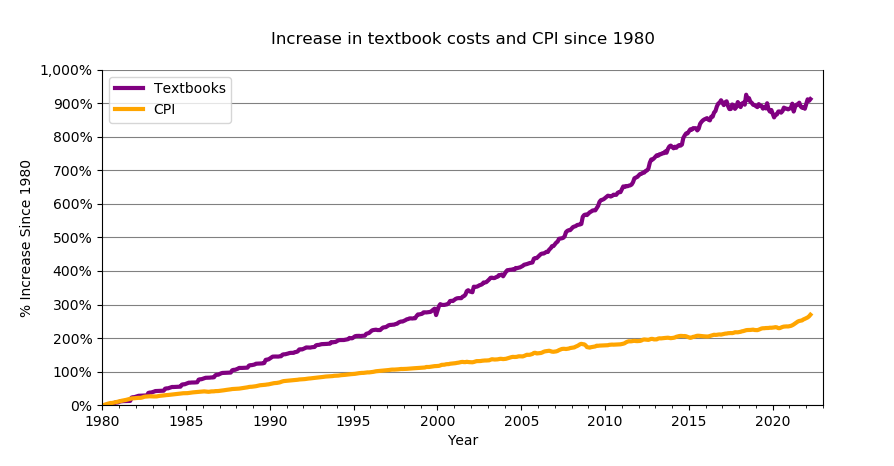
A price increase in textbooks is becoming a serious problem! CSM will be demonstrating this through an interactive display, showing how much students are spending on textbooks.
Learn more about how rising costs are affecting students at the CSM Library, March 2-8, 8:00am-3:00pm!
Deadline for FAFSA is tomorrow 3/2! Join Skyline's FAFSA workshop in building 5, Room 102 from 10am to 4pm for help with the application or any questions!
Did you know Skyline College hosts events and conferences? Skyline College has over 9 facilities available, including the beautiful Farallon room! Visit https://t.co/PIASo2OzKB for more info and event requests.
Skyline College Library is hosting a traveling photography exhibit by Brad Temkin, The State of Water: Our Most Valuable Resource, from Jan. 28–Mar. 16. Open to students, faculty, staff, and the community from 9 a.m.–5 p.m.
https://t.co/Eb5ukKPij7