If you'e never read The Falling Man, you should do so. I post this on September 11th every year, and I find time to read it on this day every year. Still, in my eyes, the greatest piece of journalism I have ever read. https://t.co/gZgwzRoSgX
Fascinating paper shows that people with similar neural responses are more likely to become friends months later.
The authors studied an incoming MBA cohort. Before the students had really interacted, they were put in an fMRI scanner and shown movie clips.
Then the researchers reconstructed the social network of the cohort two months later and again eight months later.
The results are incredibly fascinating.
People whose brains responded more similarly to the same movie clips were more likely to become friends.
And, even more interestingly, people who grew closer over time had been more neurally similar before they met than people who drifted apart.
This does not mean that friendship is “written in the brain”.
Circumstances matter, proximity matters, gender and other demographic similarities matter.
But the paper suggests something deeper.
Friendship is not only built through shared experience.
Some friendships may be rooted in a pre-existing similarity in how people process the world.
Some friends may literally be on the same wavelength.
*
Full paper in the first reply
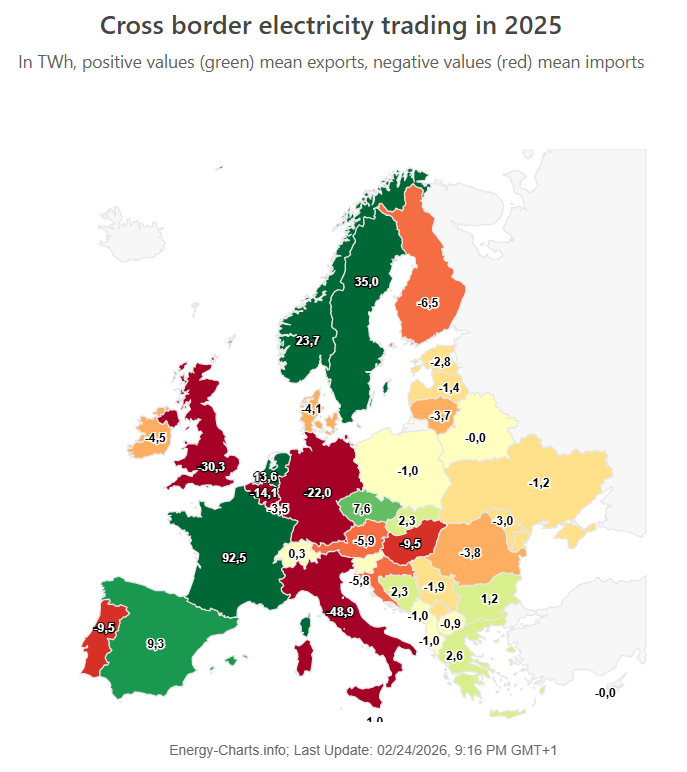
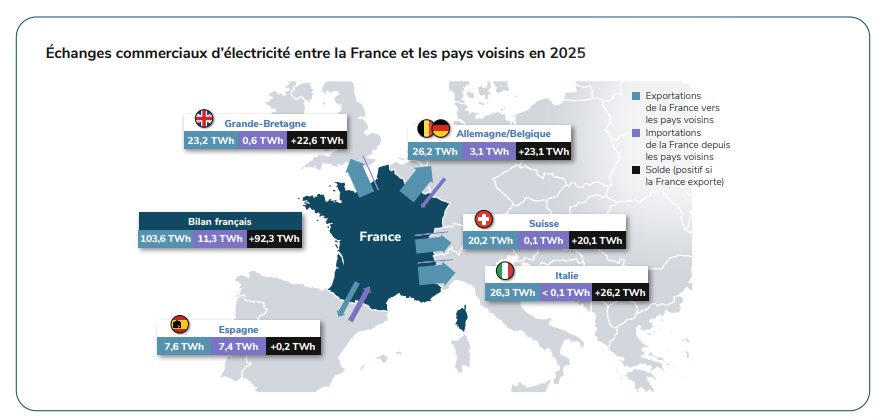
Last year, France sent us 22.6 terawatt hours of (mostly nuclear) electricity, about eight percent of our total.
It also sent Italy 26.2 terawatt hours, Germany 23.1, and Switzerland 20.1
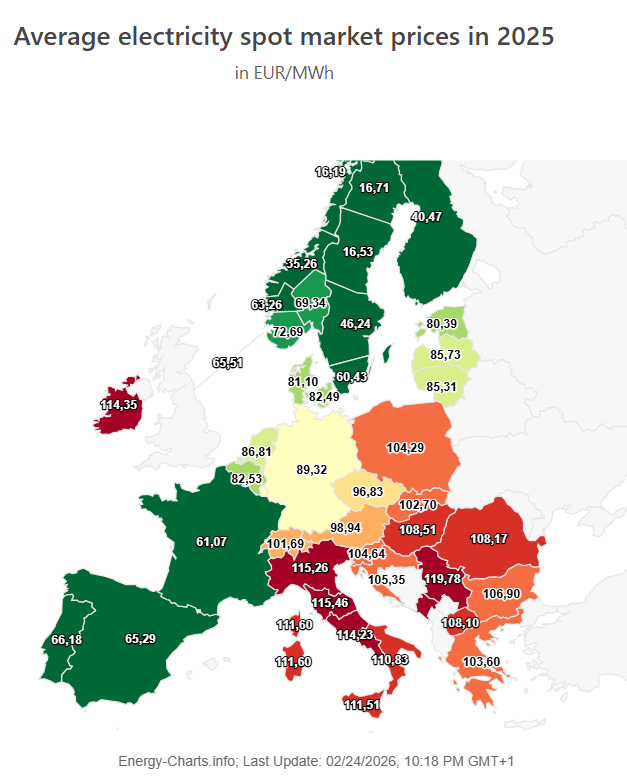
Ours and Germany's crazy energy policies would cost us a lot more if France wasn't, kindly, running a reliable nuclear grid, producing Europe's cheapest non-hydro electricity.
Thank God for France!
https://t.co/vIj4Sdpfky
Also, stop highlighting the counterintuitive, the rebel, the heretic, the surprising, the paradigm-overturner, together with clickbait like "Was Einstein Wrong?" "Was Darwin Wrong?" (Answer: Yes, but probably not about yesterday's claim). By definition these ideas have low Bayesian priors, so they're less likely to be right even if the new study was bulletproof, which it probably is not. This style of science journalism selects for the nonreplicable, undermining public confidence in science.
Some of the mental health crisis in Gen X & Millennials comes from being told that climate change will inexorably end civilization, humanity, or all life (rather than being a serious problem we should figure out how to solve). Who'd look forward to the future with that prophesy? Chelsea Follett @chellivia argues: The Kids Need [Rational] Optimism, Not Doom and Degrowth. https://t.co/SyNd6rmQY4
Bella infografica "reale". Nei cerchi rossi si vede la coltivazione della patata transgenica Victoria 3R, resistente alla peronospora, un fungo distruttivo, in assenza di fungicida (pesticida). In quelli blu, la patata Victoria tradizionale, sempre senza fungicida. In quelli marroni, sia Victoria che Victoria 3R in presenza di fungicida.
Come si vede, l'adozione della patata transgenica, che modifica solo la resistenza al fungicida,* evita il pesticida. L'adozione di Victoria 3R è un modo per aumentare in modo sostanziale i raccolti in contesti dove la peronospora è molto invasiva, distrugge i raccolti e porta alla fame e alla morte, come in Uganda.
Aver fiducia nell'intelletto umano è doveroso.
*si potrebbe dire, in modo molto semplice, che è un approccio tecnologico per attuare una selezione artificiale in tempi brevi e riportarla in natura
@elite_ajax001@BehizyTweets@AskPerplexity No evidence supports the claim that the government spent $1B on a survey about liking National Parks. Fact-checking debunks it as an exaggeration, likely from Elon Musk. The NPS 2025 budget is $3.57B total, with surveys costing far less.
Anche Giuseppe Conte cita un famoso articolo di Foreign Affairs per dire che si poteva fare la pace già nel 2022 a Istanbul, ma Boris Johnson, un europeo, la fece saltare. Però nell’articolo di Foreign Affairs gli autori scrivono: “La versione secondo cui l’occidente avrebbe costretto l’Ucraina a ritirarsi dai colloqui con la Russia è senza fondamento”. Sono 11 mesi che nei programmi televisivi opinionisti e politici citano quell’articolo e nessuno – né chi lo cita né chi intervista chi lo cita – lo ha letto. È lungo, ma è pubblico, è qui:
Vent’anni di ricerche spazzati via in una notte.
Pochi giorni fa è stato distrutto il vigneto sperimentale dell’Università di Verona a San Floriano, in Valpolicella.
Questo atto vandalico segue un caso analogo avvenuto lo scorso giugno nel Pavese, dove un campo sperimentale di riso modificato con la tecnologia CRISPR-Cas9 fu devastato.
Entrambi gli episodi sembrano parte di un’azione organizzata contro l’innovazione scientifica in agricoltura: un’azione che danneggia non solo i ricercatori ma l’intero settore agricolo e ambientale.
Le Tecniche di Evoluzione Assistita (TEA) utilizzate in questo progetto miravano a sviluppare viti resistenti alla peronospora, una malattia che causa gravi danni alla viticoltura e richiede l’uso intensivo di fitofarmaci.
L’adozione di queste tecniche avrebbe potuto ridurre del 70% l’uso di trattamenti chimici, con benefici significativi per l’ambiente e la salute pubblica.
Questo atto di vandalismo non è solo un attacco alla ricerca scientifica, ma anche un esempio lampante di mentalità NIMBY, dove l’opposizione locale a progetti innovativi e sostenibili ostacola il progresso scientifico.
L’unico modo per crescere in maniera sostenibile oggi è sostenere in tutti i modi la libertà e gli investimenti in ricerca e l’adozione di tecnologie più sostenibili e innovative. Altrimenti, mentre il mondo va avanti, noi continueremo a restare indietro.
@nanoscalebiomed@bravimabasta Che poi, "il cosiddetto woke", come se si negasse l'esistenza dell'intero movimento culturale. Eppure conoscerne la storia, la genesi ed il decadimento degli ultimi tempi aiuterebbe a farsi un'idea del recente fallimento della sinistra, statunitense e non