Este año fue el primero en el que el examen de admisión a la UNAM se aplicó en línea.
Analicé tres carreras: Medicina, Actuaría y Ing Aeroespacial. En todas los aciertos se recorrieron a la derecha muchísimo.
Muchos han dicho que fue por trampa, aquí los datos por año 👇🧵
Someone built https://t.co/oipIfNWf2U a directory of 5,700+ failed YC startups with post mortems, deep analysis, and rebuild plans so you can revive dead ideas and turn them into new projects.
#ÚltimaHora 🐋
En lo que representa un hito sin precedentes en la biología marina, @CONANP_mx informó sobre el avistamiento de una #BallenaAzul albina en aguas del Parque Nacional Bahía de Loreto, en Baja California Sur.
Video: El Ejidatario
Prof. Donald Knuth opened his new paper with "Shock! Shock!"
Claude Opus 4.6 had just solved an open problem he'd been working on for weeks — a graph decomposition conjecture from The Art of Computer Programming.
He named the paper "Claude's Cycles."
31 explorations. ~1 hour. Knuth read the output, wrote the formal proof, and closed with: "It seems I'll have to revise my opinions about generative AI one of these days."
The man who wrote the bible of computer science just said that. In a paper named after an AI.
Paper: https://t.co/juSOmK9vOt
I've just released a new version of typeagent, a Python library I've been working on since mid last year --more and more using Claude-- that implements memory for agents.
Not originally my idea, I mostly ported the TypeScript version by Steve Lucco and Umesh Madan. This release was improved a lot by Bernhard Merkle.
To install, use "pip install typeagent". Changelog: https://t.co/5tuMTxthTd
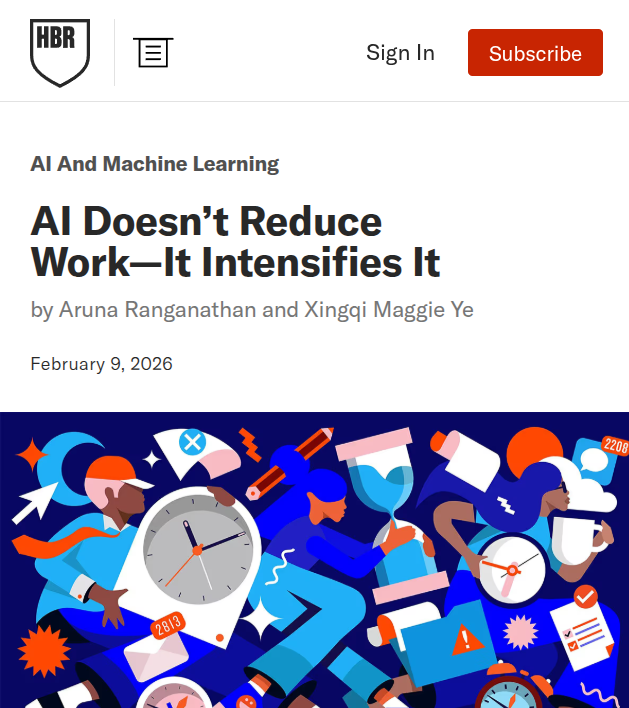
Powerful new Harvard Business Review study.
"AI does not reduce work. It intensifies it. "
A 8-month field study at a US tech company with about 200 employees found that AI use did not shrink work, it intensified it, and made employees busier.
Task expansion happened because AI filled in gaps in knowledge, so people started doing work that used to belong to other roles or would have been outsourced or deferred.
That shift created extra coordination and review work for specialists, including fixing AI-assisted drafts and coaching colleagues whose work was only partly correct or complete.
Boundaries blurred because starting became as easy as writing a prompt, so work slipped into lunch, meetings, and the minutes right before stepping away.
Multitasking rose because people ran multiple AI threads at once and kept checking outputs, which increased attention switching and mental load.
Over time, this faster rhythm raised expectations for speed through what became visible and normal, even without explicit pressure from managers.
yes we over-hired during covid because i incorrectly built 2 separate company structures (square & cash app) rather than 1, which we corrected mid 2024. but this misses all the complexity we took on through lending, banking, and BNPL. and that we’re now targeting $2M+ gross profit per person, 4x our pre-covid efficiency, which stayed flat at ~$500k from 2019 until 2024. we have and do run an efficient company... better than most.
Amazon Kiro deleted a production environment and caused a 13-hour AWS outage. I documented 10 cases of AI agents destroying systems — same patterns every time. https://t.co/sNHATQL2q8
El tranvía si llegaba a la Ciudad Universitaria UNAM.
La terminal se ubicaba en un terreno situado al norte del Estadio Olimpico, ingresando por un bajopuente desde la Av. Revolución; se llegaba por un puente de piedra aún existente. En sus últimos años salía de M. Juanacatlán, cuando el 20 de febrero de 1979 fue suprimida a razón de la construcción de los ejes viales.
En México está ocurriendo algo muy serio y casi nadie lo está contando bien: están desapareciendo los patrones. No “los empleos” en abstracto. Los patrones reales. Los que abren el negocio, dan de alta en el IMSS, pagan nómina, aguantan inspecciones, créditos, multas, trámites. En enero se perdieron 25,992 registros patronales a tasa anual. Y ya van 19 meses seguidos de caída.
Un registro patronal no es un papel: es un acto de confianza. Es decirle al Estado: “Aquí estoy. Me formalizo. Cumplo. Pago”. Pero hoy esa decisión se volvió una apuesta contra el sentido común. Porque al costo laboral se le sumó el costo de la burocracia… y el costo del miedo: extorsión, inseguridad, cobro de piso. Cuando un negocio deja de ser negocio, no hay épica: se cierra. Y el patrón desaparece.
Lo peor es que esto no es sólo economía. Es Estado de Derecho. Porque cuando el patrón se va, se rompe la formalidad, se pulveriza el empleo estable, se normaliza la informalidad, y la ley queda como privilegio de unos cuantos. La caída de patrones es el termómetro más crudo del México real: un país donde cumplir la ley cuesta más que violarla.
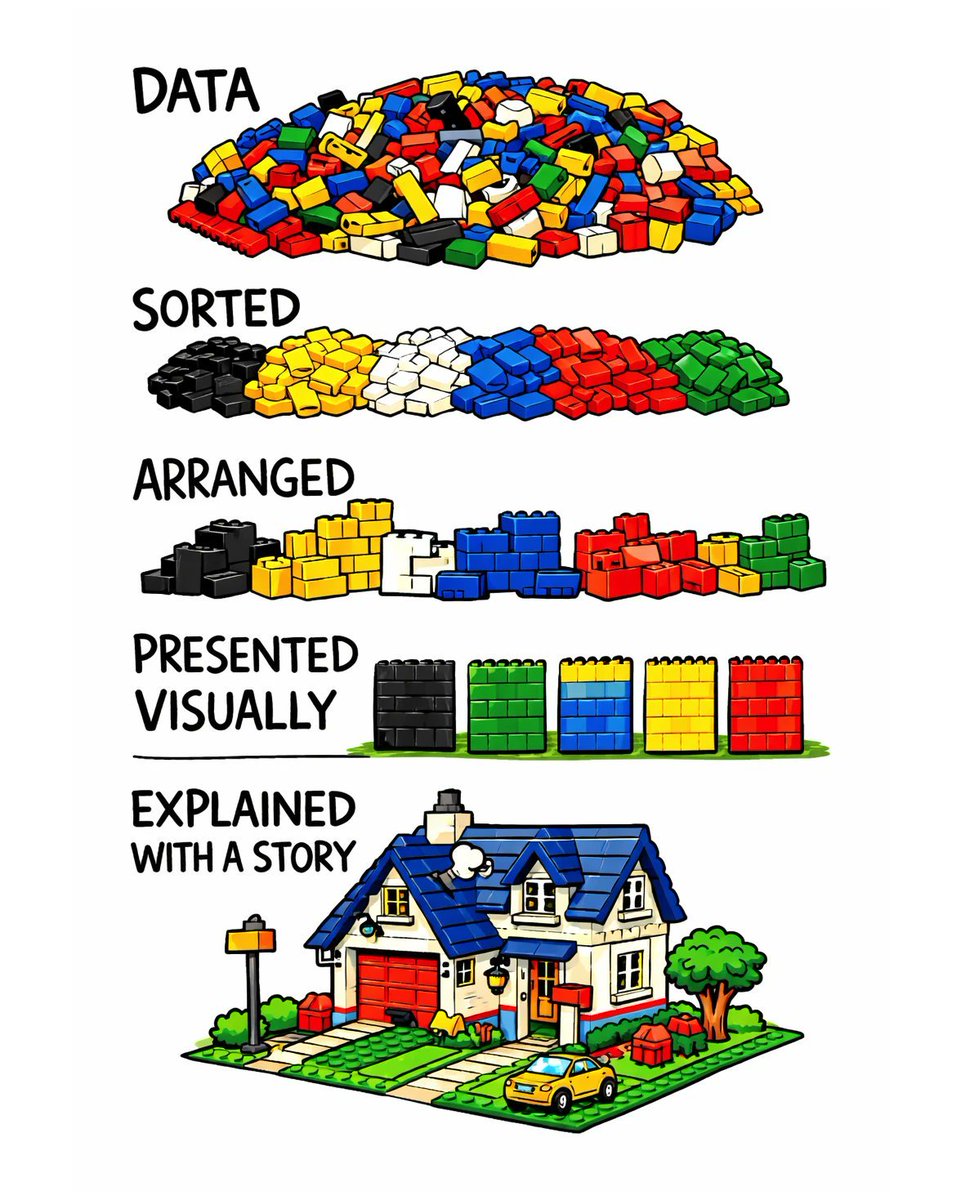
Your regular friendly reminder: These four datasets all have the same mean, median, and variance. Moral of the story: Always visualize your data!
[Link below.]
Anthropic employs world-class engineers who could build an HR system in weeks. They use Workday anyway. The reason tells you exactly where enterprise SaaS is headed.
Building HR software requires knowing labor law across 50 states and 100+ countries. Payroll tax compliance changes quarterly. Healthcare benefit structures shift annually. One classification error creates seven-figure liability.
No engineering team wants to own that surface area. The maintenance burden compounds forever while delivering zero competitive advantage.
This is why enterprise SaaS moats actually strengthen with AI. The value was never “we built software you couldn’t.” The value was always “we absorb compliance risk and regulatory complexity you don’t want.”
AI makes custom software cheaper to build. It doesn’t make compliance cheaper to own. Workday’s real product is liability absorption, and that product just got more valuable as build-vs-buy calculations everywhere else shift.
The companies getting disrupted are the ones selling capability. The ones selling risk transfer are about to have their best decade.
















![SteveStuWill's tweet photo. Your regular friendly reminder: These four datasets all have the same mean, median, and variance. Moral of the story: Always visualize your data!
[Link below.] https://t.co/xVYKoCECjq](https://pbs.twimg.com/media/G_nqerobAAEJlnv.jpg)


