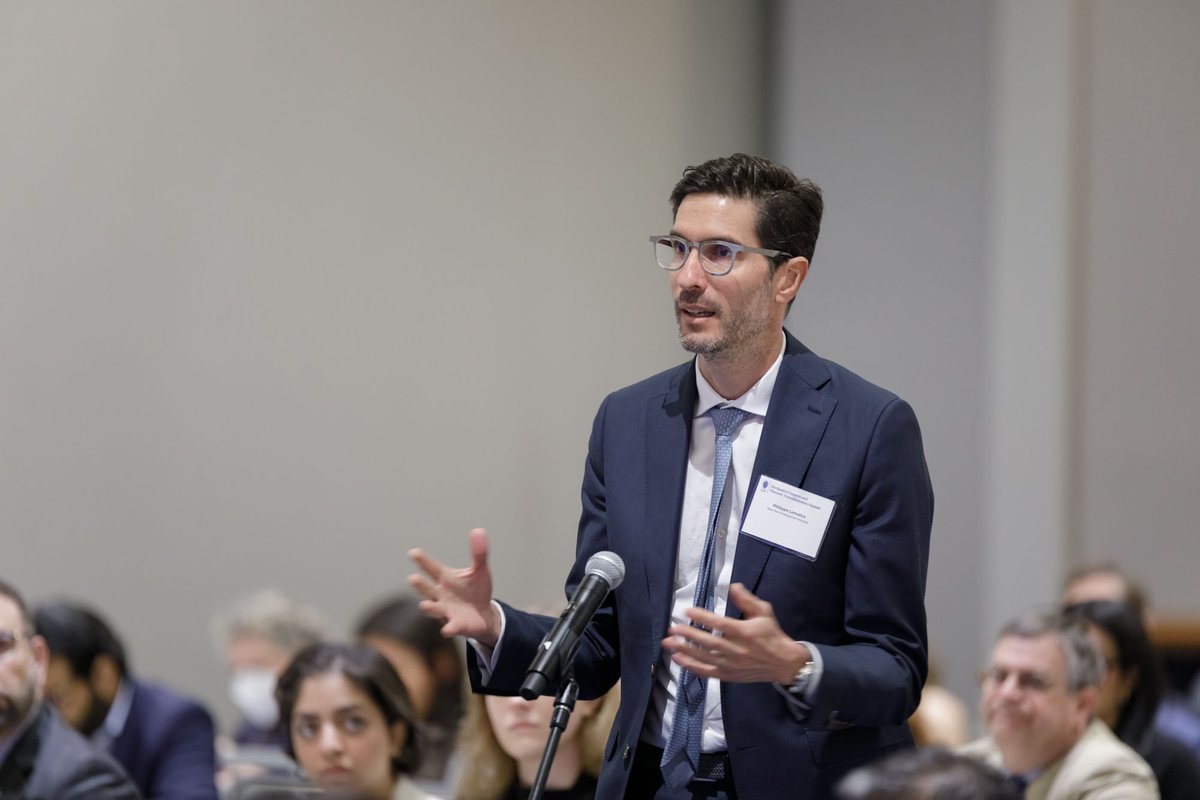
Extended use of Impella 5.5 for >14d did not ⬆️ the rate of serious adverse events and provided hemodynamic support to a heterogenous group of pts presenting with cardiogenic shock with stable device performance
🔗: https://t.co/qGNTOZB6Us
@DavidKaczoro@GavHick@TheJHLT@ISHLT
Editor's Choice study: Static cold storage at 10 °C mitigates the influence of advanced donor age on heart transplant recipient outcomes. Read for free in #JTCVS until 6/30: https://t.co/Rtq2diX8kG
Share similar research at #MechSummit2026: https://t.co/ds6iRJuZfU
The biggest value add for most physicians is tax planning, cash flow strategy, and building a plan that actually works together
Then, as wealth grows, the focus can shift toward diversification beyond just public markets
The goal isn’t always higher returns
Sometimes the goal is more stability, more optionality, and less dependence on what the market does tomorrow
Salty About Medical Education: Bryan Carmody on What the System Gets Wrong
Pediatric nephrologist, medical educator, and "Sheriff of Sodium" Dr. Bryan Carmody joins Drs. Koka and DiGiorgio to challenge some of the most persistent narratives in American medicine. From the AAMC's physician shortage projections — which Carmody argues serve the interests of medical schools more than patients — to the mechanics of the residency match, application fever, ERAS pricing, and the largely unrealized promise of pass/fail Step 1, Carmody brings his characteristic data-driven skepticism to each topic. The conversation closes on what's arguably the most consequential question: what should residency selection actually be optimizing for, and why are program directors squandering the leverage they have to drive real change in undergraduate medical education?
Chapter Markers
00:00 Introduction
02:02 How Carmody became the Sheriff of Sodium
05:03 Why people keep getting medical education wrong
07:46 The physician shortage: skepticism and incentives
09:03 Rebutting the AAMC's 86,000-doctor shortfall projection
11:17 Supply-induced demand and the limits of training more physicians
17:06 Third-party payment, discretionary care, and the real drivers of access problems
20:27 Who benefits from the physician shortage narrative
26:36 GME funding: $45 billion, hospital incentives, and the case for or against it
30:01 The Match explained: history, origins, and why it exists
35:22 ERAS, NRMP, and the financial architecture of residency applications
40:21 Preference signaling: what it is and why it's quietly capping application volume
44:12 Is the Match a monopoly? The congressional report and the anti-competitive argument
51:18 Step 1 pass/fail: the promise, the timing, and why it stalled
55:43 What actually changed — and what didn't — after 2022
58:00 What program directors should be demanding — and aren't
01:08:12 What we're not doing well in resident selection
01:11:59 Using selection systems to elevate the quality of every applicant, win or lose
01:18:45 The neurosurgery combine
Co-Host Handles
@anish_koka and @DrDiGiorgio
Show Handle
@drsloungepod
Subscribe Links
Spotify: https://t.co/kjCqkhc9yg
Apple Podcasts: https://t.co/n4BVmyAVYX
YouTube: https://t.co/p6yg15Foh4
Your financial success hinges on your A-team. This includes a planner, CPA, estate attorney, and even a money psychiatrist. Don't shy away from discussing finances—build your support system for short-term or long-term goals. #FinancialPlanning#WealthBuilding
If mean systemic pressure (Pms) is a zero-flow construct – and therefore does not literally exist during flow – then it cannot be the “driving pressure” for venous return.
Does that mean Guyton was wrong?
Not exactly.
But he has been badly misunderstood. ⬇️
The point of tax planning is to lower your lifetime tax liability, action taken based upon the following paramenters:
1) legal and ethical
2) relatively low hassle, low stress
3) supportive of your preferred mode of life
George Tolis: TAVR, Broken Training, and What's Really Wrong With Cardiac Surgery.
Dr. George Tolis, section chief of coronary and general cardiac surgery at Brigham and Women's Hospital, joins Drs. Koka and DiGiorgio for a wide-ranging conversation on the state of cardiac surgery. He makes the case that TAVR — while genuinely transformative for the right patient — is being systematically applied too broadly, driven by industry incentive and the erosion of meaningful surgical consent. He discusses his collaboration with John Ioannidis that found no statistically significant mortality benefit for any new cardiac surgery technique introduced over the past 35 years, the paper's rejection by every major surgical journal, and what he paid out of pocket to make it open access. The conversation moves to the collapse of surgical training — fragmented pathways, work hour restrictions that leave residents unprepared for attending life, an academic promotion system that ignores teaching, and a culture that routes incompetent trainees around rather than out — and closes with a brief on Vasily Kolesov, the Soviet surgeon from Leningrad who performed the world's first documented coronary bypass years before Favaloro, and whose work was buried by the Cold War.
Chapter Markers
00:00 Introduction
01:02 Air-cooled VWs, concert piano, and how Dr. Tolis got here
02:40 TAVR: genuine breakthrough or being abused?
08:02 Finding the TAVR threshold — and why informed consent is the real problem
11:46 Collaborating with John Ioannidis: no mortality benefit for 35 years of new techniques
20:02 Why the major surgical journals wouldn't touch the paper
21:52 Minimally invasive surgery: minimal access vs. minimally invasive
26:24 When do CABG survival curves diverge — and what does it mean?
30:05 Surgeons signing off on TAVRs in young patients
33:51 Health system economics and the heart team dynamic
37:50 How to actually pick a good surgeon (ask the scrub nurses)
40:36 Cardiac surgery training: the three pathways problem
44:04 Work hour restrictions and the residency simulation gap
51:16 General surgery is like MTV — they don't operate anymore
53:21 A resident who finished training without ever applying a cross-clamp
56:34 How to evaluate if a program actually trains
59:27 Academic promotion has nothing to do with teaching
01:01:33 Dr. Tolis's resident outcomes database and three papers nobody cared about
01:05:32 The training timeline: finishing at 49, no runway left
01:07:08 One-size-fits-all RRC rules for cardiac surgery and psychiatry
01:09:16 Cardiac surgery as a disposition, not a therapy
01:12:24 When ECMO becomes the final common path
01:13:38 How you become nationally recognized without being a good surgeon
01:17:16 Vasily Kolesov: the Soviet surgeon who did the first bypass
Co-Host Handles
@anish_koka and @drdigiorgio
Show Handle
@drsloungepod
Subscribe Links
Spotify: https://t.co/kjCqkhbBII
Apple Podcasts: https://t.co/n4BVmyAo9p
YouTube: https://t.co/p6yg15EQrw
Most trainees think they’re “behind” because they haven’t started investing yet
But when your future paycheck is $20k+ per month, your biggest asset right now isn’t your Roth IRA
It’s your future income
Learn the basics, avoid bad debt, and build good habits
From today's new episode:
Medical students think being a cardiac surgeon means waking up, going to the OR, doing something incredible, and going home.
That couldn't be further from the truth.
And we're not correcting them.
Three different pathways to become a cardiac surgeon.
5-2. 4-3. I-6.
Programs change their pathway depending on the year. Depending on who came back from the lab.
"There's no other field like this. If you want to become a pilot, there is a path. With cardiac surgery, there are three different paths — and programs change them depending on the year."
And the work hour restrictions meant to protect residents?
"I'm convinced they hurt the residents."
Residency is supposed to be a simulation of the rest of your life.
We're not giving them that simulation.
We're giving them a highlight reel.
And then sending them out to practice.
As of today, what happened to me now should never happen to another physician in training. Everything has changed.
Here’s the story…
I got denied disability insurance when I was a 4th year med student. Tremor and ADHD on my chart. I am now permanently uninsurable, and if I lost my income it would be a massive problem for my family.
This happened because an insurance agent talked me into a fully underwritten disability policy as a 4th year med student. He didn’t have access to a GSI — a guaranteed standard issue policy that doesn’t dig into your medical history — so he never brought it up. He couldn’t make money on it.
The underwriter saw an essential tremor and a history of ADHD. I got denied. I’m permanently uninsurable to this day. A catastrophic financial mistake before I’d earned a single attending paycheck.
Turns out I’m one of the ~50% of doctors who need a GSI. And that group is bigger than you’d think — treatment for anxiety or depression, a BMI over 30, hypertension, sleep apnea, an old ACL repair from college. Any of these (and many others) can get you denied.
My mistake is the entire reason Money Meets Medicine Disability has always existed. To make sure what happened to me doesn’t happen to any residents who come across my work.
And now we can essentially guarantee it doesn’t happen to anyone else.
Here’s the news: MMM Disability is one over very few agencies in the country that now has access to a brand-new national GSI offer available to every resident and fellow in the country. It’s an individually owned, own-occupation policy that’s yours to keep after training.
Until today, getting a GSI meant hoping you trained somewhere a carrier had made one available — and these aren’t offered by or associated with your program, which is why most programs don’t even know they exist. If your hospital didn’t have one, you were stuck.
Not anymore. As long as you haven’t had an adverse decision — a denial, rating, or exclusion — in the last 2 years, we can essentially guarantee you coverage, no matter where you train.
So residents 🚨 don’t let an agent without GSI access run your paperwork. That’s the exact mistake that cost me my insurability.
If you want to see your options (including the GSI all residents now have available), we would be honored to help you at MMM DI.
Time is on your side as a physician
You don’t need to stress about having everything perfect the second you finish training
- Build some cash reserves
- Get breathing room
- Then crank up retirement savings
From tomorrow's new episode of Physician Cents
One of the most underrated financial goals during training:
Protecting your mental health
Not every dollar has to go toward investing
Sometimes the best financial move is creating breathing room, reducing stress, and giving yourself confidence
A starting Apple Genius Bar tech in San Francisco clears ~$30/hr.
A second-year general surgery resident down the street clears ~$17/hr.
The surgeon has $300K in debt and 80-hour weeks.
The Genius Bar tech doesn't.
Tell me again which job is picked for prestige.
🚨 16 years after TEVAR's approval in Japan (2009), the bill is coming due.
Our center's data (2003–2025, n=8,690):
Stent-graft explantations are surging.
→ 32–35 cases/year since 2022.
Post-approval trend: +2.3/year (p<0.001)
🔴 Paraplegia: 4.1% vs 1.0% — 4× higher (p=0.003)
🔴 In-hospital mortality: 6.4% vs 3.6% — 1.8×
🔴 OR time: 386 vs 307 min (p<0.001)
Late TEVAR complications start emerging at ~5 years.
A wave of salvage surgery hits at ~15 years.
TEVAR is not a panacea. Patient selection is everything.
#AorticSurgery #TEVAR #EVAR #Aorta
Calling all surgeons working in heart and lung transplant: Submit your research for the chance to present to your peers at #MechSummit2026 in October. Don't pass up this opportunity to share your work: https://t.co/DNYUNLXmOV
Deadline: June 29
When physicians compare W-2 and 1099 income, the biggest mistake is focusing only on the headline pay.
A better framework is to ask:
- Who is paying the payroll taxes?
- Who is covering health insurance and malpractice?
- What retirement plan opportunities exist in each setup?
- What deductions are actually available?
- How much extra complexity are you taking on?
Higher gross pay and *possible* increased benefits of the 1099 realm does not automatically mean a better financial outcome, let alone a better life outcome.
I’ll be unpacking this in next Wednesday’s episode of A Good Problem to Have.
How best to treat a critically ill pt w/ agitated delirium who's not mech ventilated. We are seeing more of these pts in our practice. They can be difficult to treat. In this episode, we discuss the 4D trial & some evidence on Rx strategies for these pts.
https://t.co/8YcNLzMhlJ
Why Smart Docs Still Stress About Money (Even When They're Set), Ep #28
😵 Physicians assume that once their income stabilizes and their savings plans are in place, they will have peace of mind. But what if that peace never shows up?
Now live ➡ https://t.co/JUxT0XoyIN