“Backrooms” is about the Gen Z experience of living amid the cultural detritus of the 1990s, faded photocopies of a decade that - at least aesthetically - never ended.
The uncanny reality of a 20-year-old witnessing Oasis reunions, “Frasier” revivals, “What’s Goin’ On?” memes.
To celebrate the end of my exams, I have written about parts and wholes, making something from nothing, and what happens when you drop a vase.
https://t.co/zOyJtbladj
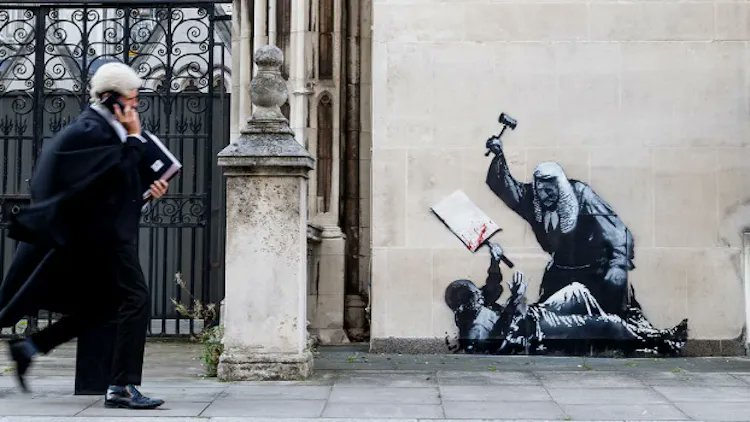
I'm glad it can finally be reported that Rajiv Menon KC, lead defence barrister in my daughter's (Filton 6) trial, is being *prosecuted*
Judge 'Injustice' Johnson is trying to punish Rajiv for a brilliant speech in the 1st trial because it led to the jury refusing to convict.
One of my most popular articles ever included a long extract from a powerful closing speech by barrister Rajiv Menon during a Palestine Action trial in January. In the end, the jury refused to convict the six defendants.
Menon is now on trial for that closing speech – for reminding the jury that they had a 350-year-old right in law to follow their conscience in reaching a verdict, even if it meant defying a direction from the judge to convict.
Paradoxically, Menon joked in his speech that, because of that earlier legal principle, the judge, unlike his counterpart in 1670, could not lock them, the jurors, up were they to choose to follow their consciences.
Instead, the judge is seeking to lock up the barrister. Does 2026 qualify as an improvement on 1670?
It is believed that this is the first time a barrister has been tried for comments made to a jury in his closing speech. That should serve as a potent reminder of just us how authoritarian the current political moment is, and of how quickly long-established legal rights are being dismantled to protect British collusion in genocide.
Read my article – and the part of the speech for which Menon is being tried – here: https://t.co/RyDHG3Iz81
There will be so much to write and think about as election results come in over the coming days but I'm particularly interested in what's happening to Scottish Labour. Only recently the party was on the up but fortunes have fallen drastically along with UK Labour and now it faces a range of miserable options: they range from a best case of constructing a government off the back of Reform and Tory votes, to being beaten into third or even fourth place in a former heartland.
In this piece I spent some time with Sarwar on his battle bus where he is putting on a brave face and trying to keep team spirits high despite poor polling and private rumblings about his leadership among his own colleagues. Have a read 👇
I have a half-done essay re. we NEED to nationalise the job hunt. Applications should be geo-locked, the govt should be able to perform spot checks, & there should be a UCAS style comms portal - a prospective employer shouldn't have your contact details in the first place
This is just cruel. First you entice people to sign up for something they need to get their personal data and then you only reward those who are already your devoted fans.
We hear so much about the manosphere, Andrew Tate, Clavicular, blah blah - lazy click bait journalism, documentary making and drama.
This week the New Statesman cover is about angry young women and the new feminism that’s reshaping Britain and its politics. A brilliant and enlightening feat of research and reporting from @emilylawford and @Scarlett__Mag
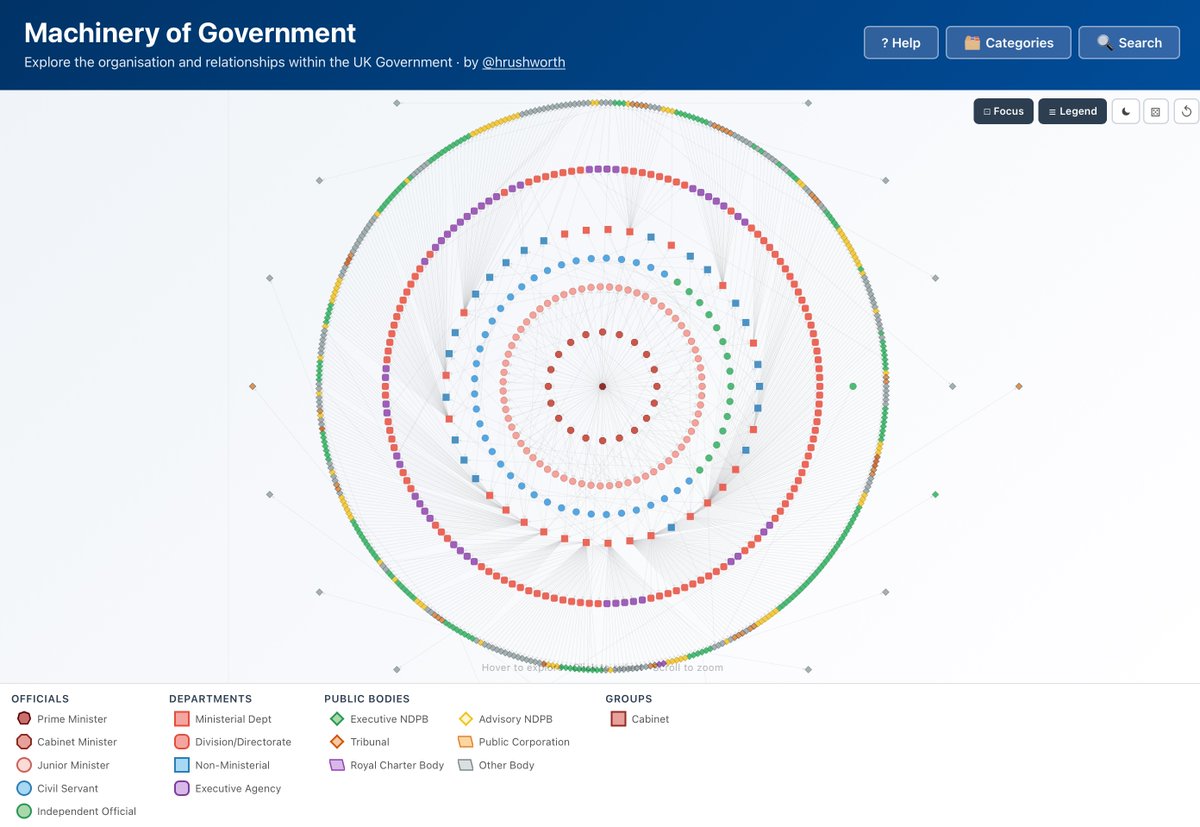
The British Government is a complicated beast. Dozens of departments, hundreds of public bodies, more corporations than one can count...
Such is its complexity that there isn't an org chart for it.
Well, there wasn't...
Introducing ⚙️Machinery of Government⚙️
The Elizabeth Line has been a resounding success and has been FAR more popular than Government predictions though it would be.
We should be building far more lines up and down the country.
CILEX wins Mazur appeal:
An unauthorised person can lawfully perform any tasks, which are within the scope of the conduct of litigation, for and on behalf of an authorised individual such as a solicitor or appropriately authorised CILEX member.
THE NEW WORLD WAR by @Will___lloyd
As the fourth anniversary of the invasion of Ukraine approached last month, Zelensky inflated his rhetoric. He used the same formulation I had heard countless times from Ukrainians every time I visited. This was not a conflict between Ukraine and Russia any longer, if it had ever been that to begin with. These were, Zelensky told the BBC in February, the first years of the Third World War.
In the early weeks of the war, so many British citizens drove vans full of aid to the Polish border that Ben Wallace, then the defence secretary, had to ask with some tact that people send money instead. Clips of born-in-the-USSR Russian incompetence electrified social networks. No war ever seemed to cost so little. It generated a new, brief faith in ourselves, even in Boris Johnson. Our capabilities, our diplomacy, our technology, our sanctions packages, our intelligence services, our rules-based liberal order. We didn’t even have to fight. The Ukrainians would do that for us. Ukraine was a good war, a morally clean war, giving a precious gift to Europe’s leaders: meaning, valour, solemnity, glory.
That was not how it looked in Kyiv this winter, where the congealed violence of four years of war had transformed the country into something many in Europe no longer want to think about: a war of extermination fought between two militarised societies barely two days’ drive from Dover. The teams of men coldly eyeing their live feeds in bunkers, busily assassinating each other with drones, then posting the results online. The schools where children learned underground, as if they were surviving a nuclear winter. The old men and women who froze in their apartments and had to be cut out from them once their neighbours realised what had happened. The war had pulled the US and Europe apart, invented a whole new machinery of death, underlined our dependence on brutal petro-states, flooded this corner of Eastern Europe with several generations worth of weapons. A British official told me that Ukraine’s population, which had been estimated at just over 40 million in 2014, had shrunk to something like 20 million by 2025, significantly less than most estimates in the public domain.
I came to the war late, first visiting at the end of 2024. I witnessed Europe’s early hope and energy begin to curdle and move elsewhere: to Gaza and Greenland, Venezuela and now Iran. The world was a mess, expensive munitions for advanced air defence platforms were running low and needed everywhere from Kyiv to Tel Aviv to Abu Dhabi; Ukraine was not a front-page story anymore. The same image, the same blood, the same nation. Shrug. A terrible thing was happening somewhere far away.
A few days after I returned from Kyiv last month, Trump and Benjamin Netanyahu launched their war on Iran. Turkey, the keystone that sits directly between Ukraine and Iran, may yet be pulled into it. The vengeful Iranian Shaheds, so familiar to Ukrainians after four years of nightly terror, now rained down all over the Gulf. There were rumours that they were being mass-produced in China. Taken aback by the violent efficiency of the Iranian counterattack, Trump was demanding a Western armada enter the Gulf. War was spreading.
The right to a trial by jury is fundamental. There are a range of improvements put forward by legal professionals working in our courts to improve efficiency of our system without the need to restrict access to jury trial. That’s why I’ll vote against threat to jury trial today.
The “troublemakers” being the thousands of experts expressing concern that the government is removing the right to jury trial for thousands of people, with no evidence, on a campaign of misinformation.
The conduct of this government is shameful.
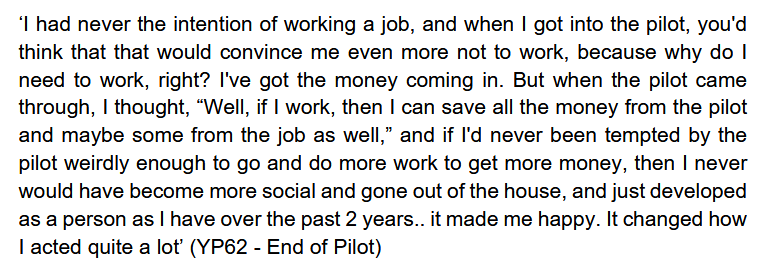
Love this experience by one of the basic income pilot participants in Wales. They got £1,290 a month after tax for two years (about $1,862/mo), and at first they planned to not get a job, but then after getting into the pilot, they changed their mind, because why not do more to get more money?
this is Middle English & delightful to read; as you can see, it is not so difficult.
Old English is more difficult of course but there is fascination in the evolution of language -- how do languages evolve? why do languages evolve? where do words "come from"?--language being a creation of the human brain, so mysterious, & anonymous.
in graduate school in English, it used to be the case that some students would fall in love with Old English, & never want to leave; others, Middle English. vocabularies are small, the very world seems small, as if in miniature.
pushing on, into centuries to come, especially the 19th century, felt like opening a door to a cyclone-- & the roof is blown off....