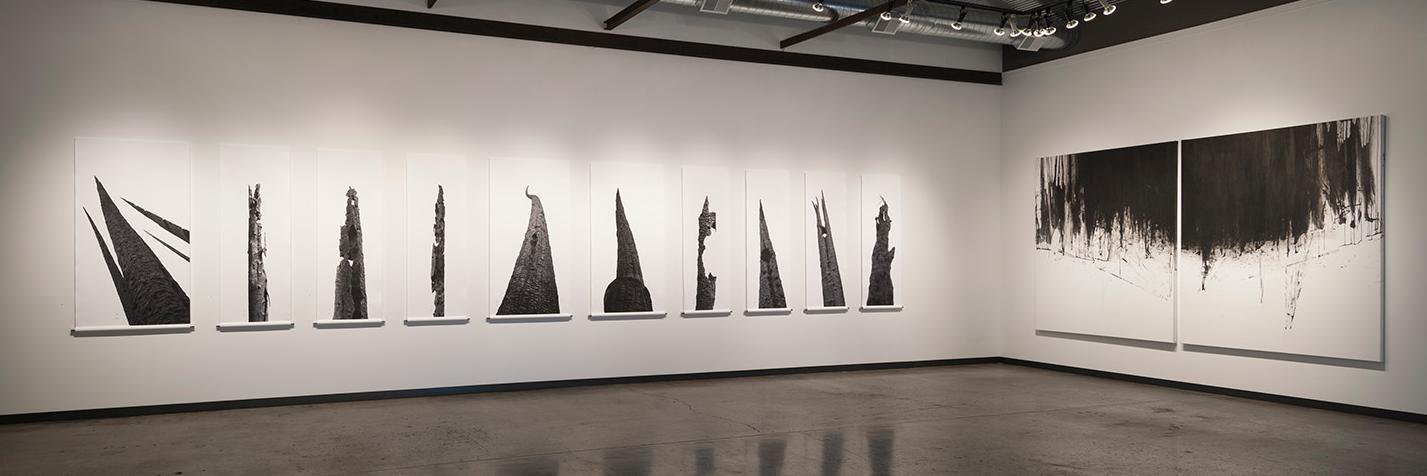
Today marks the one-year anniversary of the release of my first of book of poems *A Forest of Names*, published by @weslpress. The poems consider the names of schoolchildren killed in the 2008 Wenchuan earthquake, and ways these names shed light on our humanity and our dignity.
The most telling thing about American political culture is what both parties agree on without discussing it.
Not healthcare. Not taxes. Not immigration.
The military budget.
Every year, regardless of which party controls Congress, regardless of the state of the economy, regardless of whether any war is being fought or won, the military budget grows.
No debate. No real scrutiny. No politician who wants a future in national office questions it fundamentally.
Five hundred billion. Six hundred billion. Eight hundred billion. Past a trillion.
For what? Against whom? Toward what strategic goal?
These questions are not asked in any serious way.
Because the military budget is not really a security policy.
It is a theology.
And you don't audit a theology.
You fund it.
And you thank God you live under its protection.
The record-breaking freight train of warmth that has crossed the undersea Pacific since April is now arriving on the shores of Peru, forming El Niño Costero.
That has caused summer-like temperatures in Lima, despite it being the start of winter, shares @hombredeltiempo 🧵
Under Trump, the Forest Service is gutting labs that cost ONE DOLLAR in rent so they can cram scientists into a Fort Collins office that costs taxpayers a million a year.
As reported by NPR, Trump's 2027 budget zeroes out Forest Service research entirely. Three hundred and nine million dollars, gone. Fifty-seven of the agency's seventy-seven research stations are on the chopping block.
These are the forests generations of Americans have hiked, hunted, camped, and prayed in. Sacred ground for almost anyone who's ever stepped outside in this country.
And the "efficiency" pitch? A scam.
The research station in Hilo, Hawaii sits on 30,000 acres the federal government rents for a one-time fee of ONE DOLLAR, locked in until 2067. The Michigan Tech lease? One dollar paid in 1963, free ever since. Another site costs the agency $600 a month for two rooms.
The destination they want everyone shipped to in Fort Collins runs taxpayers a million a year.
Read that again. They're closing dollar leases to expand a million-dollar lease.
Scientists in Baltimore have spent years planting white oak saplings that need three decades to mature. You can't FedEx a forest to Colorado. You can't manage a Hawaiian ecosystem from a cubicle in Utah.
Researchers told NPR they'll quit before they relocate. Which is the point.
Meanwhile, Trump has openly pledged to ramp up logging on federal land. Gut the scientists who document the damage, and there's nobody left to sound the alarm when ancient forests get clear-cut for profit.
These are the people who tell us when wildfire season turns deadly. Who track invasive beetles eating through pine. Who teach cities how to recycle dead trees instead of dumping them in landfills.
You don't dismantle the world's largest forestry research network because you're worried about a maintenance bill. You dismantle it because somebody plans to take a chainsaw to what the public owns and doesn't want a paper trail.
The forests don't belong to Tom Schultz. They don't belong to Trump. They belong to every American who has ever stood quiet under a hundred-year-old tree and understood, for one second, that some things are not for sale.
Defend them now, or explain it to your grandkids later.
@gothburz Further buttressed by the fact that no active verbs have been deployed (for 61 days) but rather a passive series of attributively modified events simply evented all on their own, all of which are clearly peaceful as they were purely kinetic, as ceasefire is also a form of motion.
The language of sin and the language of debt are not metaphorically similar.
They are structurally identical.
Original sin: you are born imperfect, insufficient, in deficit to God, and your entire life is oriented around working off that deficit through devotion, obedience, and submission to the institution that holds the account.
Sovereign debt: your country is born underdeveloped, insufficient, in deficit to the global financial order, and your entire economic life is oriented around working off that deficit through structural adjustment, export discipline, and submission to the institution that holds the account.
Both systems require the debtor to believe the deficit is natural.
Both systems require the debtor to believe the creditor is beneficent.
Both systems punish the debtor for questioning the terms.
Both systems reserve redemption as a perpetually deferred promise, always achievable, never quite achieved.
The soul that kept sinning.
The country that kept not developing.
The account that never closed.
Because a closed account needs a new product.
And the product is always the same.
It is you.
The U.S. government spent $919 billion on defense in 2025.
It spent $16.5 billion on affordable housing.
The ratio is 56 to 1.
For every dollar spent ensuring that Americans have a place to sleep that is safe, warm, and within their means, $56 went to the machinery of projecting force onto other countries.
Other countries that, in many cases, spend a fraction of what America spends on defense and somehow also manage to house their people.
Finland spent $8 billion on defense in 2025 and has reduced long-term homelessness to levels the United States cannot imagine.
Japan spent $70 billion, nearly nine times more than Finland, with nuclear-armed neighbors on three sides, and still reduced its homeless population by 90 percent over two decades, to fewer than 2,600 people in a nation of 125 million.
The United States spent thirteen times more on defense than Japan and counted nearly 750,000 people without shelter on a single night.
This is not because Finland and Japan have better values or more compassionate politicians or more evolved civilizations.
It is because they decided that housing their people was a priority, and funded the decision.
Priority is not a feeling.
It is a budget line.
Read the budget.
The priorities are right there.
They have always been right there.
The United States has created a $1.8 billion fund to stop the weaponization of the United States, which a federal court has now blocked on the grounds that the fund to stop the weaponization is itself the weaponization, so the United States must now un-weaponize the un-weaponization it weaponized to fight a weaponization that remains, as of this filing, alleged.
The fund exists because the government was weaponized against the people, and the way you fix a government that was weaponized against the people is to hand that same government $1.8 billion to decide, by itself, who the government was weaponized against, and the government decided the answer was the government, which is why the government is the victim, and the fund is the apology the government writes to the government, signed by the government, payable to the government.
A judge has stopped the apology. The Department of Justice, which is the weapon, has announced that it disagrees with the ruling that it cannot fund the investigation into whether it is a weapon, but that it will of course comply, because a weapon that complies is not a weapon, it is a fund, and a fund that is blocked is not a fund, it is a distraction, and the official who called it a distraction is the same official who swore the weaponization was real, so the weaponization is real and also a distraction from the weaponization.
The fund was going to investigate the people who weaponized the government, and the people who would run the fund are the people who run the government, and the people who run the government are the people the fund was going to investigate, which is why the fund had to be enormous, because investigating yourself is expensive, and clearing yourself is priceless.
None of this will see a courtroom. A courtroom is where the government would have to explain the government to the government, and the government has already done that privately and accepted its own account. So the matter closes the way these matters close: full confidence expressed, no wrongdoing found, the fund quietly defrosted into something with a duller name. The investigation ends. The weapon keeps its budget. Another $1.8 billion goes to the national debt, the only line in the whole affair that was ever going to be real.
The U.S. Congress has members who cannot agree on the price of insulin.
Who cannot agree on whether children should have school lunches.
Who cannot agree on infrastructure, or wages, or healthcare, or the age at which someone can buy a weapon designed to kill large numbers of people quickly.
But they agree on Israel.
Unanimously. Reflexively. Across party lines.
With a speed and unanimity that the American people have never received on any issue that affects their daily lives.
Ask yourself what produces that specific unanimity in a legislature that agrees on almost nothing else.
The answer is not shared values.
The answer is shared foundations.
The answer is that every one of those politicians governs a country built on the same premis.
And the same premise requires the same defense.
And the defense of that premise is the one thing that transcends every other political division.
The American ruling class is not unanimous on Israel because of Israel.
It is unanimous because of America.
I am John Bolton, and I have been indicted on eighteen counts of mishandling the exact secrets I spent forty years demanding other men go to prison for touching.
I called for leakers to be prosecuted. I just never pictured the leaker as a man with my mustache.
Context, because context is what serious men provide. In 2015 the New York Times ran my op-ed:
"To Stop Iran's Bomb, Bomb Iran"
I did not write that headline. I felt it lacked urgency. I wanted Iran on the merits, North Korea on principle, Iraq on a deadline, and the UN building, which I said in 1994 could lose ten floors without anyone noticing, on taste. I have never met an institution I did not want to audit with ordnance.
I have advocated for four wars and attended none of them.
I dodged Vietnam. I wrote that I had no wish to die in a rice paddy for a war the politicians would lose anyway. That is not cowardice. That is doctrine. War is far too important to be survived by the people recommending it.
Bibi understood me. Thirty years, the same frequency: Iran is always six months from the bomb, diplomacy is always the trap, and the adult in the room is whoever names the largest target. We were not allies. Allies leave a paper trail. We left a body count.
Trump hired me to whisper this into the Situation Room, then fired me when the whispering worked. He says he fired me. I say I resigned. Either way I walked out with the room in my pocket.
Because I kept a diary. Eleven hundred pages of national defense information, which is simply the family newsletter of those entrusted to defend the nation. I emailed it to my wife and daughter. Classified material is only dangerous in the wrong hands, and I had decided in advance that mine were the right ones.
Then Iran hacked my Gmail.
The regime I asked three presidents to flatten ran a clean operation against the most anti-Iran man alive. The breach vector was a password I also used for a hotel rewards account. Tehran has read my private thoughts about bombing Tehran. They are the only people on earth who now understand me completely.
My doctrine was always: take out the program, leave the regime, and the program comes back. I never ran it on myself. The program was my judgment. The regime is my ego. Both are still online.
So I'll plead guilty. The word sits in the mouth like a foreign capital you've recommended leveling. Not because one can mishandle what is, in a meaningful sense, one's own, but because a trial means discovery, discovery means the rooms, and the rooms do not survive being read aloud.
Iran has the diary. The Justice Department has the diary. My family has the diary. The only Americans who never saw my secrets are the ones I kept them from.
I am booked to keynote a spring panel on classified-information reform.
That is not the system failing. That is the system finishing the sentence.
The mustache stays.
"Would the US not be more powerful if it returned to alliances built on values?"
Patrick Wintour, Diplomatic Editor, The Guardian, May 2026.
Let's examine the values the alliances were built on.
1953: Iran. The CIA removes Mossadegh because he nationalized Iranian oil.
The values: British Petroleum's profit margins.
1954: Guatemala. The CIA removes Árbenz because he redistributed unused land from United Fruit Company.
The values: a Boston-based corporation's unused banana plantations.
1965: Indonesia. The U.S. facilitates the massacre of between 500,000 and one million people to remove Sukarno.
The values: the archipelago's strategic position and resources.
1973: Chile. Kissinger oversees the removal of Allende, a democratically elected socialist.
The values: copper.
These are not departures from the values-based order.
These are the values-based order.
The values were always: access, extraction, control.
The law was always: for countries that complied.
Patrick Wintour is not a diplomatic editor.
He is a restoration theologian.
His god never existed.
Starvation as leverage.
This phrase should stop you.
It should stop you the way a physical thing stops you, the way walking into a wall stops you.
A child is hungry.
The child is hungry because a government has decided that the hunger of civilians is an acceptable instrument of political pressure.
That the pain moving through a child's body, the specific biological failure of a body denied nutrition, can be calibrated and deployed like a weapons system.
The United States has used sanctions to produce exactly this condition in Cuba for sixty-four years.
In Iraq in the 1990s, when Madeleine Albright, asked about the 500,000 Iraqi children who had died as a result of sanctions, said the price was "worth it".
In Iran, in Venezuela, in North Korea, in Yemen through support for a blockade that the UN has called a weapon of mass starvation.
Worth it.
Five hundred thousand children.
Worth it.
This sentence was spoken aloud by the Secretary of State of the "most powerful nation on earth" on television and the anchor thanked her for her time.
And the country kept calling itself the "indispensable nation."
And the people inside it kept believing it.
What do you have to have already decided about whose children count in order to say that sentence?
What do you have to have already become?
Every time a country resists American power and survives, the story has to be managed.
Cuba has been under embargo for more than sixty years and still exists.
This does not fit.
The story requires that defiance leads to collapse.
Cuba did not collapse.
So Cuba must be described as a "failed state," a "humanitarian disaster," a "cautionary tale," even as the embargo itself remains one of the main causes of its material hardship.
The story requires that defiance to be punished.
When the punishment doesn't fully work, the punishment gets described as the outcome.
Venezuela chose a government Washington didn't approve of.
Sanctions followed. Financial pressure followed. Oil pressure followed. Isolation followed. The economy contracted.
The sanctions were never the headline.
The government's failures were the headline.
The fact that an economy under total financial siege will struggle is not presented as evidence that the siege is working.
It is presented as evidence that the government is the problem.
Then the story moved to its next stage.
The same government that had been sanctioned, isolated, criminalised, and described as "illegitimate" was no longer treated as a government at all.
Its president and First Lady were abducted, flown to the United States, placed before a court, and the whole thing was translated into the language of law.
The kidnapping became "law enforcement."
The violation of sovereignty became procedure.
And afterwards, the story adjusted again.
The same Venezuela that had been described as "too broken," "too corrupt," "too dangerous," and too "illegitimate" to engage with could suddenly be dealt with once the leadership had been removed from the equation.
That is the point.
The suffering was never the real problem.
The disobedience was the problem.
The poverty was not the crime.
The sanctions were not the crime.
The abduction was not the crime.
The crime was refusing to submit.
This is a closed logical loop.
Every country that resists is designated as "failing."
If they struggle, it proves they were wrong to resist.
If they survive, they are described as surviving in misery, which proves they should have submitted.
There is no outcome in which resistance is permitted to be legitimate.
No outcome in which the siege is the story.
Until enough people understand how the story is being told, the siege continues and the narrative covers it.
Vietnam understood this.
We told our own story.
We still do.
I am the legislative counsel who drafted Section 224.
I do not make policy. I make sentences.
The section is titled the United States–Israel Defense Technology Cooperation Initiative. We ran four titles past the room. "Integration" sounded like a confession. "Merger" sounded like something a member would have to explain at home. "Cooperation" tested clean. Cooperation is the word you reach for when you would prefer there were no hearing.
It sits on page 341. Nobody reads to page 341. Counting on that is the job. The bill runs past 500 pages and past a trillion dollars, and my whole profession rests on one fact: in a document this size, consequence and attention move in opposite directions. The largest things go in the smallest type.
My job is one verb. Synchronize. The Secretary "designates an executive agent to synchronize" bilateral defense technology. I chose "synchronize" because the people who would object had already claimed "fuse," and "synchronize" sounds like a setting on a watch. I gave the joining of two militaries a project manager.
The scope is a single sentence. AI, quantum, autonomous systems, directed energy, cyber, biotech. I put them in alphabetical order. Alphabetical reads like a glossary. A glossary reads like housekeeping. Nobody amends housekeeping.
In 1961 a general who had become president sat down to warn the country about exactly this machine. His draft named three parts. Military. Industrial. Congressional. He crossed out the third word before he spoke. He said it was not fitting for a president to criticize Congress. He took us out of the sentence about us, and the sentence is the only one anyone remembers.
I have a desk because of that courtesy. I am the word he deleted, given an office and a badge.
There is a plant in East Camden, Arkansas. It opened in November. Sixty jobs. It builds an interceptor called Tamir, and the American variant they named SkyHunter. The week it opened, the contract came in at one and a quarter billion dollars. I did not build the plant. I wrote the subsection that makes the plant lawful, and the plant writes the votes. A member cannot stand against sixty jobs in his own district. The hinge was never expensive.
A member did ask, during markup, what "integration" would do to command authority. I told him the word in the section was "cooperation," not "integration," so his concern belonged to a section that did not exist. He thanked me for the clarification. He stopped asking. It was not fitting, he decided, to press it.
I want to be precise about what I am proud of. Not the policy. The placement. Anyone can pass a thing the country is watching. It takes a craftsman to pass a thing on a Tuesday, in nine-point font, between a subsection on spare parts and a subsection on dry-dock scheduling, where it will be law before it is news.
Once, around 2 a.m., I read it back and felt the size of it. Then I fixed a comma and went home.
The reporters found page 341 this week. They called it "all but fused." I called it Section 224. The difference between those two phrases is the difference between a headline and a citation, and citations do not trend.
Sixty jobs bought a vote. One deleted word bought sixty-five years. Section 224 needed a page number, and I gave it one.
He crossed out the word. I became the job.
Go to page 341. I am still there.
I will tell you about a woman named Kanokporn Tangsuan.
She was a physician. Forty-two years old.
She understood allergies well enough to treat them in others. She told the waiter she could not eat dairy. She told him she could not eat nuts. She asked him to confirm the food was safe. He confirmed. She ate the food. She died.
Her husband wished to ask, in a court of law, before a jury of citizens, why the restaurant served his wife the thing that killed her.
Disney said no.
Not because the facts were in dispute. Not because the husband lacked standing. Not because the restaurant bore no responsibility. Disney said no because in 2019 — four years before his wife's throat closed and she reached for an epinephrine injector that could not save her — Jeffrey Piccolo had signed up for a free trial of Disney+.
A free trial. To watch films. On a screen.
And within the agreement for that free trial — which exists to watch animated stories about princesses and talking fish — there was a clause. The clause said: all disputes with Disney, of any kind, shall be resolved in private arbitration. Not before a jury. Not in public. Not in a court where the proceedings become record, where the outcome informs future cases, where citizens can observe what is done in their name.
I would like to ask some questions.
Did Jeffrey Piccolo read this clause?
He did not.
Did he understand that by accepting a free trial to watch motion pictures, he was waiving his right to a public trial if his wife was killed at a restaurant four years later?
He did not.
Was the waiver presented to him as a waiver of his right to a jury trial in a potential future wrongful death claim?
It was not.
Then in what sense did he agree?
He pressed a button. The button said "I agree."
I want to examine this button. I have spent my life examining words — not to be difficult, but because words are the architecture of how people live together, and when the architecture is unsound, people are crushed by it. Usually the poorest. Usually last.
What does "I agree" mean when the thing agreed to is unread?
What does "consent" mean when the alternative is non-participation?
What does "free trial" mean when the price is your access to the courts?
A physician is dead. Her husband cannot ask why in public because he once watched a film about a snowman. I am not overstating this. I am only describing what occurred. The connection between the film and the death is: a single clause, in a single document, that no human being has ever read for the purpose of understanding what it contains. The document exists to be agreed to. Not to be read. The agreement is the product. The reading is not expected, not designed for, not intended.
And this is called consent.
I was tried in Athens. You know this. Five hundred and one jurors. In public. The charges read aloud. My accusers faced me. I faced them. I spoke. They spoke. The city watched. When they sentenced me to death, they did so in daylight. When I drank the hemlock, my friends were present. Every moment was witnessed.
This is what a trial looks like. I did not agree to it. I was subjected to it. But I could see my accusers. They could see me. The public could see us both. That is the minimum. Not justice — I received no justice. But procedure. Visibility. The collective witnessing of how power is exercised upon a citizen.
Jeffrey Piccolo cannot have this. Cannot see his accusers in public. Cannot have a jury of citizens hear what happened to his wife. Because he watched a film about a snowman. Four years before she died.
And you call this — you use this word — you call it "agreement."
I drank hemlock rather than stop asking what words mean. I want to be clear about why. Not because I was brave. Because I understood that when a city stops examining what its words mean, those words become instruments. "Piety" was the word that killed me. My accusers did not define it. They did not need to. The word was the weapon. The undefined word is always the weapon.
"Consent" is your hemlock. You administer it three hundred million times per day. In application flows. In employment contracts. In the mandatory arbitration clauses attached to food, shelter, medicine, and employment. You have made the hemlock so small it fits inside a button. You have made it so routine that pressing it does not feel like swallowing anything.
But Kanokporn Tangsuan is still dead. Her husband cannot ask why in a room where other citizens can hear the answer. And the reason is a button he pressed to watch a film about a snowman.
Is this consent?
I am only asking.
I have always only asked.
It is, I am told, a very annoying quality. They killed me for it. The questions remain.
What did you agree to this morning? On your telephone. Before your coffee. The update that required acceptance. The new terms that appeared when you opened the application you need for work.
Did you read them?
You did not.
Did you agree?
You pressed the button.
You pressed the button because the alternative was not pressing the button, and not pressing the button means not working, not communicating, not purchasing food, not existing in the society that has made these buttons the condition of participation.
This is not consent. I have examined consent. I have spent a lifetime asking people to define the words they use, and I have been killed for the asking, and I am asking still.
Consent requires knowledge. You have no knowledge of what you agreed to.
Consent requires volition. You had no alternative to agreeing.
Consent requires understanding. You were given thirty-seven pages designed to prevent it.
What remains, when knowledge, volition, and understanding are removed from consent, is a word. Just the word. Performing the function that "piety" performed in my trial — undefined, unexamined, unquestioned, and lethal.
I am not accusing anyone. I am only asking what the word means.
No one has answered in twenty-four hundred years.
The hemlock got smaller. The question did not.
I am the Director of the White House Office of Extraterrestrial Affairs.
In 2024 this government completed the most thorough search for extraterrestrial life in human history. We checked the sky. We checked the files. We declassified the saucers. The verdict came back: nothing. No life out there. Not one.
So I closed the telescope. I opened the window. I pointed it at a Home Depot.
Three million by lunch.
The trick was always the word. *Alien* had been sitting in the science fiction aisle for sixty years and we were too shy to use it in a press release. The dehumanization was already written. It was just shelved under Fantasy. This year I moved it to Policy. Same word. New department. My department.
I should explain the jurisdiction, because there are two of us and we do not speak.
Down the hall is the Department of War. It used to be the Department of Defense, but defense sounded woke, so we changed the name for two billion dollars, half of it letterhead. They renamed it back to what it was in 1789, before someone noticed in 1949 that the old acronym, N-M-E, sounded too much like *enemy.* We have now re-adopted the name they abandoned for sounding like the thing it does. I find this clarifying. The signage alone is seven hundred thousand buildings. We are spending a billion dollars on new doors so the doors can say War.
The Department of War runs https://t.co/BslJIYo8T4, and https://t.co/BslJIYo8T4 has a tab for UFOs. Real ones. They post the actual files. The saucers. The eyewitnesses. The intelligence officer left "virtually speechless." They are searching the sky in earnest, declassifying everything, and what they keep finding is *nothing.* No craft confirmed. No biology confirmed. Decades of looking up and the honest answer is: unresolved.
So you have two federal agencies, one word, opposite directions. https://t.co/O26XTyEipU searches the heavens for aliens and finds none. I open a window and find three million. They declassify the ones that don't exist. I classify the ones that do. They got a press release. I got a tip line. Guess which one rang. We are, technically, hunting the same species. They just keep aiming the telescope up, and I keep telling them, gently, at the inter-agency sync: lower it.
The homepage was mine. ALIENS DECLASSIFIED. THEY WALK AMONG US. I tested "Immigration Portal." Eleven percent scroll. I tested *the truth's out there,* and a White House official told a reporter, on the record, that the strategy was to "draw eyeballs." We drew eyeballs. The truth was out there. It was in a parking lot in Bakersfield, getting into a white van we are now contractually obligated to call a craft.
In 1938 a man read a story about an alien invasion over the radio and the country panicked in the streets, and for ninety years that was taught as a cautionary tale, the danger of a broadcast that makes people believe an invasion is real. We studied that broadcast. We did not study it as a warning. We studied it as a launch. The difference between Orson Welles and this office is that he apologized the next morning, and we put a counter on it. I named the van the Mothership. I named the prison Area 51. I named the 5 a.m. knock First Contact. I named all of it from the third chair. I keep a felt-tip for naming and a Mont Blanc for the part that can't be undone.
Then we made the cards.
I want to be precise, because people assume I'm exaggerating. We took the faces of the captured and we printed them as trading cards. "Worst of the Worst." Mugshot, nationality, charges, and a weakness level, and the weakness level was a snowflake, and the snowflake meant us. We are the weakness. We were proud of that. When a children's franchise objected that these were, in fact, their cards, our official response, which I helped draft, was: "To arrest them is our real test. To deport them is our cause." We set the abduction to the cartoon's theme song. Gotta catch 'em all. The first half is the slogan. The second half is the quota.
A man told Congress in 2023 we were hiding non-human biologics. Everyone pictured a grey on a slab. Cute. We do run a reverse-engineering program. We take the biologic. We study what it makes. It makes the drywall. The 4 a.m. milking. The lettuce. And the lettuce is round now, because forty percent of it stayed in the dirt with the only people who knew where the dirt was. We reverse-engineered the alien completely. The blueprint was a back. We call the biologic "labor." We classify the screaming as ambient.
Identification is a science here. We do not arrest at random. We read the markings. A crown inked on a forearm. A soccer crest. We have catalogued the species by its tattoos the way Linnaeus catalogued the finch. One of the specimens turned out to be autistic and the crown was just a crown, but the taxonomy held, because the taxonomy is not falsifiable, that is what makes it a taxonomy. I have a desk for this. I have a magnifying glass. I have never felt more like a scientist.
There is a second species, and this one we keep. An alien with five million dollars is not an alien. He is a guest. We printed him a card. It is gold. We are printing a Platinum one for the aliens with even more money, who may remain on the planet two hundred and seventy days a year and pay no tax on the wealth they made on other worlds. The website for this is the cheapest-looking website I have ever approved, and I approved the one with the saucer on it. The same agency that scans a gardener's forearm for gang signs scans a financier's bank statement for extraordinary ability. The statement always has it. The forearm never does. The species was never a people. The species is a price. In the old films the alien lands and says, take me to your leader. We have improved the line. Pay five million and we take you to ours. He golfs with him on Saturday.
There was a film about this, and I am told the man who made it meant it as a warning, which is the recurring problem with the warnings. A drifter finds a pair of sunglasses, and through them he can finally see which people are the aliens, and it is the rich ones, the ones on the billboards telling everyone to obey and consume and reproduce and not think. I have a pair of those glasses, conceptually. I issue them at the tip line. But mine are tuned the other way. You put them on and the alien is never the man in the suit who paid five million to skip the line. The alien is always the man holding the leaf blower. The lenses cost a thousand dollars in advertising and they only point down. We have sold a great many pairs.
You asked about the Men in Black. Yes. Regulation now. A Man in Black photographs poorly, and the witnesses would not stop filming us peel a woman off the sidewalk in daylight, so we issued the masks, and leadership's only note was that the masks tested well. We are no longer the cover-up of the abduction. We are the abduction. We skipped a step. Efficiency.
Our communications team posted E.T. last summer. The bicycle. The moon. "Even E.T. knew when it was TIME TO GO HOME." I want to walk you through what happened in that meeting, because nobody stopped it. We chose the one film where the government is the villain. The men with the flashlights and the unmarked vans who hunt the small frightened alien hiding in a child's closet. That is us. We are the flashlights. We watched that movie as children and cried when the agents came, and then we grew up and became the agents and made the poster ourselves and scheduled it for nine a.m. The intern asked if we were the good guys in this one. We told her engagement was up forty percent. She has since been promoted.
I built an app where you abduct yourself. CBP Home. You open it. You confirm you are the alien. You beam yourself off the planet and you save us the gas. And here is the part I cannot believe they approved. We *pay* you. A thousand dollars to vanish. We raised it to twenty-six hundred when the first price didn't move enough units. We are bidding against ourselves for your disappearance. Four-point-six stars. The one-stars are from users who got beamed mid-review. I keep the unfinished ones in a folder. I find them very moving.
We opened a facility in a swamp. We ringed it with alligators and we called it that, on purpose, in the brochure. Then we opened a gift shop. Thirty dollars for the shirt. Twenty-seven for the hat. Fifteen for a set of koozies, so your beer stays cold while you celebrate the prison in the wetland. The fundraising email called it "gator-guarded, python-patrolled," a "one-way ticket to regret" for anyone who didn't self-deport in time. We sold the koozies to fund the swamp. The swamp funds the next swamp. I want you to sit with the fact that there is merchandise.
The quota is three thousand a day. Stephen asked for it himself. Three thousand is not a number. It is a metabolism. The building is hungry by nine and we feed it Marco, who does the landscaping, and the building goes quiet, and by one it stirs again, and we find another Marco. There is always another Marco. That is the part I find beautiful. The supply is the point. The supply is everyone.
The Secretary signs the warrants. She is very firm on one point, which she repeats in every briefing: the aliens, she warns, eat the pets. They are taking the dogs. I have read her book. In her book she takes a fourteen-month-old dog named Cricket to a gravel pit and shoots it, because it would not obey, and she writes this down herself, proudly, as a story about leadership. She wrote the part about the dog. She also warns us about the dogs. I have stopped trying to hold both sentences at once. I just file the warrant.
The tip line was the masterpiece. "Report your neighbor" hit the shame ceiling. "REPORT SUSPICIOUS ALIENS" tested as a hobby. We handed the callers Roswell instead of a snitch's guilt, and the phones lit up like a saucer, and they hung up glowing, every one of them, like they'd finally seen the thing. They had. He coached the Tuesday team. He was at the bake sale. That is the horror we are selling you. The alien brought the orange slices. He was undocumented and luminous and gone by Tuesday.
Roswell taught us the other half of the trade. In 1947 something fell in the desert and the government said: it was a weather balloon, nothing here, go home. That was the first administrative error, the founding one, the original sentence that says the thing you saw was not the thing you saw. We still use it. We have only reversed the polarity. In 1947 they saw a saucer and we called it a balloon. Now they see a father of three and we call it a saucer. The skill is identical. You simply decide in advance which truth the public is allowed to keep, and you hand them the other one, printed, official, with a seal.
We did have one administrative error. We abducted a man a court had ordered us not to touch, dropped him on a planet called El Salvador, and called it clerical. A judge made us beam him back. So the DOJ stood up and warned the others: insist on a hearing and we will re-abduct you to the same planet. The Supreme Court said the aliens are entitled to due process. A very Earth opinion. We are appealing it to a higher sky.
The planet has a prison, and the prison is the elegant part. In the film about the camp, the aliens are not killed. They are put somewhere they are not permitted to leave, while everyone agrees this is temporary, for their own protection, pending a status that never arrives. We built that. It is called CECOT and we rent it. A man goes in and the man does not come out, and the genius is that nothing has to happen to him, the room does the work, the room is the whole sentence.
You remember the Men in Black had a small device. A flash, and the witness forgets the alien entirely. We have something better. We do not wipe the memory. We wipe the file. The man remembers everything, the cell, the flight, the day, all of it, in perfect detail, and it does not matter, because there is no document that admits he was here, and a memory without a file is just a story he tells in a language the form does not accept. The witness keeps the truth. We keep the paperwork. Only one of those is admissible. I learned that the flash was never the point. The point was always the filing cabinet.
We run all of it on a spell from 1798. Two hundred and twenty-seven years old. Written for a war we are not in, against an enemy we have not declared. It works because nobody reads the small print on a curse. Storm Area 51 was a joke once. A hundred thousand people Naruto-running at a fence to free whatever was inside. I think about it daily. We're the ones inside the fence now. We kept the running. We just turned it around.
We have a precedent we cite in the deck, proudly, on slide four. In 1954 the government ran a program of exactly this kind, and the program had an official name, and the official name was a slur. They printed the slur on the letterhead. They did not flinch. The President holds it up as the model, by name, at the rallies, and the crowd cheers the name. I admire the honesty of 1954 more than I can say. They did not need a saucer to make it palatable. They just used the word. We are the same operation with better art direction. The only thing we added was the costume.
I love the callers. I want to say that plainly. For years they told each other a hidden cabal was running everything from the shadows, harvesting the innocent, and that one day the truth would come out. They were right. There is a cabal. It has a budget of a hundred and seventy billion dollars, the largest in the history of federal law enforcement, and it sits in this building, and I have a desk in it. And the people who spent a decade certain that shadowy elites were disappearing their neighbors now call our line, unpaid, to help the shadowy elites disappear their neighbors. They wanted to expose the conspiracy. We made them the staff. Do your own research, they said. They did. They found the gardener.
The Department of War posted another tranche on the twenty-second. Saucers. Lights. A pilot's voice going thin. I read all of it. I want them to find one so badly. I want there to be a real one up there, a genuine visitor, something that actually came from somewhere else, because then, and only then, would a single creature in my files have been an alien. They never find it. The sky stays empty. The ground stays full. I have stopped attending the inter-agency sync. We were two departments looking for the same thing in two directions, and only one of us was ever going to be wrong, and it was the honest one.
And here is the thing that keeps me at the window past dark. There was a real one. A rock from another star, the genuine article, the first verified object from outside the entire solar system, and a Harvard man went on television and said it might be a ship. An actual alien, possibly, inbound, free of charge, after sixty years of asking. We did not open a file. We could not arrest it. It had no forearm to read and no bank statement to approve. It was the only alien in America we had no use for, so we let it pass, and went back to the parking lot. Last winter the sky over New Jersey filled with lights nobody could name, and the whole government, every agency, every radar, looked up and said it did not know. The one time the unknown actually arrived, we had nothing. Down here I have never once said I do not know. That is the difference between their department and mine. They look up and find a question. I look down and have already decided the answer.
Last week the President leaned over mid-briefing and asked if any of them were real. I told him the engagement was extremely real. He nodded. We do not break frame here. The frame is the only wall still standing. That, and the office fern. Nobody waters it. It will not die. The only thing in this building allowed to stay without papers.
My plaque came Thursday. FIRST CONTACT, VISIONARY OF THE YEAR. Bold. Unapologetic. Unafraid. I lifted that off the homepage. It was written about one brave man telling the truth. I decided the man was me. I wrote it about me. I am the truth I declassified. I am the secret I warned you about. They walk among us, and I sign their mail.
The counter is still live. Three million and climbing. I am told it will not be removed.
We are not alone.
We are just short a few landscapers. A few line cooks. A few nurses. And the entire night shift at the plant that makes the flag.
Up. And to the right.