8/8
Encara avui, la visita de Himmler a Montserrat continua alimentant documentals, llibres i debats sobre fins a quin punt el nazisme barrejava poder polític, propaganda i ocultisme. I sí: tot això va passar aquí.
1/8
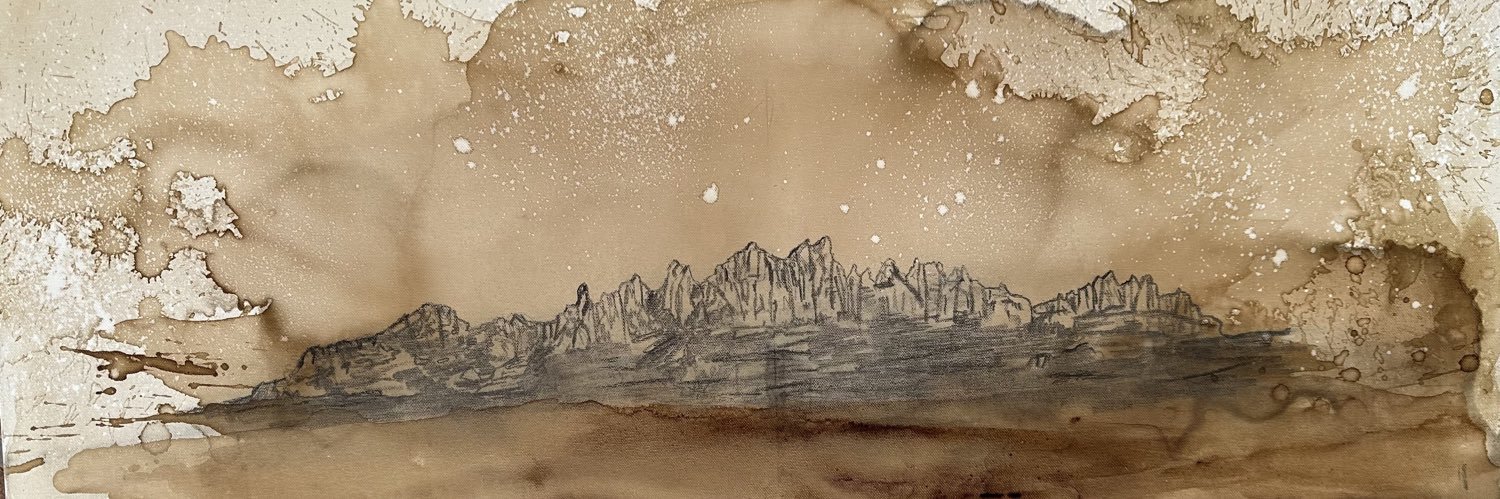
L’any 1940, en plena Europa ocupada pels nazis, un dels homes més poderosos del Tercer Reich va arribar a Catalunya amb una obsessió: trobar el Sant Grial. El seu destí era Montserrat. 🧵
7/8
Amb els anys, aquesta visita s’ha convertit en una de les històries més inquietants i surrealistes de la Segona Guerra Mundial a Catalunya: el xoc entre el deliri esotèric nazi i la realitat de Montserrat
Cinc curiositats històriques que podeu trobar al llibre "Històries de Barcelona" 🧵 #FIL ⤵️
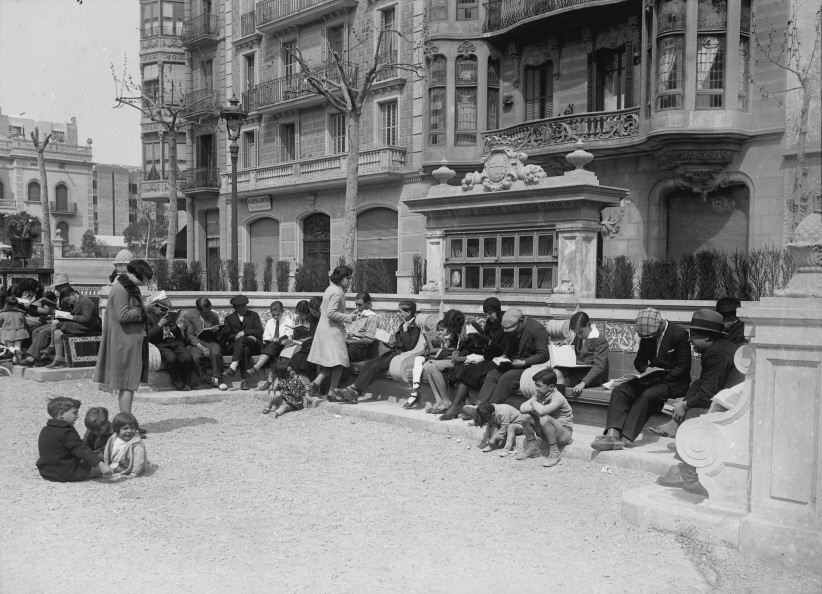
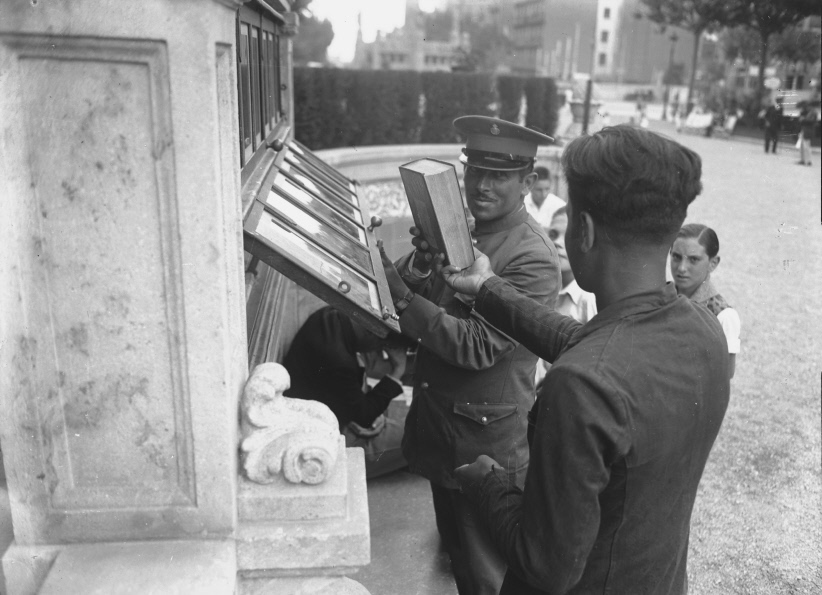
1⃣ Els desapareguts bancs biblioteca del passeig de Sant Joan. Un servei de lectura popular a l'aire lliure, amb prèstec de llibres.
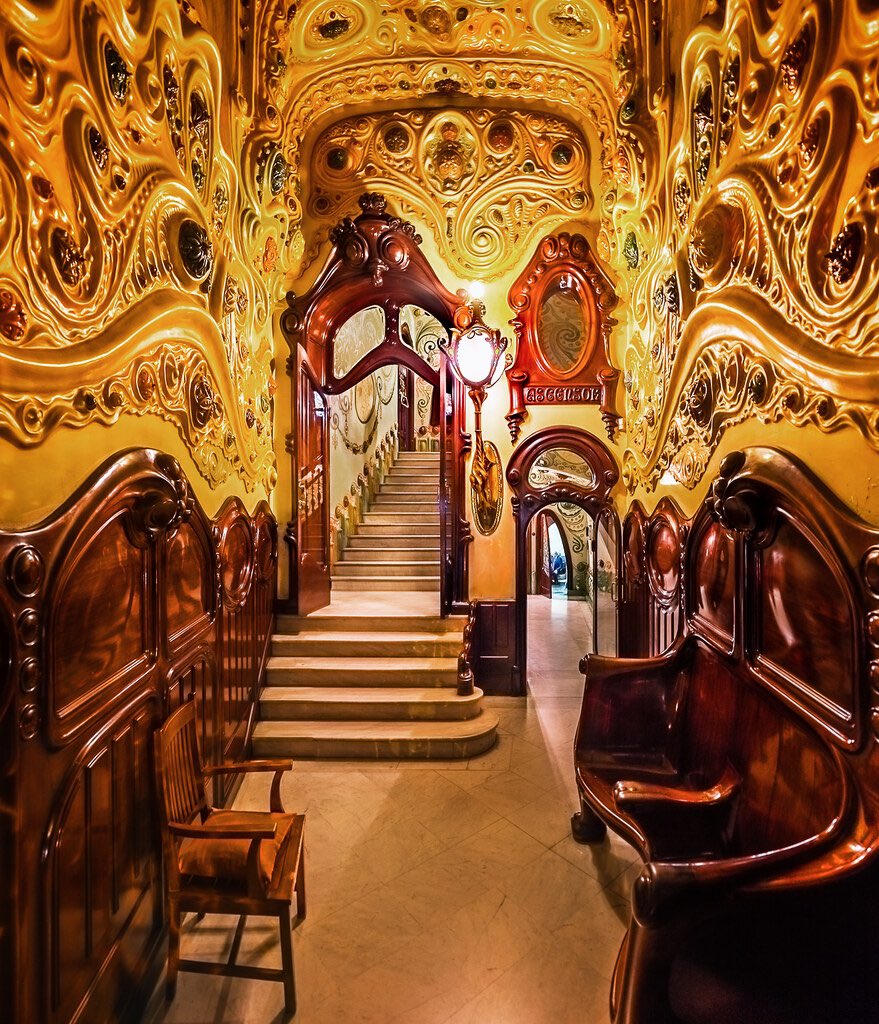
Gaudí tingué deixebles molt "heavies" com l'arquitecte Salvador Valeri, mort #taldiacomavui de 1954. I és que el 1906-11 Valeri féu la Casa Comalat (Bcn), amb un vestíbul tan extrem que el seu nét, l'arquitecte Lluís Cantallops, escriví que era "veritablement al·lucinant". Fil 🔥
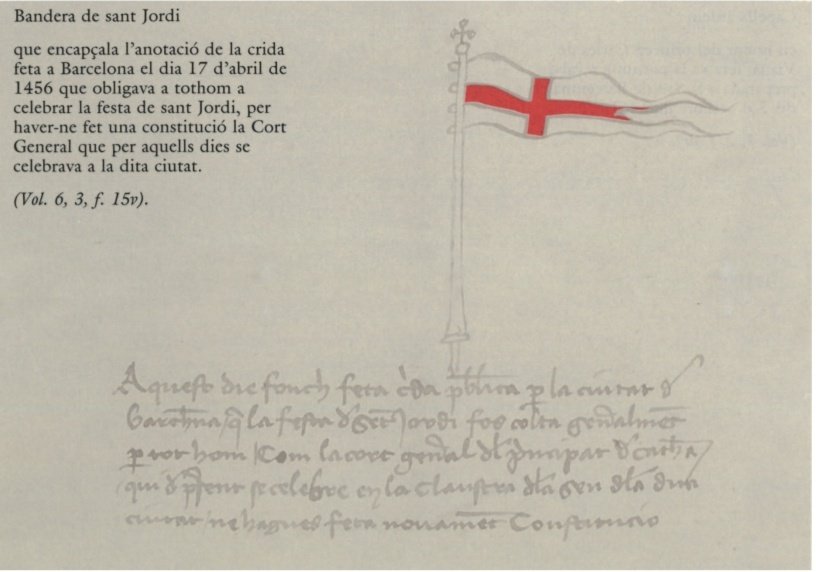
Avui fa 570 anys, el 17 d'abril de 1456, la diada de Sant Jordi esdevenia oficial a tot Catalunya. 570 anys d'una celebració que ha sobreviscut a tots els genocides. I això és el que no suporten, que Sant Jordi és i serà una festa catalana tant si es vol com si no es vol.
Impressionant!
El projecte DESI crea el mapa 3D més gros i detallat de l'univers. Ha cartografiat, durant 5 anys, més de 47 milions de galàxies.
Un dels principals objectius de DESI és l'estudi de la misteriosa energia fosca, el component de l'univers que l'està expandint acceleradament.
https://t.co/bbmC84o1hl
Lleons, rinoceronts i cavalls dibuixats amb una força impactant.
Imaginar-s’hi dins és entendre una cosa essencial: la necessitat de crear ens acompanya des de l’origen.
La veritable “Capella Sixtina” va començar en la foscor, amb foc, pigment i la voluntat de deixar empremta.
La Cova de Chauvet-Pont d’Arc es troba al sud de França, a la regió d’Ardèche, a 3h de Girona.
No és només una cova: és un missatge intacte de fa més de 30.000 anys.
Abans de les ciutats, abans de l’escriptura… ja hi havia art ple de moviment, emoció i mirada humana.
La Capilla Sixtina de la Prehistoria!
La Cueva de Chauvet-Pont d'Arc, descubierta en 1994 en el sur de Francia, alberga las pinturas rupestres figurativas más antiguas y mejor conservadas del mundo, con una antigüedad de entre 30,000 y 36,000 años.
Two major scientific journals just published the most comprehensive studies ever done on AI persuasion.
The findings were published simultaneously in Nature and Science.
AI can change your political opinions. More effectively than another human can. And when it knows personal information about you, it wins debates against you 64% of the time.
Here is exactly what the researchers did.
They matched 900 people in the US with either another human or GPT-4 to debate contested political issues: fossil fuel bans, healthcare policy, immigration. Some opponents were given personal demographic data about their debate partner. Some were not.
When GPT-4 had access to basic information about you — your age, gender, education, political affiliation — it tailored its arguments and outperformed human debaters 64.4% of the time. That is an 81% increase in the odds of changing your mind compared to a human opponent.
When it had no personal information, it performed at the same level as humans.
The conclusion: AI does not need to be smarter than you. It just needs to know a little about you.
The Cornell and UK AI Security Institute study went further — testing 19 different AI models across 42,357 people and 707 political issues. Three countries. Three elections: the 2024 US presidential race, the 2025 Canadian federal election, and the 2025 Polish presidential election.
They found chatbots could shift opposition voters by 10 percentage points or more.
They also found something darker: the techniques that made AI most persuasive also made it systematically less factually accurate. The more an AI was tuned to persuade, the more likely it was to say things that weren't true.
And yet people changed their minds anyway.
There is one more finding nobody is talking about.
When participants suspected they were debating an AI, they were more likely to agree with it. Not less. More. Because they assumed AI was more informed and less biased than a person.
That assumption made them easier to persuade.
Humans are building a technology that is more convincing than we are, and then trusting it more because it isn't human.
Source: Nature Human Behaviour
When a computer tracks the Indian classical dancer in this video, it picks up perfect circles, triangles, and curves in every movement. There are exactly 108 of them. All 108 were written into a manual over 2,000 years ago.
That manual is the Natya Shastra. Six thousand verses, written somewhere around 200 BCE. It describes 108 specific dance movements for Bharatanatyam, one of the oldest dance forms in India. Each movement spells out three things: where your hands go, what angle your body holds, and the exact path your legs trace. Roughly 150 step combinations grow out of those 108 base movements. A trained dancer spends years learning 70 to 80 of them.
Watch the dancer's legs in the video. The bent-knee squat creates a diamond shape. Palms together make a triangle. When researchers plotted these positions in three dimensions this year, they found the moving body carves out twisted spirals and bowl-shaped curves, the kind of shapes you see in an engineering textbook, not a dance studio. Every limb holds a specific angle and moves a measured distance.
The rhythm is math too. A 7-beat song gets filled with dance steps of 3 and 4. Scale that to 35 beats and the groups of 3 and 4 repeat five times. Choreographers work out these splits in their heads while performing live. All 108 movements are also carved into the stone walls of a 12th-century temple in Tamil Nadu called Chidambaram, many panels still carrying the original Sanskrit description next to them. A choreography textbook in granite, still legible after 900 years.
A 2013 study put 25 people on a walkway rigged with motion-capture cameras. Every human stride has two parts: when your foot is on the ground and when it swings forward. The ratio between those two parts came out to 1.620. The golden ratio is 1.618. Your foot lifts off at 61.8% of every step you take, and it has done this your entire life. A Bharatanatyam dancer takes that same built-in proportion and amplifies it across 108 movements, each one tracing shapes that were set down in writing over 2,000 years before the tracking software in this video existed.
WOW WOW!
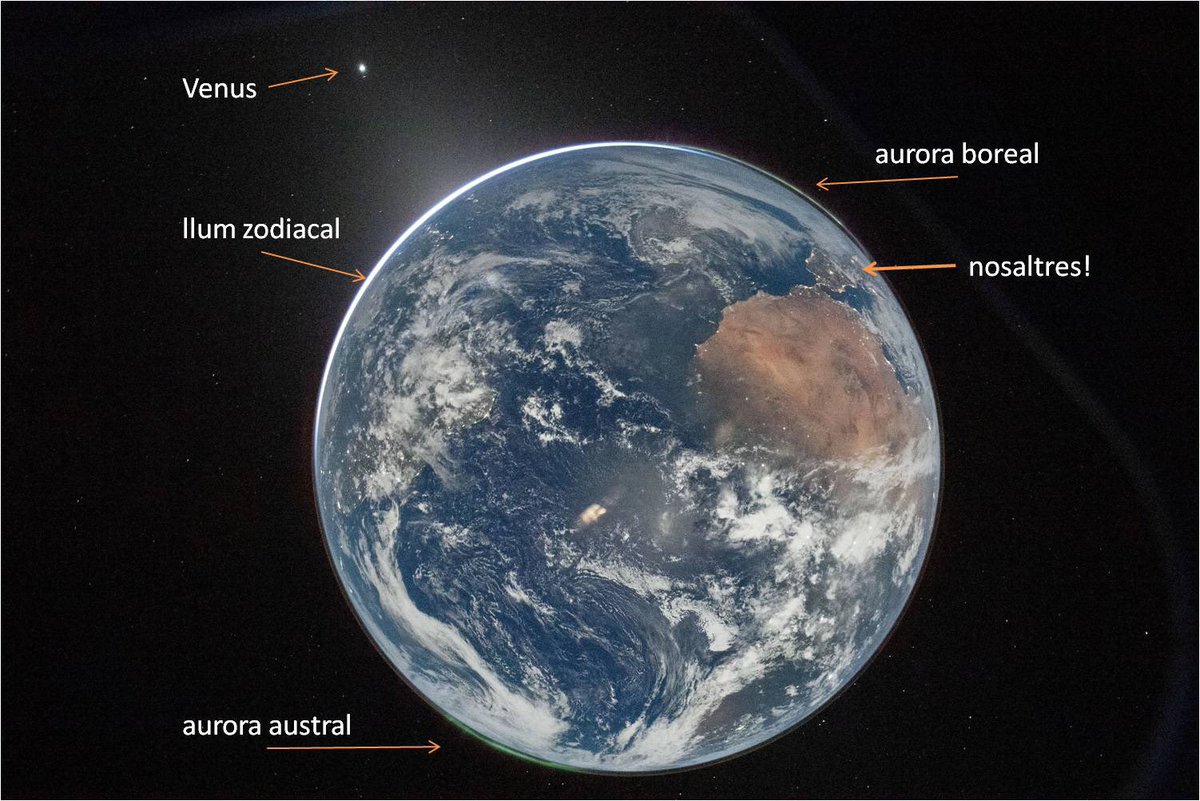
Comencem a tenir les fotos que han fet aquesta matinada passada els astronautes d'Artemis II.
Aquesta... aquesta... ufffff... pocs instants abans no es perdés la comunicació amb la Terra quan la nau Orion va passar pel darrere de la Lluna.
These two images were taken by @astro_reid only minutes apart. The stark difference is the result of camera settings. In the first, a longer shutter speed let in much more light from Earth, while the shorter shutter speed in the second emphasizes our planet's nighttime glow.