What shaped the mental health system we have today, and where do we go from here?
Join us in Boston for The Future of Mental Health in America, January 26–28, 2027 where we’ll explore those questions together. We’ll examine the historical, scientific, institutional, and cultural forces shaping mental health care and explore new possibilities for the future.
Last year’s inaugural conference sold out because it created space for honest, constructive conversations that rarely happen elsewhere. This year, we’re bringing that spirit back and building on it.
Early bird tickets are now on sale — limited quantities available. Visit the link below for full details and reserve your place.
Whether we welcome them or not, emotions are what make us human.
In the process of coming off psychiatric drugs, many of you describe those feelings returning���sometimes in a way that’s vivid and clarifying, and sometimes in a way that’s raw or unsettling. Oftentimes, it’s a mix of both.
If that’s been your experience, how has it changed the way you understand what you feel—or the way you relate to it now?
ICYMI: Heartbreak. Grief. Loneliness. Homesickness. Shame. Exhaustion. First love gone wrong. The particular despair that follows betrayal. The long stretch of not knowing who you are yet.
None of these are simple and none of them are binary. The existing mental health industry still reduces them to cold, clinical terms — depression, anxiety, a disorder, an episode — as if the right label could stand in for the life underneath it.
That is the problem Dilvin Yasa touches on in Marie Claire Australia: lean far enough into blanket labels and you stop getting to know yourself as a person.
Psychiatrist Suzanne Garfinkle-Crowell, quoted in the same piece, puts the translation work back where it belongs. If someone says they “have depression,” they may be saying they are sad, lonely, in despair.
What words or phrases would more accurately name the difficulties that first led you to a psychiatric diagnosis?
You can read the article via the link below.
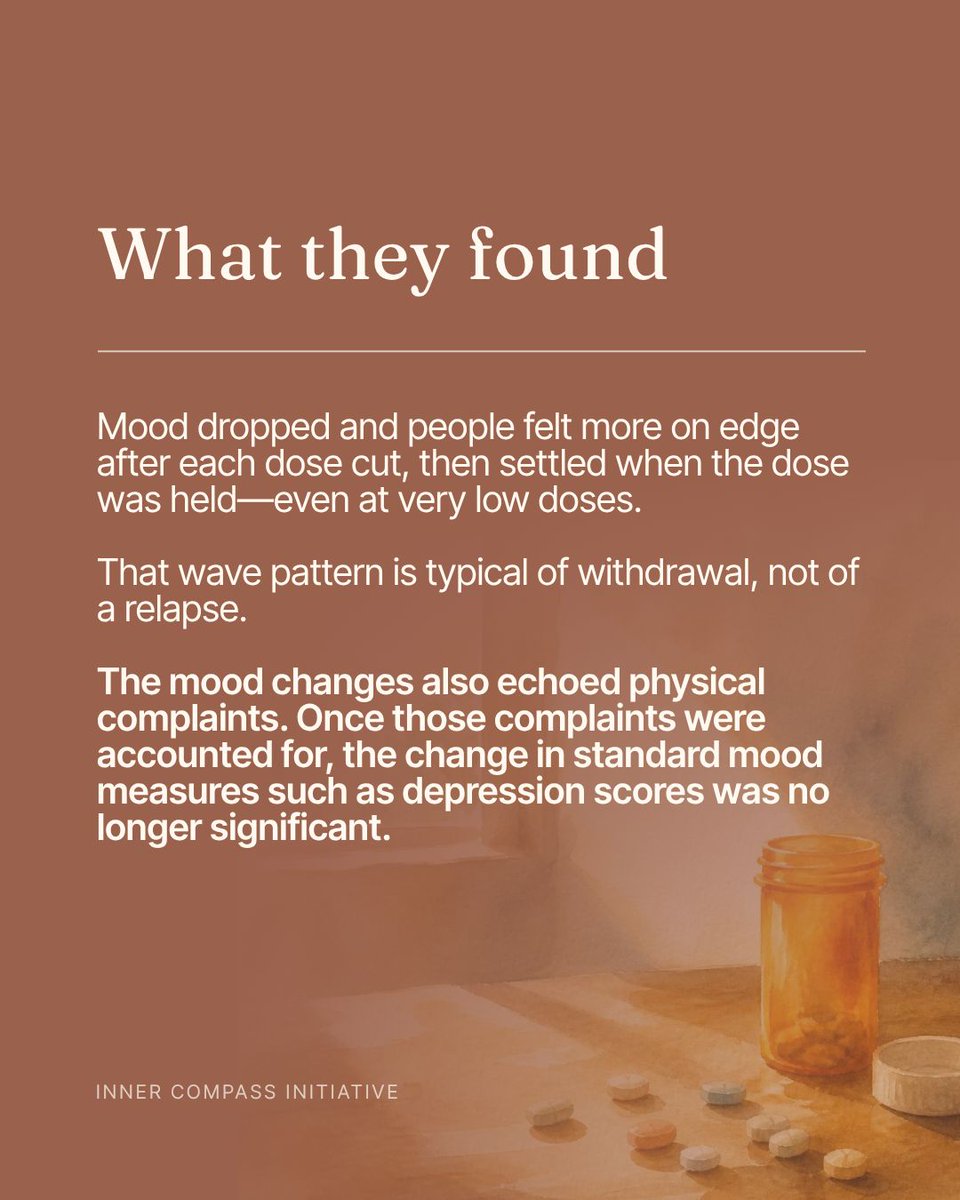
ICYMI: For years, people tapering psychiatric drugs have described a “windows and waves” pattern of withdrawal: a crash after a dose cut, then a stretch of settling if the dose is held.
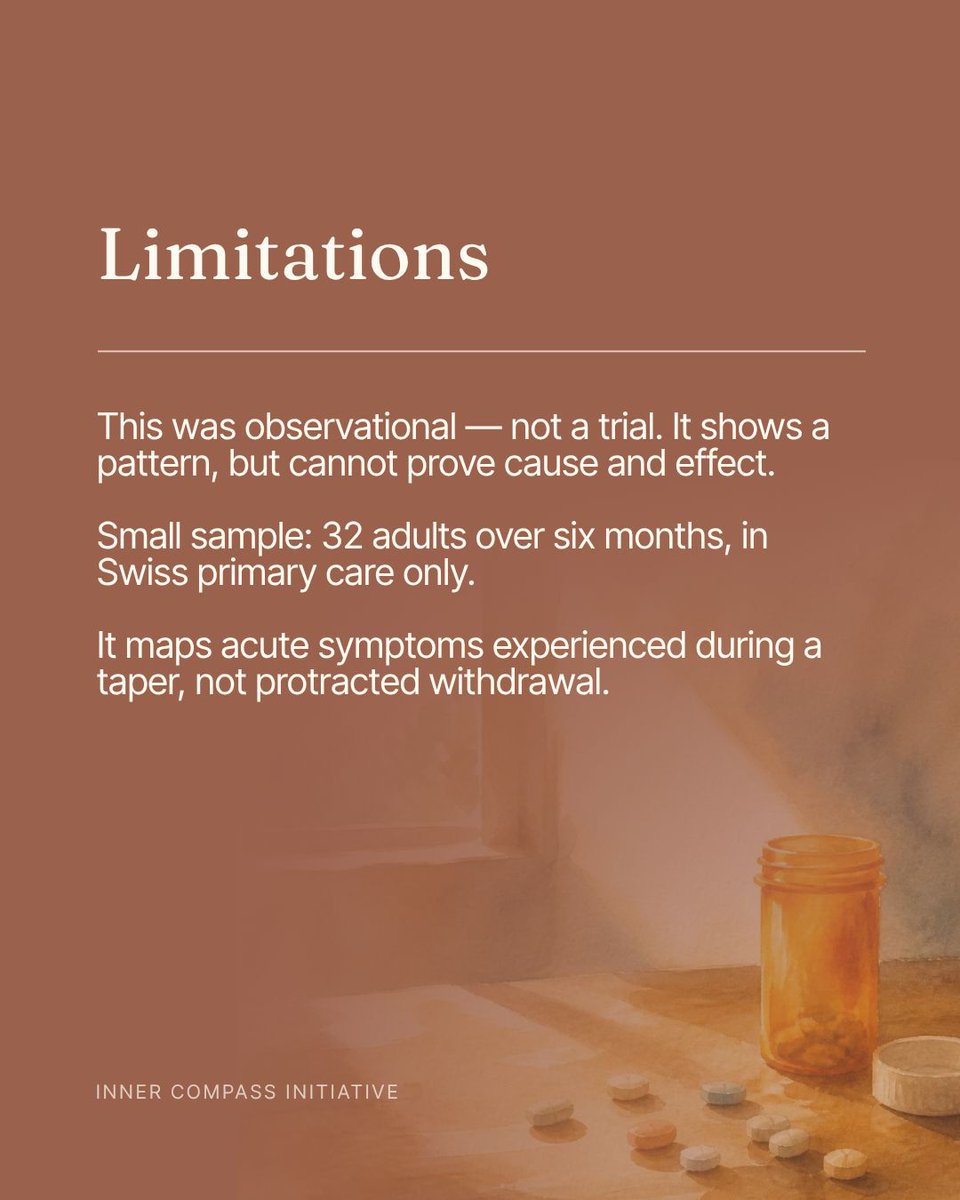
Clinicians have often interpreted that crash as the original condition returning, but a new study followed people through a six-month antidepressant taper and found exactly the same wave pattern.
Led by Michael Hengartner (@HengartnerMP) with Mark Horowitz (@markhoro), the research found people tapering reported their mood dropped after each reduction, then eased when the dose stayed put—even at very low doses.
Notably, the mood changes were aligned with physical complaints. Once those physical complaints were taken into account, the rise in depression scores was no longer significant.
That will not surprise you if you have lived it, but the research is still worth reading. You can find coverage of it including a link to the original paper via the link below.
Similar concerns about how clearly these harms are communicated are being explored here in America and elsewhere in the world, so today’s report is relevant wherever you are. You can read it here (PDF) ⬇️. 3/3
https://t.co/M4YSNwHESs
🧵 Patients and families around the world have long been raising concerns that the warnings in antidepressant leaflets were not clear or prominent enough.
Last December, the UK’s drug regulator announced a review into these concerns. The findings of that review were released today, including updates covering self-harm and suicidal behaviour; post-SSRI sexual dysfunction (PSSD) and removal of “chemical imbalance” language. 1/3
During the review, patients and families also raised concerns about the warnings related to antidepressant withdrawal, which are going to be addressed in a separate report. 2/3
“The problem is not only that psychiatry lacks exits, but that psychiatric diagnoses, explanations and interventions often carry an institutional and epistemic authority that makes them difficult to question, revise, or undo.”
New for Inner Compass Insight by Helene Speyer (@helene_speyer), Stine Bjerrum Moeller, and Mike Slade: a psychiatrist and two clinical psychologists on why psychiatry should take less territory, hold less authority, and be better prepared for de-diagnosing and deprescribing.
See link below to read the new Substack.
What would a mental health system designed to help a whole person look like?
As a professional or patient, what changes would you make?
Would it be more social prescribing, like helping someone make more of nature?
Would it be more community-focused, like connecting people who have similar experiences?
Would it involve art and creative activities as an outlet for expression?
Or would it be something else drawn from your own unique experiences?
These are all questions inspired by our discussion with psychiatrist Dr Javeed Sukhera (@javeedsukhera), talking here with our Director of Research & Policy, Dr Elizabeth Curley (@adjunctoptimism), about helping the whole person.
You can read our full write-up of the interview on Substack via the link below.
And let us know in the comments how you’d go about building a future that in supporting someone focuses not on merely coping, but on the whole person.
Yael was told she would need psychiatric drugs for the rest of her life.
She went through severe depression, repeated episodes of psychosis and hospitalizations, and 15 years of suicidal ideation.
She was given a bipolar diagnosis that left her feeling mentally broken.
And yet she found her own way off the drugs and towards a peace of mind she had been told was not possible for her.
On Tuesday she will tell that story in her own words, in a live interview online:
- Where: Inner Compass Exchange
- Tuesday, October 13, 1–2pm ET
Join her and other Exchange members today for a free two-week trial, and cancel after the interview if you choose.
Sign up via the link below ⬇️.
🧵 One of the many reasons it's so important to hear and consider how people have been affected by taking psychiatric drugs — both positively and negatively — is that the pamphlet never covers the wider impact of those effects.
How drugs like SSRIs affect sexual function and libido is one example of this.
On labels, it’s typically reduced to mechanical phrases like “decreased libido,” “ejaculation failure,” or “delayed or absent orgasm.”
But wording like this does not cover the wider cost and the impact on the whole human being and their life: desire, sensation, creativity, connection, and the feeling of being fully in your body.
Our founder, Laura Delano (@_lauradelano_), discusses those effects here with Theo Von (@theovon), describing how sexuality is not just about the act of sex, but vibrancy, vitality, and how you move through the world.
And when this shows up in up to 70% of people on SSRIs, it is not “just a little side effect.”
(In fact, some academics and clinicians have argued it is the primary effect of SSRIs and SNRIs.)
Laura and Theo discuss this and so much more in episode 678 of This Past Weekend with Theo Von—see below for the link, along with more information and resources. 1/3
It’s a given that psychiatric drugs affect emotions and a person’s relationship to them. What’s less often talked about is how that can change your relationship with the things that are intrinsically tied to emotions.
Music is one of those things.
Did taking or stopping psychiatric drugs change what you hear, what you play, or how music reaches you? And how?
Moving on from the mental health industry is rarely, if ever, an overnight decision. For many of you, it amounts to years of going back and forth, sometimes finding relief and sometimes finding anything but.
Our founder, Laura Delano (@LauraDelano ), is one of those people.
Talking with Theo Von (@TheoVon), she reflects on being 18: four years after her first psychiatric diagnosis and prescriptions, walking back toward the system of her own volition.
Listen for what she is actually asking for: she wants to know why she feels the way she feels. She wants to know she’s not a bad person. She wants relief.
Those needs are universal and timeless—part of what makes us uniquely human. People have always needed an explanation for their pain, company in it, and some way through when it becomes unbearable.
Those needs and those struggles, in all their forms and intensity, are not in question.
How those needs get met is the real question.
Laura and Theo explore this at length in the full show—link below.