It's crazy to me how Robin Hood is now popularized as "stealing from the rich to give to the poor"
(Socialist messaging)
In reality, Robin Hood stole back the taxes that a cruel leader unjustly levied against the population
(Anti-socialist messaging)
Este artículo de Nature es un ejemplo de cómo muchos medios (incluidos medios supuestamente científicos como Nature) tratan los problemas de los hombres: reconoce (a regañadientes) que los chicos y hombres jóvenes están peor en varios indicadores objetivos importantes (rendimiento escolar, graduación universitaria, salud mental, suicidios, adicciones, etc.), pero, inmediatamente añade la coletilla obligatoria: “pero cuidado, no vayamos a hablar demasiado de esto porque podría dejar de lado a las mujeres y niñas”.
Es decir: los problemas de los hombres solo pueden mencionarse si se recuerda constantemente que las mujeres siguen siendo las verdaderas víctimas prioritarias.
Se enfocan los problemas y desventajas de los hombres como una competición de víctimas e implícitamente se admite una jerarquía de sufrimiento: cualquier atención a los problemas masculinos automáticamente “resta” atención a las mujeres. Como si el sufrimiento fuera un recurso de suma cero. Esto, por supuesto, es absurdo: se pueden estudiar y abordar problemas de ambos sexos al mismo tiempo.
El artículo no está interesado en entender por qué los chicos están quedando atrás en educación, por qué tienen tasas mucho más altas de suicidio, adicciones o fracaso social. Está interesado en contener el discurso para que no amenace la narrativa dominante de que las mujeres siguen siendo el grupo prioritario de preocupación. Dice textualmente:
"Es incómodo y a veces controvertido hablar de una 'crisis masculina' cuando todavía existe una discriminación arraigada y, en muchos casos, cada vez peor contra las niñas y las mujeres.”
Es decir: sí, los chicos están mal… pero por favor no hagamos mucho ruido porque las chicas están peor. Y sólo podemos ocuparnos de uno de ellos.
https://t.co/1ylcekDgDo
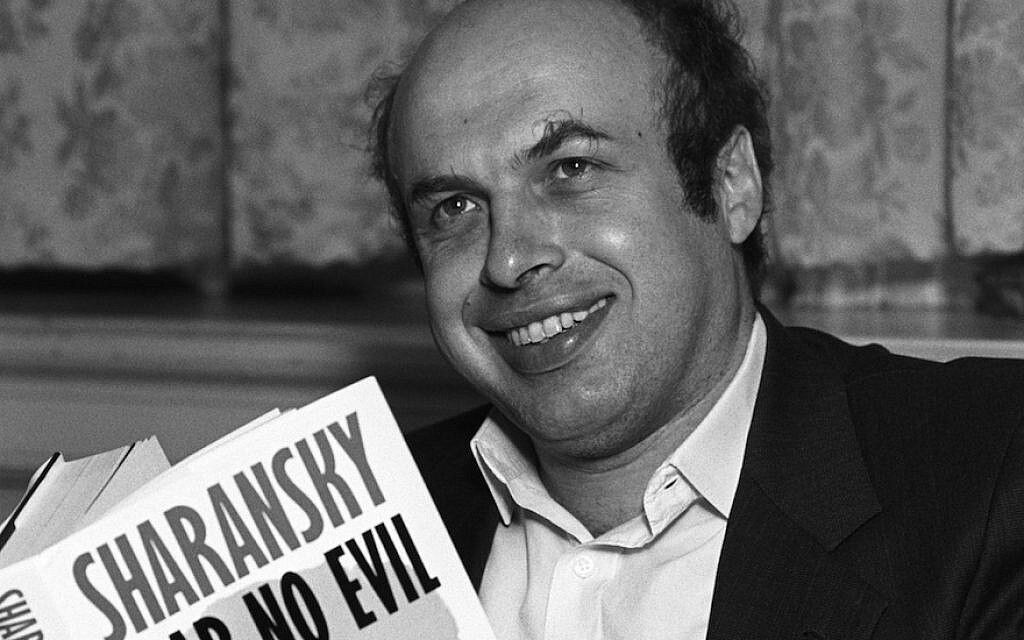
A Soviet Prisoner Invented a 10-Second Test for Freedom
Natan Sharansky spent 9 years in a Gulag. When he got out, he had one question for every society he visited.
It takes 10 seconds to answer. And most Americans have never heard it.
Karl Marx gave humanity its most murderous idea: that human suffering stems not from scarcity and the human condition, but from private property itself. This bearded parasite—who never worked a day in his life and lived off Engels' textile fortune—convinced generations that voluntary exchange was exploitation while violent redistribution was justice.
The body count speaks for itself. Stalin's forced collectivization murdered 6 million Ukrainians through engineered famine. Mao's Great Leap Forward killed 45 million through sheer economic illiteracy. Pol Pot slaughtered a quarter of Cambodia's population. And every single time, the intellectuals proclaimed it "wasn't real socialism." The pattern is identical across continents and centuries: seize private property, centrally plan production, watch millions starve.
But the intellectual foundation was always rotten. Marx's labor theory of value—the notion that labor alone creates value—was already debunked by Austrian economists like Böhm-Bawerk before the ink was dry on Das Kapital. Value is subjective, determined by individual preferences in voluntary exchange. Marx simply couldn't grasp that the capitalist performs the crucial function of time preference—sacrificing present consumption for uncertain future returns.
Even "democratic socialism" in Western Europe required massive wealth transfers from productive individuals to bureaucratic parasites, creating permanent dependency classes and stagnating growth. Venezuela had the world's largest oil reserves and still managed to create toilet paper shortages. Cuba turned a Caribbean paradise into a floating prison where doctors flee on rafts.
Every socialist experiment ends the same way: empty shelves, secret police, and intellectuals explaining why the next attempt will be different.